BBQ Beef Brisket
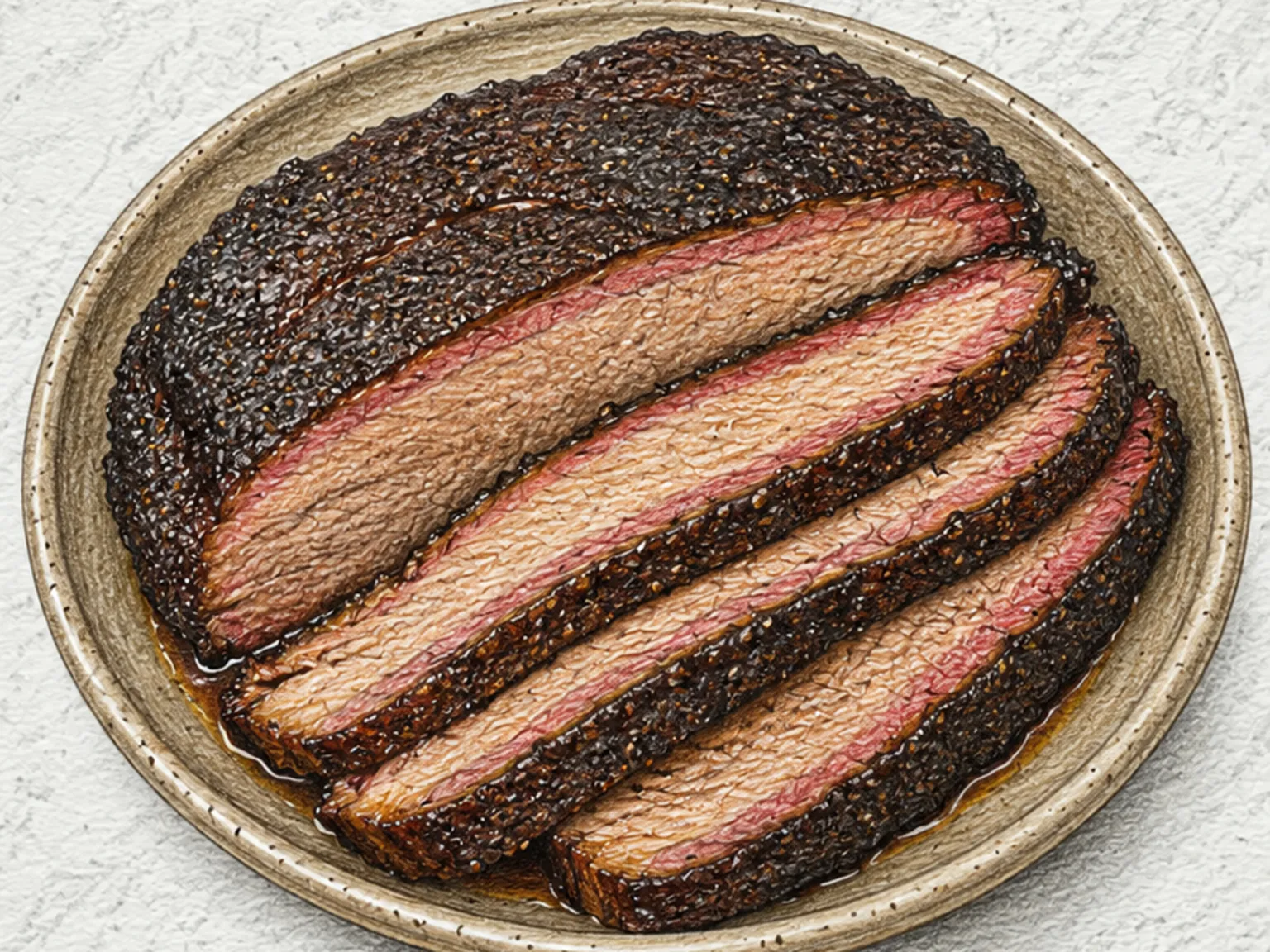
BBQ beef brisket is the centerpiece of Texas barbecue, requiring nothing more than coarse salt and cracked black pepper rubbed into a whole packer brisket before twelve or more hours of low-temperature smoking over oak. Despite the minimal seasoning, the prolonged exposure to smoke builds a dark, crusty exterior known as bark that concentrates flavor on every surface. The thick fat cap renders slowly and bastes the lean flat beneath it, keeping the meat moist even after half a day of cooking. Collagen breaks down completely, so each slice pulls apart along the grain with almost no resistance. The finished brisket carries oak smoke, sharp pepper heat, and the deep beef flavor that salt draws out - proof that time, not complexity, defines this dish.
Adjust Servings
Instructions
- 1
Trim brisket fat cap to about 1cm thickness.
- 2
Season evenly with salt and pepper, refrigerate overnight.
- 3
Set smoker or oven to 107C (225F).
- 4
Cook fat-side up for 12-14 hours.
- 5
Remove when internal temp reaches 93C, rest 1 hour.
As an Amazon Associate, we may earn from qualifying purchases.
Tips
Nutrition (per serving)
More Recipes

BBQ Ribs
BBQ ribs start with a rack of pork spare ribs rubbed generously with a blend of paprika, brown sugar, garlic powder, and black pepper, then rested overnight so the seasoning penetrates the meat. Low-and-slow cooking at around 130 degrees Celsius for two or more hours dissolves the connective tissue until the meat slides cleanly off the bone. The dry rub caramelizes against the rendered fat into a sticky, darkened crust that carries most of the concentrated flavor. A final glaze of barbecue sauce adds smoky sweetness and a faint vinegar tang that keeps each bite from tipping into one-note richness. Served alongside coleslaw or grilled corn, the pairing offsets the deep, heavy character of the ribs.

Philly Cheesesteak Sandwich
Philly Cheesesteak Sandwich originated in 1930s Philadelphia and remains one of America's defining street foods. Ribeye or top round is partially frozen for about thirty minutes so it can be sliced paper-thin, and these razor-thin slices are seared on a screaming-hot flat griddle where they caramelize almost instantly, developing char and retaining their juices. Onion and green bell pepper are cooked on the same griddle to absorb the beef's rendered fat and fond, and provolone cheese is draped over the pile of meat before a dome lid traps steam to melt it into a blanket that binds everything together. The hoagie roll provides the crucial structural balance - a lightly crisp exterior that gives way to a soft crumb capable of absorbing juices without becoming soggy or falling apart.

Classic Beef Burger
A classic beef burger shapes seasoned ground beef into a thick patty and sears it over high heat until a deep brown crust forms on the outside while the interior stays juicy. The Maillard reaction on the hot surface concentrates the beef flavor into that crust, and a slice of cheddar melted on top adds a salty, creamy layer. Crisp lettuce and a thick tomato slice bring moisture and freshness, while pickle slices cut through the richness with vinegar acidity. A brioche bun absorbs the rendered juices and condiments without falling apart, holding the stack together so every bite delivers all the components at once.

Beef Fajitas Skillet
Beef fajitas skillet marinates skirt steak in lime juice, cumin, and chili powder, then sears it on a screaming-hot cast iron pan until a dark crust forms while the interior stays pink and juicy. Bell peppers and onions are flash-cooked in the same pan, staying crisp-tender and carrying the caramelized beef drippings on their surface. The lime marinade cuts through the rendered fat with sharp citrus acidity, and cumin lends an earthy warmth that defines the fajita flavor profile. Served sizzling with warm tortillas, salsa, guacamole, and sour cream, each assembled bite balances smoky heat, bright acid, and cooling cream.

Korean BBQ Beef
Bulgogi is Korea's signature marinated beef dish, made by soaking thinly sliced sirloin or chuck in a mixture of soy sauce, grated pear, sugar, minced garlic, and sesame oil, then searing it quickly over high heat. The pear serves as a natural tenderizer-its enzymes break down the meat's proteins so each slice pulls apart easily-while its fructose merges with the soy sauce into a balanced sweet-salty glaze. Cooking in small batches is essential: overcrowding the pan drops the temperature and steams the meat instead of searing it, producing a gray, chewy result rather than caramelized brown edges. A final drizzle of sesame oil and a scatter of sesame seeds before plating adds a roasted, nutty finish.

Korean Beef Brisket Rice Bowl
Chadol deopbap is a Korean rice bowl featuring paper-thin beef brisket slices seared in a hot pan until the edges turn crisp, then drizzled with a soy-based sauce and served over steamed rice. The marbled fat in the brisket renders out during cooking, creating a rich, buttery flavor that pairs naturally with the salty-sweet soy glaze. Garlic and sesame oil add aromatic depth without overcomplicating the dish. A raw or soft-cooked egg yolk on top is a common addition, breaking into a golden sauce that coats the rice when mixed. Despite its simplicity - just a handful of pantry staples and a few minutes at the stove - it delivers a deeply satisfying meal that works well for both lunch and dinner.