Beef Fajitas Skillet
Quick answer
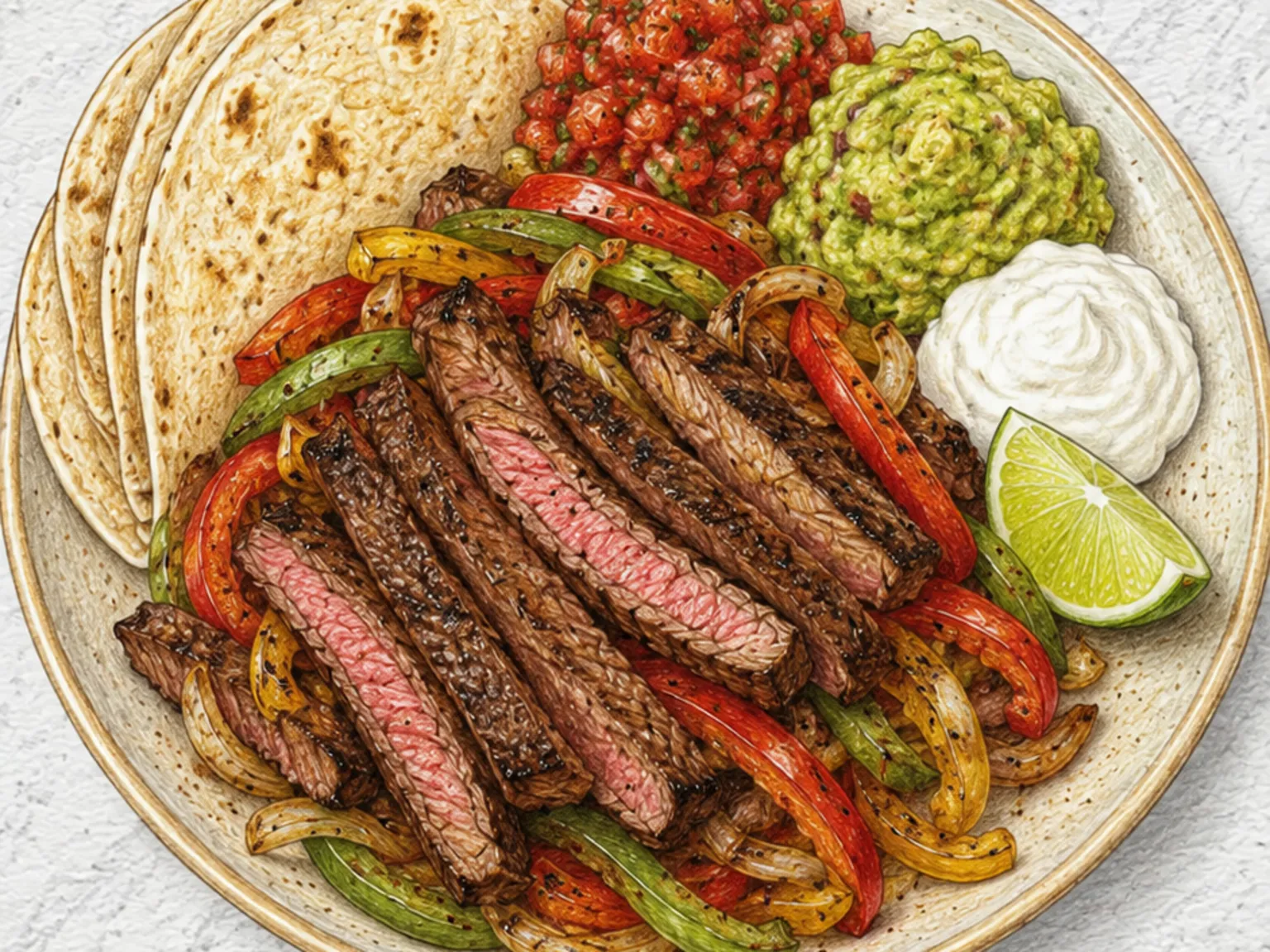
Skirt steak is marinated in lime juice, cumin, chili powder, and garlic, then placed onto a cast iron pan heated until it is smoking to develop a dark crust on the surfac...
What makes this special
- Beef Fajitas Skillet uses a smoking cast iron pan to char marinated skirt steak in seconds.
- Cast iron smoked-hot caramelizes skirt steak surface in seconds
- Cumin's earthy depth overlapping with lime acidity creates fajita's sharp aroma
Key ingredients
Core cooking flow
- 1 Slice 500g skirt steak at a diagonal against the grain into 5mm thick strips.
- 2 Remove the seeds from 1 red and 1 green bell pepper and slice each into 1cm thick lengthwise strips.
- 3 Preheat a cast iron or heavy skillet over high heat for 2 minutes, add olive...
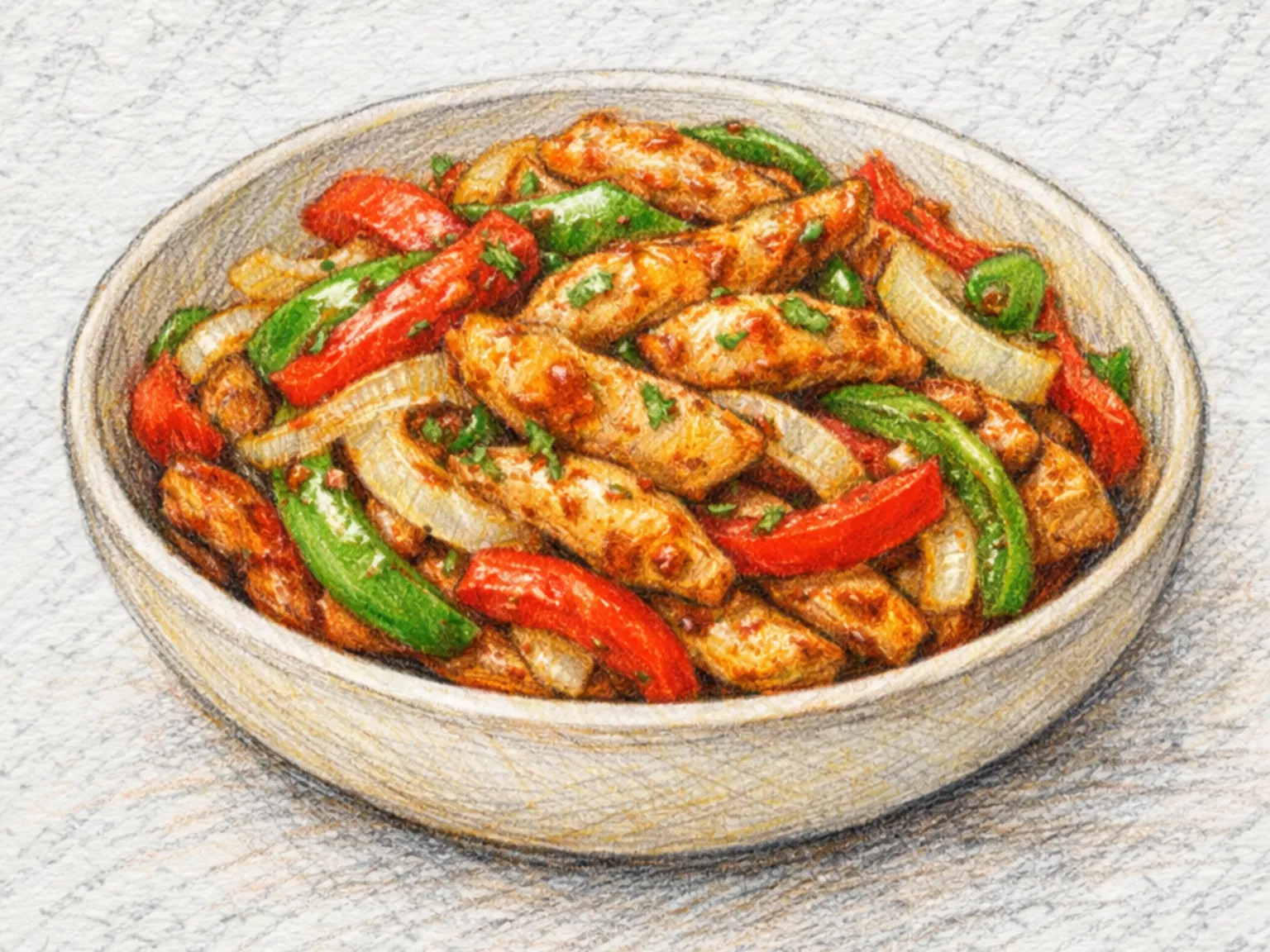
Skirt steak is marinated in lime juice, cumin, chili powder, and garlic, then placed onto a cast iron pan heated until it is smoking to develop a dark crust on the surface while the interior stays pink and retains its juices. The mass of the pan sustains the high heat even when the cold meat is added, which is what produces the crust rather than a steam. After the steak rests and is sliced, bell peppers and onion go into the same pan and are cooked quickly so they pick up the drippings without going limp. The earthy weight of cumin combines with the sharp citrus of lime to produce the specific, forceful aroma that defines fajitas, and chili powder adds a sustained heat alongside the deep red color. The components are loaded into warm tortillas with salsa, guacamole, and sour cream so each mouthful carries smokiness, acid, heat, and cool creaminess together.
Instructions
Read the steps as a cooking flow: prep, heat, seasoning, doneness control, and finish.
- 1Season
Slice 500g skirt steak at a diagonal against the grain into 5mm thick strips.
Combine 2 tablespoons lime juice, 2 tablespoons olive oil, 2 teaspoons chili powder, 1 teaspoon smoked paprika, 1 teaspoon cumin, and 1 teaspoon salt, pour over the beef, and marinate for 10 minutes.
- 2Prep
Remove the seeds from 1 red and 1 green bell pepper and slice each into 1cm thick lengthwise strips.
Slice 1 onion the same way into 1cm thick lengthwise strips as well.
- 3Control
Preheat a cast iron or heavy skillet over high heat for 2 minutes, add olive oil, spread the vegetables in a single layer, leave undisturbed for 1 minute to develop char marks, then stir-fry 2-3 minutes more while keeping a slight crunch. Remove and set aside.
- 4Heat
Spread the marinated beef in a single layer in the same hot skillet without crowding, leave undisturbed for 2 minutes until a deep brown crust forms on the underside, then flip and cook 1-2 minutes more, removing while a slight pink remains inside.
- 5Finish
Return the reserved vegetables to the pan with the beef and toss together over high heat for 1 minute to combine all the flavors, then season with 0.5 teaspoon pepper and adjust salt if needed.
- 6Finish
Warm the 8 tortillas in a dry pan or microwave for 10-15 seconds each to make them pliable.
Divide the fajita mixture among the tortillas and serve immediately, as the vegetables will release moisture and lose their texture if left to sit.
After the steps
Pick a recipe that fits this dish.
Continue with shared ingredients, meal pairings, or a similar method.
Recipes That Go Well With This
More Western →Based on shared ingredients and meal pairing
Beef Stroganoff
Beef stroganoff sears thin strips of sirloin over high heat just long enough to brown the surface while keeping the interior pink and tender, then folds them into a pan sauce built from sauteed mushrooms, onions, and sour cream. The mushrooms must cook until properly browned in the pan, not just softened, to lose their excess moisture and concentrate their savory depth alongside the beef. Sour cream is stirred into the hot pan drippings at the end, transforming them into a sauce that is simultaneously creamy and subtly tangy without curdling. A touch of mustard sharpens the finish without announcing itself. Spooned over egg noodles or mashed potatoes, the cream sauce soaks into the starch below, pulling every element of the plate together into a rich, cohesive meal that traces its origins to nineteenth-century Russian cuisine.
Corned Beef Hash
Corned beef hash is an American brunch dish that pan-fries diced potatoes and shredded corned beef until crispy, then tops them with a fried egg. Parboiling the potatoes for five minutes softens the inside while setting up a starchier surface that crisps better in the pan. Cooking the potatoes in butter and oil until golden before adding onion and then the corned beef builds layers of texture. Minimizing how often the hash is flipped allows a crust to form on the bottom, which is the signature of a well-made hash. The salty depth of corned beef combines with the starchy richness of potato, and breaking the egg yolk over the top ties everything together.
Chicken Quinoa Power Salad
Chicken quinoa power salad brings together pan-seared chicken breast, quinoa simmered for 12 minutes then cooled, romaine lettuce, cucumber, and bell pepper in a single bowl built for a complete, balanced meal. Resting the chicken for three minutes after searing gives the juices time to redistribute inward so every slice stays moist rather than losing liquid at the cut surface. Rinsing the quinoa before cooking removes saponins that leave a bitter residue even after boiling. A dressing of Greek yogurt, lemon juice, and olive oil provides creamy tartness at a low calorie count, and the fermented tang of the yogurt complements the raw vegetables without overpowering them. Bell pepper's natural sweetness adds color and brightness alongside the lean chicken, and the combination of textures - crisp lettuce, tender grain, firm seared meat - makes each forkful more satisfying than its ingredients suggest individually.
BBQ Beef Brisket
Texas-style BBQ beef brisket requires nothing more than coarse salt and cracked black pepper rubbed into a whole packer brisket before twelve or more hours of low-temperature smoking over oak. The minimal seasoning lets the wood smoke and the meat itself do the work. Extended smoke exposure builds a dark, crusty exterior called bark that concentrates flavor on every surface. The thick fat cap renders gradually and keeps the lean flat below it moist through half a day of cooking. Collagen breaks down completely, so each slice pulls apart along the grain with almost no resistance. The result carries oak smoke, sharp black pepper, and the deep beef flavor that salt draws forward - a reminder that time, more than any combination of spices, defines this tradition. Sliced and served with white bread and pickles in the Texas style.
Serve with this
Citrus Espresso Tonic with Orange
Espresso tonic is a carbonated coffee drink built by slowly pouring espresso over chilled tonic water to form two distinct layers. The tonic must be thoroughly cold to maintain stable carbonation throughout; cooling the espresso for about thirty seconds before pouring it over a spoon produces a clean separation between the two liquids. The quinine bitterness in the tonic water meets the espresso's roast bitterness, creating a balanced interplay rather than one-note sharpness. Orange slices and lemon peel garnish the glass, releasing citrus oils that rise with the bubbles. Specialty espresso with pronounced fruit acidity works particularly well here, harmonizing with the tonic's effervescence and lending natural sweetness without added sugar. Pre-chilling the glass with ice before adding the tonic helps preserve carbonation. The drink gained popularity in Scandinavian coffee culture during the 2010s before spreading worldwide.
Kimchi Bacon Mac and Cheese
Kimchi bacon mac and cheese layers aged kimchi's lactic tang and smoky bacon into a classic American cheddar cheese sauce over elbow macaroni. A butter-flour roux forms the base, with milk whisked in to build a béchamel before cheddar is melted into a thick, clinging sauce. Crisp bacon pieces add salt and crunch throughout, while chopped ripe kimchi introduces fermented acidity that counteracts the richness of the cheese. A pinch of gochugaru runs underneath with mild, warming heat. The tubular macaroni shape traps sauce inside and out, ensuring each forkful carries the full spectrum of creamy, tangy, and smoky flavors.
Real Pineapple Sherbet
This refreshing fruit dessert is prepared by scooping out the flesh of a mini pineapple and using its hollowed shell as a serving vessel. The fruit pulp is blended until smooth to prevent icy lumps, then mixed with sugar, lemon juice, and oligosaccharide syrup to achieve a sweet and tangy flavor. After pouring the mixture back into the shell and covering it with the top lid, it is frozen for at least four hours. Stirring the mixture occasionally during freezing breaks up ice crystals, resulting in a smoother texture. The active bromelain enzyme present in the fresh fruit provides a subtle tingly sensation on the tongue. Serving the sherbet directly inside the pineapple skin minimizes juice loss and keeps the dessert cold. Letting it stand for five minutes before scraping and topping with fresh apple mint leaves makes it ready to serve.
Similar recipes
Classic Beef Burger
A classic beef burger shapes seasoned ground beef into a thick patty and sears it over high heat until a deep brown crust forms on the outside while the interior stays juicy. The Maillard reaction on the hot surface concentrates the beef flavor into that crust, and a slice of cheddar melted on top adds a salty, creamy layer. Crisp lettuce and a thick tomato slice bring moisture and freshness, while pickle slices cut through the richness with vinegar acidity. A brioche bun absorbs the rendered juices and condiments without falling apart, holding the stack together so every bite delivers all the components at once.
Loco Moco Rice Bowl (Hawaiian Beef Patty Gravy Rice Bowl)
Ground beef is mixed with minced onion, shaped into patties, and pan-seared for four to five minutes per side until a crisp crust forms outside while the center stays moist. The same pan - still coated with beef drippings - gets butter, the remaining onion, and flour to build a quick roux, then water and Worcestershire sauce transform it into a smooth, glossy gravy that captures all the fond. Assembly is straightforward: rice on the bottom, patty on top, gravy ladled over, and a sunny-side egg crowning the bowl. Breaking the runny yolk into the gravy creates a rich, velvety sauce that ties the Hawaiian-born dish together into a hearty, deeply satisfying plate.
Classic Waffle
Classic waffles are made from a batter of flour, eggs, milk, melted butter, and baking powder cooked in a hot waffle iron. The baking powder aerates the batter, producing a crumb that is open and light while the outer surface crisps against the heated metal plates. Each square grid pocket in the iron serves a structural purpose: it forms a channel that holds maple syrup, melted butter, or fruit compote so every forkful carries an even measure of topping. Eggs distinguish American-style waffles from Belgian ones, contributing fat and protein that give the interior a slightly chewy, springy quality rather than a purely airy crumb. The sizzling sound from the iron as the batter hits the plates signals that the surface temperature is high enough for browning; the waffle is done when the steam output drops off and the exterior color deepens to a uniform amber. Fresh from the iron, pressing a fork into the surface produces an audible crack, and the inside is steaming, soft, and moist.