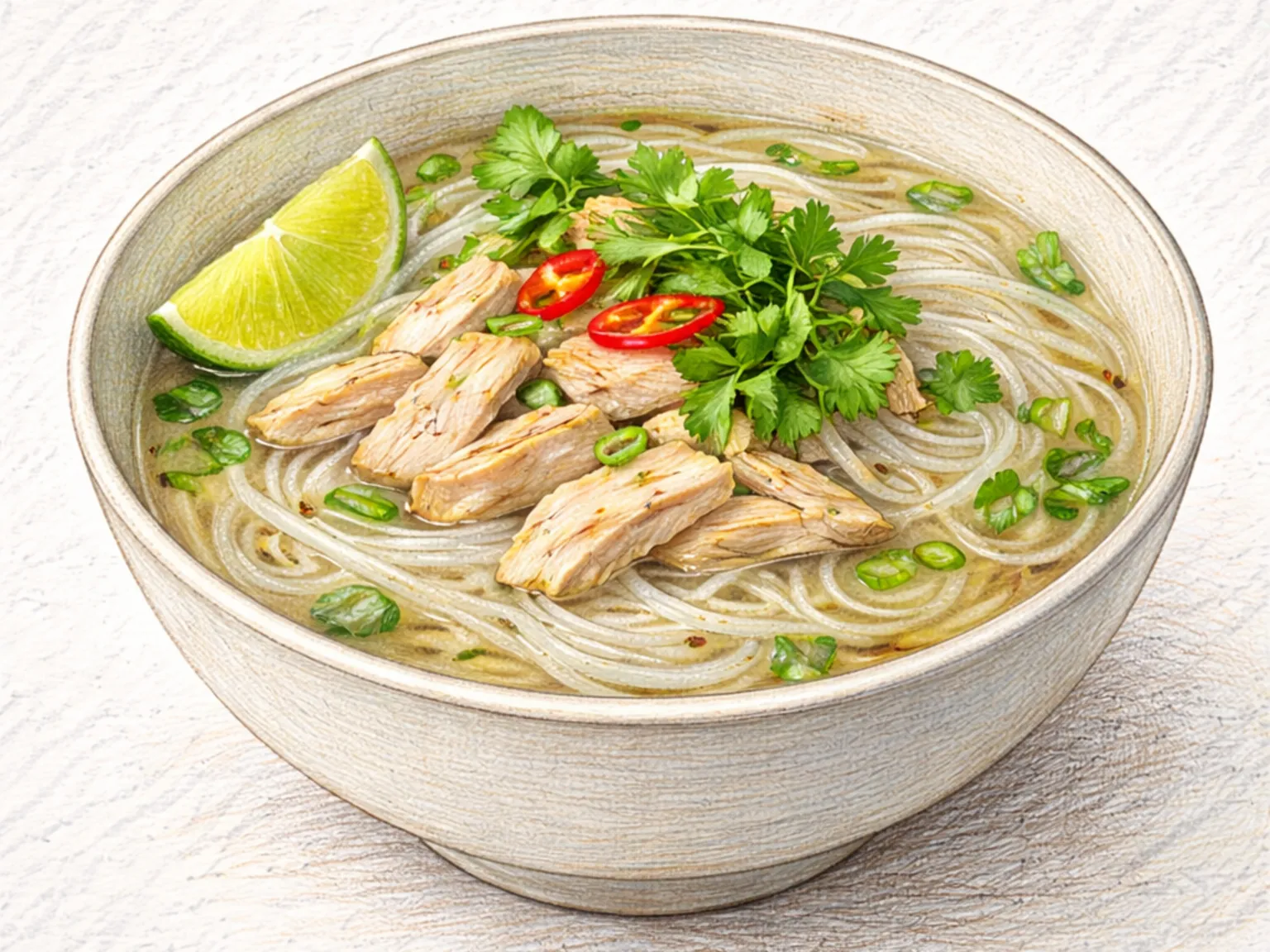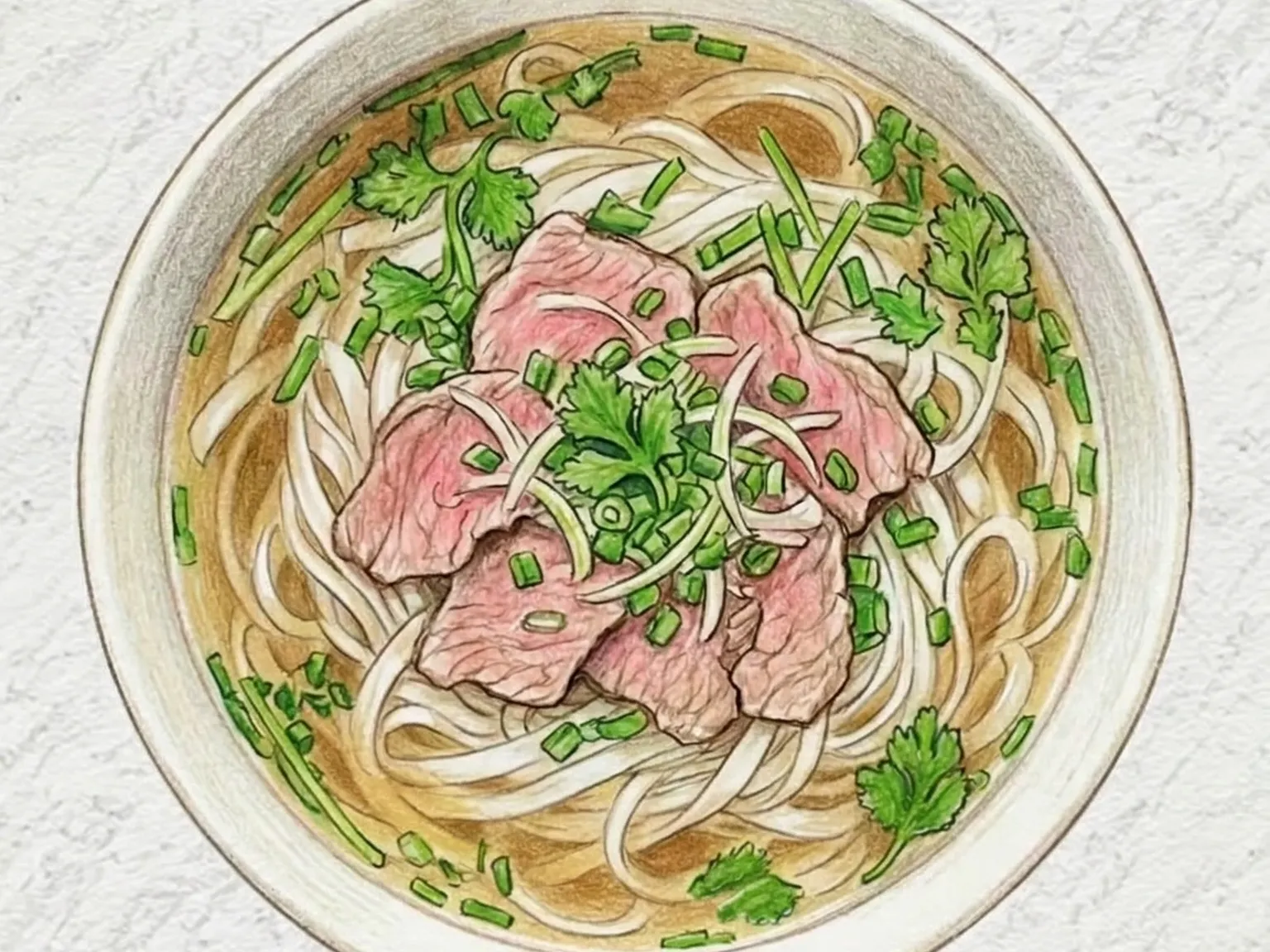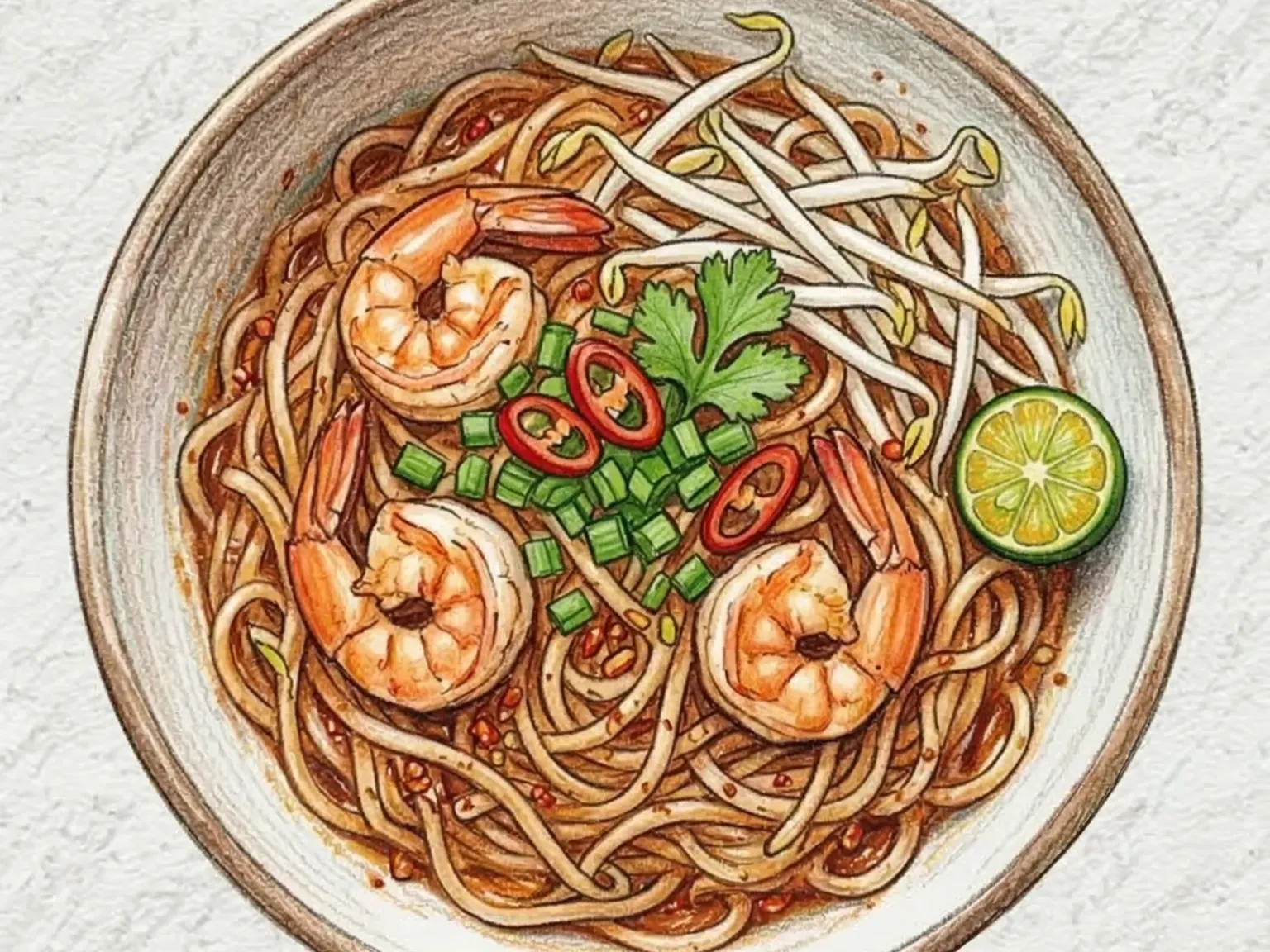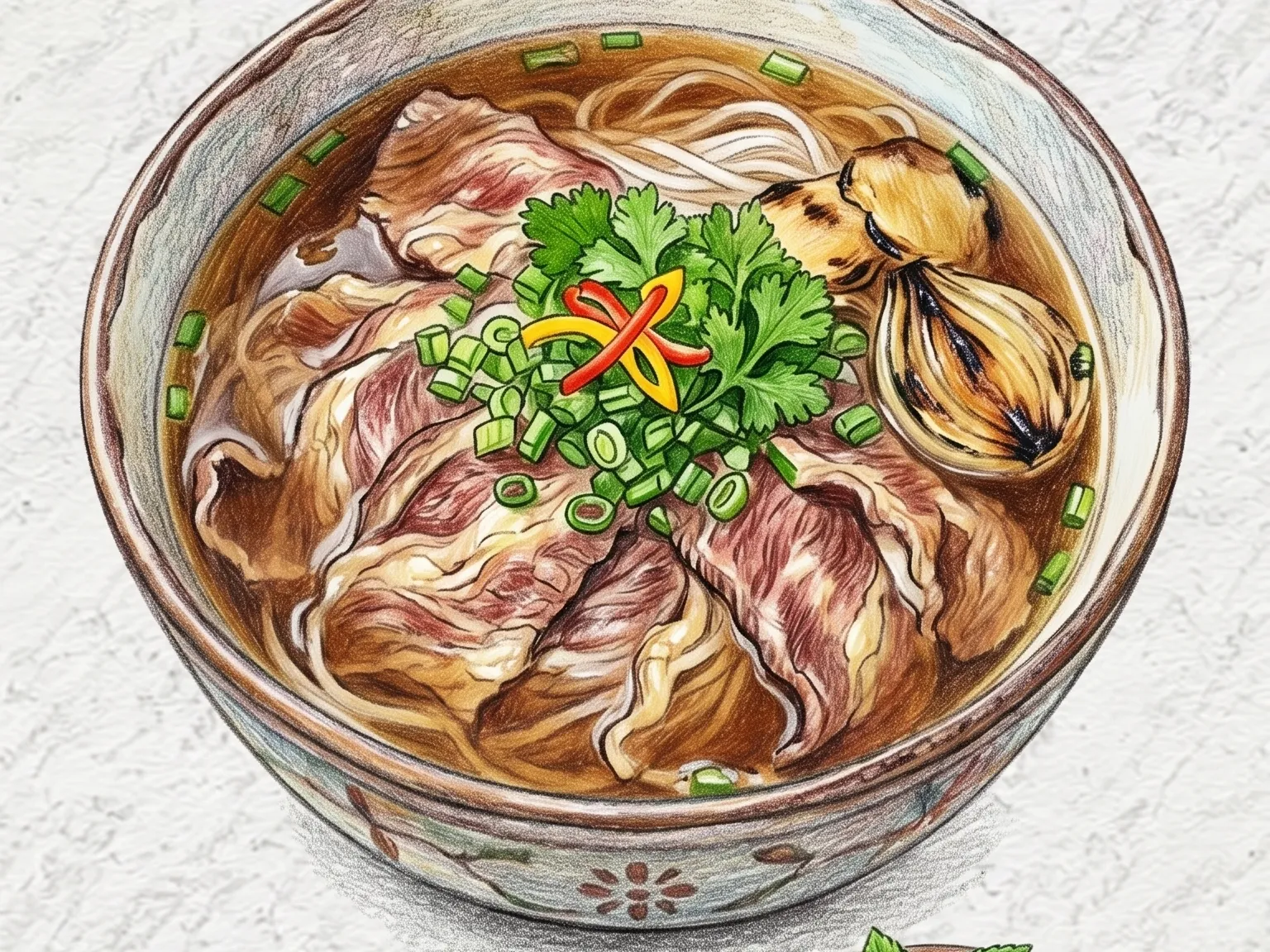
Beef Brisket Pho Guksu (Charred Ginger Beef Rice Noodle Soup)
Beef pho guksu is a Vietnamese-style rice noodle soup featuring charred onion and ginger broth ladled over thin beef brisket slices and soaked rice noodles. Dry-charring the onion and ginger in a pan burns off their raw pungency and coaxes out a caramelized sweetness that becomes the broth's aromatic backbone. Fish sauce and a touch of sugar season the strained broth, keeping it full-flavored yet clean on the finish. Pouring the boiling broth directly over the thinly sliced brisket cooks the beef gently in the bowl, leaving it soft and pink at the edges. Bean sprouts, cilantro, and lime wedges are added at the table to adjust freshness and acidity.
Adjust Servings
Instructions
- 1
Char halved onion and ginger in a dry pan until lightly blackened.
- 2
Simmer water with charred onion and ginger for 15 minutes.
- 3
Season with fish sauce and sugar, then strain broth.
- 4
Soak rice noodles 10 minutes, then blanch for 1 minute.
- 5
Place noodles and brisket in bowls, then pour in hot broth to cook beef.
- 6
Top with bean sprouts, cilantro, and lime wedges.
As an Amazon Associate, we may earn from qualifying purchases.
Tips
Nutrition (per serving)
More Recipes

Vietnamese Spicy Beef Noodle Soup
Born in the central Vietnamese city of Hue, this spicy beef noodle soup builds its character from a broth simmered low and slow with beef shank, lemongrass stalks, fermented shrimp paste, and dried chilies. A slick of bright-red chili oil floats on the surface, signaling the heat that follows. Each spoonful delivers the shrimp paste's deep umami alongside the citrusy lift of lemongrass, creating a layered spiciness that lingers without overwhelming. The noodles used are bun, a round rice vermicelli thicker and chewier than the flat strands found in pho, giving each strand enough body to hold up against the robust broth. Bean sprouts, shredded banana flower, and a squeeze of lime are added at the table, introducing crisp texture and acidity that cut through the richness. Adding sliced pork blood sausage brings the bowl closer to the version served on Hue's streets.

Vietnamese Beef Pho
Vietnamese beef pho begins with a broth made by simmering beef bones for eight hours or more to extract a clear yet deeply flavored stock. The defining step is dry-toasting whole spices - star anise, cinnamon sticks, and cloves - in a pan until fragrant, then charring halved onion and ginger over open flame to develop smoky sweetness before adding them to the pot. Skimming impurities from the surface throughout the cooking process is essential for maintaining the broth's signature clarity and golden transparency. Blanched rice noodles are placed in a bowl with paper-thin slices of raw beef on top, and the boiling broth is poured over to partially cook the meat, leaving it tender and faintly pink. Fish sauce adjusts the salinity, and a plate of fresh bean sprouts, lime wedges, Thai basil, and sliced chili allows each diner to customize their bowl.

Hanoi-Style Pho Bo (Vietnamese Northern Clear Beef Noodle Soup)
Hanoi-style pho bo is the original northern Vietnamese beef noodle soup, distinguished from its southern counterpart by a leaner, clearer broth and restrained garnishing. Beef bones and brisket simmer for hours with a modest hand of spices - star anise, cinnamon bark, and a few cloves - so the beef flavor leads rather than the aromatics. The broth is repeatedly skimmed until it runs nearly transparent, with no trace of grease on the surface. Paper-thin slices of raw beef placed in the bowl cook to a pale pink the moment the scalding broth is ladled over them. In Hanoi, the bowl arrives with only chopped scallion and cilantro; bean sprouts, hoisin sauce, and sriracha - common in southern and overseas versions - are absent by tradition.

Bun Rieu (Vietnamese Crab and Pork Tomato Noodle Soup)
Bun rieu is a noodle soup from northern Vietnam built on two unlikely pillars - freshwater paddy crab and fermented shrimp paste - that together produce one of the most complex broths in Vietnamese cuisine. Small river crabs are pounded shell and all in a mortar, then strained through water to extract a murky liquid rich in crab essence. This liquid is heated gently until the crab protein coagulates into a soft, custard-like mass that floats to the surface - the oc, or crab cake, which is scooped and added to the finished bowl. Tomatoes dissolve into the broth during simmering, giving it a reddish hue and a fruity acidity that balances the crab's richness. Mam tom - fermented shrimp paste - is offered tableside and stirred in by each diner to taste, adding a pungent, funky depth that transforms the broth entirely. Rice vermicelli, fried tofu puffs, and a tangle of morning glory complete the bowl. Bun rieu vendors in Hanoi specialize in this single dish, ladling out hundreds of bowls each morning from a single pot.

Bun Bo Nam Bo (Vietnamese Dry Beef Noodle Bowl with Herbs)
Bun bo nam bo - literally 'southern beef noodles' - is a Hanoi interpretation of southern Vietnamese flavors, assembled as a dry noodle bowl rather than a soup. The dish layers cold rice vermicelli, stir-fried beef marinated in lemongrass and garlic, and a generous pile of fresh herbs - cilantro, Thai basil, mint, and perilla. Crushed roasted peanuts and fried shallots scatter on top, adding crunch and sweetness. The binding element is a bowl of nuoc cham - the sweet-sour-salty-spicy dipping sauce made from fish sauce, lime, sugar, garlic, and chili - poured over and mixed through at the table. The beef must be seared on maximum heat for under a minute so it stays medium-rare inside while the lemongrass marinade caramelizes on the edges. The beauty of the dish lies in its temperature contrasts: cool noodles, cold herbs, warm beef, and room-temperature sauce all meeting in each chopstick-lifted tangle. Found on nearly every street in Hanoi's Old Quarter, it is lunchtime fuel for office workers who line up at their preferred stall.

Korean Spicy Beef Soup Noodles
Yukgaejang guksu starts with a deep broth made by simmering beef brisket until the liquid turns rich and full-bodied. The meat is shredded along the grain and returned to the pot alongside fernbrake, bean sprouts, and green onion that have been seasoned with gochugaru, sesame oil, and garlic before a brief stir-fry. This pre-seasoning step lets the chili heat dissolve into the oil, producing a rounded spiciness rather than raw powder burn. Korean soup soy sauce adjusts the salt level without clouding the broth's color. Thin wheat somyeon noodles are boiled separately and added at the end so they absorb the broth without turning mushy. Swapping in glass noodles changes the texture to a chewier, more slippery bite that holds onto the soup longer.