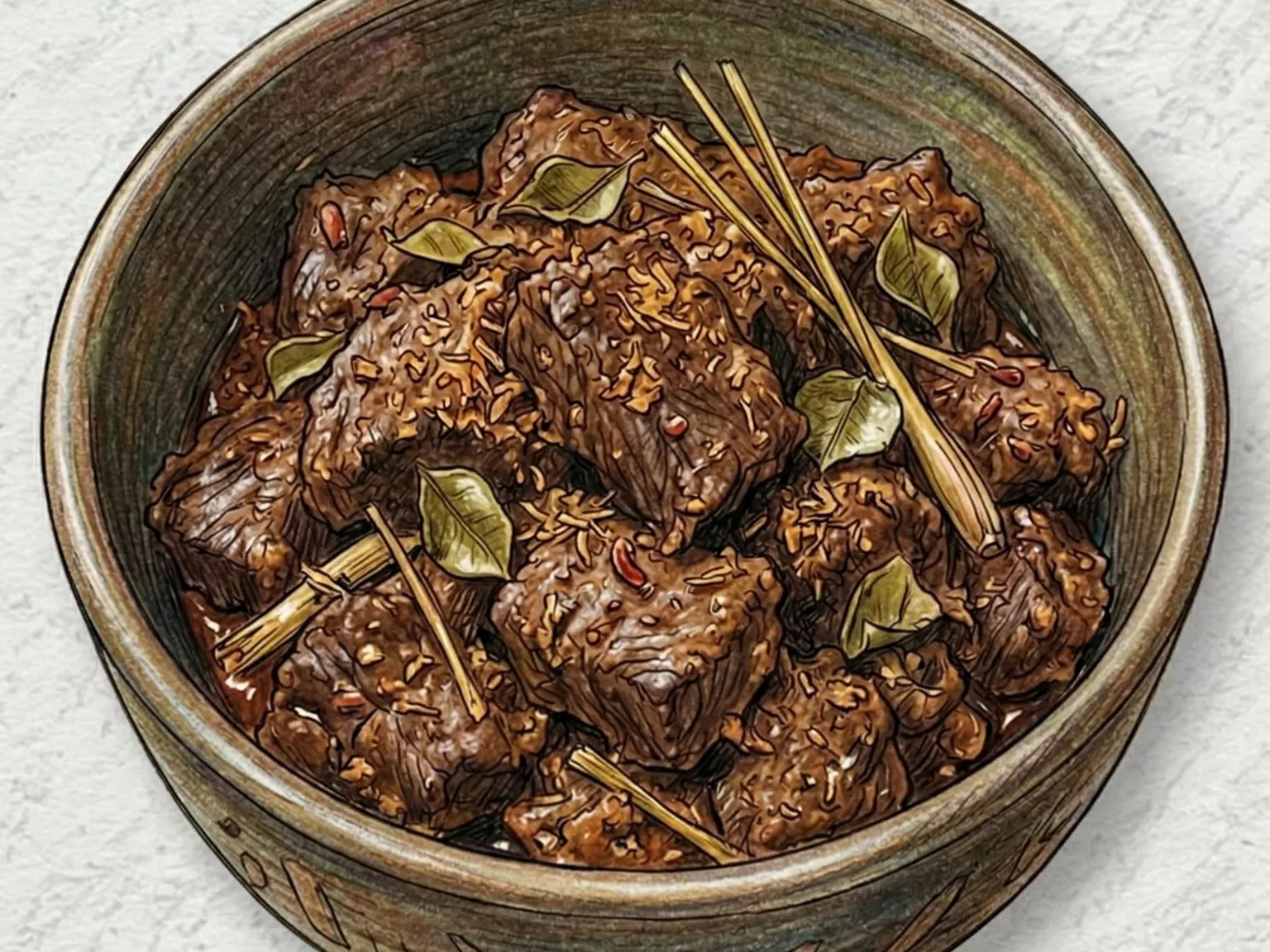
Beef Rendang (Indonesian Dry Coconut Braised Beef Curry)
Rendang originated among the Minangkabau people of West Sumatra, where it was developed as a preservation method - cooking meat in coconut milk and spices until all moisture evaporates, allowing it to last for days in tropical heat without refrigeration. The process begins with a rempah paste of shallots, garlic, ginger, galangal, turmeric, and lemongrass pounded by mortar, then fried in coconut oil until the raw edge disappears. Beef chunks braise in coconut milk for two to three hours, during which the liquid reduces progressively - first a wet curry, then a thick sauce, and finally a dry coating where the coconut oil separates and fries the meat in its own spice crust. The finished pieces are dark brown, almost black at the edges, with a concentrated flavor that layers heat from chili, warmth from galangal, and a deep sweetness from the caramelized coconut. UNESCO recognized rendang as part of Minangkabau intangible heritage, and it consistently ranks among the world's most celebrated dishes.
Adjust Servings
Instructions
- 1
Blend chilies, garlic, onion, galangal into a paste.
- 2
Cut beef into large cubes.
- 3
Stir-fry paste, then add beef.
- 4
Add coconut milk, lemongrass, turmeric and simmer 3 hours on low.
- 5
Continue stirring until liquid is almost gone and beef is dark.
As an Amazon Associate, we may earn from qualifying purchases.
Tips
Nutrition (per serving)
More Recipes

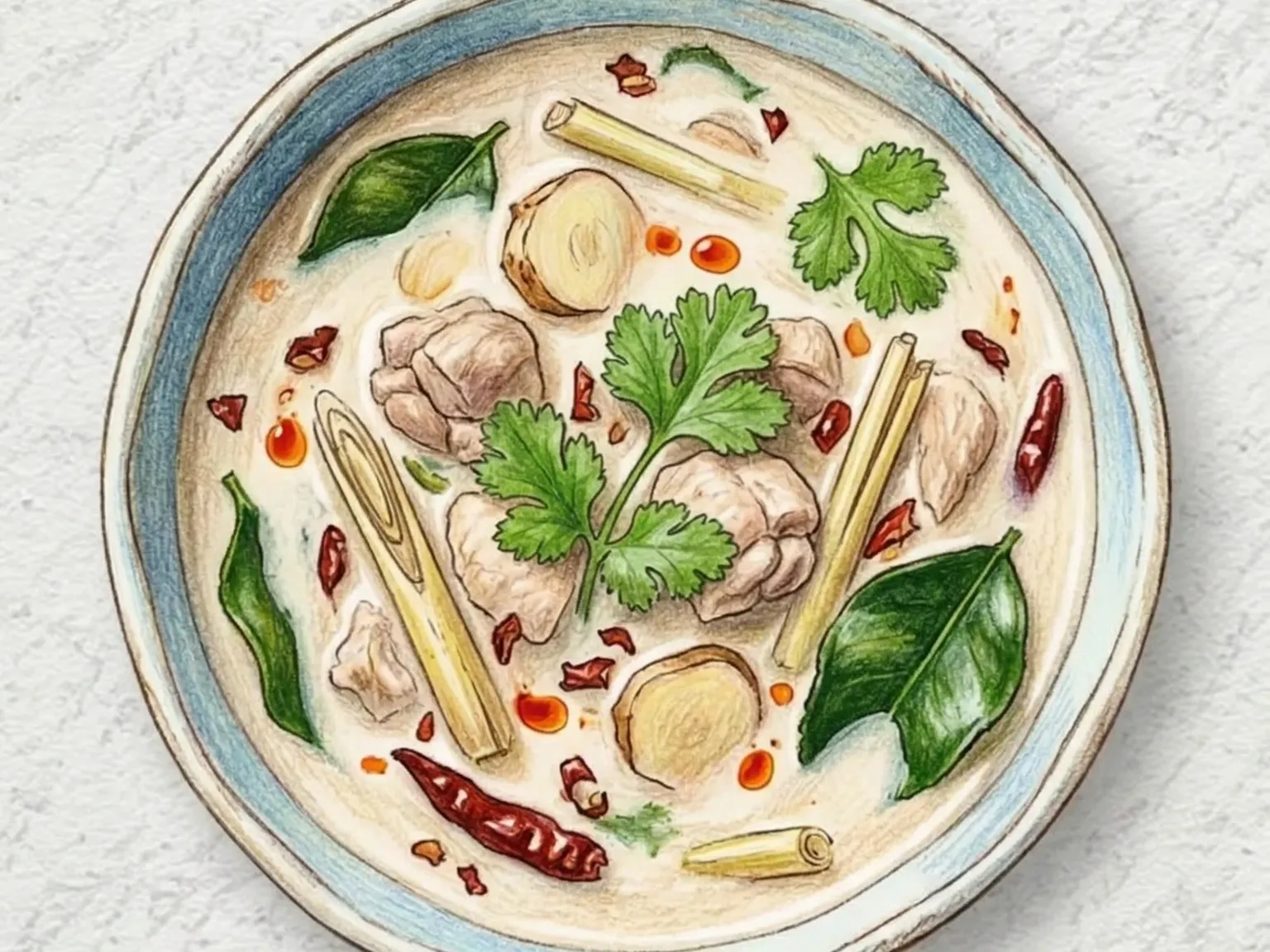
Soto Betawi (Jakarta Creamy Coconut Milk Beef Soup)
Soto Betawi is a Jakarta-born beef soup distinguished by its creamy, coconut-enriched broth and a layered spice profile. The aromatics begin with a paste of onion, garlic, and ginger, bloomed in oil alongside ground coriander and a cinnamon stick to build a warm, complex base. Beef brisket simmers in this fragrant liquid for forty minutes or more until it yields to the touch, its collagen enriching the stock. Coconut milk and fish sauce are stirred in toward the end, transforming the broth into something rich and velvety while rounding off the sharper spice edges. The finished soup is neither thin nor heavy-it sits in a satisfying middle ground, substantial enough to serve as a main course with steamed rice or crusty bread on the side. Soto Betawi is a point of pride for Jakarta's Betawi community and a fixture of the city's street-food landscape.

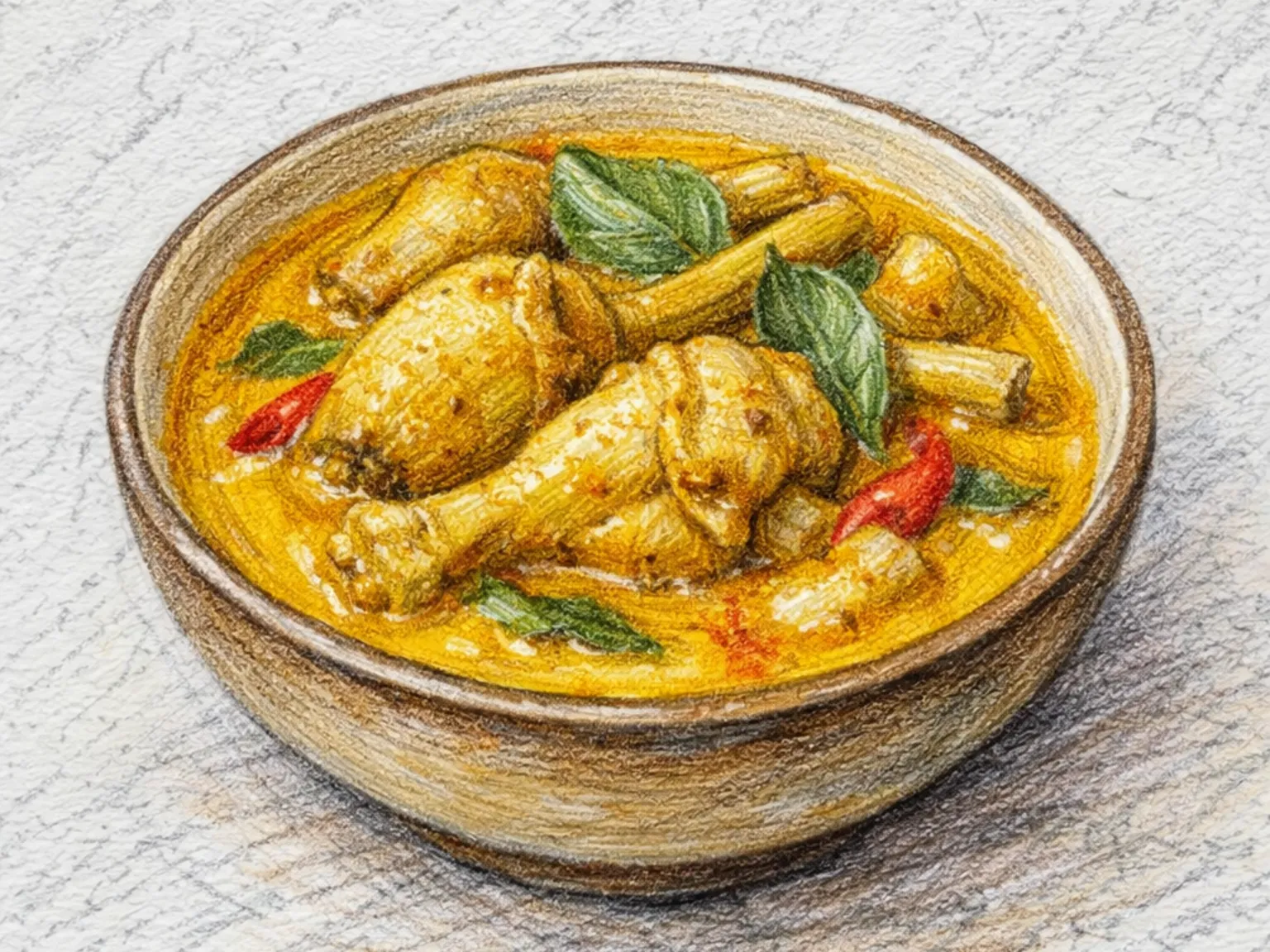
Ayam Gulai (Indonesian Spiced Coconut Chicken Curry)
Ayam gulai is a Minangkabau curry from West Sumatra, where coconut milk and a complex spice paste define the regional cuisine known as Padang food. The base - a rempah of shallots, garlic, ginger, galangal, turmeric, and candlenuts - is fried low and slow until oil separates, signaling that the paste is properly cooked. Chicken pieces braise in this spiced coconut sauce for thirty minutes or more, until the meat nearly falls off the bone and the gravy thickens to a bright yellow, oily consistency. The flavor is rich and layered: turmeric and galangal provide warmth, kaffir lime leaves add a citrus top note, and the coconut fat carries everything across the palate. In Padang restaurants, it sits in a stack of small plates brought to the table, and you pay only for what you eat.

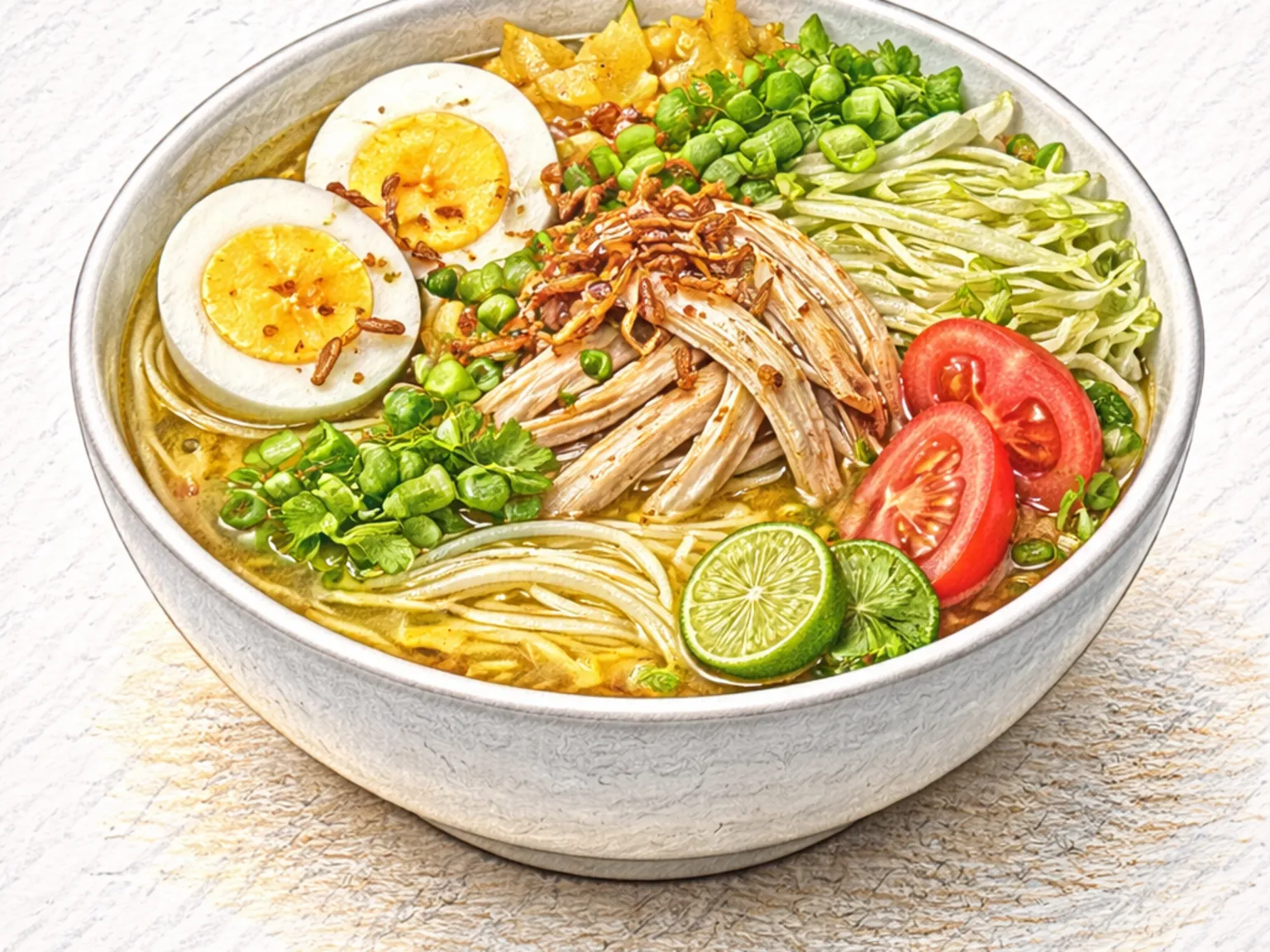
Soto Ayam (Indonesian Golden Turmeric Chicken Noodle Soup)
Soto ayam is Indonesia's beloved chicken soup, recognizable by its vivid golden broth colored with turmeric. The flavor base is a paste of garlic, turmeric, and galangal, fried until fragrant and then simmered with chicken pieces and lemongrass stalks for at least thirty minutes to build a deeply aromatic stock. The chicken is removed, shredded by hand, and returned to the bowl along with rice noodles, halved boiled eggs, and a handful of fresh bean sprouts. Each component adds its own texture-the silky noodles, the springy sprouts, the tender chicken-while the broth ties everything together with its warm, earthy spice profile. A squeeze of lime at the table brightens the bowl and lifts the heavier notes of galangal and turmeric. Soto ayam appears at breakfast stalls, family dinners, and celebrations across the Indonesian archipelago.

Ayam Penyet (Javanese Smashed Fried Chicken with Sambal)
Ayam penyet - meaning 'smashed chicken' in Javanese - is an East Javanese street dish where the chicken is deliberately flattened with a pestle after frying. First braised in turmeric-galangal water until cooked through, then deep-fried until the skin blisters and turns mahogany. The final smash on a stone mortar cracks the crust open, exposing the moist interior and creating irregular surfaces that catch the sambal. That sambal - pounded fresh from bird's eye chili, shallot, tomato, and shrimp paste - is the true centerpiece, fiercely hot and funky. Served on a banana leaf with steamed rice, fried tofu, and raw vegetables, it is a full meal assembled in street-stall speed.

Beef Tartare
Beef tartare is a French raw-beef preparation where premium tenderloin is hand-chopped with a knife - never ground - to preserve the texture of each small piece, then mixed with capers, anchovies, shallots, cornichons, egg yolk, and Dijon mustard. The knife cut keeps the meat granular and distinct on the tongue rather than pasty, and the yolk coats every morsel in a rich, silky film. Capers and anchovies drive the salty, briny umami that makes raw beef compelling, while Dijon adds a sharp mustard heat that wakes up the palate. Freshness is everything here - the quality of the tenderloin determines the entire experience, and there is nowhere for lesser cuts to hide.

Hungarian Goulash
Goulash is a traditional Hungarian stew where beef chuck is slow-cooked with generous amounts of paprika until the meat falls apart at the touch of a fork. Onions are fried until golden, then paprika powder and garlic are toasted briefly in the fat - this step dissolves the paprika's red pigment and smoky flavor into the oil, defining the color and taste of the entire stew. After browning the beef, tomato paste, beef broth, and caraway seeds are added, and the pot simmers on low heat for over an hour until the connective tissue in the chuck breaks down completely. Potatoes go in for the final thirty minutes, absorbing the paprika-infused broth while their starch naturally thickens the liquid into a rich, cohesive sauce.