Korean Beef & Shiitake Japchae

Korean Beef & Shiitake Japchae

Quick answer

Japchae originated as a Joseon royal court dish of stir-fried vegetables before sweet potato glass noodles were added to create the form recognized today.

What makes this special

  • Soy-marinated beef and sliced shiitake lift this traditional Korean glass noodle dish.
  • Evolved from a Joseon court vegetable dish after glass noodles were added
  • Each ingredient stir-fried separately to match different moisture and timing
Total time
38 min
Level
Medium
Servings
4 servings
Ingredients
10
Calories
320 kcal
Protein
12 g

Key ingredients

sweet potato noodlesbeefshiitake mushroomspinachcarrot

Core cooking flow

  1. 1 Soak 180 g of glass noodles in lukewarm water for 20 minutes, then boil for...
  2. 2 Cut 150 g of beef and 100 g of shiitake into thin 5 cm strips.
  3. 3 Blanch 120 g of spinach in boiling water for 30 seconds until vividly green...

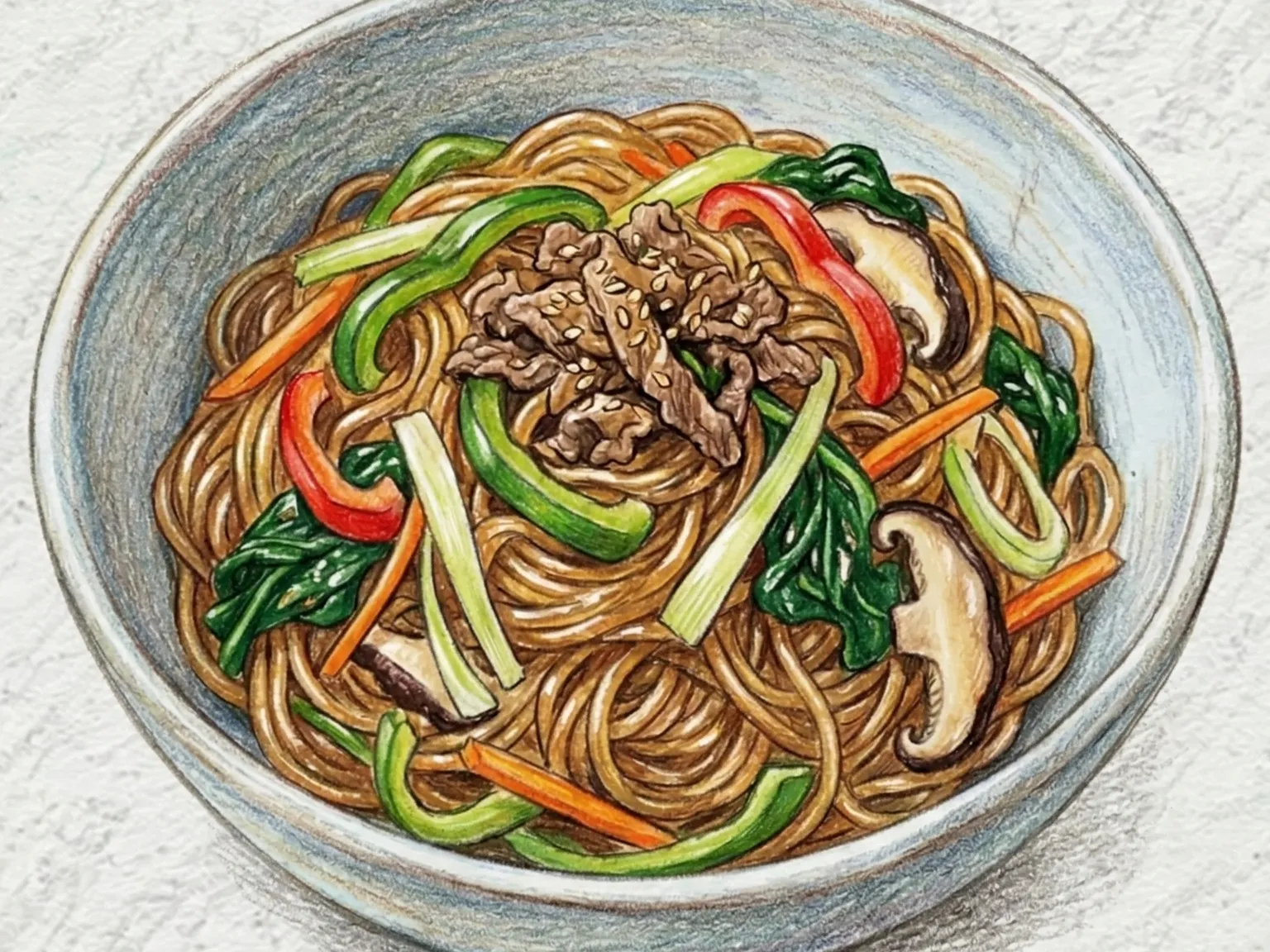
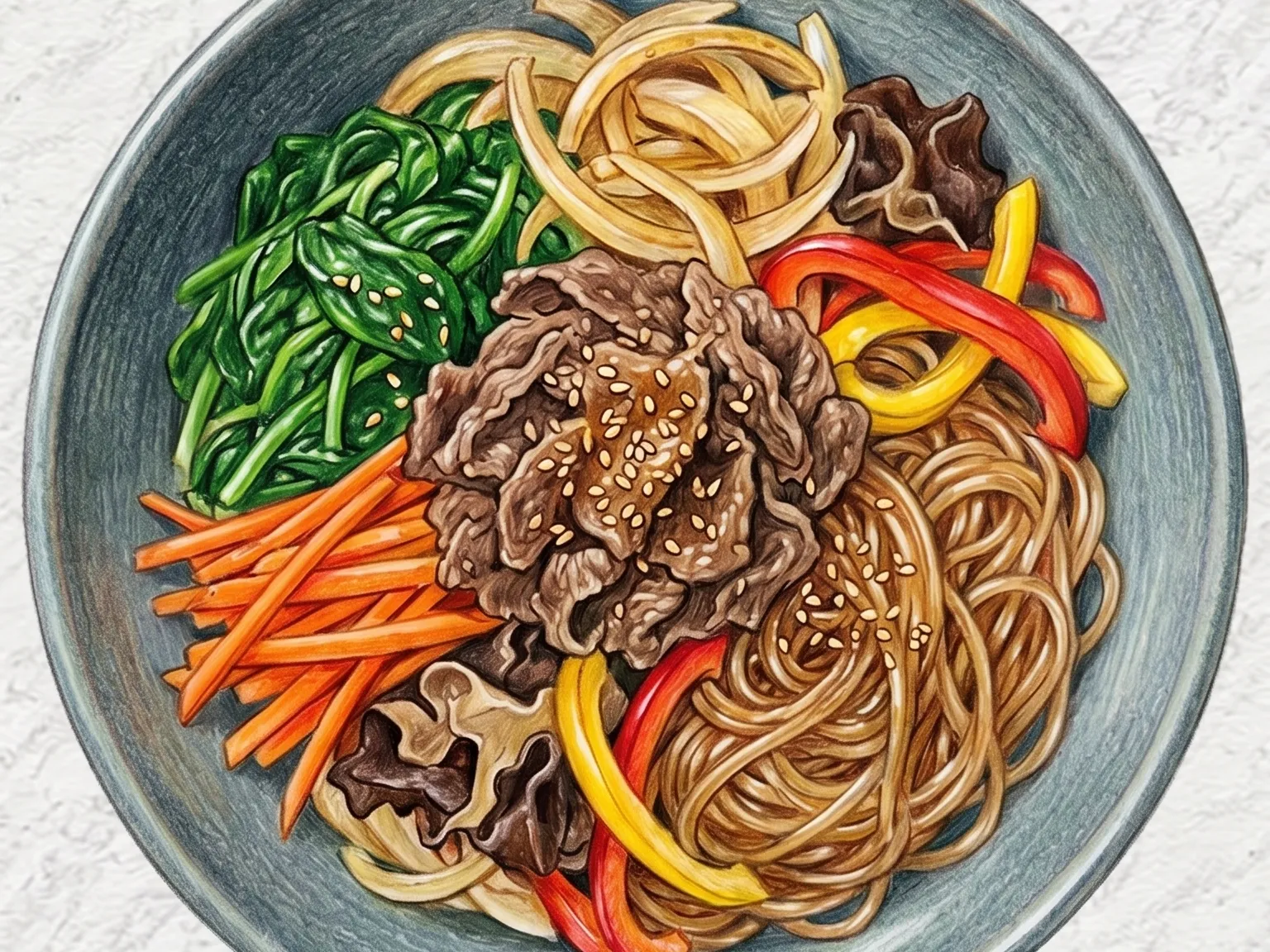
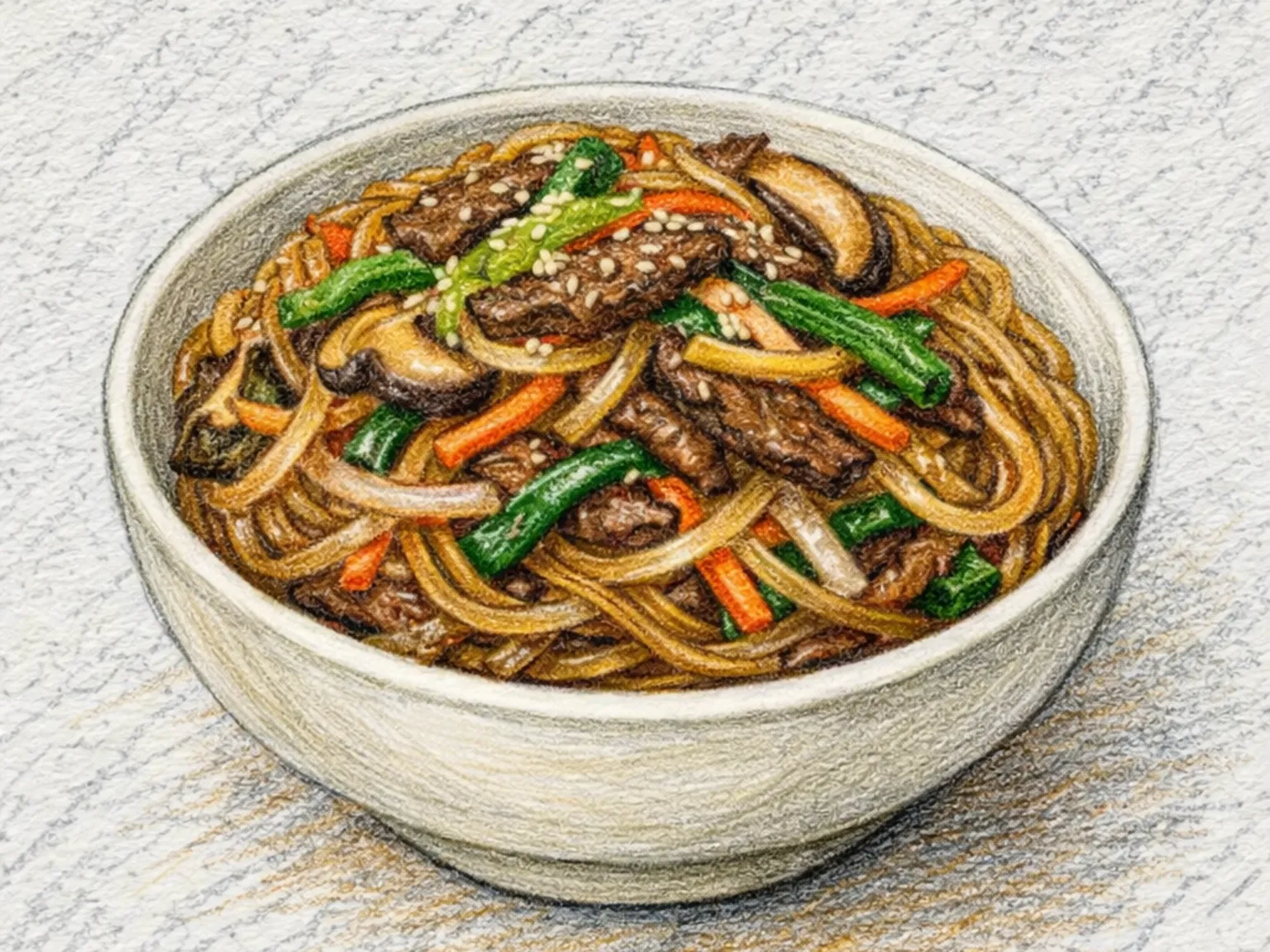
Japchae originated as a Joseon royal court dish of stir-fried vegetables before sweet potato glass noodles were added to create the form recognized today. This version pairs glass noodles with soy-marinated beef and sliced shiitake mushrooms. Each component cooks separately: beef and mushrooms stir-fried with garlic, spinach blanched and squeezed dry, carrots and onions sauteed until just tender. A final toss with sesame oil brings everything together. The noodles should be translucent and springy, carrying a sweet-salty soy glaze into each forkful. A standard presence on every Korean holiday table at Chuseok, Seollal, and birthday celebrations alike.

Prep 20min Cook 18min 4 servings

Instructions

Read the steps as a cooking flow: prep, heat, seasoning, doneness control, and finish.

6 steps
  1. 1
    Heat

    Soak 180 g of glass noodles in lukewarm water for 20 minutes, then boil for 6 minutes until translucent and springy, rinse well under cold running water, and drain completely.

  2. 2
    Season

    Cut 150 g of beef and 100 g of shiitake into thin 5 cm strips.

    Combine with 1 tablespoon soy sauce, 1 teaspoon sugar, and 1 teaspoon minced garlic. Let marinate 10 minutes.

  3. 3
    Heat

    Blanch 120 g of spinach in boiling water for 30 seconds until vividly green, rinse in cold water, and squeeze out all moisture firmly. Julienne 70 g of carrot and 100 g of onion into thin strips.

  4. 4
    Control

    Stir-fry the marinated beef and shiitake over high heat for 2 to 3 minutes until fully cooked.

    Remove and set aside. Cook the onion in the same pan for 1 minute, then add the carrot and cook 1 minute more.

  5. 5
    Season

    Combine the noodles, cooked ingredients, and spinach in a large bowl.

    Add 3 tablespoons soy sauce, 1 tablespoon sugar, and 1.5 tablespoons sesame oil, then toss gently with tongs to coat every strand evenly.

  6. 6
    Finish

    Return the japchae to a medium-high pan and toss briskly for 1 minute so the seasoning coats every strand evenly.

    Remove from heat, finish with a drizzle of sesame oil, and serve right away.

After the steps

Pick a recipe that fits this dish.

Continue with shared ingredients, meal pairings, or a similar method.

Recipes That Go Well With This

More Side dishes →

Based on shared ingredients and meal pairing

Korean Mushroom Japchae (Shiitake Glass Noodle Stir-Fry)
Shared ingredient: glass noodles Side dishes

Korean Mushroom Japchae (Shiitake Glass Noodle Stir-Fry)

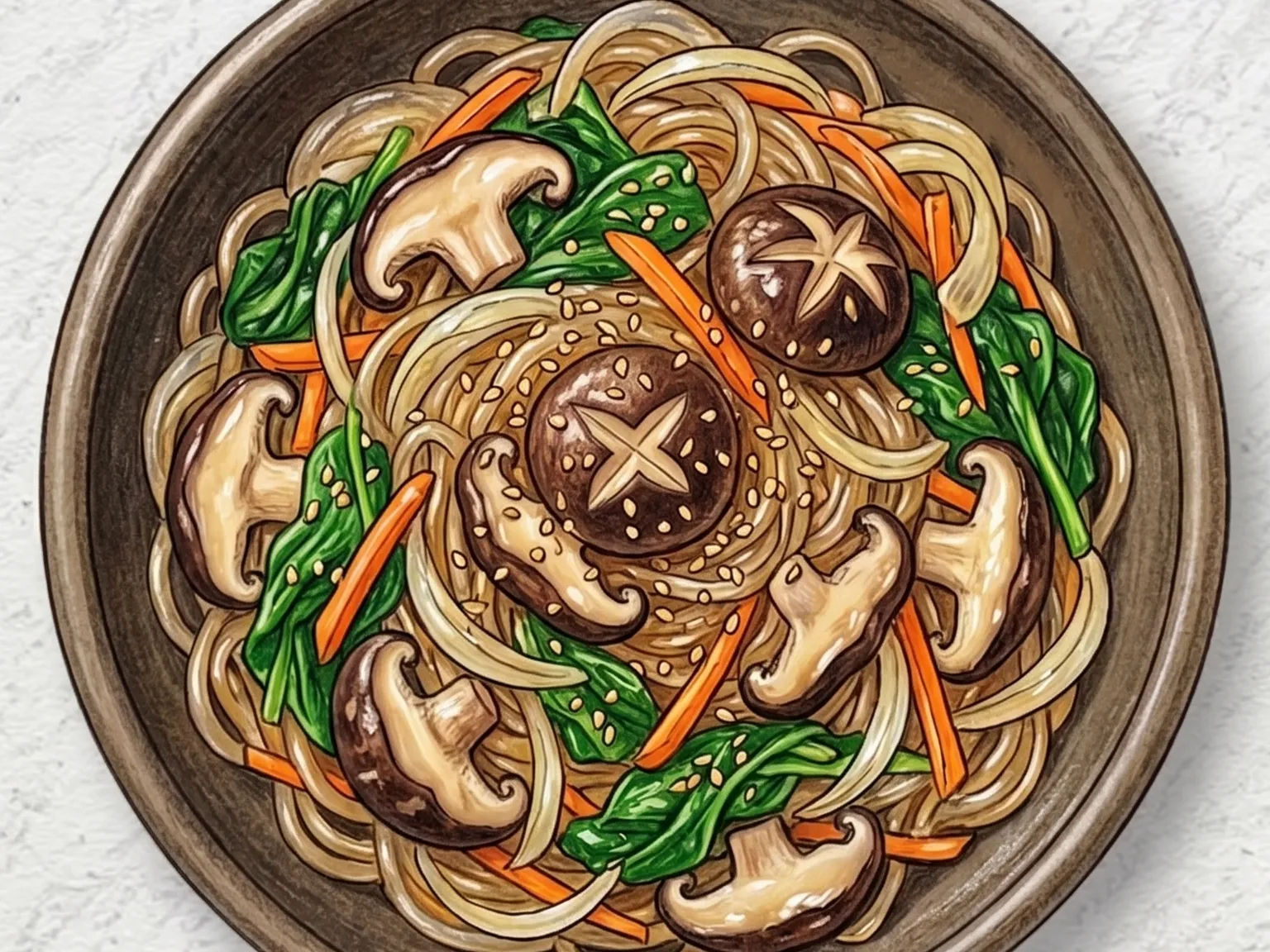
Beoseot japchae replaces beef with shiitake mushrooms as the primary source of savory depth, making it a staple of Buddhist temple cuisine and vegetarian tables alike. Sweet potato noodles are soaked and boiled, then rinsed in cold water immediately to lock in a firm, springy texture. Shiitake, spinach, carrot, and onion are each cooked separately - their moisture levels and heat tolerances differ enough that combining them prematurely flattens every component. Soy sauce, sugar, minced garlic, and sesame oil bring the noodles and vegetables together, and the finished dish rests for ten minutes so the seasoning penetrates the noodles evenly. The result is a japchae where the mushroom carries genuine umami weight without any meat.

Korean Beef Japchae (Soy-Marinated Beef Glass Noodle Stir-Fry)
Shared ingredient: glass noodles Noodles

Korean Beef Japchae (Soy-Marinated Beef Glass Noodle Stir-Fry)

Sogogi japchae is a Korean stir-fried noodle dish made with sweet potato glass noodles, soy-marinated beef strips, and an assortment of individually prepared vegetables. Spinach is blanched, carrots and onions are julienned and stir-fried separately, and each component is combined at the end to preserve its distinct color and texture. The noodles are soaked rather than fully boiled, then finished in the pan so they stay chewy instead of mushy. Soy sauce, sugar, and sesame oil form the seasoning base, giving the dish its characteristic sweet-savory balance.

Korean Pollock Jeon (Egg-Battered Pan-Fried Pollock)
Serve together Grilled

Korean Pollock Jeon (Egg-Battered Pan-Fried Pollock)

Dongtae-jeon is a Korean pan-fried pollock dish where thin slices of frozen-then-thawed pollock are seasoned with salt, pepper, and cheongju (rice wine), lightly dredged in flour, dipped in beaten egg, and fried in a thin layer of oil. Because frozen pollock releases significant moisture when thawed, pressing it thoroughly with paper towels is a critical step without it, the flour coating will not adhere and the oil will splatter. The flour layer should be thin enough that it barely coats the surface, preserving the fish's mild flavor, and cooking over medium-low heat gives the egg batter time to turn golden while keeping the fish inside soft and flaky. Mixing finely chopped green onion into the egg batter before dipping adds a subtle allium fragrance to the otherwise clean-tasting fish. A staple at Korean ancestral rites and holiday spreads, it is served with soy dipping sauce that draws out the savory, delicate flavor of the pollock.

Korean Chicken Japchae (Glass Noodles with Chicken Breast and Vegetables)
Similar recipe Stir-fry

Korean Chicken Japchae (Glass Noodles with Chicken Breast and Vegetables)

Dak-japchae is a lighter variation of Korean glass noodle stir-fry made with chicken breast instead of the traditional beef. Using chicken keeps the dish lean and clean in flavor, allowing the noodles and vegetables to come through more clearly. Spinach, carrot, shiitake mushroom, and onion each contribute a distinct texture and color, building multiple layers of taste within a single plate. Soy sauce and sugar establish the sweet-salty backbone of the seasoning, and sesame oil coats the chewy glass noodles with a nutty richness that ties the dish together. Cooking the vegetables and chicken separately prevents excess moisture from pooling in the pan, and boiling the glass noodles ahead of time and draining them well ensures the seasoning distributes evenly. Lower in calories than pork or beef japchae, this version provides satisfying fullness without heaviness.

Serve with this

Korean Anchovy & Shishito Braise
Steamed Easy

Korean Anchovy & Shishito Braise

Myeolchi kkwari jorim is a Korean side dish of dry-toasted small anchovies and shishito peppers glazed in a sweet soy sauce with corn syrup and cooking wine. Toasting the anchovies first drives off any fishy smell and brings out their nuttiness, while the peppers are stir-fried in oil to release a mild, lingering heat. The glaze coats everything in a shiny, sweet-salty finish, and sesame oil with sesame seeds add a final toasted aroma. This banchan tastes even better the next day after the sauce has fully settled in, making it one of the most reliable lunchbox staples in Korean home cooking.

🏠 Everyday 🎉 Special Occasion
Prep 10min Cook 12min 4 servings
Korean Glass Noodle Stir-fry
Stir-fry Medium

Korean Glass Noodle Stir-fry

Japchae is a signature Korean dish of glass noodles stir-fried with beef, spinach, carrots, onions, and shiitake mushrooms in soy sauce and sesame oil. The noodles are made from sweet potato starch and turn translucent as they cook, absorbing the seasoning to become glossy and springy rather than starchy or heavy. The defining technique is cooking each component separately before combining them at the end. Spinach softens quickly and needs only a brief wilt; carrots are stir-fried to keep a slight bite; shiitake mushrooms are cooked until pleasantly chewy; and beef is marinated in soy sauce, sesame oil, sugar, garlic, and pepper before being stir-fried so it stays tender without any gamey edge. Tossing the noodles in soy sauce and sesame oil right after boiling prevents them from clumping together. When everything is brought together at the end, each ingredient keeps its individual texture while the seasoning unifies the dish. Japchae appears at virtually every Korean celebration including Chuseok, Lunar New Year, birthdays, and wedding feasts, and a large batch keeps its quality well into the following day.

🏠 Everyday 🎉 Special Occasion
Prep 20min Cook 20min 4 servings
Korean Seafood & Chicken Herbal Soup
Soups Hard

Korean Seafood & Chicken Herbal Soup

Haesintang is a premium Korean restorative soup that combines a whole chicken with abalone, octopus, and shrimp, simmered together in a single large pot for an extended period. The chicken goes in first and cooks for well over an hour, building a cloudy, collagen-rich stock with a naturally silky body. The seafood is added later in the process to avoid overcooking: abalone stays chewy, octopus retains its characteristic bounce, and shrimp turn just pink and stop there. The interaction between the poultry fat and the marine umami produces a broth with a depth that neither chicken alone nor seafood alone could achieve. Seasoning is deliberately restrained, typically garlic, green onion, and salt, so the flavors of the ingredients themselves define the soup rather than any added sauce or spice. In Korea, haesintang is categorized as a stamina food, most commonly eaten on the hottest days of summer in the traditional belief that rich nourishment combats heat fatigue. Its combination of two high-end protein sources places it firmly in the celebratory register of Korean home and restaurant cooking.

🏠 Everyday 🎉 Special Occasion
Prep 35min Cook 70min 4 servings

Similar recipes

Korean Seafood Japchae (Glass Noodles with Shrimp, Squid and Vegetables)
Stir-fry Medium

Korean Seafood Japchae (Glass Noodles with Shrimp, Squid and Vegetables)

Haemul-japchae is a seafood version of the Korean glass noodle stir-fry, featuring shrimp, squid, spinach, carrots, and onions tossed together in soy sauce and sesame oil. Replacing meat with seafood allows the briny, mineral depth of the ocean to soak into the chewy sweet potato noodles, while the vegetables' natural sweetness keeps the overall flavor light and balanced. The noodles absorb the seasoning and take on a springy, glossy character, and the shrimp and squid contribute two distinct textures: a firm, bouncy snap from the shrimp and a satisfying chew from the squid. Scoring the squid before cooking causes it to curl and develop a pattern on the surface as it hits the heat, improving both texture and presentation. Seafood must be cooked over high heat and quickly to stay tender rather than rubbery, and the noodles should be soaked thoroughly beforehand so they absorb the seasoning evenly during the stir-fry. The dish often replaces beef japchae on holiday and celebration tables, and adding mussels or scallops deepens the broth-like quality of the finished dish.

🏠 Everyday 🌙 Late Night
Prep 20min Cook 20min 4 servings
Korean Glass Noodle Stir-fry
Stir-fry Medium

Korean Glass Noodle Stir-fry

Japchae is a signature Korean dish of glass noodles stir-fried with beef, spinach, carrots, onions, and shiitake mushrooms in soy sauce and sesame oil. The noodles are made from sweet potato starch and turn translucent as they cook, absorbing the seasoning to become glossy and springy rather than starchy or heavy. The defining technique is cooking each component separately before combining them at the end. Spinach softens quickly and needs only a brief wilt; carrots are stir-fried to keep a slight bite; shiitake mushrooms are cooked until pleasantly chewy; and beef is marinated in soy sauce, sesame oil, sugar, garlic, and pepper before being stir-fried so it stays tender without any gamey edge. Tossing the noodles in soy sauce and sesame oil right after boiling prevents them from clumping together. When everything is brought together at the end, each ingredient keeps its individual texture while the seasoning unifies the dish. Japchae appears at virtually every Korean celebration including Chuseok, Lunar New Year, birthdays, and wedding feasts, and a large batch keeps its quality well into the following day.

🏠 Everyday 🎉 Special Occasion
Prep 20min Cook 20min 4 servings
Korean Bracken Fern Namul with Perilla
Side dishes Medium

Korean Bracken Fern Namul with Perilla

This perilla-scented bracken fern namul begins by pre-seasoning 250 grams of boiled bracken with soup soy sauce, minced garlic, and half the perilla oil for five minutes so the flavor seeps into the chewy fibers. Green onion is sauteed briefly in the remaining perilla oil to build an aromatic base before the seasoned bracken joins the pan for a two-minute stir-fry that drives off excess moisture. Adding water and ground perilla seeds, then simmering gently for five minutes, transforms the dish into a lightly sauced namul where every strand carries a nutty, earthy depth. Sesame seeds scattered at the end add a visual accent and a faint crunch that complements the bracken's dense chew.

🏠 Everyday 🎉 Special Occasion
Prep 15min Cook 12min 2 servings

Tips

Do not overboil noodles or they turn mushy.
A small splash of soy at the final toss adds shine.

Nutrition (per serving)

Calories
320
kcal
Protein
12
g
Carbs
45
g
Fat
10
g