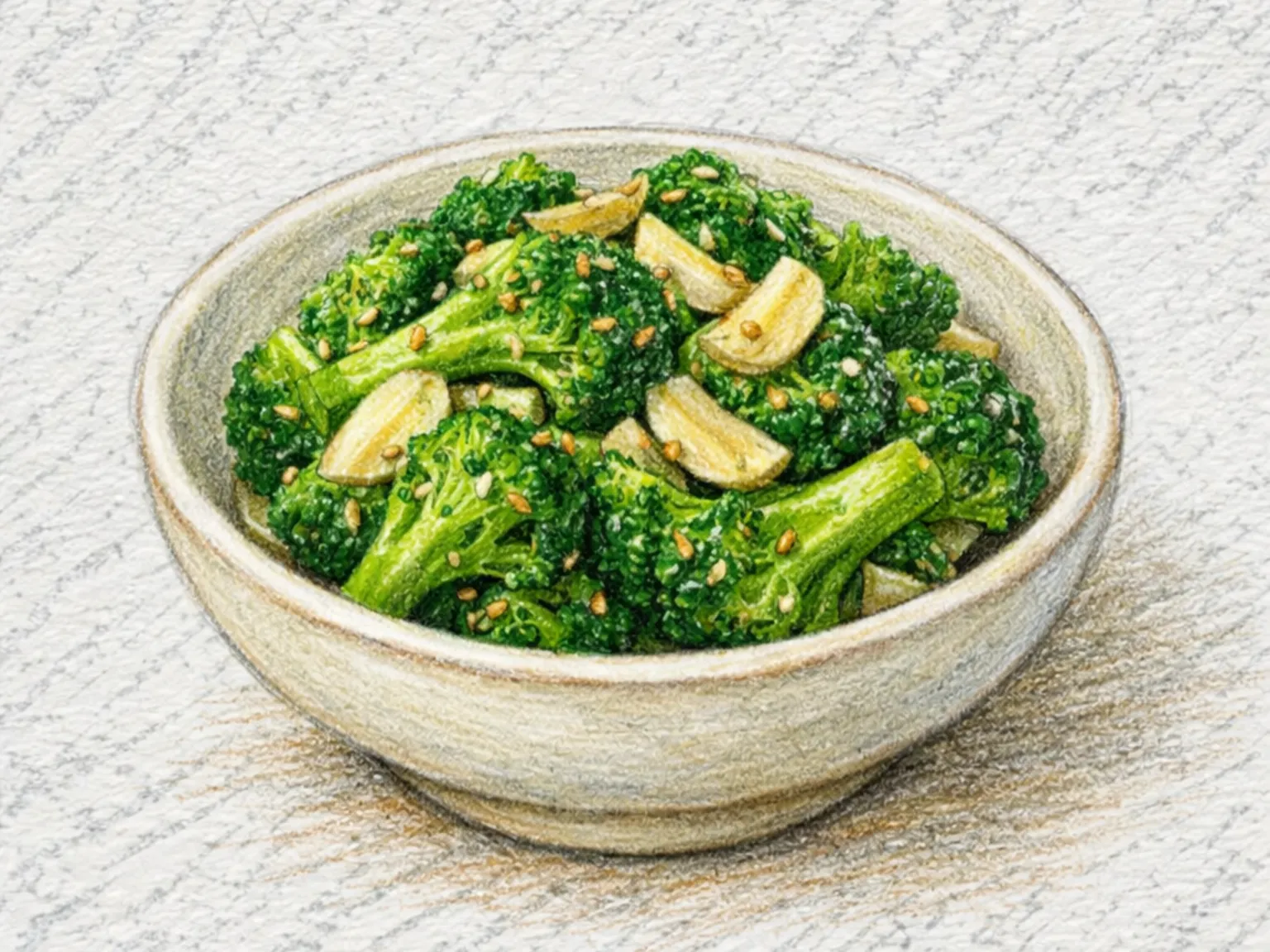
Korean Broccoli Doenjang Salad
Blanched broccoli in doenjang dressing - a modern Korean banchan bridging Western ingredients with traditional seasoning logic. Florets and thinly sliced stems blanch ninety seconds, then are shocked in cold water for vivid green and a firm bite. The dressing combines doenjang with vinegar and oligosaccharide syrup - fermented salt, acidity, and gentle sweetness that lifts mild bitterness. Ready in under ten minutes and keeps refrigerated for days.
Adjust Servings
Instructions
- 1
Cut broccoli into small florets and thinly slice the stem.
- 2
Blanch broccoli in salted boiling water for 1 minute 30 seconds.
- 3
Rinse in cold water to set color, then drain thoroughly.
- 4
Mix doenjang, vinegar, syrup, garlic, and sesame oil.
- 5
Toss broccoli with dressing and finish with sesame seeds.
As an Amazon Associate, we may earn from qualifying purchases.
Tips
Nutrition (per serving)
More Recipes

Korean Tofu and Bell Pepper Salad
Paprika-dubu-muchim combines 300 grams of blanched firm tofu, crumbled coarsely by hand, with julienned red and yellow bell peppers, cucumber, and onion in a soy-vinegar dressing. Blanching the tofu for just one minute removes any raw bean flavor while preserving a soft, creamy texture that contrasts with the crisp, sweet snap of the peppers. The onion is soaked in cold water for three minutes to tame its bite before joining the bowl. Sesame oil and minced garlic round out the dressing, adding depth without heaviness. Chilling the finished dish for 10 minutes before serving sharpens the vegetable flavors and makes the tofu firmer to the bite.

Korean Garlic Sesame Broccoli Muchim
Garlic broccoli muchim is a modern Korean namul that emerged as broccoli became a staple in Korean grocery stores from the 2000s onward. Blanching the florets and peeled stems for ninety seconds in salted water, then shocking in cold water, locks in a vivid green color and a firm snap. The dressing is minimal - soup soy sauce, minced garlic, sesame oil, and sesame seeds - letting the garlic's sharpness build a flavor layer over the broccoli's mild bitterness without overwhelming it. Using the stems, peeled and sliced thin, ensures nothing goes to waste. Ready in five minutes and keeps refrigerated for two days.

Korean Cucumber Doenjang Salad
Oi-doenjang-muchim dresses cucumber in a doenjang-based seasoning - a milder alternative to the gochugaru-forward oi-muchim, foregrounding the fermented soybean paste's savory depth over spicy heat. Cucumber is sliced into half-moons or diagonal cuts and salted for five minutes to draw out moisture; skipping this step dilutes the dressing into a watery puddle. The seasoning blends doenjang, soup soy sauce, minced garlic, sesame oil, and sesame seeds, with the doenjang quantity being the critical ratio - too much and the dish is aggressively salty, too little and the cucumber's blandness dominates. Roughly one tablespoon of doenjang to two cucumbers is the working proportion. The cucumber's cool moisture meets doenjang's deep umami to produce a combination that is refreshing yet substantial enough to anchor a rice meal, especially in summer. This banchan must be eaten promptly after assembly - over time, osmotic pressure draws water from the cucumber and collapses its crunch. Served alongside grilled meat, the doenjang's savoriness complements the char while cleansing the palate.

Korean Spicy Seasoned Deodeok
Deodeok - Codonopsis lanceolata - is a mountain root used in Korean cooking and folk medicine for centuries. Its flesh is fibrous and sticky, with a ginseng-like bitterness. Peeled and pounded with a mallet to split fibers into ribbon-like shreds, then soaked in cold water to draw out bitterness. A gochujang-vinegar dressing with garlic, sugar, and gochugaru clings to each strand's rough surface. The finished dish is chewy and resinous, with a sweet-sour-spicy glaze.

Korean Grilled Doenjang Onions
Onions are sliced into 2 cm rings, secured with skewers, and grilled over medium heat while being brushed with a sauce of doenjang, gochujang, minced garlic, perilla oil, and water. Over eight to ten minutes of flipping and re-brushing, the onion's moisture evaporates and its natural sugars concentrate into pronounced sweetness, while the doenjang chars lightly at the edges to add a toasted, earthy note. Perilla oil softens the salt intensity of the doenjang, and a finish of sliced green chili and ground sesame layers in mild heat and nuttiness. At 146 calories per serving, this is a low-calorie side dish that also works as a light accompaniment to drinks.

Korean Grilled Broccoli with Soybean Paste
Broccoli doenjang-gui is a Korean roasted broccoli dish where bite-sized florets are blanched for just one minute, tossed in olive oil, coated with a thick paste of doenjang, gochujang, garlic, and oligosaccharide syrup, then baked at 200 degrees Celsius for twelve minutes. The brief blanching softens the stems just enough while preserving crunch, and coating with oil first ensures the paste clings evenly rather than sliding off. High oven heat chars the edges of the florets, concentrating the fermented soybean paste into a deeply savory, slightly smoky crust. Sesame seeds scattered on at the end add a toasted nuttiness that rounds out the salty-spicy profile.