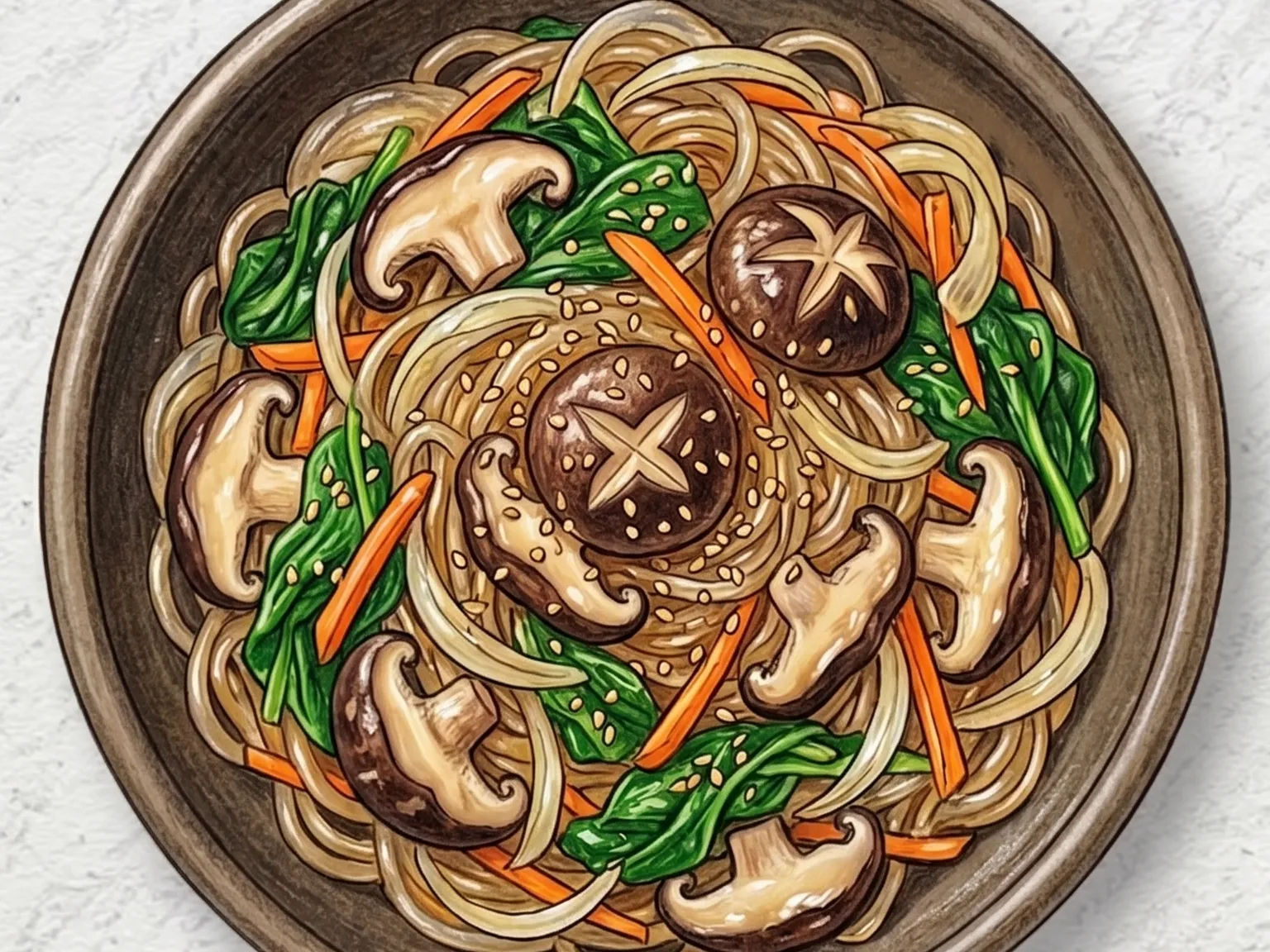
Korean Mushroom Japchae (Shiitake Glass Noodle Stir-Fry)
Soak 180 g sweet potato noodles in lukewarm water for 20 minutes. Cook the shiitake, onion, and carrot separately over medium heat and toss them with half the seasoning, then boil the noodles for about 6 minutes until no hard center remains, rinse them in cold water, and toss them in the pan with the other half for about 2 minutes. Turn off the heat before mixing in the vegetables, squeezed spinach, and sesame seeds.
Quick answer
- Total time
- 35 min
- Level
- Medium
- Servings
- 4 servings
- Ingredients
- 10
About this dish
Shiitake carries the chew in this meatless japchae, cut into long thin strips alongside the onion and carrot.
Read more
The seasoning is split: half dresses the sauteed vegetables, and the rest is stir-fried with the boiled noodles so they take on flavor of their own.
Ingredients
Instructions
- 1
Soak 180g sweet potato noodles in lukewarm water for 20 minutes, until fully pliable, then drain in a colander.
- 2
Cut 100g shiitake mushrooms, the onion, and the carrot into thin 5cm strips.
Blanch the spinach for 30 seconds, move it directly to cold water, and squeeze firmly to remove excess moisture.
- 3
Mix 4 tablespoons soy sauce, 1.5 tablespoons sugar, 1 tablespoon minced garlic, and 1 tablespoon sesame oil until the sugar dissolves. Reserve the remaining tablespoon of sesame oil for cooking the vegetables.
- 4
Divide the reserved tablespoon of sesame oil between the shiitake, onion, and carrot as you cook each separately over medium heat.
Allow about 2 minutes for the mushrooms and 1 to 2 minutes each for the onion and carrot. Transfer them to a bowl and toss with half the seasoning.
- 5
Boil the soaked noodles for about 6 minutes, checking the packet instructions too.
Once no hard center remains, drain, rinse in cold water, and drain again. Toss in the pan with the remaining seasoning over medium heat for about 2 minutes.
- 6
Turn off the heat.
Add the cooked mushrooms and vegetables, blanched spinach, and 1 tablespoon sesame seeds to the noodles and toss thoroughly. All 2 tablespoons of sesame oil have already been used in the seasoning and the pan.
References checked
These references were consulted when this page was prepared or corrected. A source check does not mean the recipe was independently kitchen-tested.
- Japchae
Maangchi · Checked: 2026-09-12
Use-up ingredient planner
Turn these ingredients into two more meals
The overlap excludes basic seasonings. Open the next recipe and your selected dishes will stay with you.
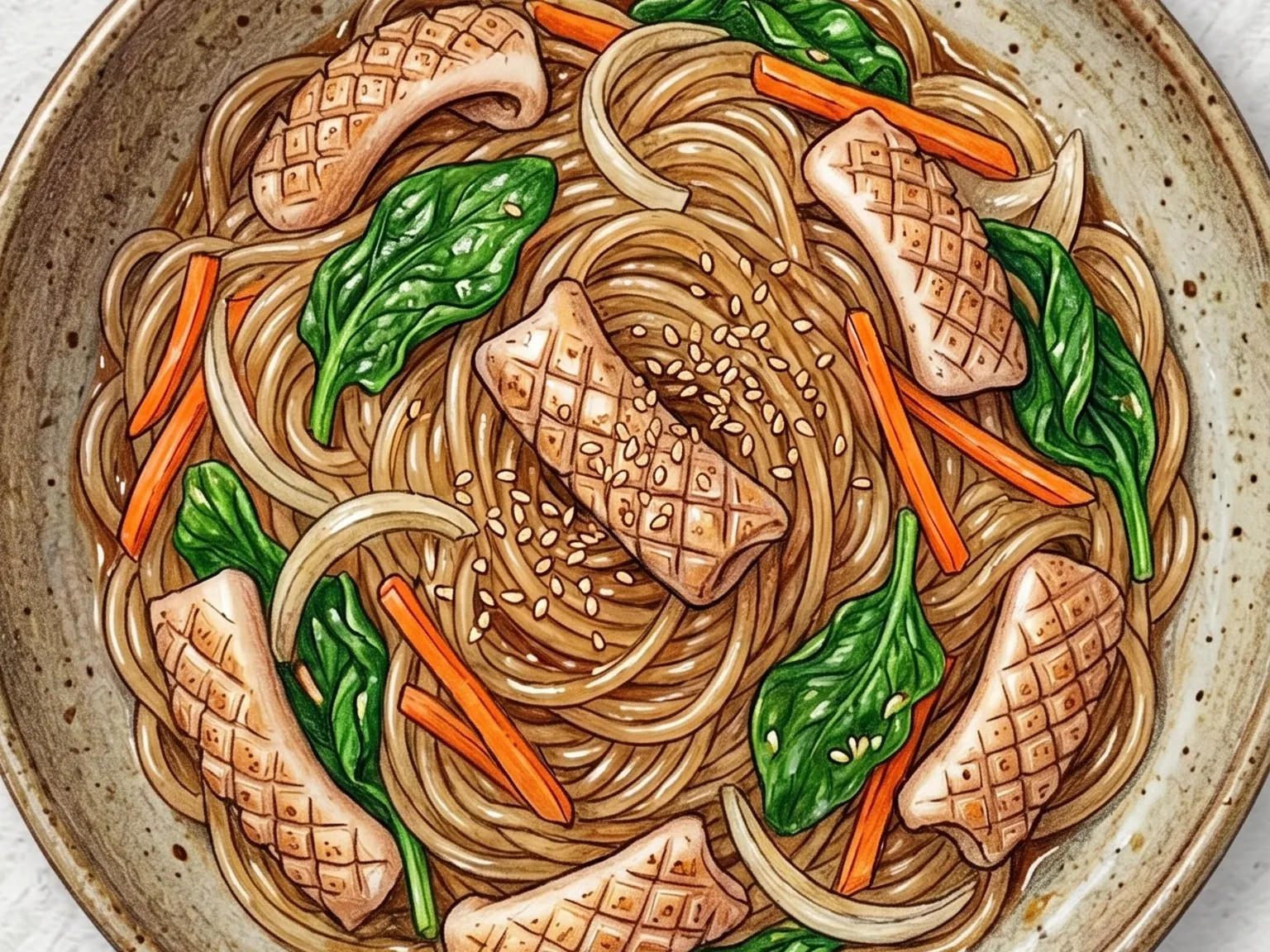
Korean Squid Glass Noodle Stir-Fry
sweet potato noodles, onion
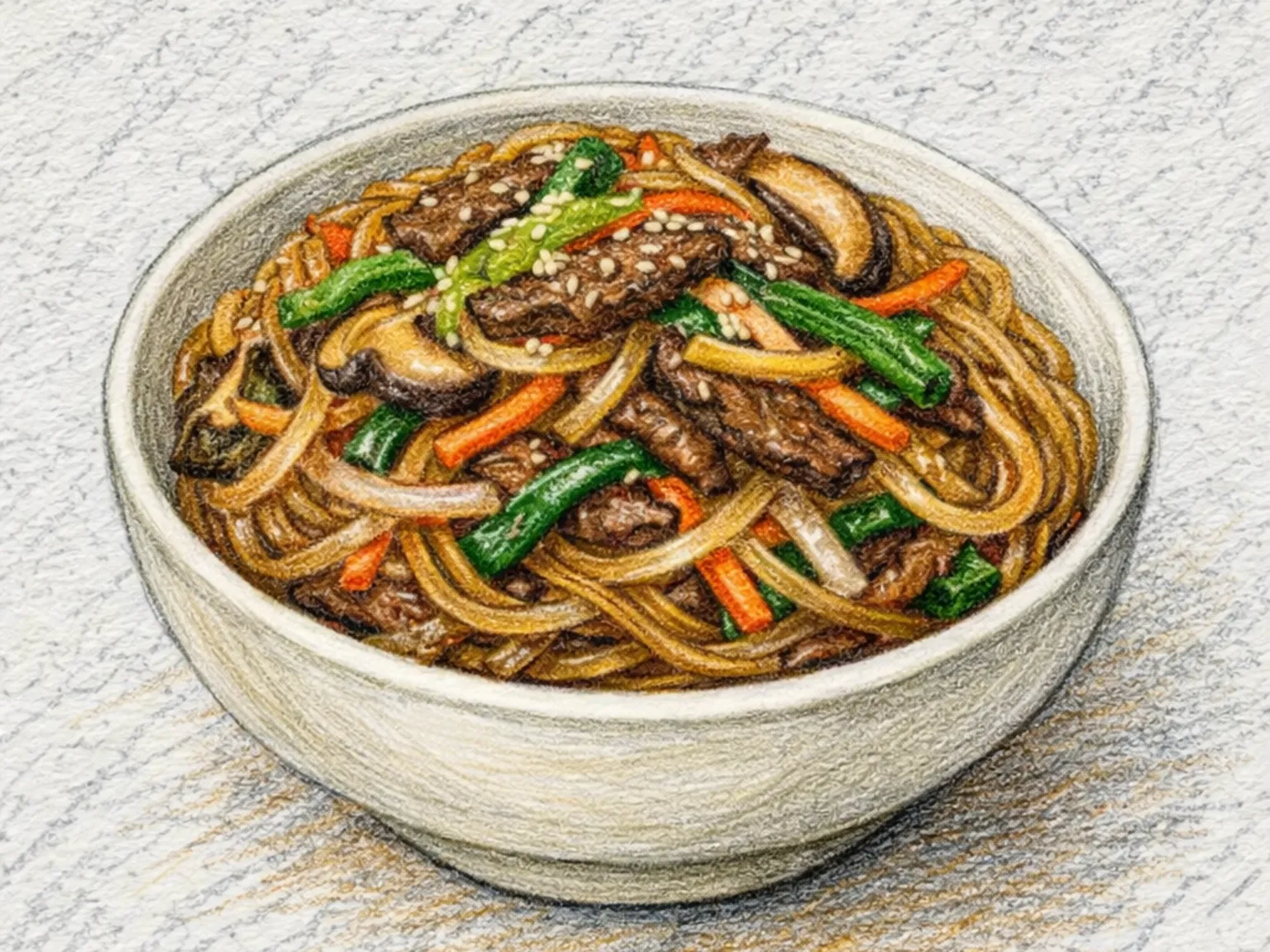
Korean Beef & Shiitake Japchae
sweet potato noodles, shiitake mushroom
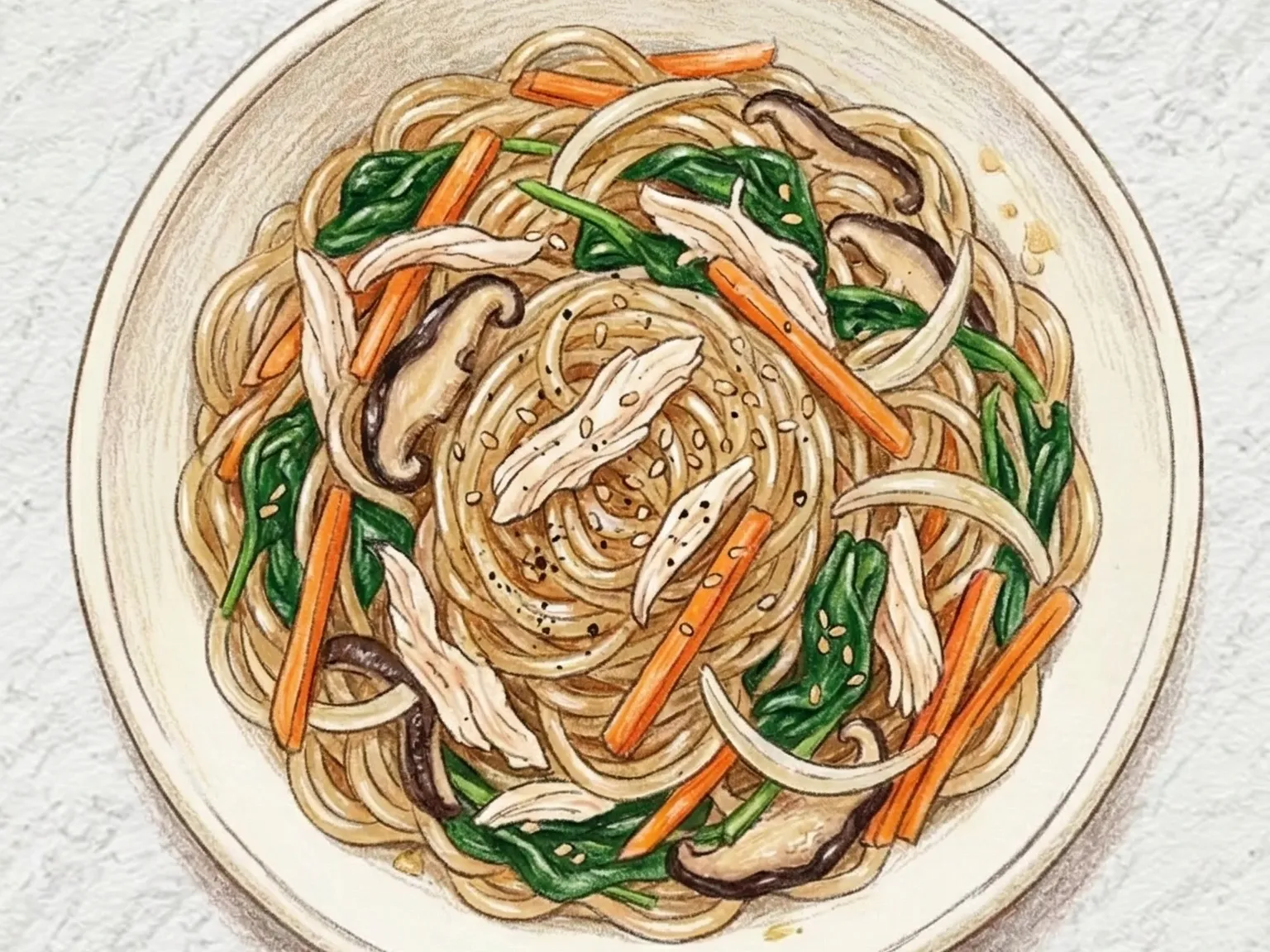
Korean Chicken Japchae (Glass Noodles with Chicken Breast and Vegetables)
sweet potato noodles, shiitake mushroom