Beef Wellington
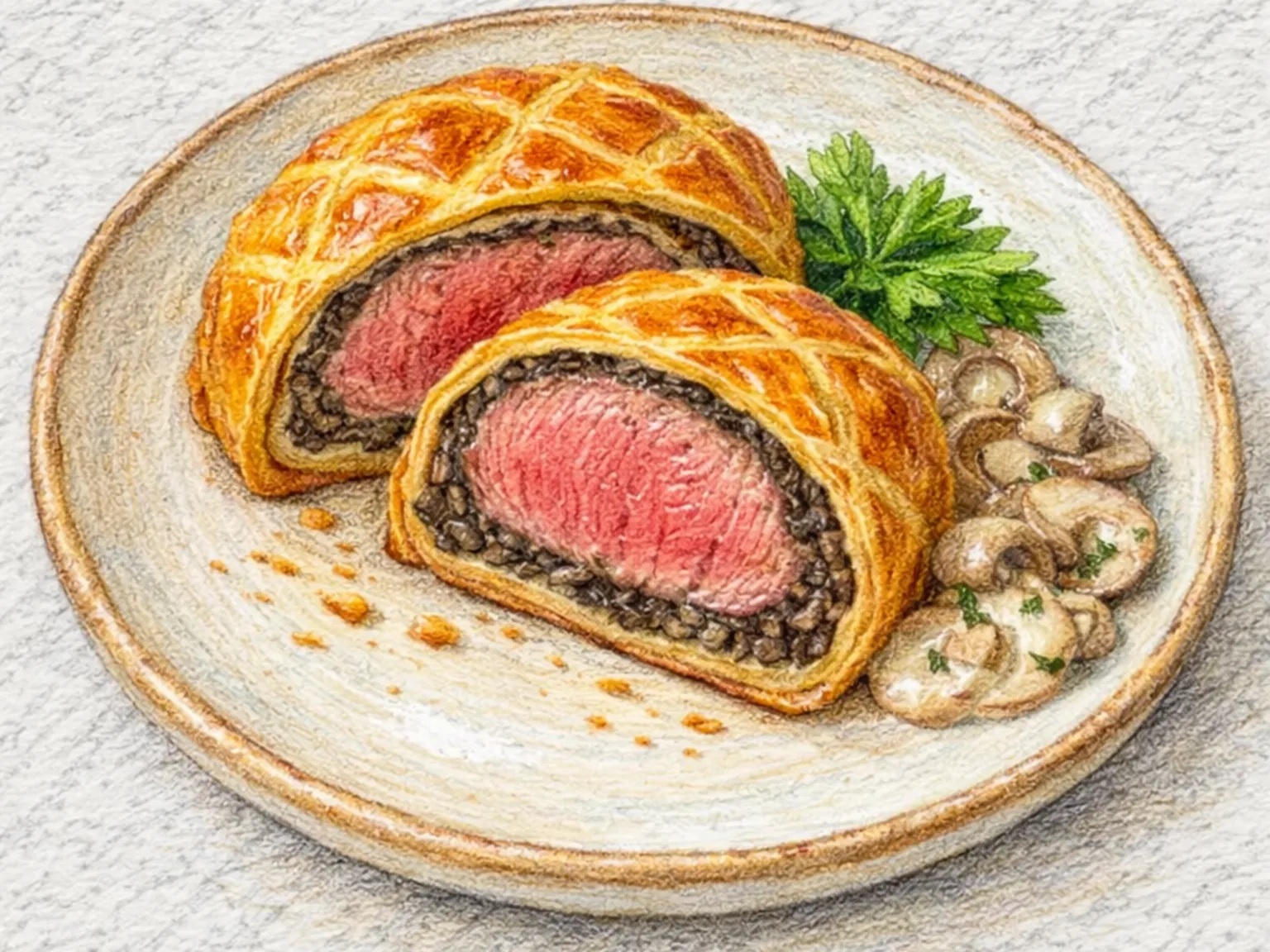
Beef Wellington wraps a whole seared tenderloin in a layer of mushroom duxelles and prosciutto, then encases everything in puff pastry before baking. The initial sear locks a flavorful crust onto the beef surface, and the duxelles acts as a moisture barrier between the meat and the pastry, preventing the dough from going soggy as the tenderloin renders. In the oven, the pastry puffs into hundreds of golden, flaky layers while the beef inside cooks evenly to a pink medium-rare center. Slicing through the finished roll to reveal the clean cross-section - bronze pastry, dark mushroom layer, rosy beef - is the dramatic payoff of the careful assembly. A red wine reduction served alongside completes the dish for a formal occasion.
Adjust Servings
Instructions
- 1
Season tenderloin and sear all sides over high heat until browned.
- 2
Finely chop mushrooms, shallots, and garlic; cook until all moisture evaporates to make duxelles.
- 3
Brush cooled beef with mustard, wrap with prosciutto, and spread duxelles over.
- 4
Wrap in puff pastry, seal edges, and refrigerate for 30 minutes.
- 5
Brush with egg wash and bake at 220°C for 25~30 minutes.
As an Amazon Associate, we may earn from qualifying purchases.
Tips
Nutrition (per serving)
More Recipes

Cornish Pasty (British Hand Pie with Beef and Root Vegetables)
Cornish pasty is a traditional British hand pie from Cornwall, made by encasing raw diced beef, potatoes, rutabaga, and onion inside a sturdy pastry of flour, butter, salt, and water. Because the filling goes in uncooked and sealed, the meat and vegetables steam inside the crust during baking, concentrating their juices into a rich, savory gravy within the pastry. Crimping the edges tightly is essential to prevent the juices from leaking during the forty-to-forty-five-minute bake at 200 degrees Celsius. Cutting the filling small enough ensures even cooking throughout. An egg wash brushed over the surface before baking produces a glossy, golden crust.

Cottage Pie
Cottage pie is a British comfort dish that tops a savory ground-beef filling with buttery mashed potatoes and bakes until golden. The meat is browned with diced onion and carrot, then simmered with tomato paste, Worcestershire sauce, beef stock, and green peas until the liquid reduces to a thick, concentrated sauce. Mashing the potatoes while hot with butter and warm milk produces a smooth, creamy layer. Scoring the potato surface with a fork before baking creates ridges that crisp and brown in the oven at 200 degrees Celsius over twenty minutes. The contrast between the rich, umami-heavy filling below and the soft, golden potato crust above defines the dish.

Sausage Roll
Sausage roll is a British bakery snack made by wrapping seasoned sausage meat in puff pastry, brushing with egg wash, and baking until golden. Mixing the meat with finely minced onion, breadcrumbs, and Dijon mustard adds moisture and flavor that keep the filling juicy after baking. Rolling the pastry around a log of filling and placing the seam side down prevents the roll from opening in the oven. Scoring the top allows steam to escape, which helps the pastry puff into crisp, distinct layers. Baking at 200 degrees Celsius for twenty to twenty-five minutes produces a deep golden shell with flaky, butter-rich layers encasing the savory meat inside. It works equally well as a snack, light meal, or picnic food.

Crispy Pork Belly Roast
Crispy Pork Belly Roast is a British oven roast focused on achieving a perfectly shattered crackling atop tender, slow-rendered meat. The skin is scored in tight parallel lines and rubbed with coarse salt, then left uncovered in the refrigerator overnight to draw out surface moisture - the first condition for crackling that actually cracks. The initial thirty minutes at 230 degrees Celsius or higher blisters the skin and sets its structure, after which the temperature drops to 160 degrees to slowly melt the internal fat layer, leaving the meat soft and the skin glass-crisp. Garlic cloves and rosemary sprigs placed beneath the belly perfume the meat from below as the oven heat circulates. The rendered pan juices are deglazed to make a quick gravy that carries the pork's own flavor. A rest of at least ten minutes before slicing is essential to keep the juices locked inside the meat.

Classic British Scones
Classic British scones are made by rubbing cold butter into flour and binding the mixture with milk, using minimal handling to keep the dough light. This restraint is what creates the signature crumbly, layered texture - overworking develops gluten and produces a tough result. In the oven, the butter melts and generates steam between the flour layers, causing the scone to rise and split naturally along its sides. The exterior, brushed with egg wash before baking, turns golden and slightly crisp, while the interior stays soft and flaky, somewhere between bread and biscuit. Traditionally served during afternoon tea with clotted cream and strawberry jam, scones are split by hand rather than cut with a knife. The warmth of a freshly baked scone against the cool richness of clotted cream is the combination that defines the English tea table.

Eton Mess (Crushed Meringue, Cream & Strawberry Mix)
Eton mess is a British dessert originating from Eton College, made by roughly combining broken meringue, whipped cream, and strawberries into a deliberate jumble. The name describes the method - there is no careful layering, just a generous pile of ingredients mixed together in a glass or bowl. The meringue is baked until crisp outside and marshmallow-soft inside, then crushed into large, irregular shards. Some strawberries are mashed to create red streaks through the cream while others are left whole for fresh bursts of fruit. The cream is whipped to soft, billowy peaks that fold loosely around the other components. Each spoonful delivers a different ratio of crunch, softness, sweetness, and tartness. Eton mess must be assembled and served without delay, as the meringue begins absorbing moisture from the cream and fruit immediately.