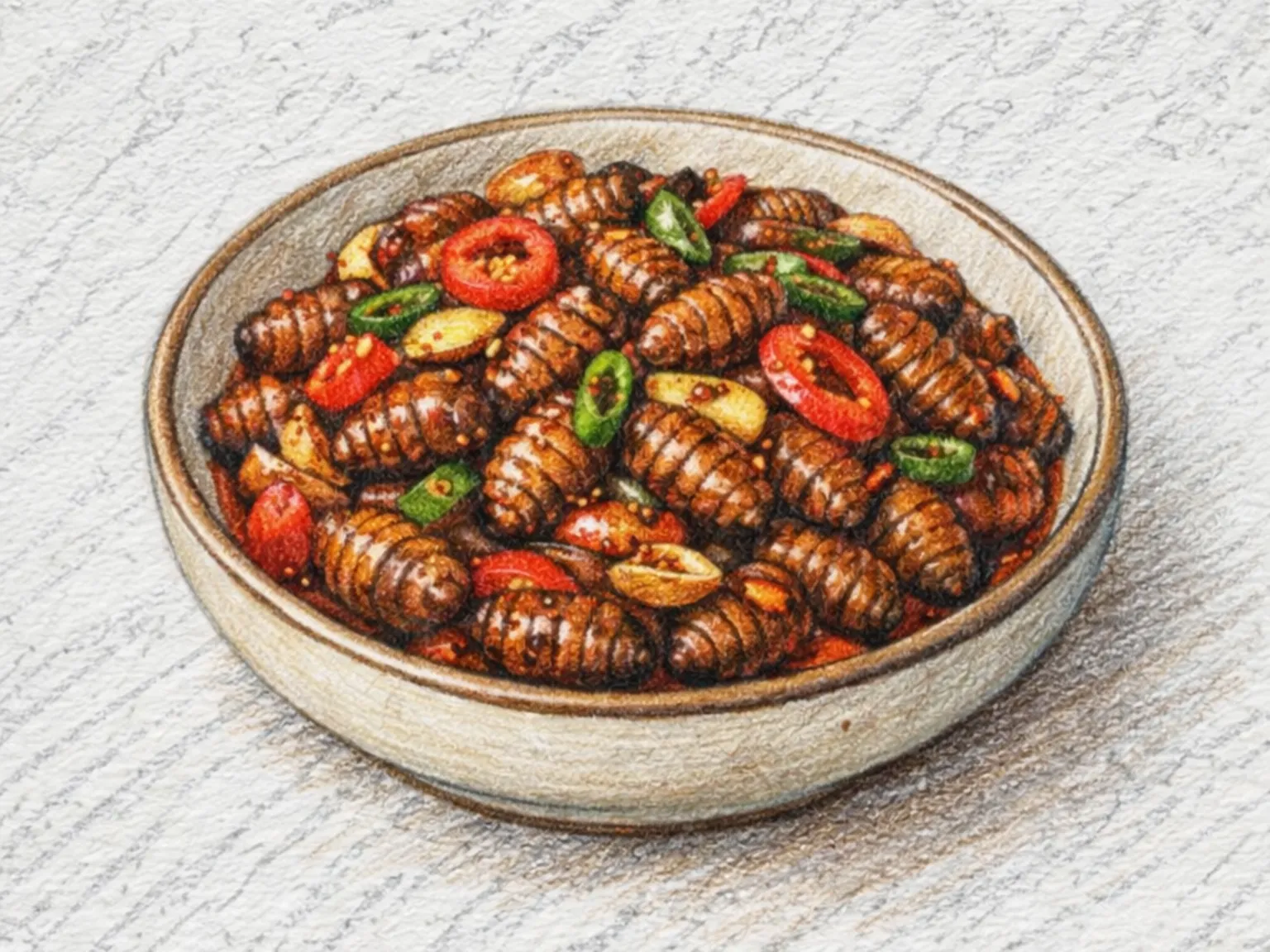
Korean Stir-fried Silkworm Pupae
Beondegi-bokkeum starts with canned silkworm pupae, drained, rinsed, and stir-fried in oil with garlic, soy sauce, and gochugaru over medium heat. As the moisture evaporates, the pupae develop a light crust while the soy sauce creates a glossy, salty glaze across their surface. Sliced cheongyang chili and scallion go in at the end, layering sharp heat and allium fragrance over the pupae's earthy, nutty base flavor.
Adjust Servings
Instructions
- 1
Drain and lightly rinse the canned silkworm pupae.
- 2
Heat oil and stir-fry garlic and scallion until fragrant.
- 3
Add pupae and stir-fry over medium heat for 3 minutes.
- 4
Season with soy sauce and chili flakes, then add sliced hot chili.
- 5
Cook 1-2 more minutes until glossy, then turn off heat.
As an Amazon Associate, we may earn from qualifying purchases.
Tips
Nutrition (per serving)
More Recipes

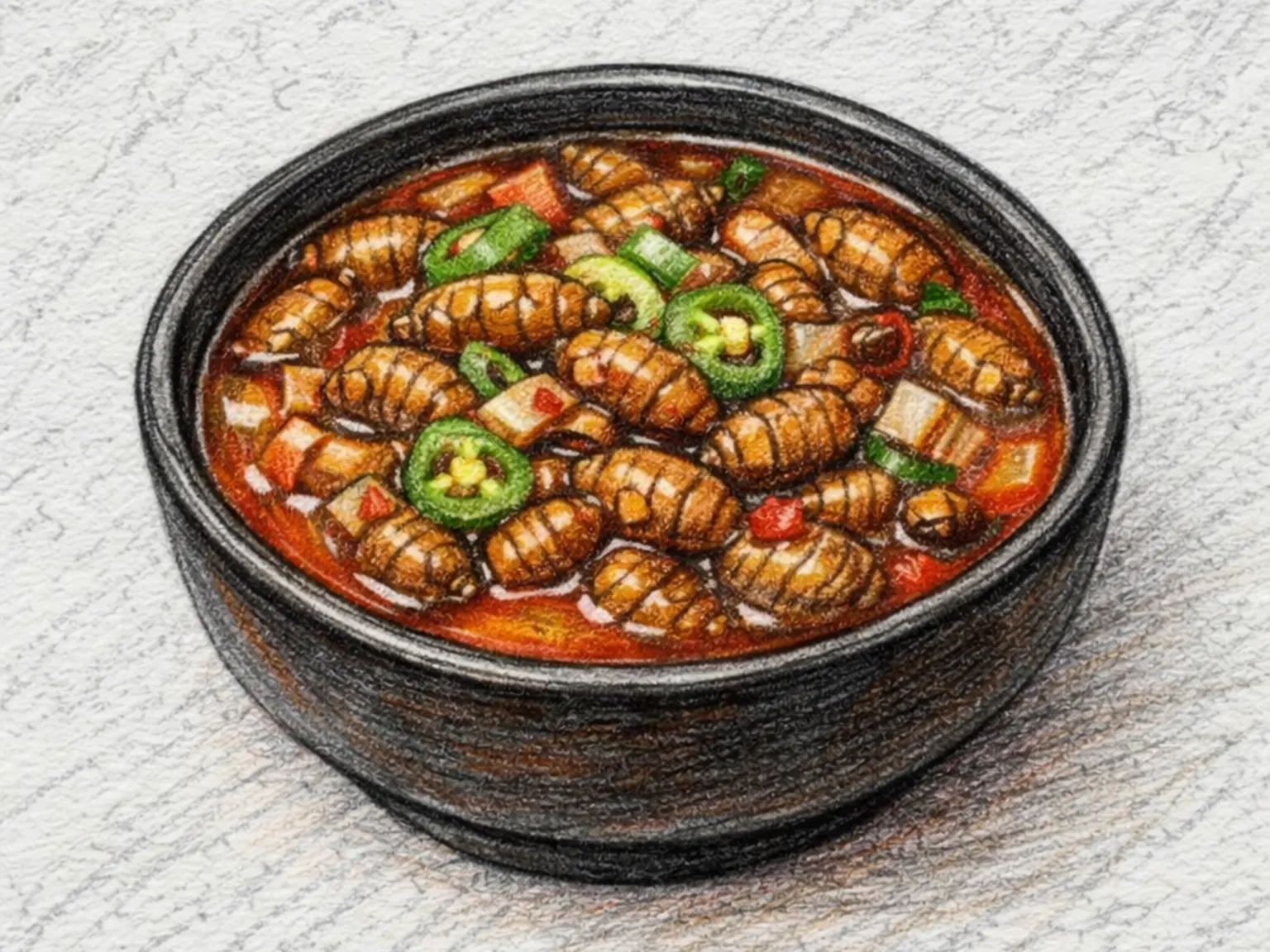
Korean Silkworm Pupae Broth
Beondegi-tang simmers canned silkworm pupae in a broth seasoned with soup soy sauce, gochugaru, and minced garlic. Sliced green onion and hot green chili cook alongside for eight minutes, letting the chili heat infuse the liquid while the pupae release a deep, earthy umami into every spoonful. Adding a splash of the canning liquid intensifies the savory depth, and the soup is best served piping hot so the aromatics stay lively.

Korean Spicy Stir-fried Cartilage
Odolppyeo-bokkeum is a fiery Korean stir-fry of chicken cartilage marinated in a sauce of gochujang, gochugaru, soy sauce, garlic, and sugar, then cooked at maximum heat for a short burst. The cartilage delivers a distinctive crunch-then-chew that no other cut can replicate, and thorough drying with paper towels before marinating ensures the sauce clings directly to the surface. After ten minutes of marinating, the cartilage hits a ripping-hot oiled pan to pick up smoky wok char, followed by onion, green onion, and hot green chilies that are tossed until all moisture evaporates and the glaze turns glossy. Keeping the total stir-fry time brief is critical, since prolonged cooking turns the cartilage from pleasantly crunchy to unpleasantly tough.

Korean Stir-fried Sundae (Sundae Bokkeum)
Sundae-bokkeum is a spicy Korean stir-fry of blood sausage with cabbage, onion, and green onion in a sauce made from gochujang, gochugaru, soy sauce, sugar, and garlic. High heat and a short cooking time are essential because prolonged stir-frying toughens the sundae, while the cabbage and onion release enough moisture to help the sauce coat every piece evenly. The seasoning layers direct heat from gochujang, a gentler warmth from gochugaru flakes, and sweetness from sugar into a multidimensional spicy-sweet profile. Green onion goes in last for a burst of fragrance, and adding tteokbokki rice cakes transforms the dish into the popular combo known as tteoksuni.

Korean Garlic-Grilled Octopus
Muneo-garlic-gui is a Korean seafood snack made by searing pre-boiled octopus with minced garlic in olive oil over high heat. The octopus is cut into bite-size pieces, seasoned with salt, pepper, and red chili flakes, then rested briefly before hitting a smoking-hot pan. The garlic blooms in the oil first at low heat, and when the octopus goes in, the temperature is cranked up so the surface chars quickly while the interior stays springy and resilient. A squeeze of lemon juice at the end cuts through the richness and sharpens the natural brininess of the octopus.

Korean Spicy Stir-fried Octopus
Nakji-bokkeum is a fiery Korean stir-fry of small octopus (nakji) coated in a sauce of gochujang, gochugaru, soy sauce, sugar, and garlic, tossed with bean sprouts, onion, carrot, and scallion. Bean sprouts line the bottom of the pan, releasing moisture to prevent sticking while adding crunch. The vegetables and half the sauce go on next, then the octopus on top, covered and steamed on medium heat for three minutes before a final high-heat stir-fry sears everything for two minutes. Speed is critical - octopus toughens with prolonged cooking - and the dish is often mixed with boiled thin wheat noodles for a heartier meal.

Korean Spicy Sea Snail Salad
Golbaengi-muchim is a Korean spicy sea snail salad made by draining canned sea snails and tossing them with sliced cucumber, onion, and green onion in a dressing of gochujang, gochugaru, vinegar, and sugar. The chewy texture of the snails contrasts with the crisp bite of the raw vegetables, and soaking the onion in cold water for five minutes beforehand removes its sharp sting so it blends more smoothly with the sauce. Sesame oil and sesame seeds are added last for a nutty finish, and the dish must be served immediately after mixing to keep the vegetables from releasing water and going limp. Laying thin somyeon noodles underneath turns it into a fuller drinking snack that doubles as a light meal.