Korean Mushroom Bulgogi Jeongol
Quick answer
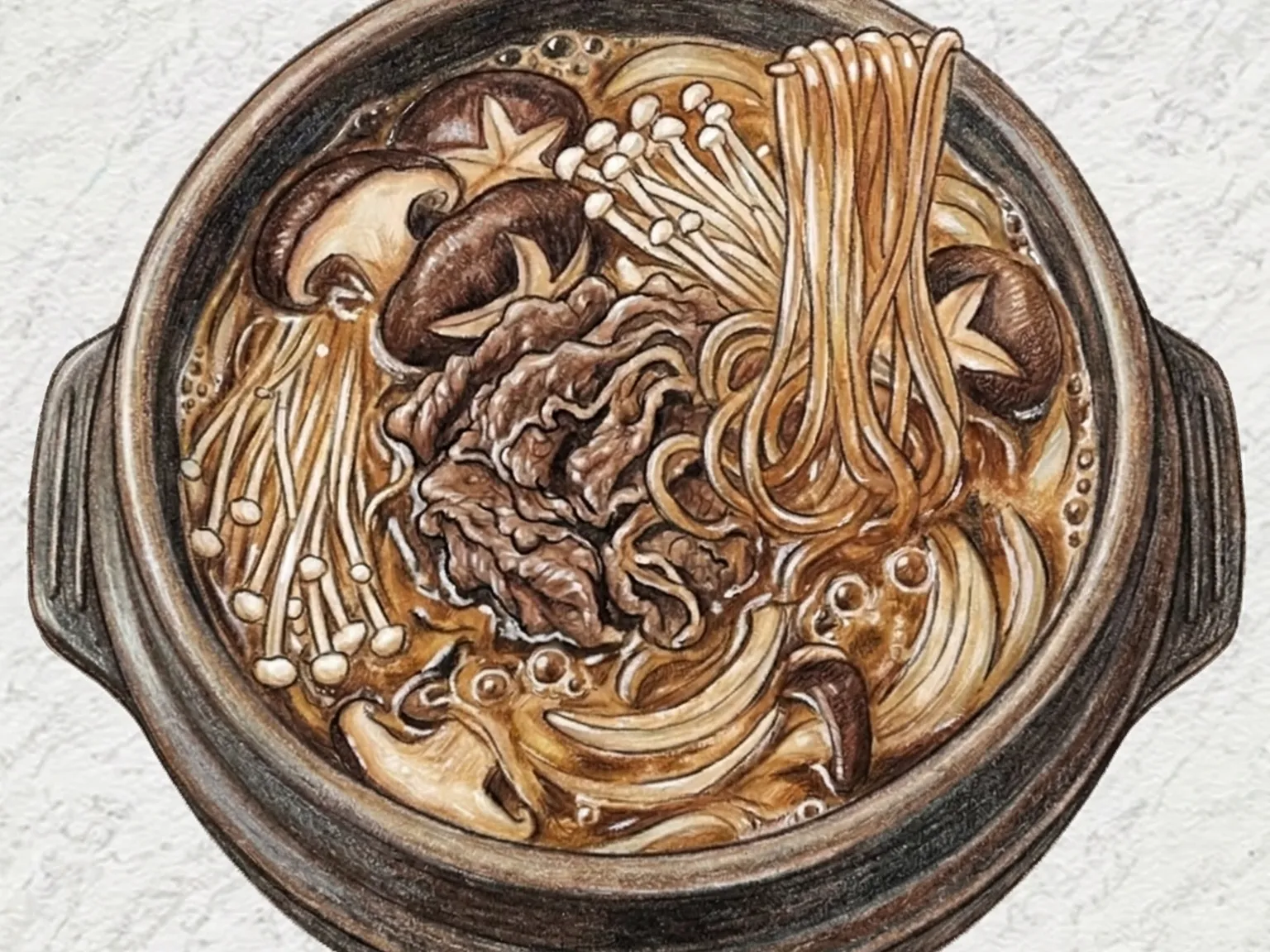
Soy sauce-marinated beef and a mix of shiitake and enoki mushrooms simmer together in a generous broth, with the beef's umami and the shiitake's deep, earthy scent buildi...
What makes this special
- Beoseot bulgogi jeongol accumulates rich flavors as soy-marinated beef and earthy shiitake mushrooms infuse the hot pot with deep, layered umami.
- Soy-marinated beef and shiitake release layered umami into the broth as they cook
- Glass noodles absorb the rich bulgogi broth and carry flavor to the last bite
Key ingredients
Core cooking flow
- 1 Soak 80 g sweet potato noodles in lukewarm water for only 10 to 15 minutes, then drain them.
- 2 Mix 350 g sliced beef with 2 tablespoons soy sauce, 1 tablespoon sugar, and 1 tablespoon minced garlic.
- 3 Slice the shiitake mushrooms about 0.5 cm thick.
Soy sauce-marinated beef and a mix of shiitake and enoki mushrooms simmer together in a generous broth, with the beef's umami and the shiitake's deep, earthy scent building into the stock as the jeongol cooks. Sweet potato noodles absorb that concentrated broth, picking up its full flavor in every chewy strand. Onion's natural sweetness moderates the saltiness of the soy-based stock, and the garlic-infused liquid makes the dish work equally well as a rice accompaniment or a drinking table side. The jeongol is typically left on a portable burner at the table and eaten continuously as it cooks.
Instructions
Read the steps as a cooking flow: prep, heat, seasoning, doneness control, and finish.
- 1Control
Soak 80 g sweet potato noodles in lukewarm water for only 10 to 15 minutes, then drain them.
Keep them slightly firm, because fully softened noodles can turn mushy once they simmer in the hot broth.
- 2Season
Mix 350 g sliced beef with 2 tablespoons soy sauce, 1 tablespoon sugar, and 1 tablespoon minced garlic.
Toss gently so the thin slices do not tear, then marinate for 10 minutes until the seasoning lightly coats the meat.
- 3Prep
Slice the shiitake mushrooms about 0.5 cm thick.
Trim off the enoki base and separate the clusters, then cut 120 g onion into 1 cm strips so it softens evenly and releases sweetness into the broth.
- 4Heat
Spread the onion across the bottom of the jeongol pot, then arrange the shiitake and enoki around the sides.
Place the marinated beef in the center, separating the slices so they cook evenly instead of clumping.
- 5Control
Pour in 1000 ml water and the remaining 1 tablespoon soy sauce, then bring it to a boil over high heat.
When the edges bubble strongly, skim off foam, lower to medium heat, and simmer for 5 minutes.
- 6Finish
Add the soaked noodles and simmer for another 5 to 6 minutes.
Serve when the noodles look translucent and the beef has no red center, then keep the pot at a gentle low simmer at the table.
After the steps
Pick a recipe that fits this dish.
Continue with shared ingredients, meal pairings, or a similar method.
Recipes That Go Well With This
More Stews →Based on shared ingredients and meal pairing
Korean Andong-style Soy Bulgogi
Andong-style bulgogi departs from the Seoul version in one essential way: the beef is not grilled but braised in its marinade. In Andong, a city in North Gyeongsang Province that has carefully preserved Joseon-era culinary customs, thinly sliced beef is first marinated in soy sauce, sugar, sesame oil, garlic, and pear juice, then layered in a wide, flat pan with glass noodles, onion, scallion, and mushroom. The pan goes over heat and simmers until the liquid reduces; as it does, the sweet soy marinade thickens into a glaze that coats every ingredient with a lacquered sheen. Glass noodles absorb the concentrated braising liquid, taking on a deeply seasoned richness. The finished dish is noticeably wetter and more intensely flavored than grilled bulgogi, and spooning it over steamed rice turns it into a complete bowl. In Andong, this dish has long appeared at ancestral rite ceremonies and family gatherings, where the pan itself is brought to the table and diners serve themselves directly. The preparation reflects the inland Gyeongbuk preference for soy sauce as the primary seasoning agent rather than gochujang or doenjang.
Korean Soy Bulgogi with Mushrooms
Thinly sliced beef is marinated in soy sauce, Korean pear juice, and sesame oil, then stir-fried over high heat together with shiitake and king oyster mushrooms. Pear juice acts as a natural tenderizer: its enzymes break down muscle proteins so each slice pulls apart along the grain instead of resisting the tooth, and its fructose tempers the salt of the soy sauce into a balanced sweet-salty base. The two mushroom varieties are not interchangeable in role - shiitake brings a firm, chewy bite while king oyster delivers a thick, clean meatiness that holds its shape through the heat. Crowding the pan is the single most common mistake: when too much goes in at once, the temperature drops and the ingredients steam rather than sear, resulting in gray, soft pieces instead of the glazed, caramelized coating the dish depends on. Work in small batches over sustained high heat so the marinade reduces against the hot pan surface. Green onion added in the final minute retains its sharp, fresh character and cuts through the sweet richness, providing the finishing contrast the dish needs.
Korean Grilled Eel Rice Bowl
Jangeeo deopbap is a bowl of grilled freshwater eel over steamed rice, where the key technique is building up a thick, lacquered glaze through multiple applications of a sweet-salty sauce reduced from soy sauce, mirin, sugar, and ginger juice. The eel starts skin-side down on the grill over medium heat for around five minutes to crisp the skin, then is flipped and basted repeatedly with the sauce as it finishes cooking. A single coat of sauce produces a pale, thin color, so at least two applications and ideally three or more are needed to build the characteristic glossy surface. With each additional coat, the sugars in the sauce react with heat through both Maillard browning and caramelization, layering flavor with every pass. Because freshwater eel is naturally fatty, fat drips during grilling can cause flare-ups, so heat control is important throughout the process. Sansho pepper dusted on at the end cuts through the eel's inherent richness with a sharp, numbing fragrance that balances the sweet glaze and keeps the dish from feeling heavy.
Korean Kimchi Beef Dumpling Hot Pot
Kimchi-beef mandu jeongol is a generous Korean hot pot that combines frozen dumplings, thinly sliced beef, and aged kimchi in anchovy stock seasoned with gochujang and soup soy sauce. As the pot bubbles, the meat filling inside each dumpling leaches its savory fat into the broth while the kimchi's fermented sourness and heat layer in on top, building a soup that grows more complex the longer it simmers. Napa cabbage leaves, enoki mushrooms, and firm tofu add contrasting textures to each spoonful. Blanching the beef briefly before adding it to the pot prevents the broth from clouding, and the tofu goes in last to keep it intact. The older and more pungent the kimchi, the deeper and more rounded the soup becomes, which is why well-fermented kimchi is worth seeking out for this dish specifically. A drop of perilla oil stirred in just before serving adds a nutty finish that ties the layers together. Eaten communally from the stove, with rice stirred in at the end to absorb the remaining broth, this pot feeds a table with minimal effort.
Serve with this
Korean Chive Clam Jeon (Garlic Chive and Clam Seafood Pancake)
Buchu-bajirak-jeon is a seafood pancake of garlic chives and clam meat, pan-fried in a batter made with a mix of all-purpose pancake flour and rice flour. The rice flour addition increases the chew and gives the finished jeon a slightly more resilient texture than plain flour batters. Clam meat releases a briny, oceanic liquid as it cooks that seeps into the batter and flavors it throughout, while the chives add a sharp, grassy counterpoint. Minced garlic and diagonally sliced cheongyang chili worked into the batter suppress any fishiness and build a layered fragrance. A generous amount of oil in the pan over medium heat produces edges that crisp and brown like the outside of a fritter. Waiting until the bottom is fully set before flipping prevents the pancake from tearing. Served with soy dipping sauce or a seasoned soy mixture, the clean salinity of the clams comes through clearly.
Korean Mushroom Japchae (Shiitake Glass Noodle Stir-Fry)
Beoseot japchae replaces beef with shiitake mushrooms as the primary source of savory depth, making it a staple of Buddhist temple cuisine and vegetarian tables alike. Sweet potato noodles are soaked and boiled, then rinsed in cold water immediately to lock in a firm, springy texture. Shiitake, spinach, carrot, and onion are each cooked separately - their moisture levels and heat tolerances differ enough that combining them prematurely flattens every component. Soy sauce, sugar, minced garlic, and sesame oil bring the noodles and vegetables together, and the finished dish rests for ten minutes so the seasoning penetrates the noodles evenly. The result is a japchae where the mushroom carries genuine umami weight without any meat.
Korean Pickled Taro Stems
Torandae jangajji is a Korean pickled side dish made from taro stems. The outer fibrous skin is peeled away first, and the stems are salted and then blanched. Raw taro stems contain calcium oxalate crystals that cause an unpleasant prickling sensation in the throat, and blanching effectively neutralizes this before the stems are packed into the pickling liquid. The brine is made by bringing soy sauce, vinegar, and sugar to a boil, and it is poured over the stems while still hot so the seasoning penetrates quickly and evenly. Sliced garlic and ginger are simmered in the brine before it is poured, which infuses the liquid with deep aromatic warmth without any of the sharp pungency those ingredients carry raw. After two to three days of refrigerating, each piece develops a layered depth of salty, savory flavor with a clean vinegar brightness underneath. The defining characteristic of this pickle is its distinctive fibrous crunch, which stays satisfying even after the stems have fully absorbed the brine. It works as a rice accompaniment throughout the week and doubles as a drinking snack alongside soju.
Similar recipes
Korean Mushroom Dumpling Hot Pot
Mandu jeongol is a generous hot pot of twelve large dumplings simmered with napa cabbage, shiitake mushrooms, oyster mushrooms, and bok choy in anchovy-kelp stock. The two varieties of mushroom add layers of umami to the clear broth, while the cabbage and bok choy soften and release their natural sweetness as they cook. The dumplings cook directly in the simmering stock, their wrappers gradually turning chewy as the filling flavors seep into the surrounding liquid. Soup soy sauce and garlic provide a clean, understated seasoning that keeps the broth from overshadowing any single ingredient. The right moment to eat is when the vegetables have wilted and the dumplings float to the surface, signaling they are cooked through. The absence of any spice or strong seasoning makes this one of the more universally approachable hot pots, suited for all ages. Leftover broth absorbs cooked rice or soaked glass noodles easily, turning what remains into a satisfying finish to the meal.
Korean Wild Mushroom Hot Pot
This Korean hot pot features earthy neungi mushrooms simmered with shiitake and oyster mushrooms, napa cabbage, and tofu. Neungi mushrooms contribute an intense, woody aroma that builds a deep broth without any meat. The soaking liquid from the neungi mushrooms is reused as the broth base to concentrate the fragrance. Napa cabbage and tofu slices are arranged at the bottom of the pot to support the hand-torn mushrooms. The stew is seasoned with soup soy sauce, minced garlic, and black pepper, then simmered for twelve to fifteen minutes over medium heat. This cooking time allows the earthy flavors to meld while keeping the mushrooms tender. Serving the hot pot immediately after the broth darkens prevents the ingredients from becoming chewy. The layered textures of three distinct mushroom varieties form the core flavor experience.
Korean Tofu Hot Pot (Tofu & Beef Kelp Broth Pot)
Dubu jeongol is a Korean hot pot centered on tofu and beef simmered in kelp broth at the table. Shiitake mushrooms contribute a deep savory note, while napa cabbage and green onion add freshness and textural variety. The broth is seasoned with soup soy sauce, keeping it light and clear enough to let each ingredient's flavor come through without becoming heavy. Thin-sliced or ground beef works equally well; marinating it briefly in soy sauce and minced garlic before adding it to the pot layers the broth with additional depth. Pan-frying the tofu slices lightly in oil before placing them in the jeongol prevents them from breaking apart during the long simmer and gives each piece a slightly firmer exterior. Traditionally served bubbling directly on the table, this is a communal dish meant to be eaten at a relaxed pace, with diners adding broth and pieces to their own bowls throughout the meal.