Korean Mushroom Perilla Seed Stir-Fry

Korean Mushroom Perilla Seed Stir-Fry

Quick answer

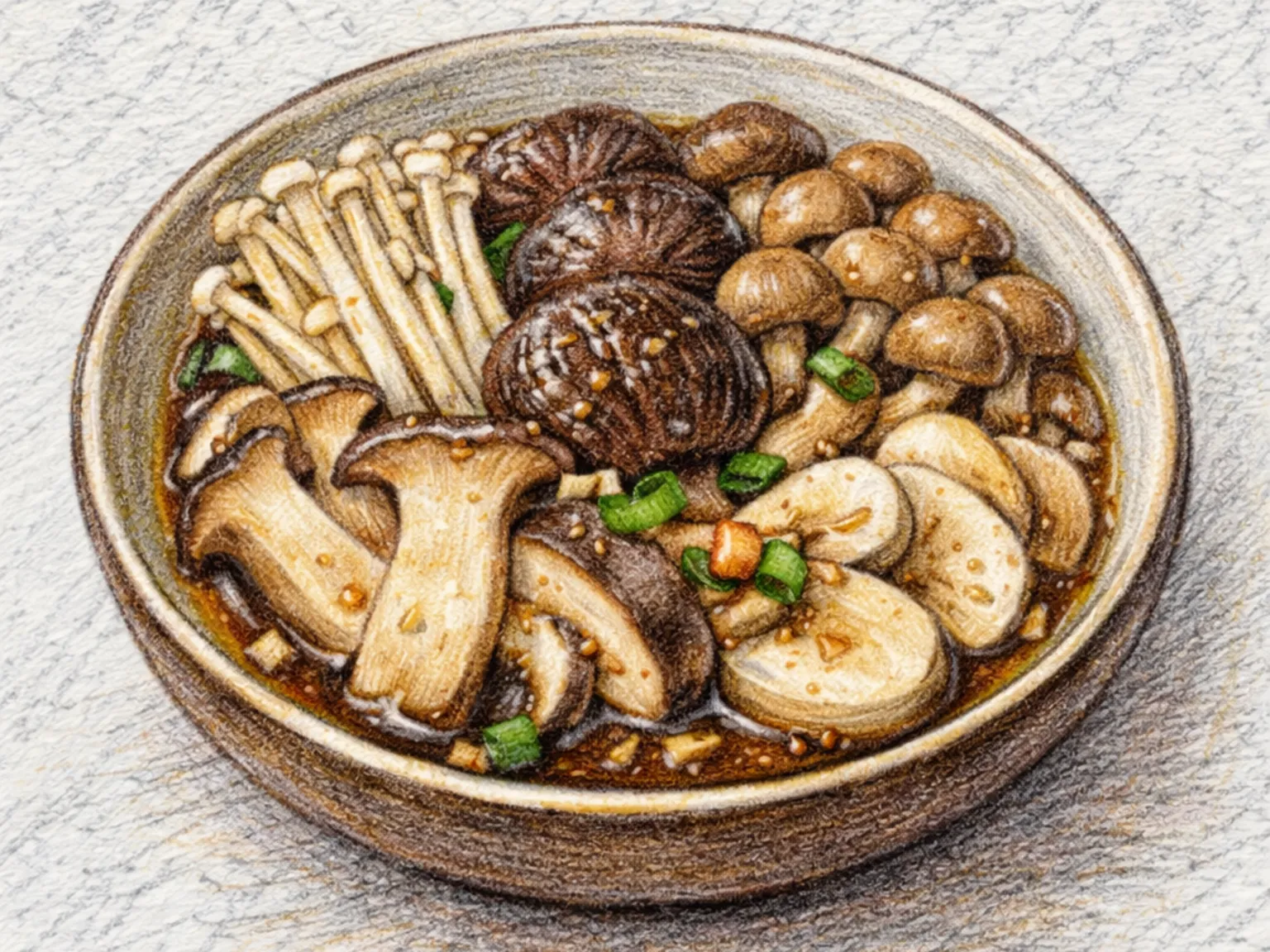
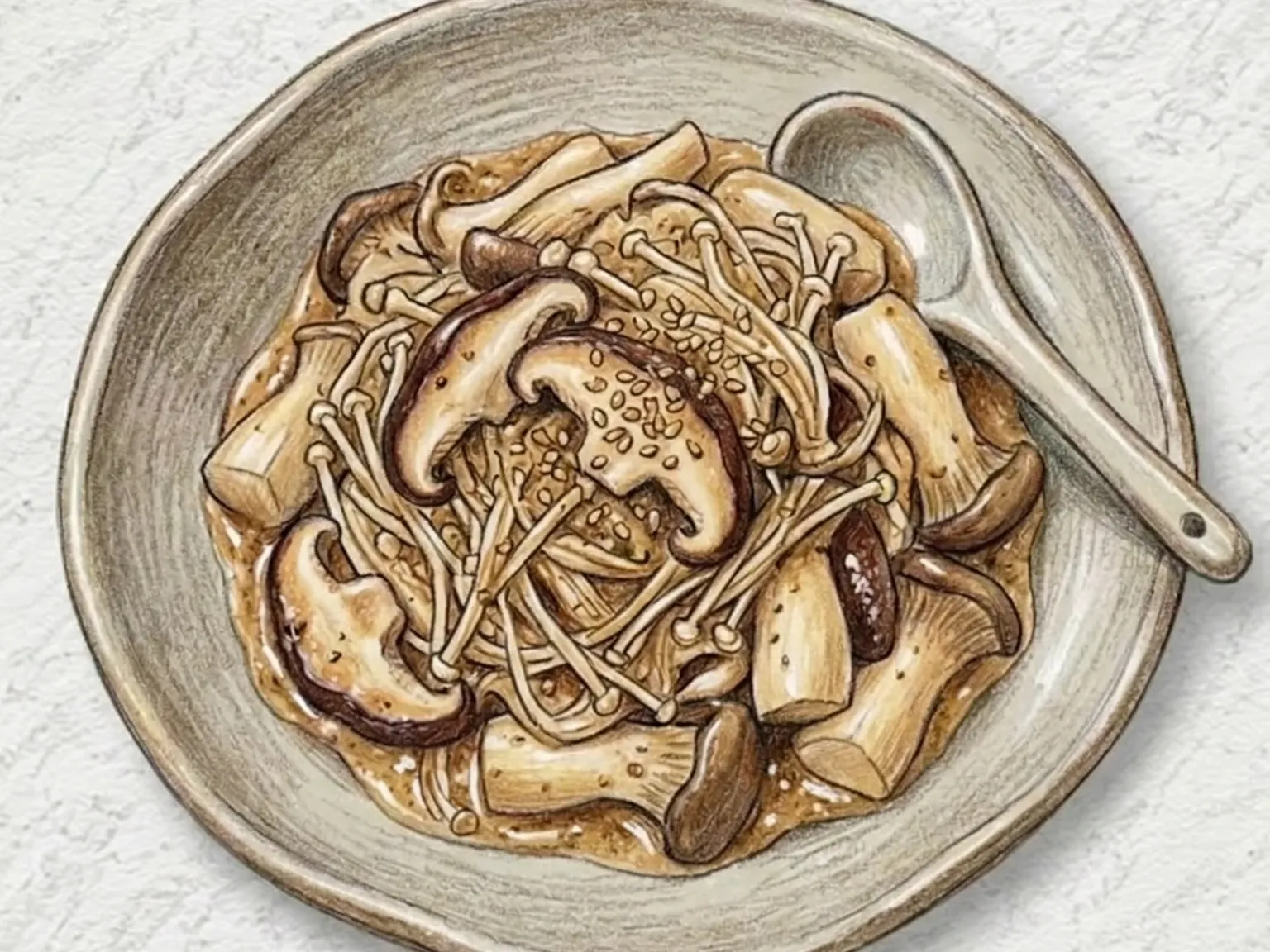
Three varieties of mushroom, shiitake, enoki, and oyster, are stir-fried over high heat until their moisture fully evaporates, then dusted with ground perilla seed that r...

What makes this special

  • Nutty perilla seed powder coats a mix of shiitake, enoki, and oyster mushroom varieties.
  • Shiitake chew, enoki threads, and oyster bite all coexist in one dish
  • Perilla powder added near the end and cooked only 1 minute avoids burning
Total time
20 min
Level
Easy
Servings
4 servings
Ingredients
8
Calories
90 kcal
Protein
4 g

Key ingredients

shiitake mushroomsenoki mushroomsoyster mushroomsperilla seed powdergarlic

Core cooking flow

  1. 1 Remove the stems from 150 g shiitake mushrooms and slice the caps about 4 mm thick.
  2. 2 Heat a wide pan well over high heat, then coat it lightly with oil.
  3. 3 Add all the mushrooms and keep the heat high for 2 to 3 minutes.

Three varieties of mushroom, shiitake, enoki, and oyster, are stir-fried over high heat until their moisture fully evaporates, then dusted with ground perilla seed that releases a surge of nutty fragrance the moment it contacts the hot surface. Each mushroom contributes a distinct texture to a single dish: shiitake offers firm, satisfying chew when torn along the grain; enoki provides delicate, threadlike strands; and oyster adds thick, meaty bites that hold their shape through the heat. The perilla seed powder must be added only in the final minute of cooking because its aromatic oils are volatile: longer exposure turns them acrid rather than nutty, and the window between perfectly toasted and burned is narrow. Soy sauce and a pinch of salt adjust the seasoning without masking the mushrooms, and a finishing drizzle of sesame oil rounds everything off with a gentle, fat-carried richness. At around 90 calories per serving, this side dish works as an everyday component of any meal without adding weight, and the unsaturated fatty acids in perilla seeds add nutritional substance well beyond what a side this light might suggest. Tearing shiitake along its natural grain accelerates moisture release during cooking, and pulling enoki apart by hand before adding it to the pan prevents the strands from clumping.

Prep 10min Cook 10min 4 servings

Instructions

Read the steps as a cooking flow: prep, heat, seasoning, doneness control, and finish.

6 steps
  1. 1
    Prep

    Remove the stems from 150 g shiitake mushrooms and slice the caps about 4 mm thick.

    Cut off the base of 100 g enoki mushrooms, pull them apart, and tear 100 g oyster mushrooms with the grain.

  2. 2
    Control

    Heat a wide pan well over high heat, then coat it lightly with oil.

    Add 3 sliced garlic cloves and stir-fry for about 30 seconds, stopping before the edges darken or taste bitter.

  3. 3
    Heat

    Add all the mushrooms and keep the heat high for 2 to 3 minutes.

    Spread them across the pan rather than piling them up, and cook until the first released moisture disappears from the bottom.

  4. 4
    Heat

    When the mushrooms soften and their edges look slightly dry, lower the heat to medium.

    Sprinkle in 2 teaspoons perilla seed powder and stir-fry for only 1 minute so the aroma stays nutty.

  5. 5
    Season

    Pour 1 teaspoon soy sauce around the edge of the pan so it briefly sizzles and seasons the mushrooms.

    Add the 1/2 teaspoon salt gradually, tossing and tasting so the dish does not become too salty.

  6. 6
    Finish

    Turn off the heat and drizzle in 1 teaspoon sesame oil, then toss lightly.

    Serve when the mushrooms are no longer wet, the perilla powder clings to the surfaces, and the strands stay separated.

After the steps

Pick a recipe that fits this dish.

Continue with shared ingredients, meal pairings, or a similar method.

Recipes That Go Well With This

More Stir-fry →

Based on shared ingredients and meal pairing

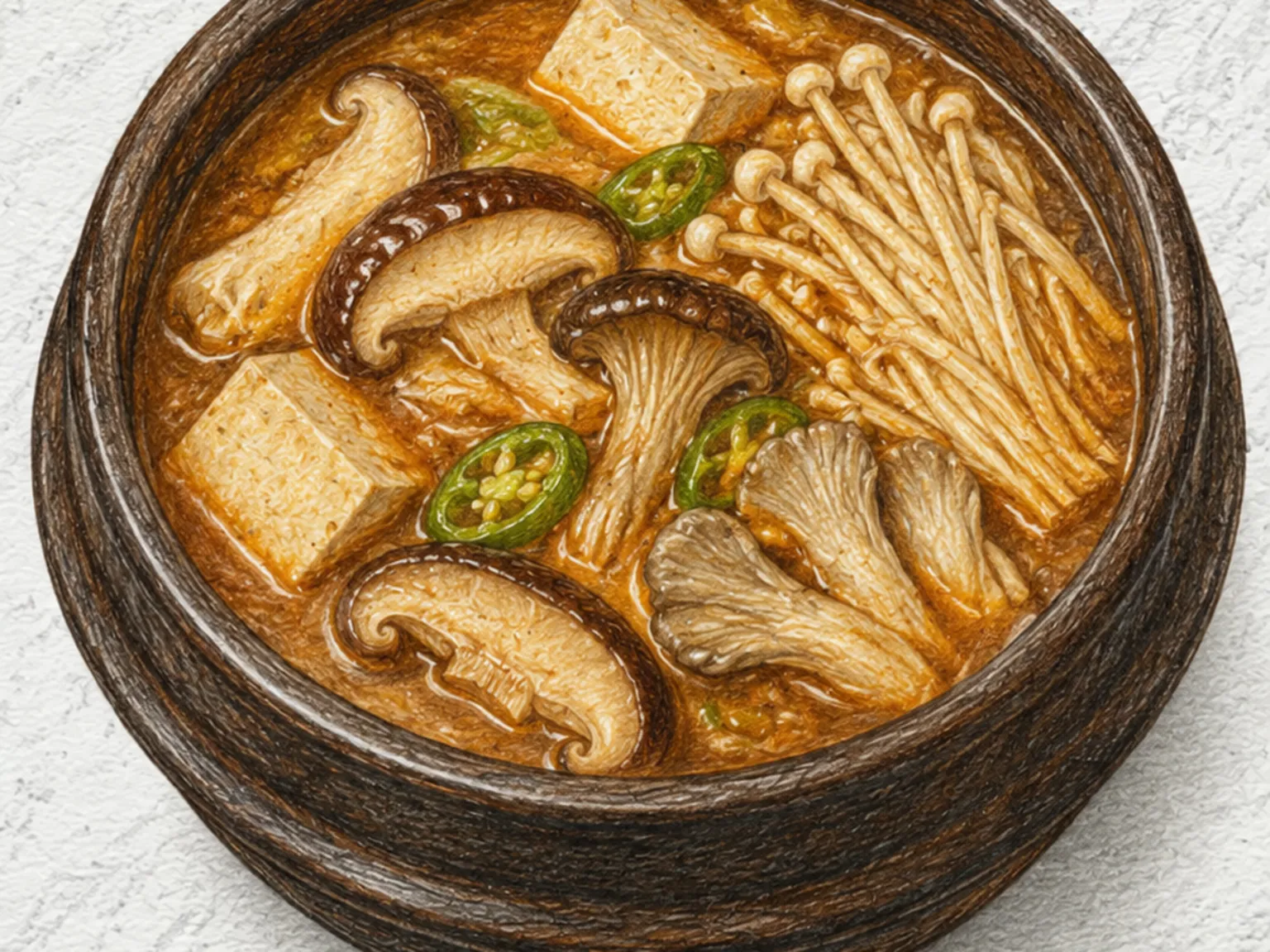
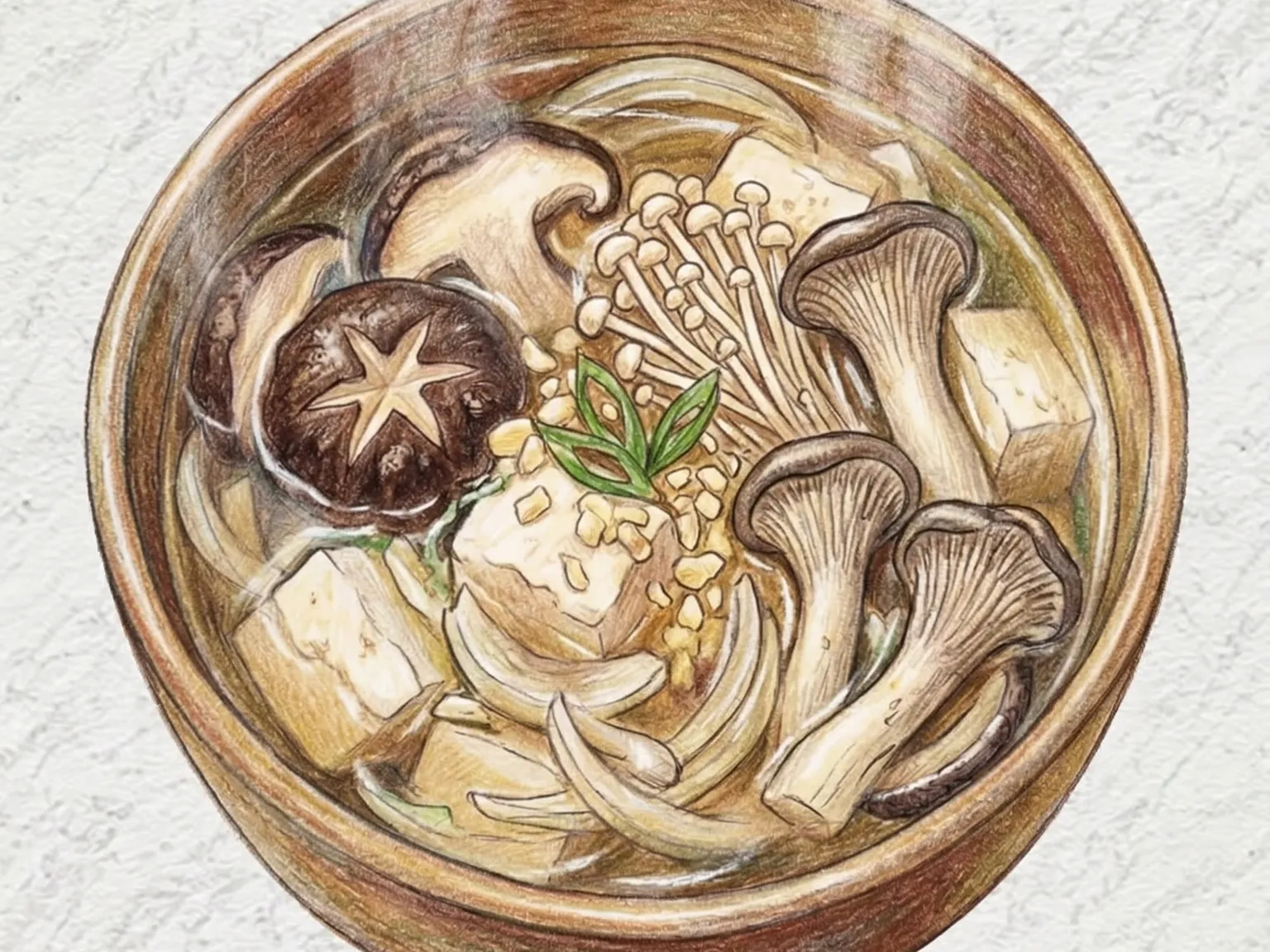
Korean Mushroom Perilla Soup
Shared ingredient: shiitake mushrooms Soups

Korean Mushroom Perilla Soup

Three types of mushrooms - oyster, shiitake, and king oyster - simmer together in an onion-based vegetable stock before ground perilla seeds are stirred in to thicken the broth into a nutty, substantial soup. Cooking the mushrooms and garlic for ten minutes in the stock allows each variety's distinct aroma to build in layers: the fibrous texture of oyster mushrooms, the deep earthiness of shiitake, and the firm, meaty bite of king oyster mushrooms all hold their character in the finished bowl. Cubed tofu is added partway through and gently absorbs the surrounding broth as it warms. Adding the perilla powder in small increments rather than all at once prevents clumping and produces a smooth, even consistency; pulling the pot off the heat at the right moment also stops the broth from separating as it cools. The vegetable stock base delivers a satisfying, full-bodied result without any animal ingredients.

Korean Mushroom and Vegetable Stir-Fry
Shared ingredient: oyster mushrooms Stir-fry

Korean Mushroom and Vegetable Stir-Fry

Mushroom-yachae-bokkeum stir-fries king oyster and oyster mushrooms with broccoli and carrot in a light soy-oyster sauce seasoning. Harder vegetables go into the hot pan first to get a head start, then the mushrooms join and pick up the sauce. High heat is essential because mushrooms release water quickly - fast cooking evaporates that moisture and concentrates the umami rather than steaming the ingredients. A finish of sesame oil ties the flavors together in a low-calorie dish that draws its depth entirely from the mushrooms' natural savoriness.

Korean Beef Fried Rice (Soy-Marinated Ground Beef Stir-fried Rice)
Serve together Rice

Korean Beef Fried Rice (Soy-Marinated Ground Beef Stir-fried Rice)

Sogogi bokkeumbap stir-fries soy-marinated ground beef with diced vegetables and day-old rice over high heat for a deeply savory fried rice. The beef goes in first, rendering its fat and leaving behind a flavorful fond that coats the pan. Onion, carrot, and zucchini follow, cooking just until their edges soften and their natural sugars begin to caramelize. Cold rice is added and tossed vigorously to break up clumps, picking up the soy seasoning and meat juices as it fries. A final drizzle of sesame oil right before plating adds a fragrant, nutty finish. The beef infuses the rice with a meaty depth while the vegetables keep the dish from feeling heavy, making it a quick, satisfying meal from everyday pantry ingredients.

Korean Clam Stir-Fry (Manila Clams with Butter, Garlic and Chili)
Similar recipe Stir-fry

Korean Clam Stir-Fry (Manila Clams with Butter, Garlic and Chili)

Bajirak bokkeum is a Korean clam stir-fry where purged manila clams are cooked quickly over high heat with butter, garlic, and cheongyang chili. Thorough purging in salted water beforehand removes all sand and prevents grit from appearing in the finished dish. Rice wine goes in first with the lid closed, so the alcohol steam helps the clams open rapidly while eliminating any lingering briny or muddy off-notes. Once the shells open, butter is added and emulsifies naturally with the released clam juices, building a salty, savory sauce without any additional effort or thickening agent. Generous sliced garlic infuses the butter sauce with depth as it cooks, and the cheongyang chili introduces a bright, sharp heat that prevents the richness from becoming too heavy. A small measure of soy sauce adjusts the final seasoning, though it must be kept minimal because the clams already contribute their own pronounced salinity. Scallion is tossed in at the very end for a clean, herbal finish before the pan comes off the heat. Total cooking time must stay within three to four minutes: beyond that window, the clam meat contracts, toughens, and loses its tender, juicy texture entirely. The sauce left in the pan after eating is intensely concentrated with shellfish flavor and pairs exceptionally well with crusty bread for soaking up every last drop. The dish works equally as a drinking snack alongside beer or as a side with steamed rice, and frozen manila clams produce reliably good results when fresh ones are unavailable.

Serve with this

Korean Kimchi Mandu Jjigae (Kimchi Dumpling Stew)
Stews Easy

Korean Kimchi Mandu Jjigae (Kimchi Dumpling Stew)

Kimchi mandu jjigae drops whole frozen kimchi dumplings straight into a simmering pot of aged kimchi, tofu, and anchovy stock. The dumpling wrappers absorb the broth as they cook, swelling plump and moist, while the kimchi filling inside echoes the stew's tangy base and doubles the fermented depth. Gochugaru and soup soy sauce add a clean chili heat, and firm tofu cubes absorb the spiced broth for a softer textural contrast. Because the dumplings themselves carry seasoning, it is better to start with less sauce and adjust after tasting the broth. This is a filling, no-fuss meal that needs nothing more than a bowl of steamed rice alongside it.

🏠 Everyday ⚡ Quick
Prep 8min Cook 15min 2 servings
Kongnamul-guk (Bean Sprout Anchovy Soup)
Soups Easy

Kongnamul-guk (Bean Sprout Anchovy Soup)

Kongnamul-guk is a clear Korean soup built on bean sprouts, water, soup soy sauce, and garlic, and its central technique is boiling the sprouts with the lid firmly closed for seven minutes. The reason behind the closed lid is a long-standing Korean kitchen belief: the compounds responsible for the raw, beany smell in soybean sprouts are volatile, and if the lid is left open, they do not escape with the steam but instead condense back into the pot. Whether the chemistry fully supports this, keeping the lid closed has been the standard method for generations and consistently produces a clean-tasting broth. Green onion goes in at the very end to keep its bright, mild bite without overcooking. Trimming the fine root tails from each sprout improves the texture and presentation, though it does not change the flavor and is often skipped on weekdays. Adding chili flakes and a cracked egg transforms the soup into a spicy, restorative hangover version, and a handful of clams deepens the broth with extra umami. From start to finish the soup takes about fifteen minutes, which makes it one of the fastest soups in the Korean repertoire, and the directness of its flavor -- clean, cool, and vegetal -- is exactly what makes it worth returning to.

🏠 Everyday ⚡ Quick
Prep 5min Cook 15min 2 servings
Korean Lotus Root Yuzu Salad
Side dishes Easy

Korean Lotus Root Yuzu Salad

Blanched lotus root slices are dressed in a bright mixture of yuzu marmalade, rice vinegar, sesame oil, and a pinch of sugar. The citrusy yuzu lifts the otherwise neutral lotus root with floral tartness, while the 3 mm thick rounds keep a satisfying crunch even after boiling. Sesame seeds and oil round out the finish with a warm, nutty note. This banchan works especially well alongside richer main dishes, cutting through heaviness with its clean acidity. It can be served as a side dish with rice, with simple accompaniments chosen to match the sauce, broth, or topping.

🏠 Everyday 🍱 Lunchbox
Prep 14min Cook 6min 4 servings

Similar recipes

Korean Mussel Stir-Fry (Plump Mussels with Butter, Garlic and Chili)
Stir-fry Easy

Korean Mussel Stir-Fry (Plump Mussels with Butter, Garlic and Chili)

Honghap-bokkeum is a Korean stir-fried mussel dish cooked in a garlic butter sauce. The recipe begins by cleaning the mussels, removing the beards, and discarding cracked shells. Garlic slices are sautéed in melted butter until fragrant. The mussels are then added with rice wine, covered, and steamed for four minutes. This steaming process creates a savory sauce by combining the butter with the natural juices from the mussels. Unopened shells are discarded. Sliced green onions and cheongyang chilies are stir-fried with the mussels for one minute, adding a sharp heat that balances the buttery richness. Finally, a splash of soy sauce is drizzled around the pan edge to glaze the shells, making the dish ready to serve alongside steamed rice.

🏠 Everyday 🌙 Late Night
Prep 10min Cook 10min 2 servings
Korean Blue Crab Soy Stir-Fry
Stir-fry Medium

Korean Blue Crab Soy Stir-Fry

Kkotge ganjang bokkeum is a Korean blue crab stir-fry where halved crabs are lightly dusted with flour, pan-seared until the shells turn deep red, then braised briefly under a lid in a sauce of soy sauce, sugar, garlic, ginger, and gochugaru. The flour coating seals in moisture and helps the sweet-salty sauce cling to the shell surface, leaving a sticky, aromatic glaze that is meant to be licked off the fingers. Ginger neutralizes the briny smell that crabs can carry, while scallion and sesame oil are stirred in at the end to build the final aromatic layer. Using live crabs and cooking them immediately after cleaning ensures the meat stays firm and sweet; frozen crabs lose moisture during thawing and produce a noticeably softer result. Scoring the claws before cooking allows the sauce to penetrate the thicker sections of shell.

🏠 Everyday 🌙 Late Night
Prep 20min Cook 15min 2 servings
Korean King Oyster Mushroom Stir-fry with Perilla
Side dishes Easy

Korean King Oyster Mushroom Stir-fry with Perilla

This stir-fry combines 250 grams of julienned king oyster mushrooms with onion, cooked rapidly over high heat in perilla oil and cooking oil to prevent the mushrooms from releasing too much water. Garlic is sauteed for 20 seconds first to infuse the oil, followed by onion for one minute to draw out its natural sweetness. The mushrooms then go in for a quick two-minute toss before soup soy sauce and a splash of water are added to create a light braising liquid. One and a half tablespoons of ground perilla seeds are stirred in during the final minute, thickening the sauce into a creamy coating without becoming pasty. Scallion is added off heat for a finishing touch of color and freshness.

🏠 Everyday 🍱 Lunchbox
Prep 10min Cook 8min 2 servings

Tips

Stir-fry on high heat as mushrooms release a lot of moisture.

Nutrition (per serving)

Calories
90
kcal
Protein
4
g
Carbs
8
g
Fat
5
g