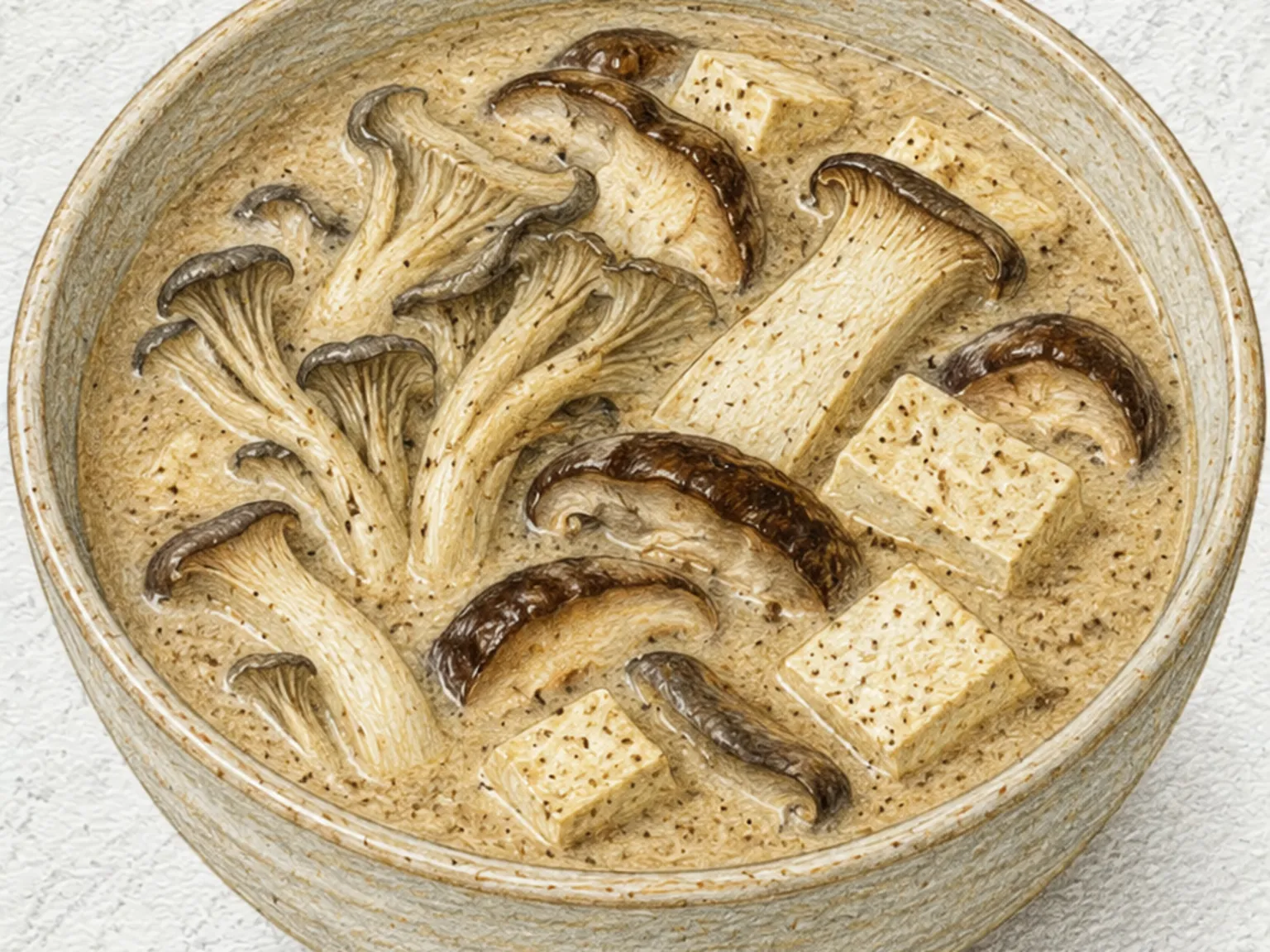
Korean Mushroom Perilla Soup
Three types of mushrooms - oyster, shiitake, and king oyster - are simmered together to create a layered, aromatic broth, then thickened with ground perilla seeds for a nutty body. An onion-based vegetable stock forms the foundation, and cubed tofu absorbs the surrounding flavors as it gently cooks. Adding the perilla powder in small batches prevents clumping and gives the soup a smooth, even consistency.
Adjust Servings
Instructions
- 1
Tear or slice the mushrooms and cut tofu into large cubes.
- 2
Simmer water with onion for 8 minutes to build a light vegetable broth.
- 3
Add mushrooms and garlic, then simmer on medium heat for 10 minutes.
- 4
Season with soup soy sauce, add tofu, and cook 5 more minutes.
- 5
Gradually stir in perilla powder and cook 3 minutes to thicken.
- 6
Turn off heat, rest for 2 minutes, then serve.
As an Amazon Associate, we may earn from qualifying purchases.
Tips
Nutrition (per serving)
More Recipes

Korean Perilla Chicken Soup
Deulkkae samgye-guk is a Korean perilla-enriched chicken soup that delivers the nourishing depth of samgyetang with a simpler preparation - no glutinous rice or ginseng, just chicken and perilla seed powder. The chicken is cut into large pieces and started in cold water, simmered for forty minutes until the broth turns milky and rich. Perilla powder must be pre-dissolved in a small amount of water before adding to prevent lumps, and ten more minutes of gentle simmering allows its oils to emulsify fully into the chicken stock. The result is a broth with a thick, nutty coating on each sip, seasoned with nothing more than soup soy sauce and salt.

Korean Soft Tofu Soup (Mild Clear Broth with Silken Tofu)
Sundubu-guk is the gentler sibling of the more widely known sundubu-jjigae, trading the latter's fiery red broth for a clear, mild soup that puts silken tofu front and center. The base is a simple anchovy and kelp stock, seasoned with soup soy sauce and nothing more assertive, so the broth stays transparent and clean on the palate. Blocks of unpressed soft tofu are slipped into the simmering liquid and heated just until they are warmed through - overcooked sundubu loses the trembling, custard-like texture that defines the dish. Each spoonful collapses gently on the tongue, releasing a faint, sweet soybean flavor that pairs effortlessly with the umami-rich stock. A small addition of salted shrimp paste can be stirred in at the table to introduce a subtle marine depth without disrupting the soup's calm character. This is the soup Koreans turn to when appetite is low, digestion needs rest, or the body simply craves something warm and uncomplicated. It is equally suitable for young children and elderly diners, and its quiet simplicity is precisely its strength.

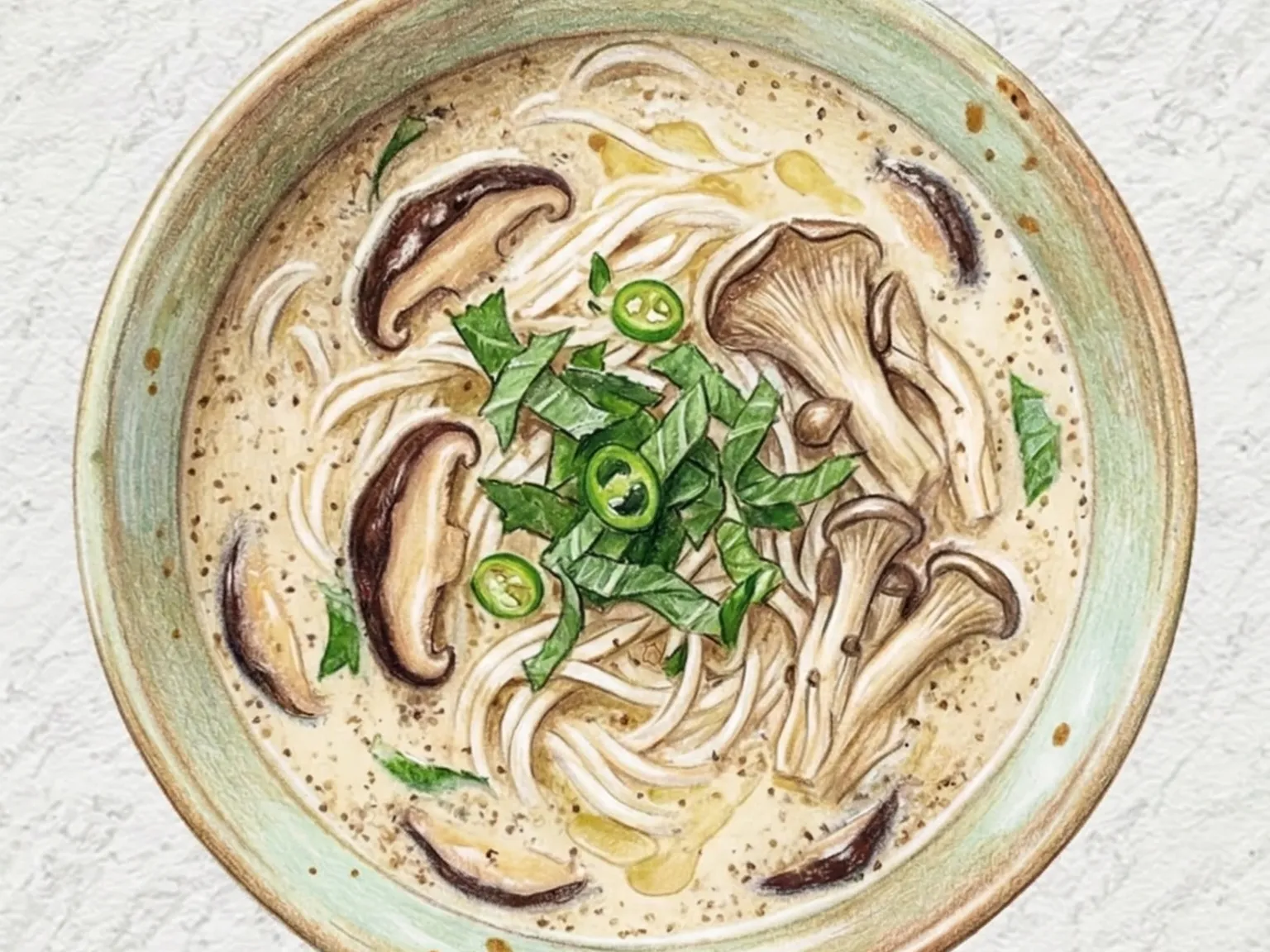
Korean Clear Mushroom Tofu Soup
Light enough for a diet, flavorful enough to satisfy - this clear Korean soup draws deep umami from oyster and shiitake mushrooms simmered in plain water, seasoned with just soup soy sauce and salt. Cubed tofu is added near the end so the pieces hold their shape, and chopped green onion finishes the bowl with a mild sharpness. At 155 calories per serving, it keeps the meal light without sacrificing depth of flavor.

Korean Taro Soup (Autumn Taro in Nutty Perilla Seed Broth)
Toran-guk is an autumn soup centered on taro root, which is first parboiled to remove its slippery mucilage, then simmered in a broth thickened with ground perilla seeds. The taro pieces cook to a texture that falls somewhere between potato and chestnut - they crumble softly on the tongue yet retain a subtle stickiness that gives each bite a gentle cling. Ground perilla dissolves into the liquid and turns it opaque and creamy, layering a nutty richness over the taro's mild, earthy flavor. Beef is often added for depth, its rendered fat and juices rounding out the broth, while an anchovy-kelp base underneath sharpens the umami. The soup is closely associated with Chuseok, the Korean harvest festival, when taro is freshly dug and at its peak sweetness. Cooking the taro just long enough to soften without disintegrating is the key challenge - underdone pieces are chalky and irritate the throat, while overcooked ones dissolve into the broth and lose their identity. Served hot with steamed rice, toran-guk is one of those seasonal dishes that Koreans anticipate all year and miss the moment autumn ends.

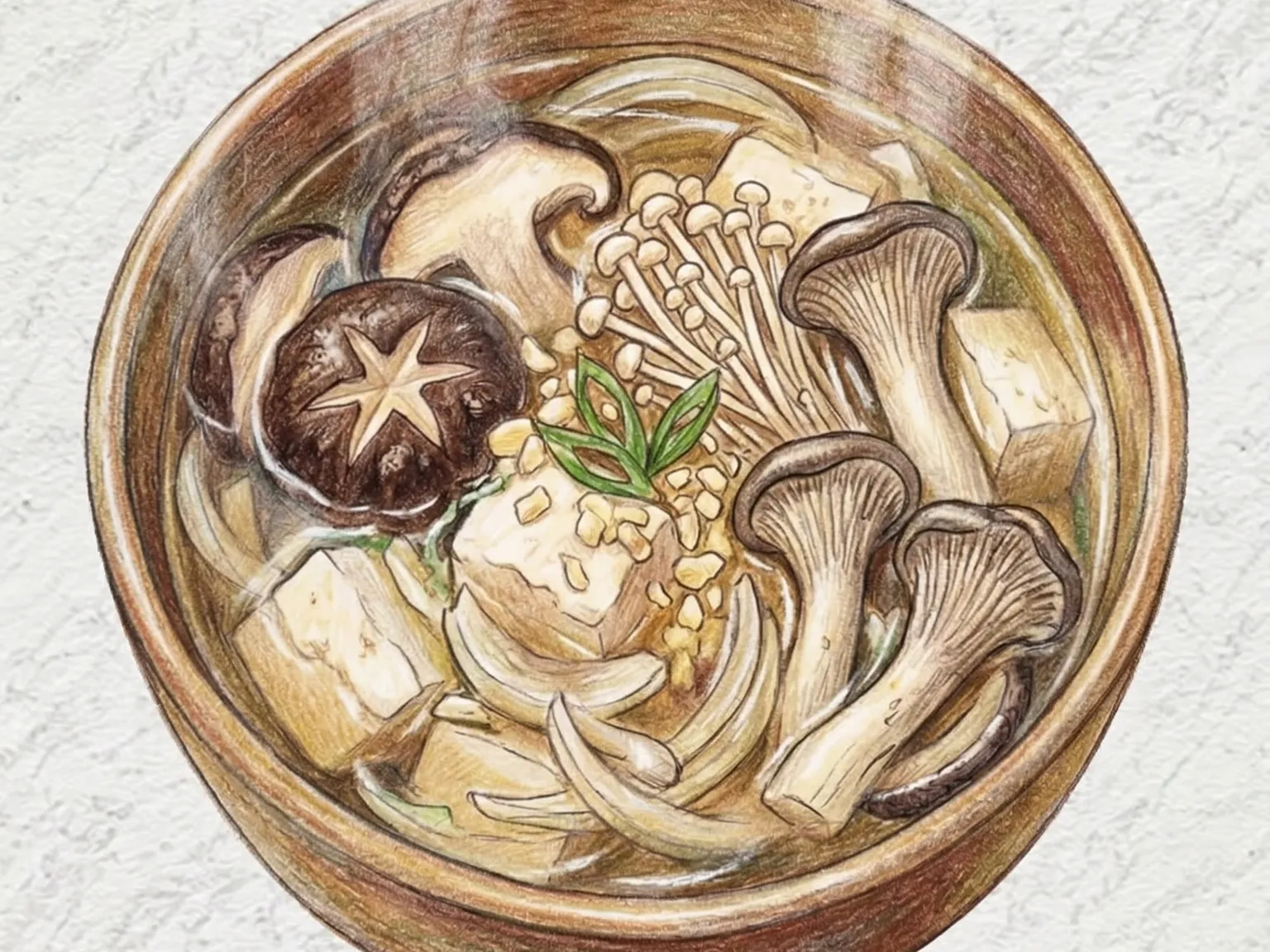
Korean Beoseot Jjigae (Mushroom Stew)
Oyster, shiitake, and enoki mushrooms are simmered in kelp-infused water to create a light, clean-flavored stew. Tofu and sliced onion add body and gentle sweetness, while soup soy sauce and garlic keep the seasoning understated. The result is a low-fat, warming dish where the distinct textures and umami of the mushrooms take center stage.

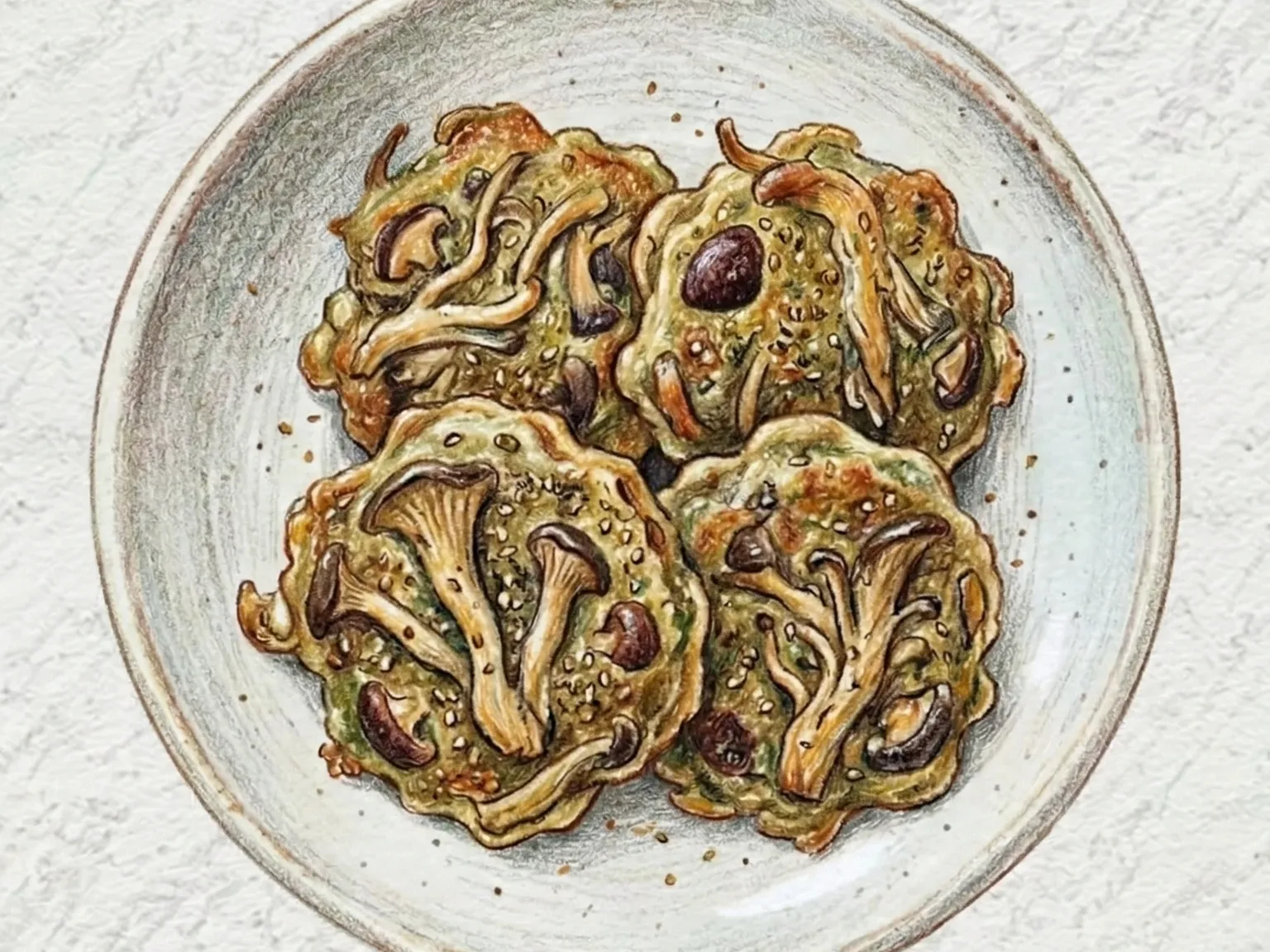
Korean Mushroom Perilla Seed Stir-Fry
Three varieties of mushroom, shiitake, enoki, and oyster, are stir-fried on high heat until their moisture evaporates, then coated in ground perilla seed powder that releases a wave of nutty fragrance the moment it hits the hot pan. Each mushroom contributes a distinct texture: shiitake offers a firm chew, enoki brings delicate strands, and oyster adds thick, meaty bites. The perilla powder should be added only in the final minute of cooking; longer exposure to heat turns its oils acrid rather than aromatic. Soy sauce and a pinch of salt adjust the seasoning, while a finishing drizzle of sesame oil rounds off the dish with a gentle richness. At around 90 calories per serving, it works as an everyday side without weighing down the meal, and the unsaturated fats in perilla seeds add nutritional value beyond what the low calorie count might suggest.