Korean Mushroom Doenjang Stew
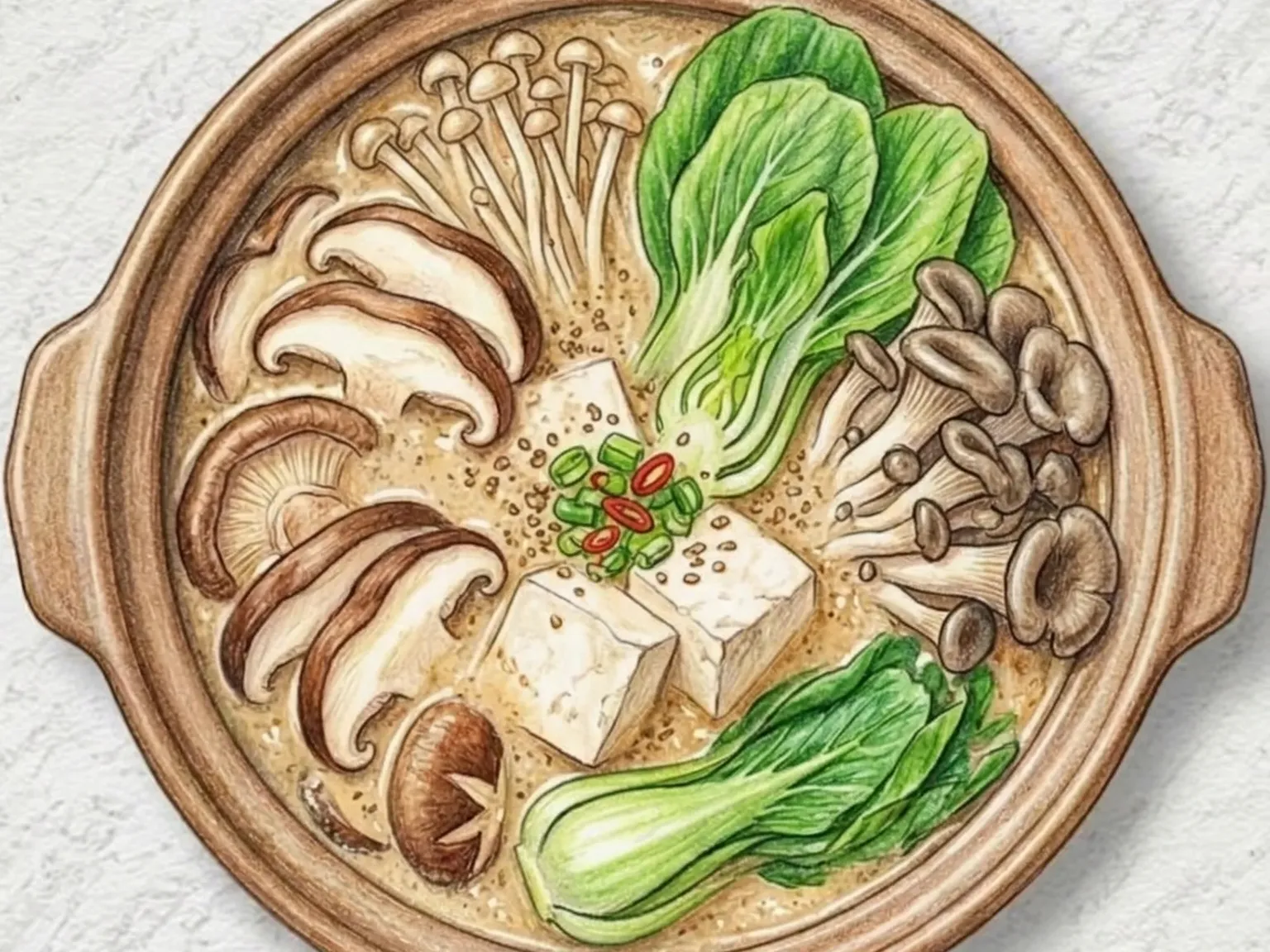
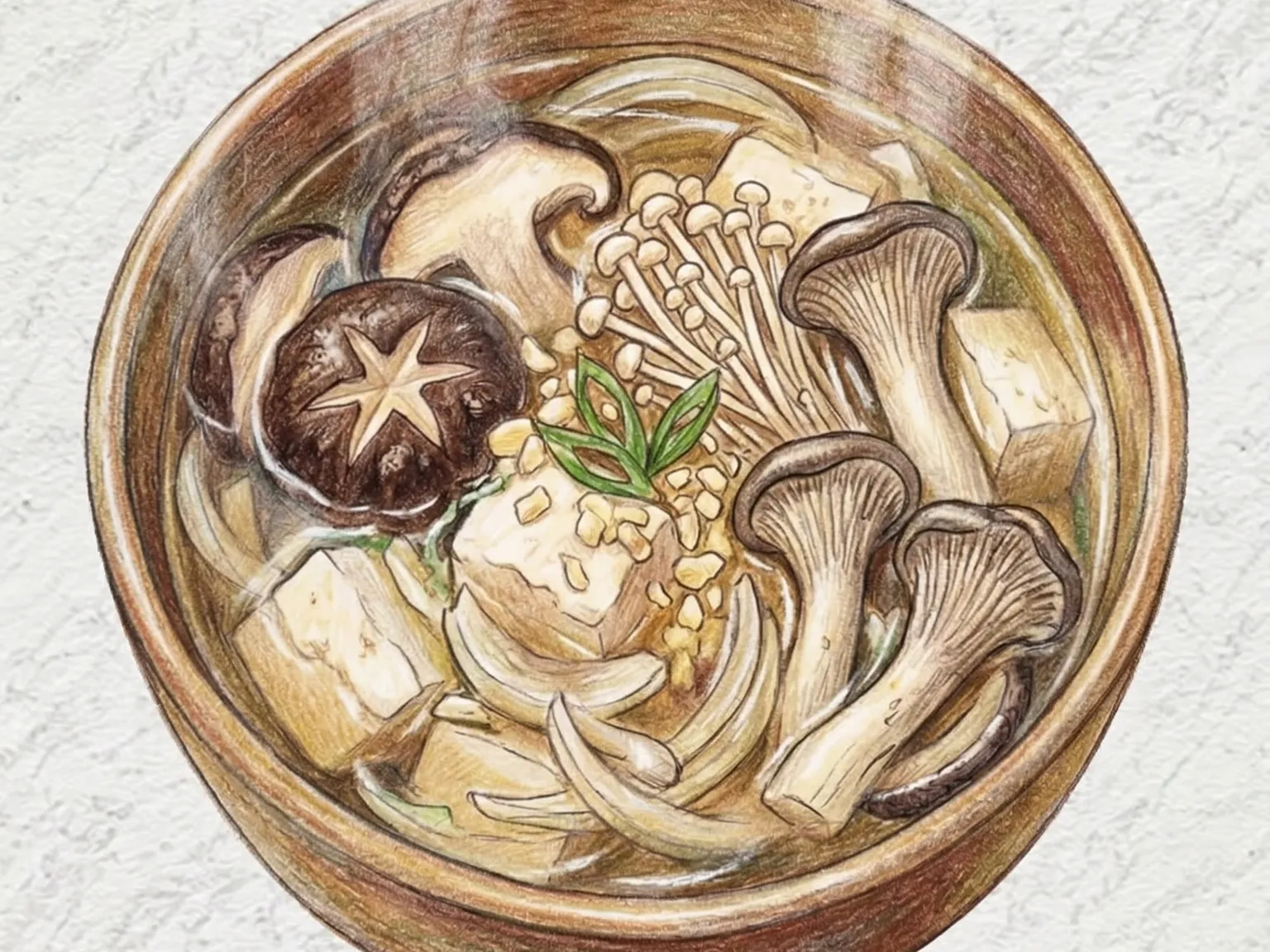
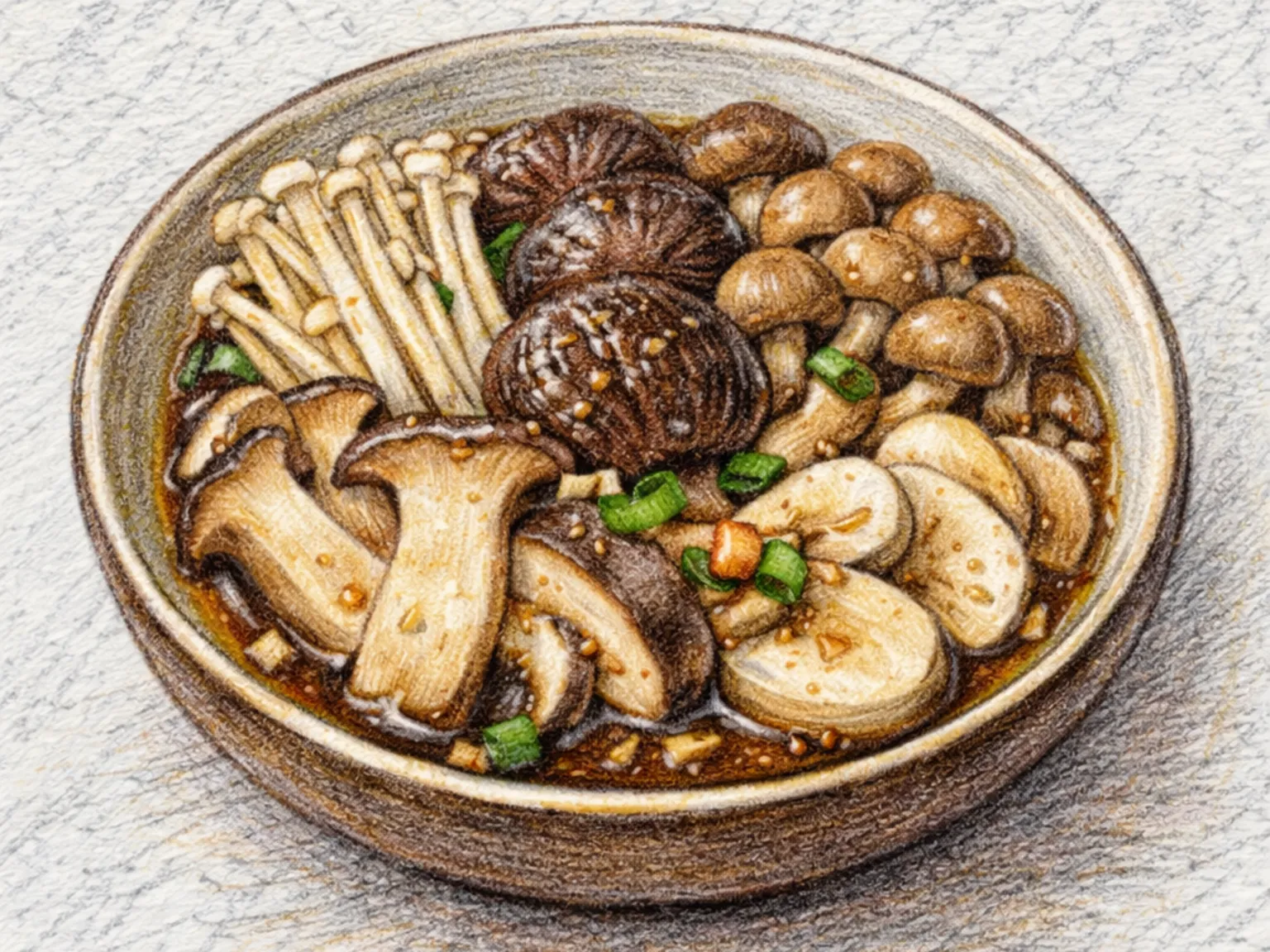
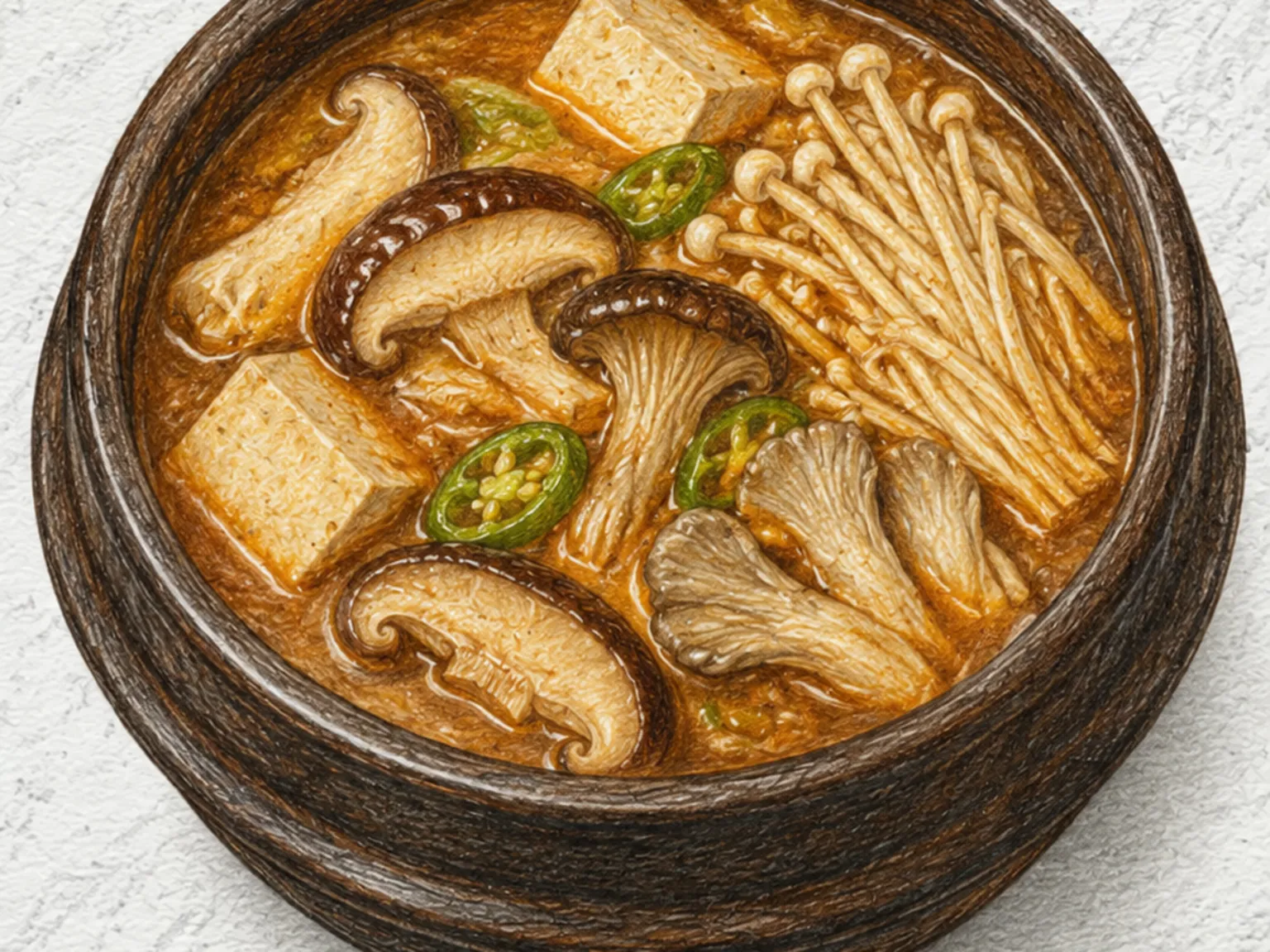
Three types of mushrooms - shiitake, oyster, and enoki - are simmered together in doenjang-seasoned anchovy broth. Each mushroom contributes a distinct texture: the meaty chew of shiitake, the silky tear of oyster mushroom, and the delicate crunch of enoki. Cubes of soft tofu round out the stew, absorbing the fermented soybean broth into every bite.
Adjust Servings
Instructions
- 1
Clean and tear or slice mushrooms into pieces.
- 2
Dissolve doenjang in anchovy broth with garlic, bring to boil.
- 3
Add mushrooms and tofu, simmer 10 minutes.
As an Amazon Associate, we may earn from qualifying purchases.
Tips
Nutrition (per serving)
More Recipes

Korean Seafood Doenjang Stew
Haemul doenjang jjigae elevates the classic soybean paste stew by adding clams and shrimp. The clams open during cooking and release their clear, briny liquor into the doenjang-seasoned kelp and anchovy broth. Shrimp add another layer of seafood flavor. Tofu and zucchini provide familiar textures that soak up the enriched broth. The seafood transforms what is already a staple Korean stew into something noticeably more complex.

Korean Crab Doenjang Stew
This crab stew uses a whole blue crab simmered with doenjang in an anchovy broth base. The crab shell and meat release a concentrated seafood essence that melds with the fermented soybean paste. Tofu and zucchini absorb the rich broth, making every component flavorful. Built on just five core ingredients, the stew lets the natural sweetness of the crab take center stage.

Korean Tofu Stew (Spicy Kimchi & Firm Tofu Pot)
A straightforward jjigae that highlights firm tofu and kimchi in a spicy anchovy broth. Gochugaru dissolves into the stock to create a vivid red, peppery base, while the kimchi's fermented tang adds complexity with each passing minute on the stove. Green onion rounds out the aromatics. Despite using only five main ingredients, the fermented kimchi does the heavy lifting, producing a broth with layered acidity and depth.

Korean Squid Stew
Ojingeo jjigae simmers a whole scored squid in an anchovy broth enriched with gochujang, yielding a sweet-spicy stew. Tofu and zucchini cook alongside, soaking up the bold red pepper paste flavor. Scoring the squid allows the seasoning to penetrate, so each bite releases the savory broth. The natural sweetness of gochujang pairs well with the mild squid, making this a straightforward but flavorful side dish stew.

Korean Mallow Soup (Joseon-Era Doenjang Mallow Soup)
Auk-guk - mallow doenjang soup - has been part of Korean home cooking since the Joseon era, when auk (mallow) was one of the most commonly grown leafy greens in household gardens. The soup starts with an anchovy-kelp stock that provides a clean umami foundation. Doenjang is pushed through a sieve into the simmering broth to dissolve evenly without lumps, and garlic adds a quiet pungency beneath the fermented paste. Mallow leaves, torn by hand into rough pieces, wilt into the broth in under a minute. What sets auk-guk apart from other doenjang-guks is the mallow's distinctive texture - the leaves have a natural mucilage that gives the soup a slightly thickened, slippery quality on the tongue, unlike the clean broth of a spinach or radish version. Traditionally associated with nursing mothers in Korean folk wisdom, who ate it to promote milk production. The soup is at its best in early summer when fresh mallow is at peak tenderness.

Korean Clam Doenjang Soup
Bajirak doenjang guk is a Korean home-style soup where manila clams and doenjang combine to layer oceanic umami with fermented soybean depth. Starting the clams in cold water and bringing it to a boil draws their flavor out gradually, building a rich stock base as the temperature rises. The doenjang is dissolved through a strainer to keep the broth smooth and free of grainy particles, and its amount should be reduced from the usual quantity because the clams themselves contribute significant saltiness. Tofu and Korean zucchini add soft textures; the zucchini releases a gentle sweetness into the broth as it cooks through. Minced garlic harmonizes with the fermented aroma of the doenjang, and scallion added in the final minute preserves its fresh sharpness. No separate anchovy or kelp stock is needed because the clams provide enough umami on their own, making the soup's approach deliberately simple: just water, clams, and doenjang produce a broth with surprising depth.