Korean Soy-Glazed Mushroom Stir-Fry

Korean Soy-Glazed Mushroom Stir-Fry

Quick answer

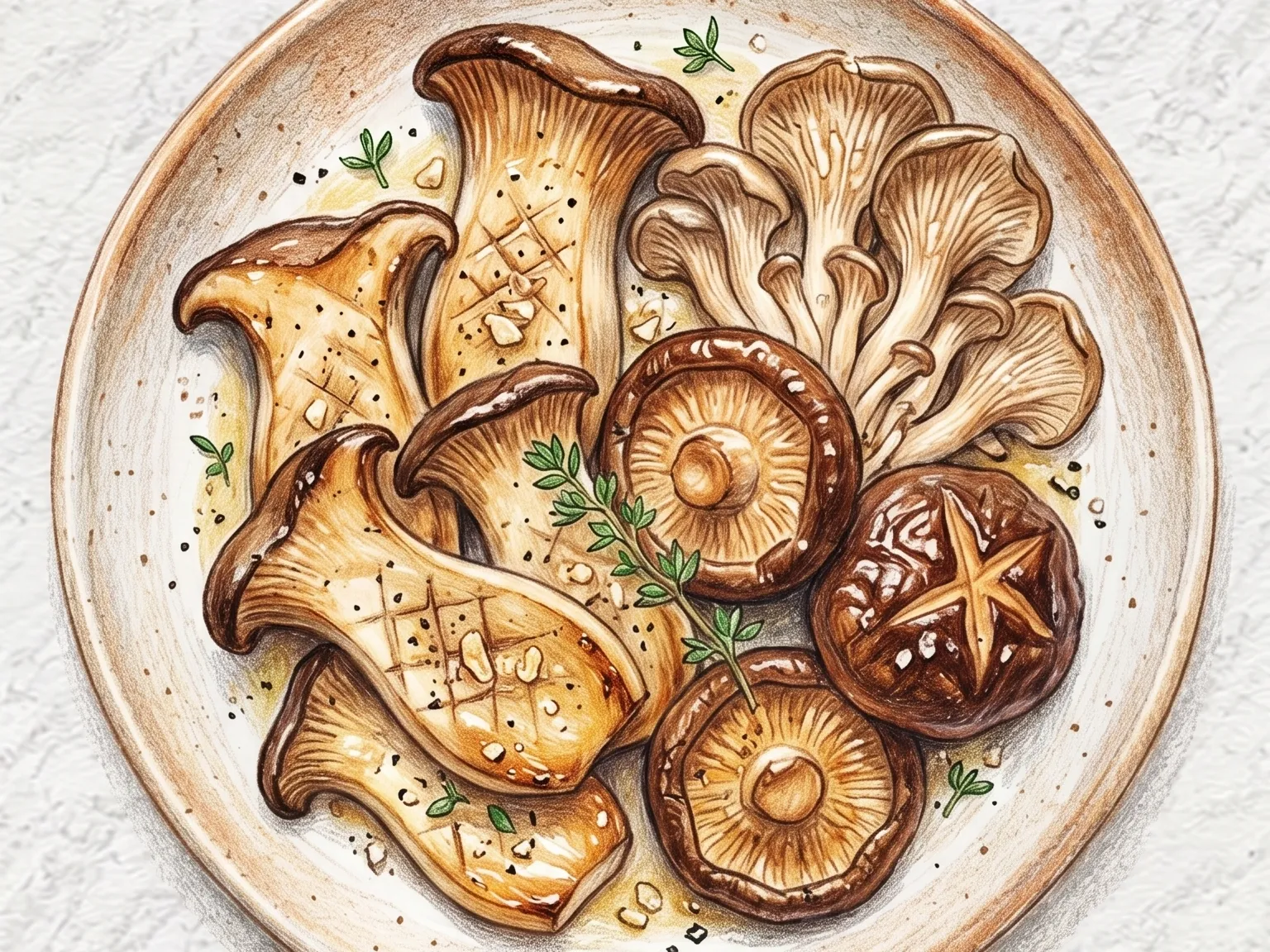
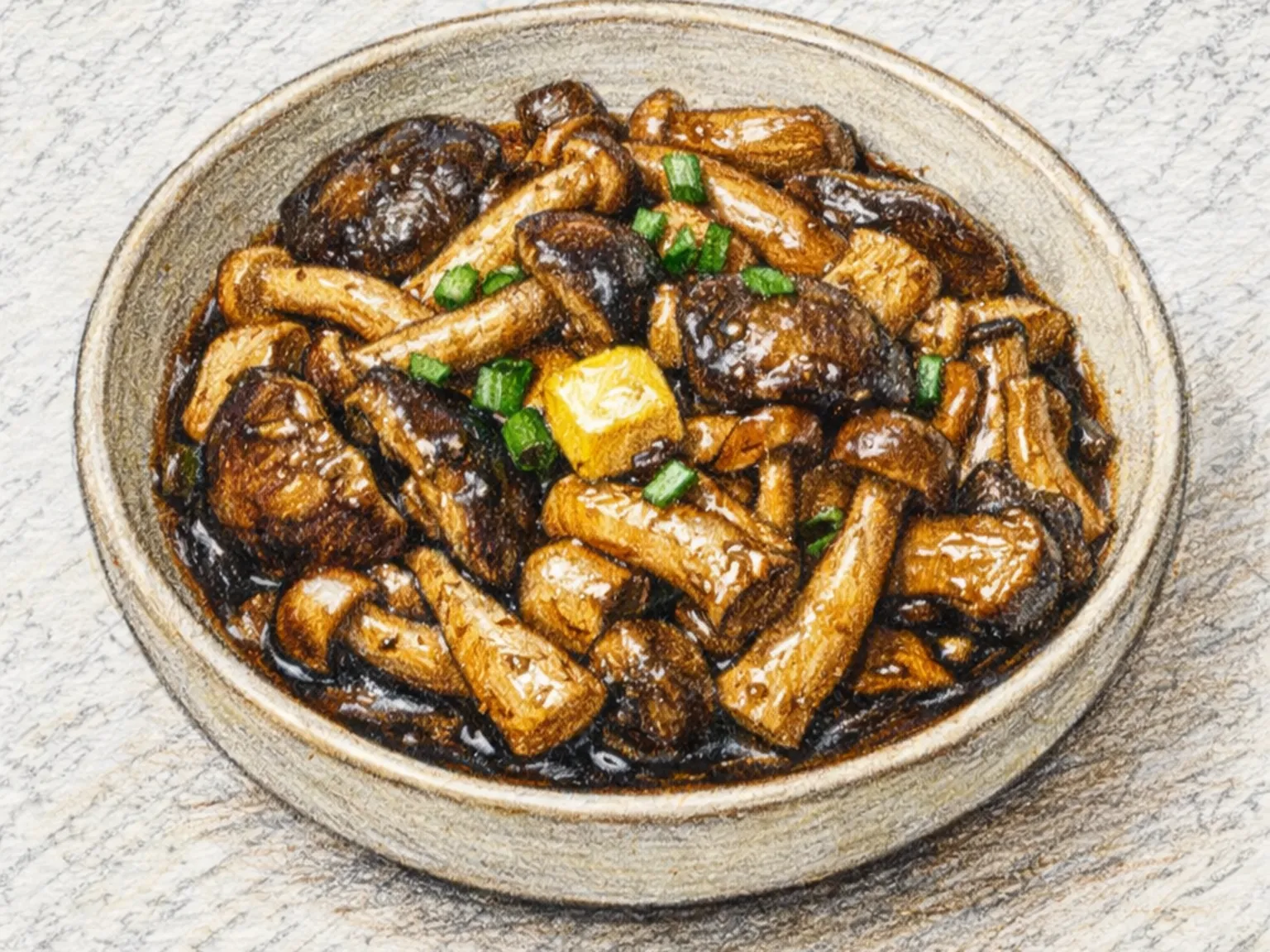
Oyster mushrooms and shiitake are sauteed in melted butter, then finished with a measured pour of soy sauce that reduces into a glossy, caramelized glaze across the surfa...

What makes this special

  • Sliced garlic and butter form a rich base for mushrooms finished with a caramelized soy glaze.
  • Garlic aroma transferred to butter before adding mushrooms creates nutty depth
  • Soy sauce caramelizes on hot pan into a slightly sweet, salty glaze
Total time
20 min
Level
Easy
Servings
2 servings
Ingredients
5
Calories
130 kcal
Protein
5 g

Key ingredients

Oyster mushroomShiitake mushroomSoy sauceButterGarlic

Core cooking flow

  1. 1 Tear 150 g oyster mushrooms into natural strips, then remove the shiitake st...
  2. 2 Slice 2 garlic cloves thinly and divide the butter into 15 g for cooking and 5 g for finishing.
  3. 3 Preheat the pan over medium heat for 1 minute, then melt 15 g of butter.

Oyster mushrooms and shiitake are sauteed in melted butter, then finished with a measured pour of soy sauce that reduces into a glossy, caramelized glaze across the surface of each piece. Sliced garlic goes into the butter first and cooks until fragrant, building an aromatic base before the mushrooms are added. Cooking over strong heat is the non-negotiable step: moderate temperatures cause the mushrooms to release moisture and stew in their own liquid rather than sear, losing the slightly crisp exterior that defines the dish. Once the mushrooms are colored and their edges firm up, soy sauce is added and tossed rapidly so it coats every surface and reduces rather than pools. The butter infuses the mushrooms during cooking with a rich, almost nutty undertone, while the soy sauce caramelizes under heat to produce a salty-sweet lacquer. A small knob of additional butter stirred in off the heat gives the sauce a final sheen. With only five ingredients, the dish depends entirely on the interplay between butter depth and soy intensity to deliver flavor well beyond its simplicity. Spooned over steamed rice, it turns a plain bowl into a complete meal.

Prep 10min Cook 10min 2 servings

Instructions

Read the steps as a cooking flow: prep, heat, seasoning, doneness control, and finish.

6 steps
  1. 1
    Prep

    Tear 150 g oyster mushrooms into natural strips, then remove the shiitake stems and slice 100 g of caps about 5 mm thick.

    Wipe them with a damp cloth only, keeping the surfaces as dry as possible.

  2. 2
    Finish

    Slice 2 garlic cloves thinly and divide the butter into 15 g for cooking and 5 g for finishing.

    Keep every ingredient beside the stove before heating, so the high-heat cooking does not stall.

  3. 3
    Control

    Preheat the pan over medium heat for 1 minute, then melt 15 g of butter.

    When the foaming calms, add the sliced garlic and cook for about 30 seconds, stopping before it browns so only the aroma infuses the butter.

  4. 4
    Step

    Add all the mushrooms at once and raise the heat to high.

    Spread them out and leave them mostly undisturbed for the first minute, then toss for about 2 more minutes until the edges turn lightly browned and dry.

  5. 5
    Season

    If liquid gathers on the pan bottom, cook 30 seconds longer to evaporate it before adding soy sauce.

    Pour 2 tablespoons around the pan edge, let it sizzle for 10 seconds, then toss quickly so it coats instead of pooling.

  6. 6
    Finish

    Lower the heat and add the remaining 5 g of butter, letting the residual heat melt it into the glaze.

    Once the sauce looks glossy and clings to the mushrooms, transfer immediately and serve over steamed rice.

After the steps

Pick a recipe that fits this dish.

Continue with shared ingredients, meal pairings, or a similar method.

Recipes That Go Well With This

More Stir-fry →

Based on shared ingredients and meal pairing

Korean Soy-Glazed Shrimp Stir-Fry
Shared ingredient: butter Stir-fry

Korean Soy-Glazed Shrimp Stir-Fry

Ganjang saeu bokkeum coats plump shrimp in a sweet-savory soy glaze built on a base of melted butter and garlic. A single cheongyang chili adds a subtle kick that lifts the buttery richness without overpowering it. The key timing rule is to add the sauce the moment the shrimp turn pink: any longer and they become rubbery, but the glaze needs just enough heat to caramelize lightly and coat. Stir-frying the garlic in the butter before the shrimp go in lays a nutty base across the entire sauce. A final splash of soy sauce over high heat at the end creates the lacquered sheen that defines the finished dish. With only eight minutes of cooking time total, this works equally well as a quick banchan alongside rice or as an appetizer with drinks.

Korean Soy Sauce Stir-Fried Mushrooms
Shared ingredient: shiitake mushrooms Side dishes

Korean Soy Sauce Stir-Fried Mushrooms

King oyster mushrooms are torn by hand rather than cut, opening up a fibrous surface that absorbs seasoning more readily than a knife-cut edge. Shiitake caps are sliced thin after removing their stems. Both go into a dry, screaming-hot pan first - no oil - to drive off surface moisture until the edges of the king oyster pieces take on light char and a firm, meat-like chew develops. Perilla oil goes in at that point, followed by soy sauce poured along the rim of the pan where the heat is most intense, which caramelizes it instantly and coats every piece in a dark, lacquered glaze. No sugar is added - the soy sauce reduction provides the sweetness. A drizzle of sesame oil off heat and a scatter of scallion finish the dish. Concentrated, deeply savory, and ready in under ten minutes.

Korean Pickled Green Peppers
Serve together Side dishes

Korean Pickled Green Peppers

Gochu jangajji - soy-pickled green peppers - is a traditional Korean preservation method that traces back to the era before refrigeration, when summer's abundance of green peppers had to be kept edible through leaner months. Each pepper is stemmed and pierced several times with a toothpick so the brine can penetrate through the thick walls of the flesh and reach the seeds inside. A brine of soy sauce, vinegar, sugar, and water is brought to a full boil and poured directly over the peppers while still scalding hot; this flash of heat slightly blanches the exterior, brightening the green color, while the interior stays raw and crisp. Repeating this step the following day - draining the cooled brine, returning it to the pot, reboiling it, and pouring again - is what separates a well-made batch from a mediocre one. The second pour deepens the penetration of the seasoning, reinforces preservation, and allows the pickles to keep under refrigeration for over a month without losing crunch. Once fully pickled, the flavor is a layered combination of salty depth from the soy, gentle acidity from the vinegar, and the pepper's own lingering capsaicin heat, which mellows in brine but never entirely disappears. Placed on a bowl of plain rice, two or three pickled peppers are enough to make a full meal. Using cheongyang chili peppers instead of regular green peppers produces a sharper, hotter version, while kkwari peppers yield a milder and more tender result.

Korean Soy-Glazed Chicken Stir-Fry
Similar recipe Stir-fry

Korean Soy-Glazed Chicken Stir-Fry

This soy-glazed chicken stir-fry marinates thinly sliced chicken breast in soy sauce, garlic, and ginger before a quick pan-fry over high heat. Slicing the breast thin ensures each piece absorbs the marinade rapidly and cooks through without drying out, avoiding the rubbery texture that plagues overcooked white meat. The ginger cuts through any poultry aroma while the soy sauce provides a steady umami backbone throughout. A drizzle of sesame oil at the end ties together the flavors with a warm, nutty finish. A single cheongyang chili added during cooking gives the dish a clean heat, and it holds up well for meal prep or packed lunches. Practical for diet-conscious cooking or post-workout protein without sacrificing flavor.

Serve with this

Korean Hemp Seed Rice (Nutty Protein-Rich Grain Rice)
Rice Easy

Korean Hemp Seed Rice (Nutty Protein-Rich Grain Rice)

Cheongsam bap is a Korean nutritional rice cooked with toasted hemp seeds. The hemp seeds contribute a nutty, subtly grassy aroma and a gentle popping texture that transforms plain short-grain rice into something more layered. Hemp seeds are nutritionally notable for their high plant protein content and a well-balanced ratio of omega-3 to omega-6 fatty acids, which is why they have attracted attention as a functional food in Korea. The preparation requires no extra technique beyond standard rice cooking - the seeds and a small amount of salt go in with the rice before the cooker starts. Lightly toasting the seeds in a dry pan for about five minutes before adding them deepens their fragrance noticeably compared to untoasted seeds. The finished rice pairs well with virtually any Korean side dish, and the mild, toasty flavor holds up equally well when the rice is eaten on its own as a simple, wholesome bowl.

🥗 Light & Healthy 🏠 Everyday
Prep 5min Cook 30min 2 servings
Korean Crab Doenjang Stew
Stews Easy

Korean Crab Doenjang Stew

Gejang-jjigae is a Korean stew made by simmering a whole blue crab in an anchovy broth base seasoned with doenjang, the fermented soybean paste. The crab shell and meat release a concentrated seafood stock as they cook, and that liquid merges with the doenjang to create a broth that is simultaneously briny, earthy, and deeply savory. Using anchovy broth as the foundation amplifies the oceanic notes rather than diluting them, so both the doenjang umami and the crab sweetness come through at the same time. Tofu and zucchini absorb the rich cooking liquid throughout the simmering process, becoming flavorful in their own right rather than acting merely as filler. The tofu in particular pulls in the solids that settle from the fermented paste, softening into a silky texture that contrasts with the firmer crab meat. Picking the sweet crab meat out of the shell with chopsticks is one of the characteristic pleasures of eating this stew, and the contrast between the naturally sweet crab flesh and the bold, fermented broth gives each mouthful a satisfying complexity.

🏠 Everyday ⚡ Quick
Prep 10min Cook 20min 2 servings
Korean Clam Doenjang Soup
Soups Easy

Korean Clam Doenjang Soup

Bajirak doenjang guk is a Korean home-style soup that brings together manila clams and doenjang to layer oceanic umami with fermented soybean depth in a single, clean broth. Starting the clams in cold water and bringing everything slowly to a boil draws flavor from the shells gradually rather than shocking them, building a stock base that grows richer as the temperature rises. The doenjang must be dissolved through a strainer rather than stirred in directly, because undissolved paste left in the soup creates a grainy texture and uneven seasoning. Since clams carry their own salt, the quantity of doenjang should be noticeably less than usual to prevent the finished soup from becoming over-salted; seasoning should always be adjusted at the end after tasting. Soft tofu cut into cubes adds a gentle, yielding protein bite, and Korean zucchini releases a quiet sweetness into the broth as it cooks through, softening the overall profile. Minced garlic introduced mid-cooking harmonizes with the fermented aroma of the doenjang without overpowering it. Scallion added in the final minute preserves its fresh, sharp note rather than turning limp and faded. No anchovy stock, no dried kelp, and no dashi of any kind is needed here, because the clams alone provide enough umami to build genuine depth. That restraint is what defines the soup: when the ingredients are kept simple, the natural sweetness and marine character of good clams come through cleanly, producing a broth that tastes more substantial than its short ingredient list suggests.

🏠 Everyday 🥗 Light & Healthy
Prep 20min Cook 15min 2 servings

Similar recipes

Korean Soy-Glazed Chicken Stir-Fry
Stir-fry Easy

Korean Soy-Glazed Chicken Stir-Fry

Chicken thigh meat stir-fries in soy sauce, sugar, and oligosaccharide syrup for a sweet-salty glaze. Garlic and ginger go into the oil first to infuse the fat with fragrance before the chicken is added, letting the aromatics penetrate deep into the meat as it cooks. The oligosaccharide heats into a tacky gloss that coats each piece evenly as the liquid reduces. Sesame oil and whole sesame seeds scattered over the top at the end bring a nutty, aromatic finish. The flavor profile runs close to Japanese teriyaki, but the heavier use of garlic and ginger pushes it toward the more direct, punchy spice character typical of Korean cooking. Boneless thighs cut into bite-sized pieces cook more evenly than larger pieces, and keeping the heat high through most of the cook ensures the surface caramelizes without turning rubbery.

🏠 Everyday 🌙 Late Night
Prep 15min Cook 15min 2 servings
Korean Cabbage Doenjang Stir-Fry
Stir-fry Easy

Korean Cabbage Doenjang Stir-Fry

Baechu doenjang bokkeum is a Korean home-style side dish where napa cabbage is stir-fried with doenjang (fermented soybean paste) in perilla oil. The cabbage goes into a hot pan first and is tossed until slightly wilted, then the doenjang is added and the heat lowered so the paste spreads evenly and coats every piece. Minced garlic goes in with the cabbage, its sharpness merging into the fermented depth of the doenjang as both cook together. The thicker stem sections go into the pan before the leaves to preserve their crunch, and the leafy parts follow later so they stay tender rather than limp. A final drizzle of perilla oil just before removing the pan from heat reinforces the nutty aroma, finished with a scatter of toasted sesame seeds. The seasoning is minimal, but the salty intensity of the doenjang and the natural sweetness of napa cabbage strike a balance that makes this side dish a reliable staple with steamed rice. No soup or stew is needed alongside it.

🏠 Everyday 🍱 Lunchbox
Prep 5min Cook 8min 2 servings
Korean Busan-Style Soy Fish Cake Stir-Fry
Side dishes Easy

Korean Busan-Style Soy Fish Cake Stir-Fry

Busan, Korea's largest port city, is closely identified with eomuk: thick, pressed fish cake sold at stalls around Gukje-sijang market. This Busan-style stir-fry slices the fish cake into strips and cooks it with onion and cheongyang chili in soy sauce, cooking wine, sugar, and minced garlic over high heat. Onion goes into the pan first to caramelize and release its sugars, creating a sweet base before the fish cake joins and absorbs the glaze into its porous interior. Cheongyang chili adds a sharp, lingering heat that sets this version apart from the milder soy-braised fish cake common in Seoul. The dish holds its flavor well after cooling, making it a reliable lunchbox side that tastes just as good a few hours later.

🏠 Everyday 🍱 Lunchbox
Prep 10min Cook 12min 4 servings

Tips

High heat is essential - mushrooms need to brown, not steam.

Nutrition (per serving)

Calories
130
kcal
Protein
5
g
Carbs
10
g
Fat
8
g