Korean Soy Bulgogi with Mushrooms
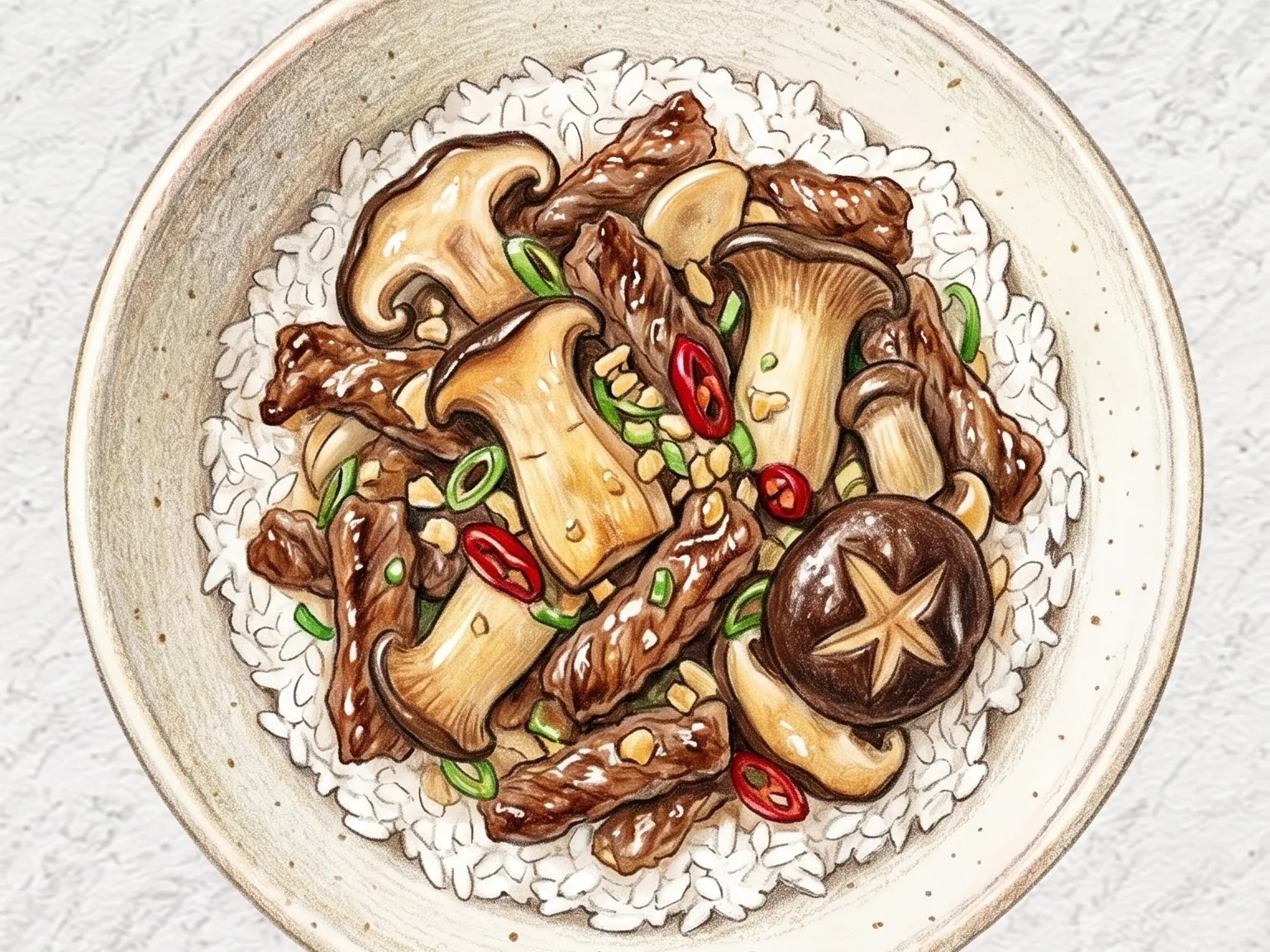
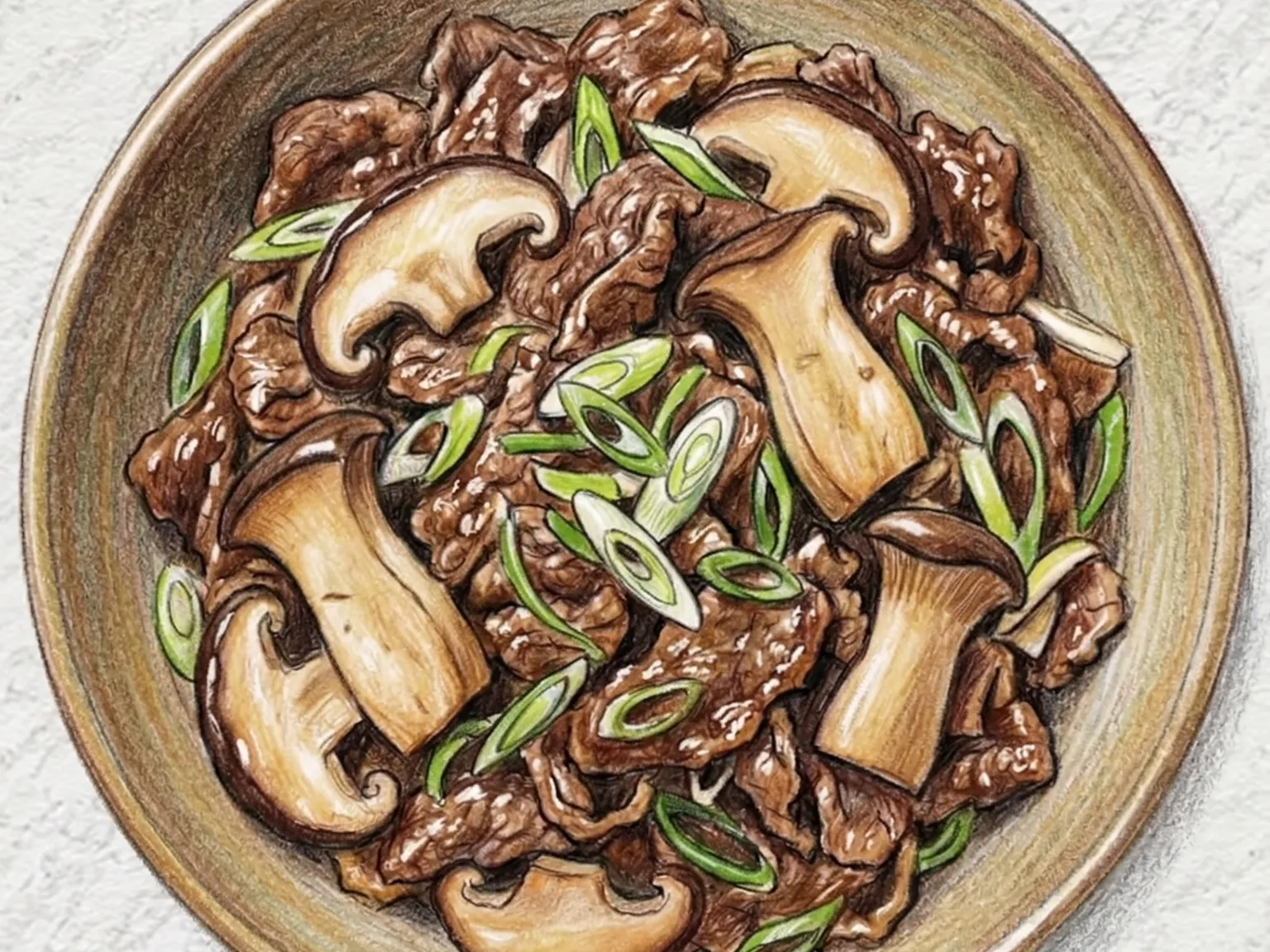
Thinly sliced beef is marinated in soy sauce, Korean pear juice, and sesame oil, then stir-fried over high heat together with shiitake and king oyster mushrooms. The pear juice tenderizes the protein and leaves a subtle fruit sweetness in the background, while the two mushroom varieties absorb the meat juices and contribute their own textures: shiitake with a firm, chewy bite and king oyster with a thick, clean meatiness. Spreading the ingredients across the pan rather than crowding them is critical; excess moisture needs to evaporate quickly so the marinade can reduce into a glossy coating instead of pooling into a broth. Green onion goes in during the final minute of cooking, adding a sharp, fresh note that cuts through the sweet soy richness and lifts the entire dish.
Adjust Servings
Instructions
- 1
Blot thin-sliced beef with paper towels to remove excess blood and odor.
- 2
Combine soy sauce, pear juice, sugar, minced garlic, sesame oil, and pepper to make the marinade.
- 3
Marinate beef for 10 minutes first, then mix in sliced onion and mushrooms.
- 4
Spread ingredients in a hot pan and stir-fry on medium-high heat for 4 minutes to reduce moisture.
- 5
Continue cooking and tossing for another 4 minutes until beef is fully cooked and sauce reduces.
- 6
Add green onion and stir-fry for 1 minute to finish, then serve right away.
As an Amazon Associate, we may earn from qualifying purchases.
Tips
Nutrition (per serving)
More Recipes

Korean Andong-style Soy Bulgogi
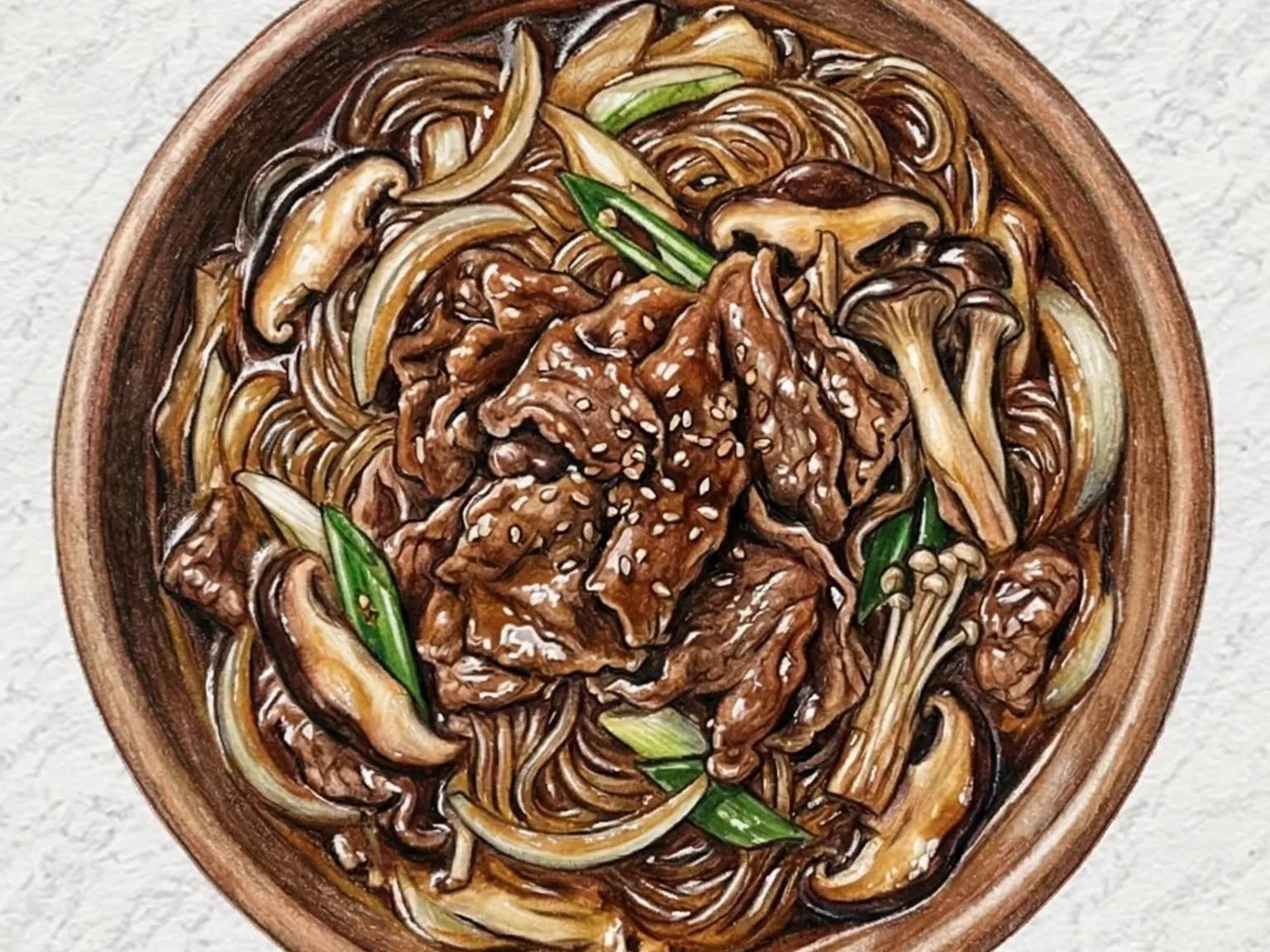
Andong-style bulgogi differs from the Seoul version in one fundamental way: it is not grilled. In Andong - a city in North Gyeongsang Province known for preserving Joseon-era culinary customs - bulgogi is braised in a shallow pan with the marinade and vegetables rather than cooked over open flame. Thinly sliced beef is marinated in soy sauce, sugar, sesame oil, garlic, and pear juice, then layered with glass noodles, onion, scallion, and mushroom in a wide, flat pan. As the liquid simmers down, the sweet soy marinade reduces into a glaze that coats every ingredient. The result is wetter and more intensely seasoned than grilled bulgogi, with the noodles soaking up the concentrated braising liquid. This style appears at Andong's ancestral rite ceremonies and family gatherings, where the dish is served communally from the pan it was cooked in.

Korean Soy Sauce Bulgogi (Soy-Pear Marinated Thinly Sliced Beef)
Ganjang bulgogi is one of Korea's most beloved home-cooked main dishes, featuring thinly sliced beef marinated in soy sauce, pear juice, sugar, garlic, and sesame oil. The pear juice acts as a natural tenderizer while contributing subtle sweetness that complements the salty depth of soy. Onion, carrot, and green onion are stir-fried together with the beef over high heat, creating smoky caramelized edges while keeping the center moist. The dish finishes with just enough sauce to spoon over rice, making each bite rich and satisfying.

Korean Spicy Gochujang Bulgogi
This spicy gochujang pork bulgogi builds its bold flavor from a marinade of gochujang, Korean chili flakes, soy sauce, garlic, and corn syrup applied to thick-cut pork neck. Stir-frying on medium-high heat drives off moisture first, allowing the sauce to caramelize and develop depth rather than turn watery. Onion goes in next, contributing natural sweetness that tempers the chili heat, followed by green onion for a fresh aromatic lift. Scoring thicker slices helps the marinade penetrate more evenly. The generous four-serving yield makes it a practical centerpiece for family dinners.

Korean Seoul-style Soy Bulgogi
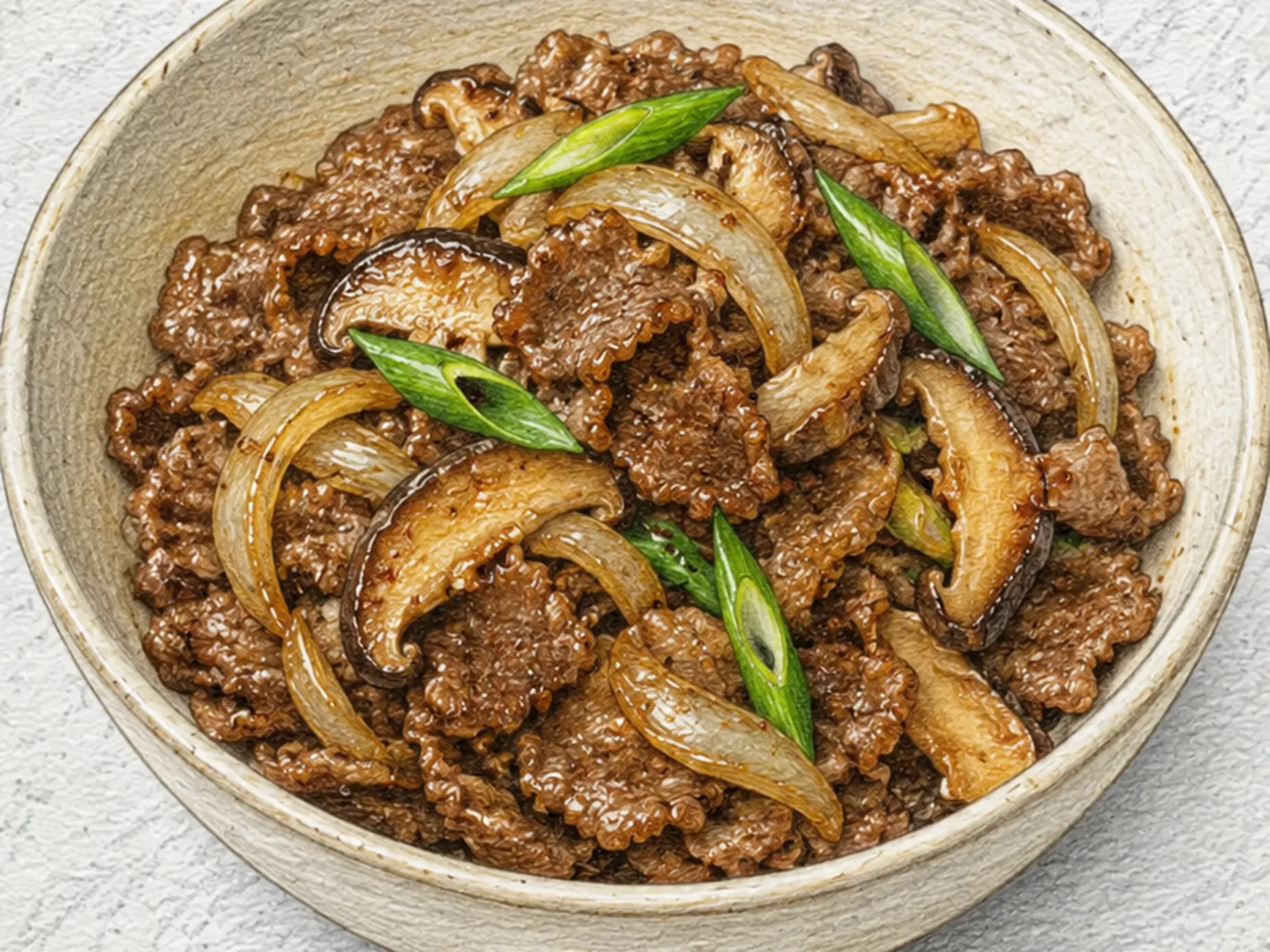
Seoul-style soy bulgogi highlights a clean sweet-savory profile achieved by marinating thin-sliced beef in soy sauce and pear juice with garlic and a touch of sugar. Onion and green onion are added during stir-frying, their natural sugars melting into the sauce for a rounded sweetness. Cooking on a fully preheated pan ensures the meat sears quickly without releasing excess liquid, preserving the smoky wok flavor. The result is a polished, well-balanced bulgogi that tastes just as good at room temperature, making it a reliable lunchbox option.

Korean Soy-Braised Beef with Mushrooms
Sogogi beoseot jangjorim is a Korean soy-braised banchan of beef eye round, shiitake mushrooms, and whole garlic cloves. The beef is boiled first and the resulting clear stock becomes the braising liquid, layering the soy sauce with deep meat flavor from the start. Shiitake mushrooms contribute their own aromatic umami, and whole garlic cloves lose their sharpness during the long simmer, turning mellow and sweet. Shredding the beef along the grain exposes more surface area to the sauce, and an overnight rest in the refrigerator lets every component absorb the seasoning more fully. It stores well for days, making it a reliable lunchbox and meal-prep staple.

Korean Mushroom Bulgogi Jeongol
This hot pot brings together soy sauce-marinated sliced beef with shiitake and enoki mushrooms simmered in a generous broth. Sweet potato noodles soak up the savory stock, gaining a chewy, flavorful bite with every serving. The combination of earthy mushrooms, caramelized onion sweetness, and garlic-infused broth makes it a satisfying communal dish meant to be shared at the table.