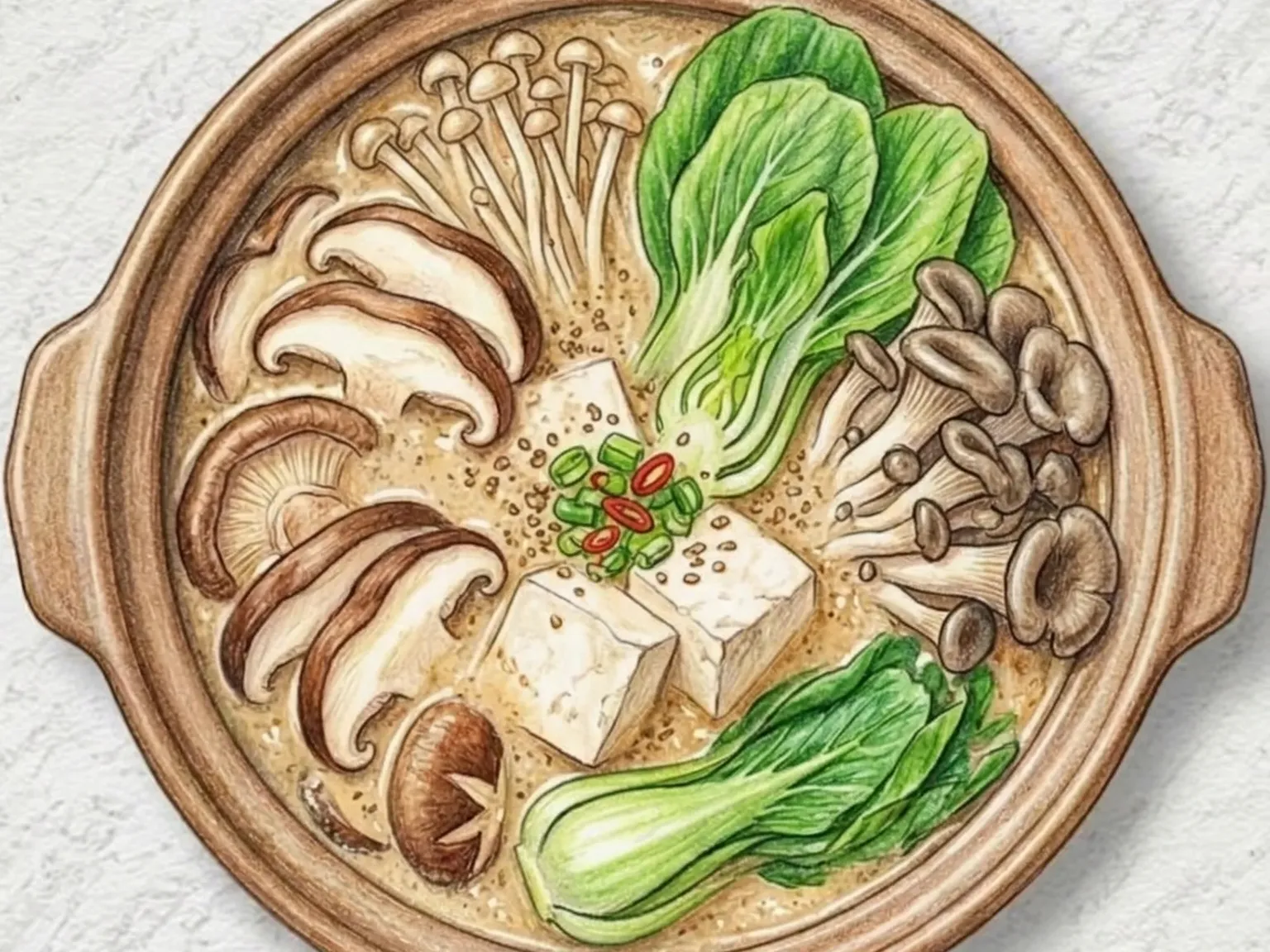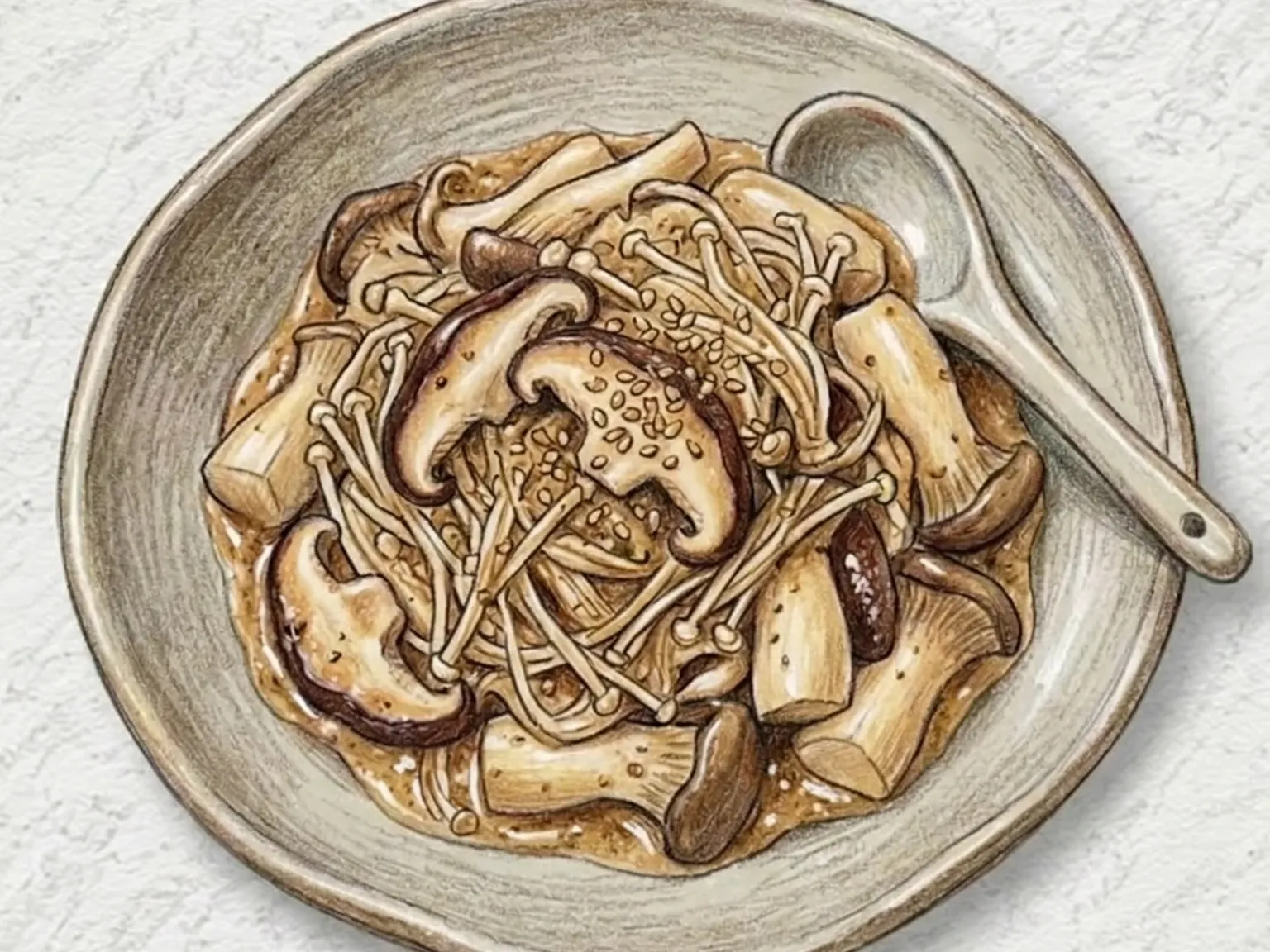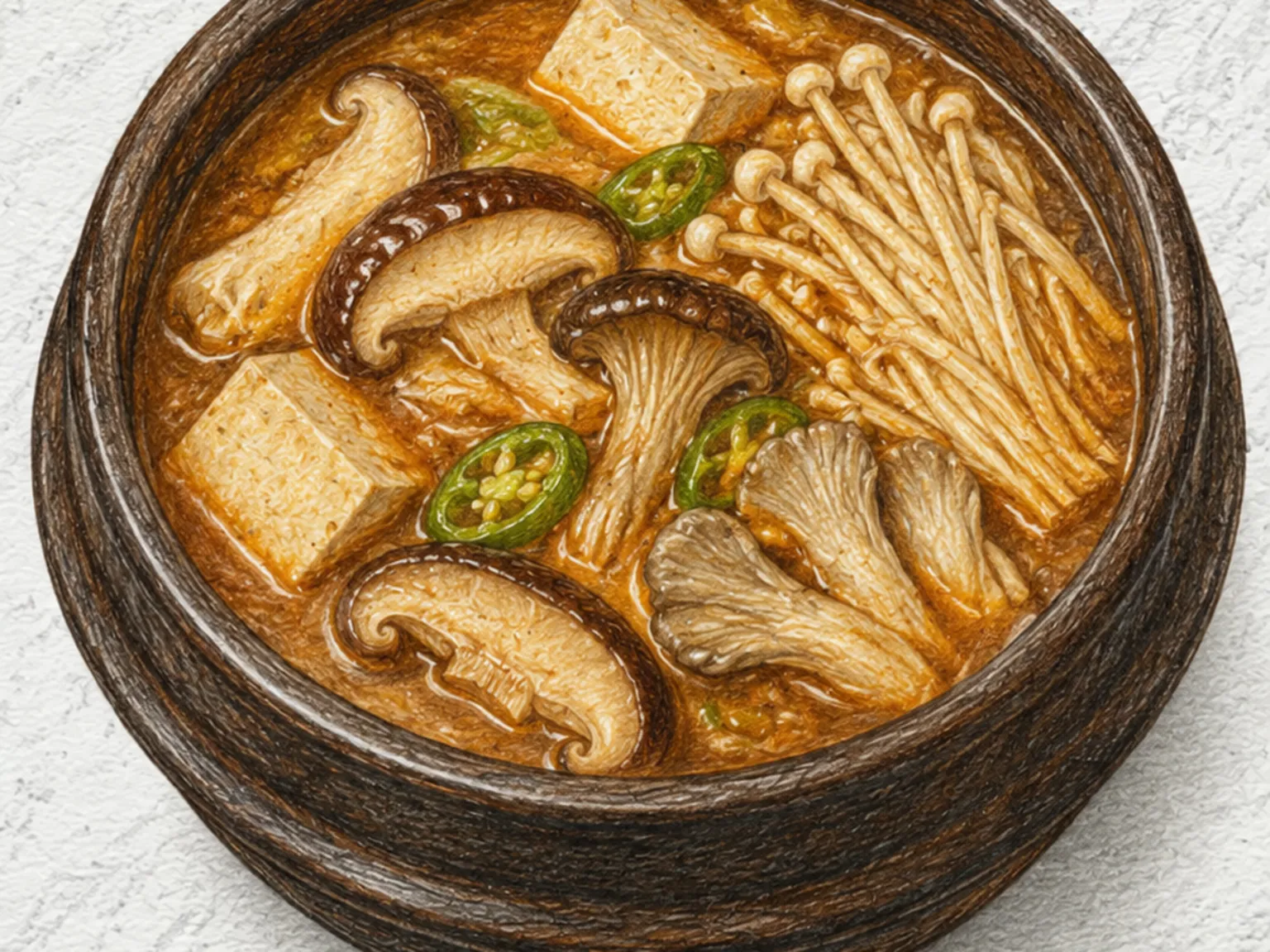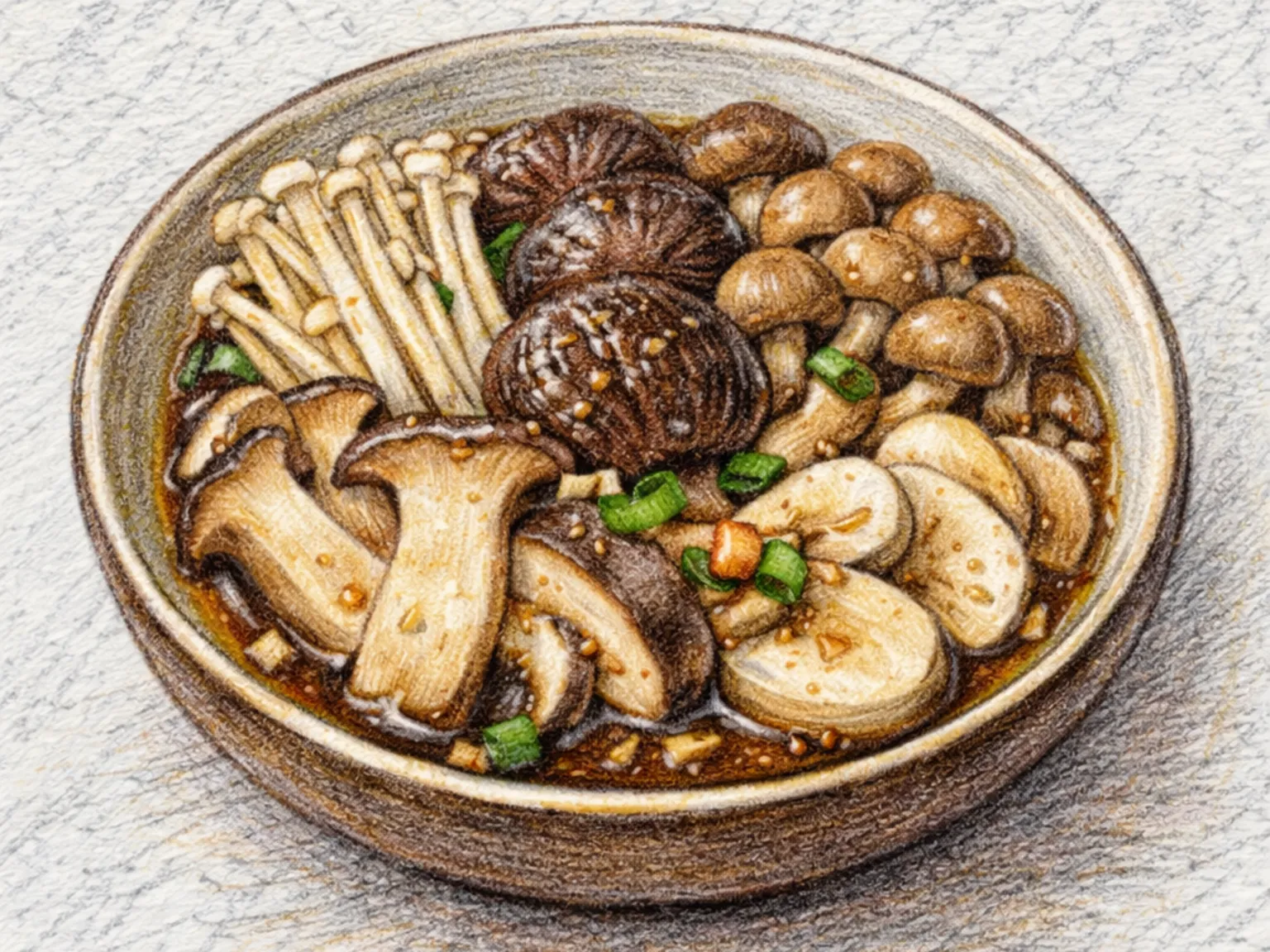
Korean Steamed Mixed Mushrooms

Korean Steamed Mixed Mushrooms

Quick answer

Three types of mushrooms - oyster, shiitake, and enoki - are steamed in a soy sauce and garlic seasoning.

What makes this special

  • Beoseot jjim involves tearing oyster and slicing shiitake mushrooms to preserve texture.
  • Tearing oyster and thickly slicing shiitake cap preserves each mushroom texture
  • Sesame oil applied right after steaming traps aroma before moisture escapes
Total time
24 min
Level
Easy
Servings
2 servings
Ingredients
7
Calories
115 kcal
Protein
8 g

Key ingredients

oyster mushroomsshiitake mushroomsenoki mushroomssoy saucewater

Core cooking flow

  1. 1 Tear 150 g oyster mushrooms by hand along their grain so the rough edges can catch the seasoning.
  2. 2 Cut off the firm base from 100 g enoki mushrooms, then loosen only the large clumps.
  3. 3 In a bowl, mix 2 tbsp soy sauce, 60 ml water, and 1 tsp minced garlic until...

Three types of mushrooms - oyster, shiitake, and enoki - are steamed in a soy sauce and garlic seasoning. Oyster mushrooms should be torn by hand along the grain so the rough surface absorbs the seasoning, and shiitake caps should be sliced thick after removing the stems to preserve their dense bite even after steaming. Enoki are trimmed at the base and loosened before going in. Sesame oil is added immediately after steaming, before the mushroom moisture evaporates, so the nutty aroma coats the surface properly. Because the three varieties have different densities and thicknesses, steaming time should stay within ten minutes to prevent the enoki from going limp.

Prep 12min Cook 12min 2 servings

Instructions

Read the steps as a cooking flow: prep, heat, seasoning, doneness control, and finish.

6 steps
  1. 1
    Season

    Tear 150 g oyster mushrooms by hand along their grain so the rough edges can catch the seasoning.

    Remove the shiitake stems, slice the 120 g caps thickly, and score large caps shallowly.

  2. 2
    Prep

    Cut off the firm base from 100 g enoki mushrooms, then loosen only the large clumps.

    Do not separate them too finely, because thin strands soften quickly during steaming and can lose their light texture.

  3. 3
    Season

    In a bowl, mix 2 tbsp soy sauce, 60 ml water, and 1 tsp minced garlic until the garlic is evenly suspended.

    Keep the water amount as written so the steam sauce does not turn too salty.

  4. 4
    Season

    Place the shiitake and oyster mushrooms in the heatproof dish first, then set the enoki on top.

    Spoon the seasoning over the surface evenly, checking that no dry patches remain before steaming.

  5. 5
    Control

    Bring the steamer water to a strong boil, add the dish, cover, and steam over medium high heat for 8 minutes.

    Stop when the shiitake looks moist and the enoki has softened but not collapsed.

  6. 6
    Finish

    Turn off the heat and immediately drizzle 1 tsp sesame oil over the mushrooms.

    Toss only two or three times with chopsticks, coating them with the cooking juices, then serve while warm and fragrant.

After the steps

Pick a recipe that fits this dish.

Continue with shared ingredients, meal pairings, or a similar method.

Recipes That Go Well With This

More Steamed →

Based on shared ingredients and meal pairing

Korean Braised Shiitake Mushrooms
Shared ingredient: shiitake mushrooms Stir-fry

Korean Braised Shiitake Mushrooms

Pyogo-beoseot-jorim braises whole shiitake mushrooms in soy sauce with oligosaccharide syrup and minced garlic over low heat until glossy. The mushrooms' natural umami intensifies as they absorb the soy-based braising liquid, while the syrup caramelizes into a lacquer-like sheen on the surface. Each mushroom releases a burst of salty-sweet juice when bitten. A finishing touch of sesame oil and toasted sesame seeds adds a layer of nuttiness to the earthy base.

Korean Braised Tofu and Mushrooms
Shared ingredient: oyster mushrooms Stir-fry

Korean Braised Tofu and Mushrooms

Dubu-beoseot-jorim is a Korean braised side dish of firm tofu and oyster mushrooms simmered in a soy-based sauce until the liquid reduces to a glossy, clinging coat. The tofu is pan-fried first in a lightly oiled skillet to form a firm outer crust before braising begins, which allows it to absorb the seasoned liquid without crumbling or losing its structure during cooking. The result is a cube with a slightly firmer exterior and a soft, custardy interior that holds together through each bite. Oyster mushrooms, torn along their natural grain rather than cut, contribute a pleasantly chewy texture and release their inherent umami into the braising liquid as they cook, adding depth without the need for separate stock. The sauce requires only soy sauce, water, garlic, gochugaru, and sesame oil, making this a straightforward braise that rewards careful heat management over elaborate preparation. When the sauce has reduced to just a small pool at the bottom of the pan, the dish is ready, well-seasoned enough to serve alongside plain rice or pack into a lunchbox.

Korean Braised Saury in Spicy Sauce
Serve together Side dishes

Korean Braised Saury in Spicy Sauce

Kkongchi-jorim simmers Pacific saury with daikon radish in a soy-gochujang sauce until the bones soften enough to eat whole - a thrifty Korean fish braise built on one of autumn's most affordable catches. The radish lines the pot bottom, cushioning the fish from direct heat to prevent breakage while absorbing the braising liquid into sweet, flavor-soaked wedges. After bringing the sauce to a boil, twenty-five minutes of medium-low simmering renders the fine bones edible without adding vinegar. Canned saury, with bones already softened during processing, halves the cooking time for weeknight shortcuts. Green onion placed on top in the final two minutes tempers the fish's natural oiliness and adds a visual accent. Like most jorim-style banchan, this dish improves over several days in the refrigerator as the seasoning continues to penetrate.

Korean Steamed Whole Garlic
Similar recipe Steamed

Korean Steamed Whole Garlic

Maneul-jjim is a Korean steamed whole garlic dish where cloves are slowly braised in soy sauce, oligosaccharide syrup, and sesame oil until completely tender. The raw garlic's sharp bite disappears entirely with heat, transforming into a mellow sweetness with a creamy, almost buttery texture. The syrup creates a glossy coating on each clove, and the sesame oil wraps everything in a nutty fragrance. This banchan works as a side to grilled meats or as a drinking snack, offering all of garlic's depth without any of its usual pungency. Placing a softened clove on a spoonful of rice is the simplest and most satisfying way to enjoy it.

Serve with this

Korean Seasoned Tofu Pouch Sushi (Yubu Chobap)
Rice Easy

Korean Seasoned Tofu Pouch Sushi (Yubu Chobap)

Yubu chobap fills sweet-savory braised tofu pockets with vinegared sushi rice. The tofu skin absorbs the braising liquid, so each bite releases a light burst of seasoned juice. Finely diced carrot and cucumber mixed into the rice add crunch and color. Sesame oil and whole sesame seeds boost the nuttiness of the rice filling. Each piece is bite-sized and easy to eat by hand, which has made it a long-standing favorite for packed lunches, snacks, and picnic spreads in Korea.

🍱 Lunchbox 🏠 Everyday
Prep 20min Cook 15min 4 servings
Korean Cabbage Kimchi (Crunchy Green Cabbage Kimchi)
Kimchi Easy

Korean Cabbage Kimchi (Crunchy Green Cabbage Kimchi)

Yangbaechu kimchi is a Korean cabbage kimchi made by salting green cabbage and tossing it with chili flakes, fish sauce, and minced garlic. The thicker leaves and lower moisture content of green cabbage compared to napa cabbage result in a noticeably crunchier texture that persists through fermentation. The natural sweetness of cabbage softens the heat from the chili seasoning, while carrot and scallion pieces add color and freshness. Six hours of fermentation at room temperature followed by refrigeration lets the tanginess develop gradually. It serves as a lighter alternative when traditional napa kimchi feels too heavy.

🏠 Everyday 🍱 Lunchbox
Prep 30min Cook 10min 4 servings
Korean Green Laver Soup (Seaweed Tofu Anchovy Broth)
Soups Easy

Korean Green Laver Soup (Seaweed Tofu Anchovy Broth)

Parae-guk is a Korean seaweed soup made with green laver and tofu simmered in a clear anchovy broth. The broth is brought to a gentle boil and seasoned with garlic and soup soy sauce before diced tofu is added and warmed through for three minutes. The green laver goes in at the very end, cooking for no more than 30 to 60 seconds, because extended heat strips away its vivid color and fresh ocean fragrance entirely. Since the recipe relies on so few ingredients, the quality of the anchovy stock determines the overall depth of flavor, so using dried anchovies with heads and innards removed, simmered for at least ten minutes, produces a noticeably cleaner and more savory base. The mineral-rich, briny character of the green laver contrasts well with the mild tofu, and the whole soup comes together in about fifteen minutes. Because green laver carries its own saltiness, it is best to add the soup soy sauce gradually and taste as the seasoning develops.

🏠 Everyday 🥗 Light & Healthy
Prep 10min Cook 15min 4 servings

Similar recipes

Korean Soy Steamed Potatoes
Steamed Easy

Korean Soy Steamed Potatoes

Gamja-jjim is a Korean braised potato banchan made by simmering potato pieces in a sauce of soy sauce, sugar, and minced garlic until the liquid reduces to a thick, glossy glaze. As the sauce concentrates, it coats every cut surface of the potato with a lacquered sheen while the seasoning penetrates through to the center, so the flavor is consistent from the outside in. The sugar caramelizes slightly during the final minutes of reduction, adding a faint toffee-like sweetness to the soy's deeper, saltier notes. Minced garlic breaks down in the heat and melds into the sauce, providing an umami backbone that rounds out the simpler flavors. Finishing with sesame oil and a generous scatter of sliced chives introduces a toasted, nutty aroma and a fresh herbal brightness. The potato itself holds its shape but is cooked through to a fluffy, yielding interior beneath the sticky exterior. Simple to make and requiring few ingredients, it is the kind of side dish that disappears from the table without much fanfare, pairing effortlessly with a bowl of rice.

🏠 Everyday 🧒 Kid-Friendly
Prep 12min Cook 25min 2 servings
Korean Steamed Tofu with Soy Sauce
Steamed Easy

Korean Steamed Tofu with Soy Sauce

Dubu-jjim is firm tofu steamed and topped with a seasoning sauce of soy sauce, gochugaru, chopped green onion, garlic, and sesame oil. Cutting the tofu into thick slabs before steaming lets heat penetrate evenly, producing pieces with slight resistance on the outside and a silky interior. The soy and chili sauce drizzled over the warm tofu seeps into each slice, delivering salty and mildly spicy flavors throughout. Sesame oil and seeds finish with a toasted aroma. Cooked without any added oil, it is a clean, protein-rich banchan that fits well on a vegetarian spread. Lightly salting the tofu before steaming draws out excess moisture, which allows the seasoning sauce to absorb more deeply and firms up the texture.

🥗 Light & Healthy 🏠 Everyday
Prep 8min Cook 10min 2 servings
Korean Steamed Eggplant with Seasoning
Steamed Easy

Korean Steamed Eggplant with Seasoning

Steaming whole eggplants preserves the moisture trapped inside the purple skin, creating a silky and soft texture that sliced pieces cannot replicate. This traditional Korean side dish relies on the technique of tearing the cooked eggplant by hand along its natural grain rather than using a knife. The resulting irregular surface area allows the dressing of soy sauce, garlic, and red pepper flakes to cling effectively to every fiber. Sesame oil and toasted seeds contribute a nutty fragrance while sliced green onions provide a fresh finish to the light seasoning. Adding perilla powder increases the nuttiness, and incorporating canned tuna provides enough protein to serve the dish as a primary component of a meal. Adding minced cheongyang chilies into the sauce increases the heat for a spicier version. Since the preparation takes less than thirty minutes, it remains a common choice during hot summer months. The dish keeps its consistency well in the refrigerator for about twenty-four hours after cooling.

🏠 Everyday 🍱 Lunchbox
Prep 10min Cook 8min 2 servings

Tips

Scoring shiitake caps helps absorb more seasoning.

Nutrition (per serving)

Calories
115
kcal
Protein
8
g
Carbs
10
g
Fat
5
g