Mushroom Memil Soba (Warm Buckwheat Noodles in Mushroom Dashi)
Quick answer
Beoseot memil soba is a warm buckwheat noodle soup built on dashi stock seasoned with soy sauce and mirin, with shiitake and oyster mushrooms simmered for five minutes so...
What makes this special
- Dried shiitake and oyster mushrooms build an earthy dashi for warm buckwheat memil soba noodles.
- Dried shiitake and torn oyster mushrooms intensify broth umami
- Cold-rinsed buckwheat noodles keep the broth clear and noodles springy
Key ingredients
Core cooking flow
- 1 Slice 120g shiitake mushrooms thickly and tear 100g oyster mushrooms apart a...
- 2 Combine 800ml dashi stock, 1.5 tbsp soy sauce, and 1 tbsp mirin in a pot and...
- 3 Simmer for about 5 minutes over medium heat until the mushrooms are tender a...
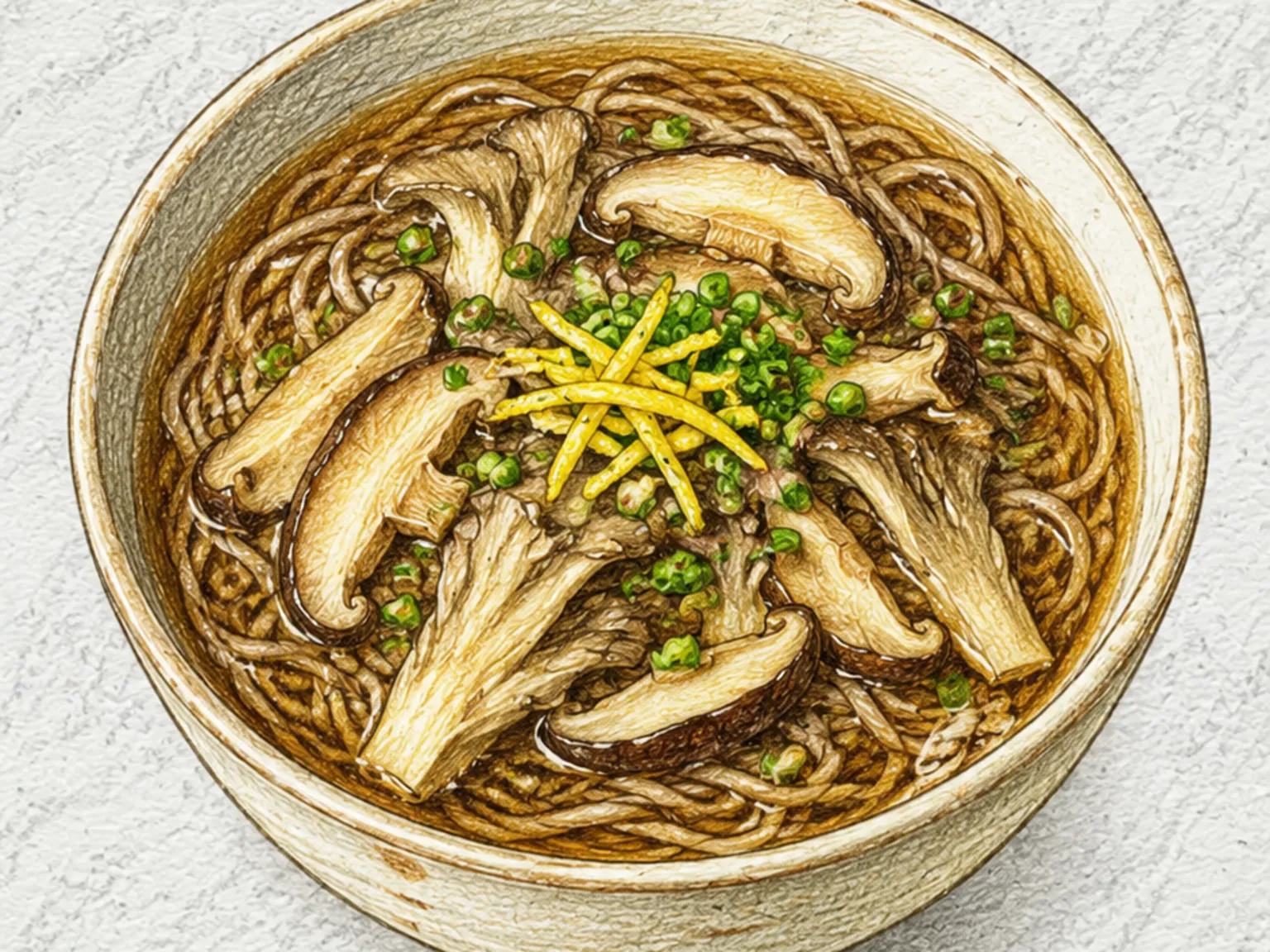
Beoseot memil soba is a warm buckwheat noodle soup built on dashi stock seasoned with soy sauce and mirin, with shiitake and oyster mushrooms simmered for five minutes so their concentrated woodsy depth moves fully into the broth. Dried shiitake contributes far more umami than fresh, and oyster mushrooms torn along the grain absorb more liquid than sliced. The soba noodles are cooked separately and rinsed in cold water to strip off surface starch, which keeps the broth clear and prevents the noodles from turning soft. A small curl of yuzu zest placed on top just before serving sends a sharp citrus note across the broth's earthy weight, lifting the finish without overpowering it. Green onion scattered on top adds a layer of fresh aroma and color.
Instructions
Read the steps as a cooking flow: prep, heat, seasoning, doneness control, and finish.
- 1Prep
Slice 120g shiitake mushrooms thickly and tear 100g oyster mushrooms apart along the grain into individual strands.
- 2Control
Combine 800ml dashi stock, 1.5 tbsp soy sauce, and 1 tbsp mirin in a pot and bring to a simmer over medium heat, then add the mushrooms.
- 3Control
Simmer for about 5 minutes over medium heat until the mushrooms are tender and the broth is well infused with their umami.
- 4Heat
In a separate pot, boil plenty of water, cook 200g buckwheat noodles for 3 to 4 minutes, then rinse repeatedly under cold water to remove starch, and drain in a colander.
- 5Step
Place the drained buckwheat noodles in a bowl and ladle the warm mushroom broth generously over them, allowing the noodles to absorb the broth briefly.
- 6Finish
Garnish with sliced green onion and a light grating of yuzu zest for fragrance.
After the steps
Pick a recipe that fits this dish.
Continue with shared ingredients, meal pairings, or a similar method.
Recipes That Go Well With This
More Noodles →Based on shared ingredients and meal pairing
Okinawa Soba (Thick Wheat Noodles with Braised Pork Belly)
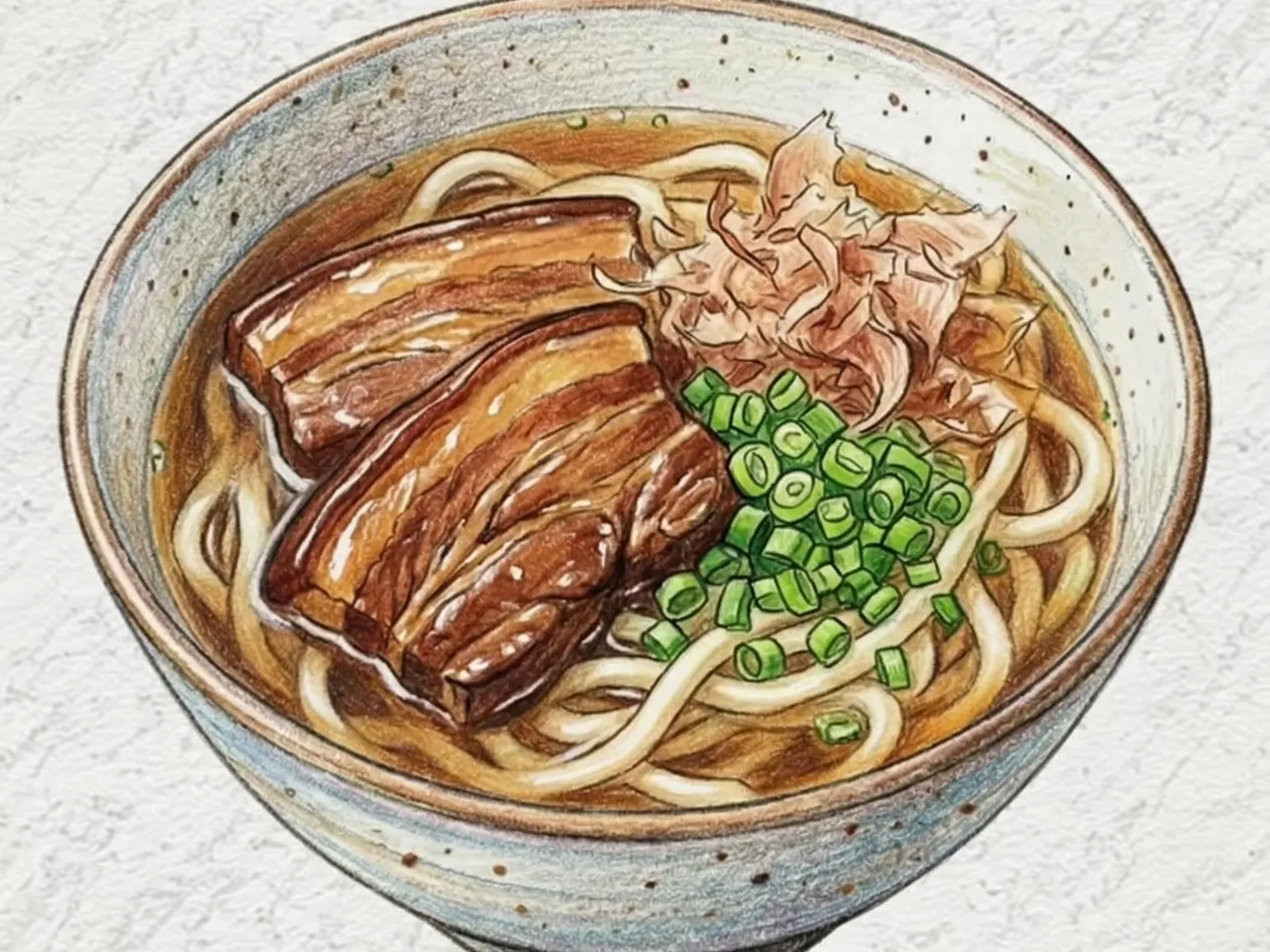
Okinawa soba is a regional Japanese noodle dish from Okinawa featuring thick wheat noodles in bonito-based broth, topped with braised pork belly. The pork belly is blanched for three minutes to remove impurities, then slowly simmered in soy sauce, mirin, and sugar until the fibers turn soft and the meat absorbs a sweet-salty glaze. The bonito dashi broth is clear and subtly savory, seasoned lightly with soy sauce to complement rather than compete with the rich pork. Rinsing the cooked noodles briefly in warm water removes excess starch so the broth stays clean when poured over them. Bonito flakes placed on top just before serving release a smoky, oceanic fragrance, and sliced scallion adds a fresh green accent to the warm, meaty bowl.
Kake Udon (Plain Udon in Clear Dashi Broth)
Kake udon is the most elemental form of Japanese udon: thick, springy wheat noodles served in a clear dashi broth seasoned with soy sauce, mirin, and a small amount of salt. With so few components, the quality of the dashi determines everything about the dish. The broth is built on katsuobushi and dried kelp, producing a flavor that is restrained but unmistakably savory. The noodles must be thick enough to hold their chew and smooth enough to carry broth with each lift of the chopsticks. Toppings are deliberately kept to a minimum, typically sliced kamaboko fish cake and chopped green onion, so the stock and noodle texture remain the focus rather than any single garnish. The noodles should go directly from the pot into hot broth, as they soften quickly and lose their characteristic bounce if left to sit. In the Kansai region, pale usukuchi soy sauce is used to keep the broth nearly transparent, making the visual clarity of the soup another deliberate element of the dish.
Soba Sesame Salad (Chilled Buckwheat Noodle Sesame Dressing)
Soba sesame salad is a cold noodle dish in which cooked buckwheat noodles are rinsed repeatedly in cold water to remove surface starch, then tossed with julienned cucumber, carrot, and red cabbage in a dressing of soy sauce, rice vinegar, sesame oil, and sesame seeds. The earthy, nutty character of buckwheat pairs naturally with toasted sesame, and rice vinegar's light acidity keeps the dish from feeling heavy despite the sesame oil. Thorough rinsing in cold water is the technical cornerstone of this recipe: residual starch left on the noodles dilutes the dressing on contact and causes the strands to clump into an uneven mass, disrupting the balance of flavors in every bite. Cucumber and red cabbage introduce a fresh crunch that contrasts the springy noodle texture, and julienned carrot threads a mild sweetness through the bowl that offsets the saltiness and acidity of the dressing. Cutting the vegetables into thin, uniform strips allows them to distribute evenly among the noodles so that each forkful carries a balanced mix. The dressing should be mixed in advance but added to the noodles only just before serving, since soaking too long causes the noodles to absorb the liquid and soften. A light and satisfying single-bowl meal, particularly well suited to warmer months.
Buckwheat Noodle Salad
Thoroughly rinsing boiled soba noodles in cold water removes the starchy film that forms on the surface during cooking. This specific step prevents the noodles from clumping together and ensures the dressing coats each strand evenly. Rinsing multiple times produces a firm and elastic texture, highlighting the characteristic coarse bite of the buckwheat. The sauce relies on a base of tsuyu combined with rice vinegar to provide a sharp acidity that cleanses the palate after every bite. This combination avoids the heavy residue often found in oil-based dressings. Shredded lettuce and sliced cucumber add a crisp, watery element to the bowl, while the addition of red cabbage provides a purple visual contrast against the brown noodles. A final topping of roasted seaweed strips adds a toasted ocean scent to the dish. For a complete meal, adding chicken breast or a boiled egg provides additional protein. The dressing remains stable when prepared in advance and stored in the refrigerator, allowing for quick assembly when the vegetables and noodles are ready.
Serve with this
Korean Crisp Chili Pepper Salad
Asakigochu is a specific variety of Korean pepper characterized by its thick walls and a distinct snap when bitten. This pepper was developed to prioritize texture over spiciness, resulting in a vegetable that offers a significant crunch without the heat of other varieties. The preparation of this dish involves a brief blanching process where the peppers are submerged in boiling water for a duration of exactly twenty seconds. This short exposure to heat is sufficient to eliminate the raw, grassy aroma often found in uncooked peppers, yet it is not long enough to soften the cellular structure. Consequently, the characteristic crispness remains unchanged. The seasoning sauce is a mixture of two traditional fermented pastes. Doenjang provides a salty and fermented depth, while gochujang adds complexity. To balance these heavy flavors, vinegar is added for sharpness and oligosaccharide syrup is used to adjust the consistency and add a subtle sweetness. This combination creates a contrast between the deep, funky notes of the fermented beans and a bright acidity that highlights the clean taste of the pepper. Timing is important for the final result. It is best to allow the seasoned peppers to rest for five minutes before serving. This pause allows the flavors from the thick sauce to soak into the pepper walls instead of simply sitting on the exterior. This side dish functions well as a standard accompaniment to a bowl of rice or as a more fullly flavored snack to be consumed while drinking soju.
Korean Radish & Shrimp Pancake
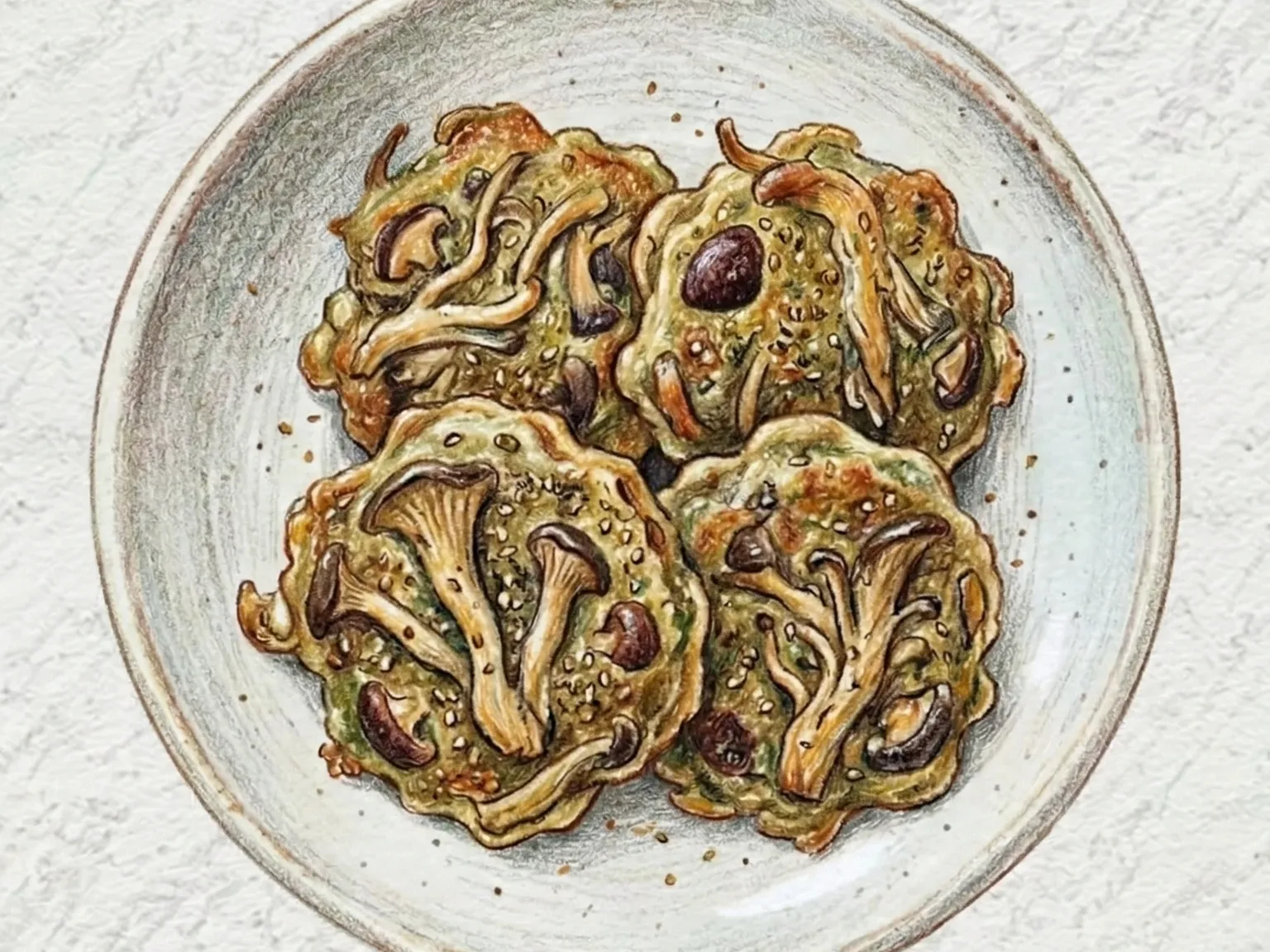
Julienned Korean radish and small peeled shrimp are combined in a pancake batter fortified with a measured amount of potato starch for added crispiness. Egg is mixed into the batter to improve binding and keep the pancake intact when flipped. Scallions are distributed throughout for a mild, grassy fragrance. Radish releases notable moisture as it cooks, so frying over high heat is essential to drive off that liquid quickly and achieve a crisp outer surface. The sharp, slightly bitter edge of raw radish disappears with heat and gives way to a gentle natural sweetness that pairs cleanly with the mild, delicate flavor of the shrimp. Pressing the center of the pancake down with a spatula while frying encourages even browning all the way through.
Korean Soy Pickled Beet (Vinegar Soy Brine Jangajji)
Beet jangajji is a Korean soy-pickled beet prepared by slicing beets thin and submerging them in a cooled brine of soy sauce, vinegar, and sugar. The vinegar cuts through the beet's earthy undertone, leaving a clean sweetness sharpened by acidity, and onion adds a mellow depth to the pickling liquid. As the brine cools, the beet's vivid red pigment bleeds into the liquid, creating a visually striking jar that stands out on the table. After at least a day of pickling, the flavor penetrates fully, producing a crisp, refreshing side dish suited to rice or grilled meats. Julienned beets pickle faster and are ready within a day, while thicker slices need two days or more for the brine to reach the center. Stored in the refrigerator, the pickles keep well for over two weeks, making a large batch practical.
Similar recipes
Cold Buckwheat Noodles
Mori soba is a Japanese cold noodle preparation where buckwheat noodles are boiled, rinsed under cold running water until firm, and served on a bamboo draining mat alongside a chilled tsuyu dipping broth. The nutty, slightly grainy character of buckwheat is the foundation of the dish, with each mouthful releasing an earthy, grain-forward fragrance. Tsuyu, concentrated from katsuobushi, kombu, soy sauce, and mirin and then chilled, is rich in umami and strong enough that a brief dip coats the noodles completely without drowning them. Wasabi and thin-sliced scallion stirred directly into the broth add sharp heat and a clean green note, while a pinch of shredded nori over the noodles introduces a subtle oceanic undertone. After boiling, the noodles must be cooled thoroughly in ice water to lock in their elasticity and prevent them from turning soft before serving.
Abura Soba (Soupless Noodles in Rich Soy Sesame Oil Sauce)
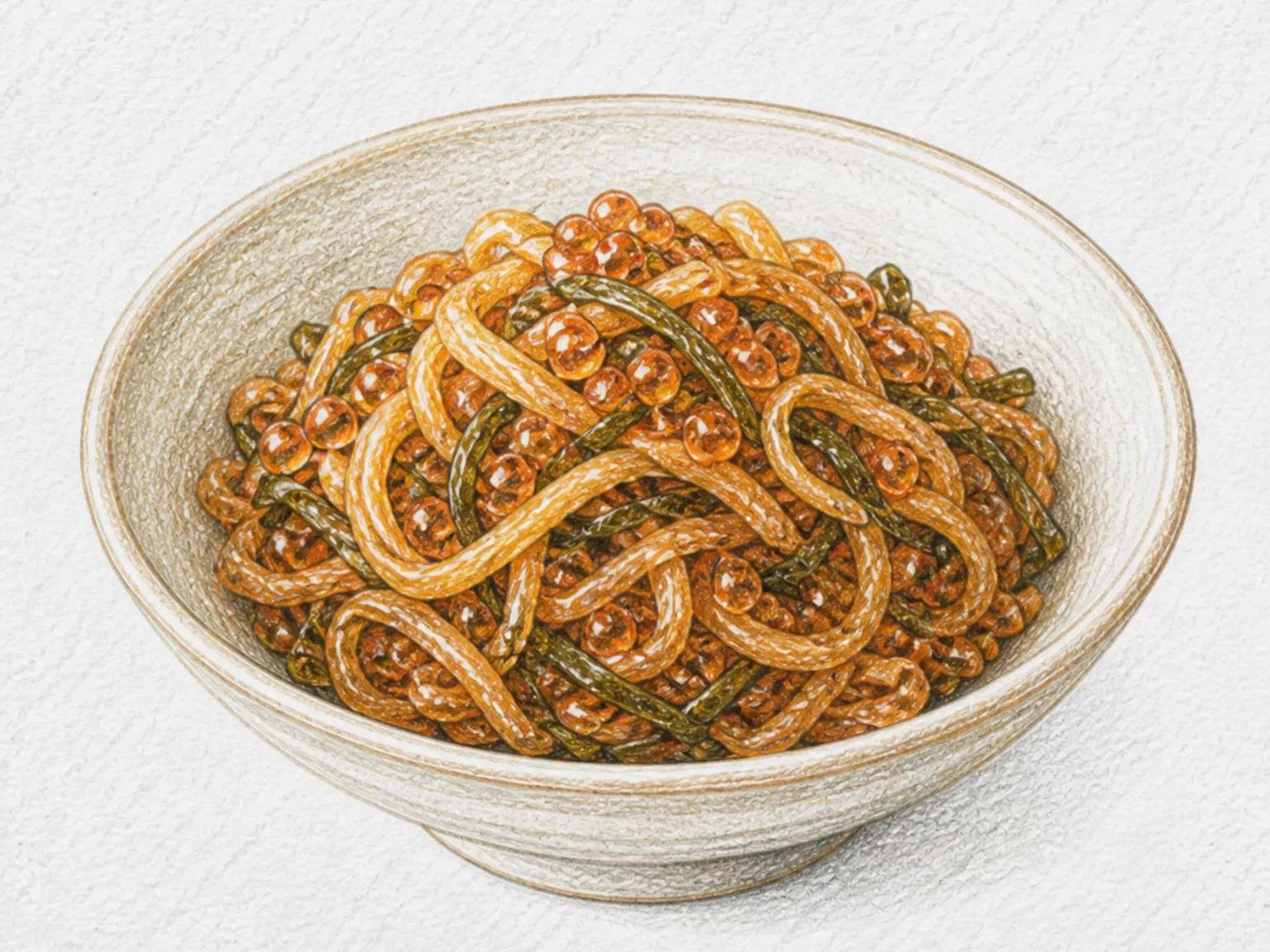
Abura soba is a noodle dish built entirely on what is in the bowl, not what surrounds it. No broth - just a concentrated sauce pooled at the bottom: soy sauce, sesame oil, oyster sauce, and a measured pour of vinegar. Cooked ramen noodles land on top, and the first task is mixing everything from below with chopsticks until each strand is fully coated. Where broth-based ramen dilutes its seasoning across liters of liquid, abura soba delivers the full flavor load directly onto the noodle. The technique developed in Tokyo's student districts in the 1950s as a cheaper, quicker option than ramen - no long broth to maintain meant faster service and lower overhead. Toppings follow the standard ramen template: chashu pork, a runny soft-boiled egg, nori, bonito flakes, and scallion add salt, fat, smoke, and freshness in sequence. The vinegar in the base sauce is not incidental - it cuts through the oil and keeps the dish from turning heavy halfway through. Adjusting the vinegar amount is considered part of eating abura soba, a small customization that regulars develop opinions about.
Tea Rice Bowl (Japanese Green Tea Poured Rice with Salmon)
Ochazuke is a Japanese dish of cooked rice topped with grilled salmon flakes, dried seaweed, green onion, and wasabi, over which hot green tea is poured just before eating. The astringent bitterness of the green tea works against the fatty richness of the salmon, cutting through the oil and keeping the palate clean throughout the bowl. Wasabi adds a sharp, nasal heat that punctuates each spoonful differently depending on how much dissolves into the surrounding liquid. A light drizzle of soy sauce provides a salty baseline that ties the ingredients together without overpowering the tea. The seaweed flakes soften and dissolve into the hot liquid, gradually releasing a subtle oceanic aroma that spreads through the broth. As the meal progresses, the rice releases some starch into the tea, thickening the broth slightly and shifting the flavor toward the end. Using dashi stock made from kombu and bonito instead of green tea produces a richer, more umami-forward version. Variations with pickled plum or mentaiko in place of salmon are equally common.