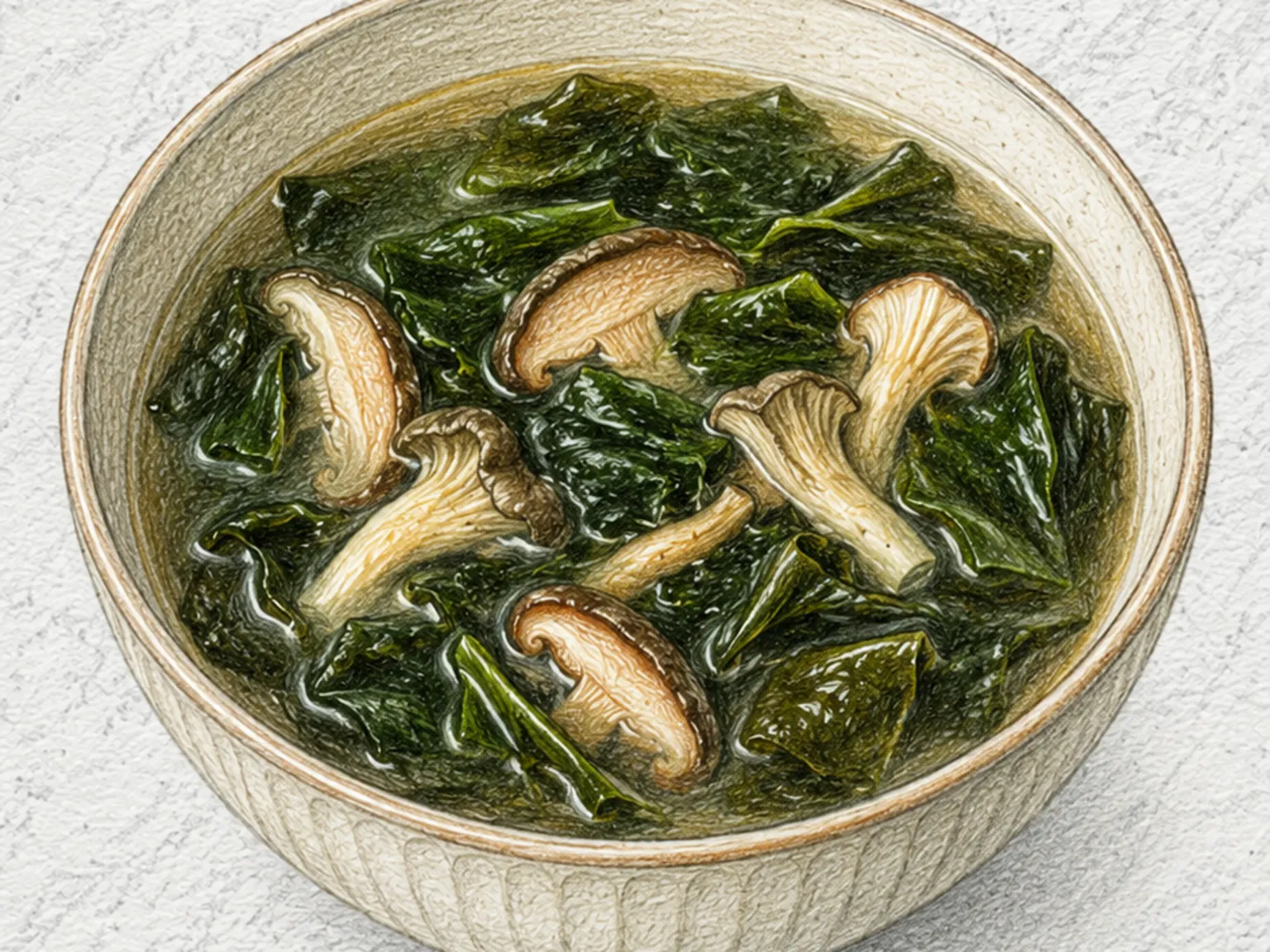
Korean Mushroom Seaweed Soup
Soups Easy

Korean Mushroom Seaweed Soup

Quick answer

Rehydrated seaweed and two kinds of mushrooms - oyster and shiitake - are stir-fried in sesame oil first, before any water is added, so their flavors concentrate in the f...

What makes this special

  • Beoseot miyeok guk features oyster and shiitake mushrooms stir-fried in sesame oil for concentrated seaweed umami.
  • Seaweed and mushrooms stir-fried in sesame oil for 3 minutes before water added to concentrate umami
  • Seaweed simmered 20 minutes lends a subtle oceanic aroma and natural viscosity
Total time
45 min
Level
Easy
Servings
4 servings
Ingredients
8
Calories
110 kcal
Protein
5 g

Key ingredients

dried seaweedoyster mushroomsshiitake mushroomssesame oilminced garlic

Core cooking flow

  1. 1 Soak 20g dried seaweed in cold water for 10 minutes until expanded.
  2. 2 Tear 180g oyster mushrooms into long strands along their natural grain, then...
  3. 3 Add 1 tbsp sesame oil to a pot and warm it over medium heat.

Rehydrated seaweed and two kinds of mushrooms - oyster and shiitake - are stir-fried in sesame oil first, before any water is added, so their flavors concentrate in the fat rather than leaching out into the broth. Water is added after that initial fry and the soup simmers for twenty minutes until the seaweed softens completely and releases a gentle oceanic character into the liquid. Without any meat-based stock, the umami comes entirely from the mushrooms and the natural glutamates in the seaweed, which is enough to give the broth genuine depth. The sesame oil blooms through the whole pot. Seasoned with soup soy sauce and salt at the end, the finished soup has a calm, layered flavor with soft seaweed and slightly chewy mushrooms providing contrasting textures in each bowl.

Prep 15min Cook 30min 4 servings

Instructions

Read the steps as a cooking flow: prep, heat, seasoning, doneness control, and finish.

6 steps
  1. 1
    Prep

    Soak 20g dried seaweed in cold water for 10 minutes until expanded.

    Rinse it clean, drain gently without squeezing hard, and cut it into bite-size pieces so it keeps a soft texture in the soup.

  2. 2
    Prep

    Tear 180g oyster mushrooms into long strands along their natural grain, then slice 100g shiitake mushrooms thinly.

    Keep the pieces fairly even so the mushrooms soften at the same pace while still staying slightly chewy.

  3. 3
    Control

    Add 1 tbsp sesame oil to a pot and warm it over medium heat.

    Add the seaweed and both mushrooms, then stir-fry for about 3 minutes until the surfaces look glossy and the mushroom aroma becomes stronger.

  4. 4
    Step

    Add 1 tbsp minced garlic and stir for only about 30 seconds.

    Pour in 1.8L water before the garlic browns, because burnt garlic can make the clear mushroom and seaweed broth taste bitter.

  5. 5
    Control

    Once the soup comes to a boil, keep it at medium heat and skim off any foam lightly.

    Simmer for 20 minutes, until the seaweed turns soft and the broth gains a little natural body.

  6. 6
    Finish

    Season with 2 tbsp soup soy sauce and 0.7 tsp salt, then taste the broth.

    Simmer 5 more minutes so the seasoning settles, and serve hot while the mushrooms still have a gentle chew.

After the steps

Pick a recipe that fits this dish.

Continue with shared ingredients, meal pairings, or a similar method.

Recipes That Go Well With This

More Soups →

Based on shared ingredients and meal pairing

Korean Mushroom Perilla Soup
Shared ingredient: oyster mushrooms Soups

Korean Mushroom Perilla Soup

Three types of mushrooms - oyster, shiitake, and king oyster - simmer together in an onion-based vegetable stock before ground perilla seeds are stirred in to thicken the broth into a nutty, substantial soup. Cooking the mushrooms and garlic for ten minutes in the stock allows each variety's distinct aroma to build in layers: the fibrous texture of oyster mushrooms, the deep earthiness of shiitake, and the firm, meaty bite of king oyster mushrooms all hold their character in the finished bowl. Cubed tofu is added partway through and gently absorbs the surrounding broth as it warms. Adding the perilla powder in small increments rather than all at once prevents clumping and produces a smooth, even consistency; pulling the pot off the heat at the right moment also stops the broth from separating as it cools. The vegetable stock base delivers a satisfying, full-bodied result without any animal ingredients.

Korean Clear Mushroom Tofu Soup
Shared ingredient: oyster mushrooms Soups

Korean Clear Mushroom Tofu Soup

This clear Korean soup draws its umami from oyster and shiitake mushrooms simmered in plain water for four minutes, seasoned with only soup soy sauce and salt to keep the broth light and direct. Two varieties of mushrooms working together - oyster for soft texture, shiitake for depth - produce a broth that holds its own without meat. Cubed tofu goes in near the end so the pieces stay intact, and chopped green onion finishes the bowl with a clean, mild sharpness. At 155 calories per serving, the dish is genuinely low-calorie without sacrificing the layered, savory quality that makes it worth returning to.

Korean Geomeun Kong Juk (Black Bean Porridge)
Serve together Rice

Korean Geomeun Kong Juk (Black Bean Porridge)

Black beans are soaked for at least four hours, then boiled until the skins wrinkle and the flesh softens through to the center. They are blended with their cooking liquid into a thick, smooth slurry that forms the base of the porridge. This bean puree is combined with separately soaked rice and the mixture is simmered over low heat, stirred regularly to prevent the starch from catching on the bottom of the pot. As the rice breaks down and the starch gelatinizes, the porridge thickens gradually into a smooth, velvety consistency. The anthocyanins in the black bean skins stain the porridge a deep purple-gray, and the flavor is earthy and distinctly nutty, unlike the lighter taste of plain rice porridge. Passing the finished porridge through a sieve removes the bean skins for a cleaner texture. Seasoned with salt alone, it reads as a savory meal; a tablespoon of sugar shifts it toward something gently sweet. Pine nuts and sesame scattered on top layer in additional nuttiness, and the porridge is frequently made as restorative food given the beans nutritional density.

Korean Oyster Seaweed Soup
Similar recipe Soups

Korean Oyster Seaweed Soup

Gul-miyeok-guk is a Korean seaweed soup with fresh oysters, traditionally served for postpartum recovery and birthday meals. The dish begins by sauteing rehydrated seaweed and oysters together in sesame oil, which coats every strand and shell in a nutty fragrance before water is added. As the soup simmers, the seaweed releases minerals and a subtle brininess that merges with the deep ocean flavor the oysters contribute. Soup soy sauce and minced garlic keep the seasoning clean and grounded without masking the seafood. Oysters reach their peak fat and sweetness between November and January, and using them during this season noticeably enriches the broth with a creamy, briny depth. The seaweed should be sauteed for no more than one or two minutes with the oysters to keep it tender rather than chewy before the water goes in.

Serve with this

Korean Seasoned Sea Grapes Salad
Side dishes Easy

Korean Seasoned Sea Grapes Salad

Kkosiraegi-muchim is a tangy, low-calorie banchan made from kkosiraegi, a red algae seaweed whose thin, noodle-like strands snap with a distinctive crunch that no other seaweed can replicate. Blanching must not exceed twenty seconds, as anything longer collapses the characteristic texture, so a timer is essential. The seaweed goes straight from the boiling water into cold water to stop the heat and lock in elasticity. The dressing brings together gochugaru, soup soy sauce, vinegar, maesil-cheong, garlic, and sesame oil; the green plum extract layering in a fruity acidity that lifts the dish beyond simple sour-spicy flavoring. Julienned cucumber threaded through the seaweed strands provides a crisp, garden counterpoint to the oceanic depth. At roughly 72 kilocalories per serving with high dietary fiber content, this banchan appears frequently in Korean diet meal plans because it satisfies without adding much to the calorie count. Eating it promptly after seasoning prevents the cucumber from releasing water and diluting the dressing. Served cold in summer, it doubles as a refreshing side that pairs well with grilled meat or plain rice.

🥗 Light & Healthy 🏠 Everyday
Prep 10min Cook 2min 4 servings
Korean Red Cabbage Kimchi
Kimchi Easy

Korean Red Cabbage Kimchi

Jeokchae kimchi is made by salting red cabbage leaves, then tossing them in a seasoning of gochugaru, sand lance fish sauce, minced garlic, and Korean pear juice before a short fermentation. Red cabbage has thicker, denser leaves than napa cabbage, so it holds its crunch well after brining rather than going soft. The anthocyanin pigment in the red cabbage reacts with the chili seasoning to produce a vivid purple color rather than the typical red associated with kimchi, making it visually striking on the table. Pear juice provides a gentle fruit sweetness underneath the heat and spice, while sand lance fish sauce builds enough savory depth that even a brief fermentation yields full flavor. Scallions add a fresh, aromatic finish that ties the seasoning together. The result is a kimchi that is crunchy, spicy, and umami-rich simultaneously, with a distinctive character that sets it apart from traditional napa kimchi.

🍱 Lunchbox 🏠 Everyday
Prep 30min 2 servings
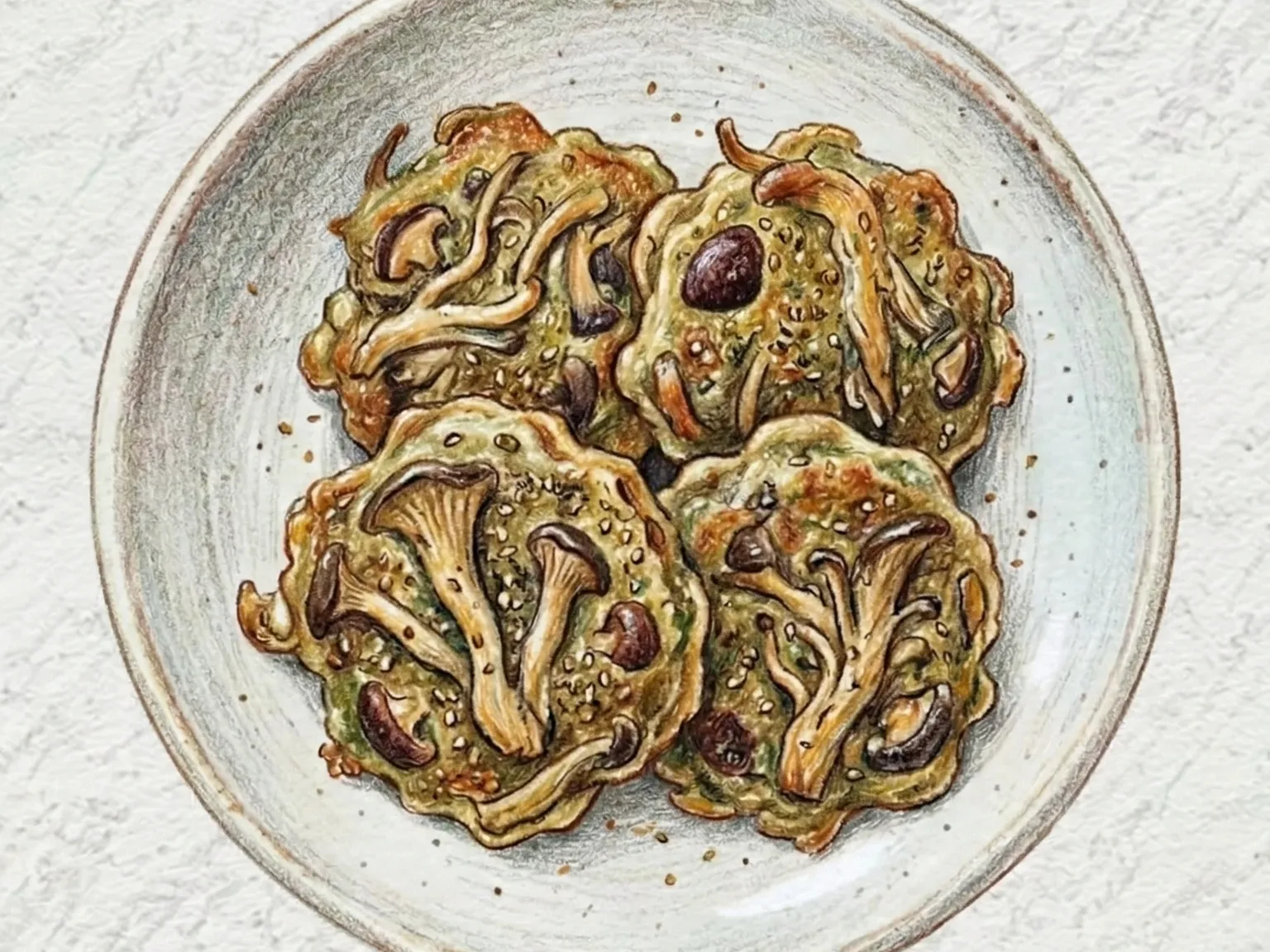
Korean Beoseot Deulkkae Jeon (Mushroom Perilla Pancake)
Pancakes Easy

Korean Beoseot Deulkkae Jeon (Mushroom Perilla Pancake)

Mushroom and perilla seed jeon brings together oyster mushrooms and shiitake, sliced thin and folded into a batter built on perilla seed powder and a splash of soy sauce. Perilla seeds carry a heavier, slightly bitter nuttiness compared to sesame, and that quality anchors the earthy depth of the mushrooms rather than competing with it. Seasoning the batter directly with soy sauce means the pancake holds its own without a dipping sauce, though one on the side does not go amiss. Frying with enough oil gives the exterior a thin, crisp shell while the mushroom filling stays moist inside. Oyster mushrooms torn along their grain develop a pleasantly chewy bite as they cook; shiitake sliced fine distribute evenly so the whole pancake cooks at the same rate. It works as a makgeolli pairing or a straightforward side, and holds up well at room temperature - the perilla aroma actually deepens as it cools.

🍺 Bar Snacks 🏠 Everyday
Prep 18min Cook 14min 2 servings

Similar recipes

Miyeok-guk (Seaweed Beef Sesame Soup)
Soups Easy

Miyeok-guk (Seaweed Beef Sesame Soup)

Miyeok-guk is one of the most culturally meaningful soups in Korean cuisine. Dried sea mustard is first rehydrated, then stir-fried in sesame oil until the strands glisten and deepen in color, and finally simmered with thinly sliced beef and water until the broth turns savory and lightly viscous from the seaweed's released gelatin. Seasoning is deliberately sparse: soup soy sauce, minced garlic, and a final touch of sesame oil are almost always sufficient, because the seaweed and beef provide the foundational umami. The soup is traditionally prepared for new mothers during the postpartum recovery period, as miyeok is rich in iodine, calcium, and iron. It also appears on every Korean birthday table as an act of remembrance toward the mother who endured childbirth on that day, making the bowl carry a weight of gratitude that goes far beyond nutrition. Beyond its symbolism, miyeok-guk is practical everyday cooking: it calls for few ingredients, comes together in under thirty minutes, and produces a broth that nourishes without heaviness. Substituting the beef with mussels, clams, or dried shrimp creates a lighter, more oceanic version that is equally rooted in tradition. The soup reheats well and frequently tastes even better the next day, once the seaweed has softened further and the flavors have had time to merge fully.

🏠 Everyday 🥗 Light & Healthy
Prep 30min Cook 30min 2 servings
Korean Perilla Mushroom Hot Pot
Stews Easy

Korean Perilla Mushroom Hot Pot

Korean perilla mushroom hot pot is a hearty vegetarian dish made with shiitake, oyster, and enoki mushrooms, tofu, and bok choy simmered in a light vegetable stock. The cooking process starts by boiling the vegetable stock seasoned with soup soy sauce and minced garlic. Shiitake and oyster mushrooms are added first to build a deep umami base. Tofu, enoki mushrooms, and bok choy are then arranged on top and simmered until the vegetables are tender. To finish, ground perilla seed powder is gently stirred into the broth at the very end, which prevents the soup from becoming gritty while releasing a rich, nutty aroma and creating a naturally thick texture. This hot pot delivers a satisfying combination of earthy mushrooms, soft tofu, and crisp bok choy, offering a comforting meatless meal.

🏠 Everyday 🥗 Light & Healthy
Prep 15min Cook 18min 2 servings
Korean Beoseot Jjigae (Mushroom Stew)
Stews Easy

Korean Beoseot Jjigae (Mushroom Stew)

Korean mushroom stew, or beoseot jjigae, is a clean and oil-free soup made by simmering three varieties of mushrooms with tofu and onions in a kelp-infused broth. The recipe uses oyster, shiitake, and enoki mushrooms to create layers of distinct textures and umami. Seasoned simply with soup soy sauce and minced garlic, the clear broth highlights the natural characteristics of the ingredients. The cooking process involves boiling sliced onions and garlic in kelp water first to build a sweet base, followed by adding the mushrooms. Oyster mushrooms are torn along the grain for a tender texture, shiitake mushrooms are sliced to provide bite, and enoki mushrooms are added during the final minute of cooking to maintain their crispness. Skimming the foam while boiling ensures the broth stays clear. It is a light, warming dish that serves as a gentle and easily digestible meal.

🥗 Light & Healthy 🏠 Everyday
Prep 12min Cook 16min 2 servings

Tips

Stir-frying mushrooms first deepens umami flavor.
After soaking seaweed, gently drain it instead of squeezing too hard.

Nutrition (per serving)

Calories
110
kcal
Protein
5
g
Carbs
9
g
Fat
7
g