Crispy Mushroom Tangsu (Sweet & Sour)
Quick answer
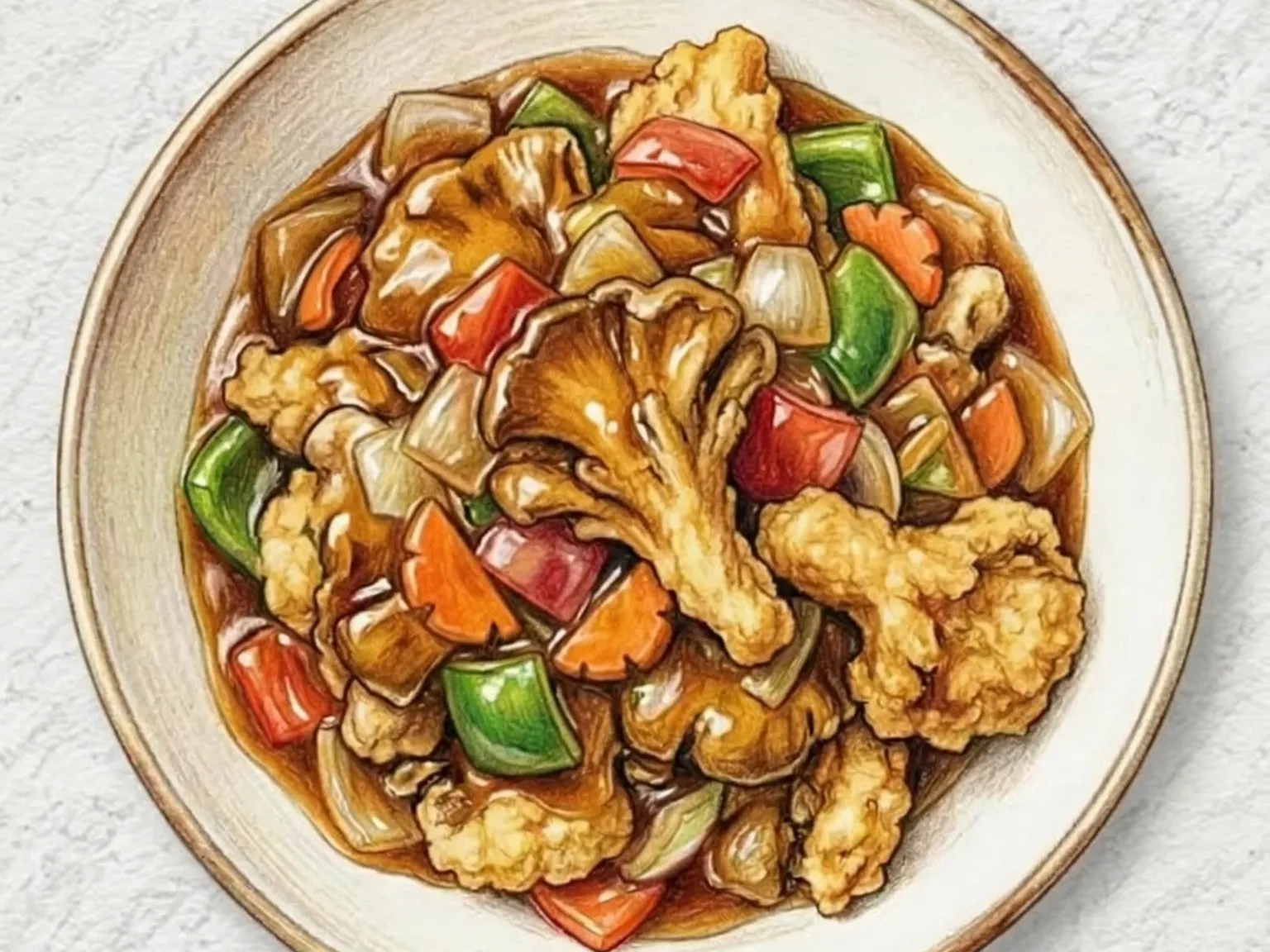
Double-fried oyster mushrooms with the same two-stage frying technique used for Korean tangsu pork.
What makes this special
- Double-fried oyster mushrooms create a shattering crisp shell over a chewy interior.
- Double-fried at 170°C then 180°C for a crisp shell over a chewy interior
- Potato starch and flour batter locks in oyster mushroom's springy texture
Key ingredients
Core cooking flow
- 1 Tear 300 g oyster mushrooms by hand into 4-5 cm strips following the grain...
- 2 Whisk 80 g potato starch, 40 g flour, and 90 ml water in a bowl until smooth...
- 3 Heat oil to 170 C and confirm with a thermometer, add battered mushrooms in...
Double-fried oyster mushrooms with the same two-stage frying technique used for Korean tangsu pork. Oyster mushrooms fully dried of moisture are coated in a potato starch and flour batter, fried at 170°C, rested to release steam, then returned to 180°C for a second fry that locks in a crisp exterior while keeping the interior chewy. A sweet-sour sauce of soy sauce, vinegar, and sugar is simmered with onion, bell pepper, and carrot, then thickened with a starch slurry. Pouring the sauce over the mushrooms in advance softens the crust quickly, so serving the sauce separately and ladling it on at the table preserves the crunch. The technique produces a texture comparable to the pork version without any meat.
Instructions
Read the steps as a cooking flow: prep, heat, seasoning, doneness control, and finish.
- 1Step
Tear 300 g oyster mushrooms by hand into 4-5 cm strips following the grain, then press firmly between two sheets of paper towel to draw out surface and interior moisture completely.
- 2Step
Whisk 80 g potato starch, 40 g flour, and 90 ml water in a bowl until smooth and lump-free, then rest for 5 minutes so the starch hydrates and the batter bonds tightly to the mushroom.
- 3Heat
Heat oil to 170 C and confirm with a thermometer, add battered mushrooms in a single layer without crowding, fry for 3 to 4 minutes until pale golden, then remove from the oil.
- 4Heat
Rest the fried mushrooms on a rack for 2 minutes to release steam, raise the oil to 180 C, then return them and fry for 1 minute until the crust deepens to a rich golden brown and turns audibly crisp.
- 5Control
Film a pan with oil over medium heat, stir-fry the onion, bell pepper, and carrot for 1 to 2 minutes until the edges turn translucent, then pour in 130 ml water and bring to a boil on high heat.
- 6Season
Add 20 ml soy sauce, 35 ml vinegar, and 25 g sugar and boil for 1 minute, then stir in the remaining 40 g starch dissolved in cold water until the sauce turns translucent and coats a spoon.
- 7Finish
To keep the crust crisp, serve the sauce in a small bowl on the side and ladle it over the fried mushrooms just before eating so the texture stays crunchy from the first bite.
After the steps
Pick a recipe that fits this dish.
Continue with shared ingredients, meal pairings, or a similar method.
Recipes That Go Well With This
More Side dishes →Based on shared ingredients and meal pairing
Korean Mushroom Japchae (Shiitake Glass Noodle Stir-Fry)
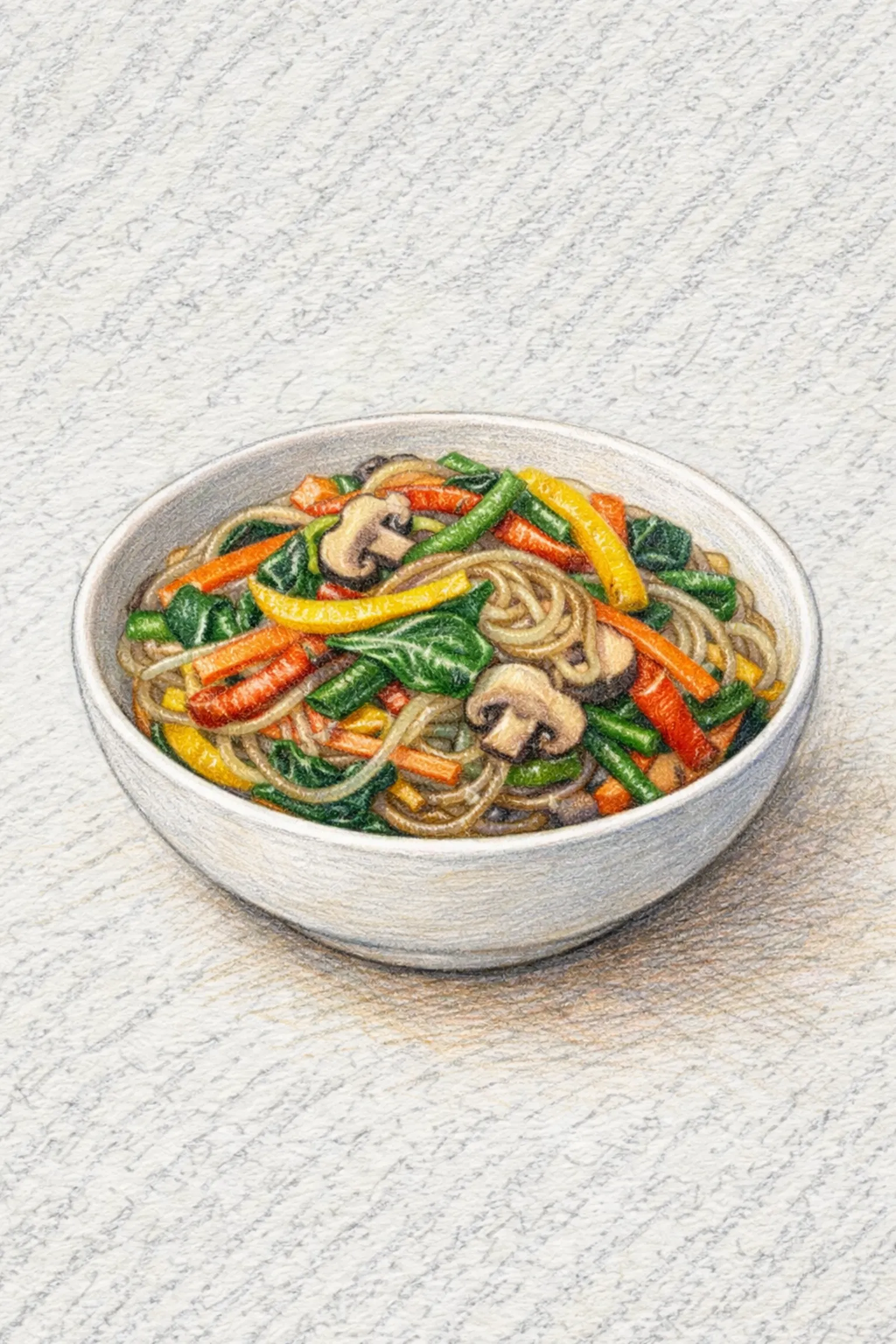
Beoseot japchae replaces beef with shiitake mushrooms as the primary source of savory depth, making it a staple of Buddhist temple cuisine and vegetarian tables alike. Sweet potato noodles are soaked and boiled, then rinsed in cold water immediately to lock in a firm, springy texture. Shiitake, spinach, carrot, and onion are each cooked separately - their moisture levels and heat tolerances differ enough that combining them prematurely flattens every component. Soy sauce, sugar, minced garlic, and sesame oil bring the noodles and vegetables together, and the finished dish rests for ten minutes so the seasoning penetrates the noodles evenly. The result is a japchae where the mushroom carries genuine umami weight without any meat.
Korean Braised Tofu and Mushrooms
Dubu-beoseot-jorim is a Korean braised side dish of firm tofu and oyster mushrooms simmered in a soy-based sauce until the liquid reduces to a glossy, clinging coat. The tofu is pan-fried first in a lightly oiled skillet to form a firm outer crust before braising begins, which allows it to absorb the seasoned liquid without crumbling or losing its structure during cooking. The result is a cube with a slightly firmer exterior and a soft, custardy interior that holds together through each bite. Oyster mushrooms, torn along their natural grain rather than cut, contribute a pleasantly chewy texture and release their inherent umami into the braising liquid as they cook, adding depth without the need for separate stock. The sauce requires only soy sauce, water, garlic, gochugaru, and sesame oil, making this a straightforward braise that rewards careful heat management over elaborate preparation. When the sauce has reduced to just a small pool at the bottom of the pan, the dish is ready, well-seasoned enough to serve alongside plain rice or pack into a lunchbox.
Korean Pollock Jeon (Egg-Battered Pan-Fried Pollock)
Dongtae-jeon is a Korean pan-fried pollock dish where thin slices of frozen-then-thawed pollock are seasoned with salt, pepper, and cheongju (rice wine), lightly dredged in flour, dipped in beaten egg, and fried in a thin layer of oil. Because frozen pollock releases significant moisture when thawed, pressing it thoroughly with paper towels is a critical step without it, the flour coating will not adhere and the oil will splatter. The flour layer should be thin enough that it barely coats the surface, preserving the fish's mild flavor, and cooking over medium-low heat gives the egg batter time to turn golden while keeping the fish inside soft and flaky. Mixing finely chopped green onion into the egg batter before dipping adds a subtle allium fragrance to the otherwise clean-tasting fish. A staple at Korean ancestral rites and holiday spreads, it is served with soy dipping sauce that draws out the savory, delicate flavor of the pollock.
Korean Soy-Braised King Oyster Mushrooms
Saesongi-beoseot-jorim braises 300 grams of king oyster mushrooms in a soy-based sauce after an initial sear that drives off moisture and firms up the texture. The mushrooms are halved lengthwise, cut into bite-size pieces, and pan-fried in oil for about two minutes until lightly golden before the braising liquid - soy sauce, water, oligosaccharide syrup, and garlic - is poured in. Five minutes of simmering over medium heat reduces the liquid to a sticky glaze that clings to every surface. Sesame oil is drizzled in just before removing from heat, and chopped scallion adds a fresh green contrast. The finished dish stores well, making it a reliable make-ahead side for weekday meals.
Serve with this
Korean Braised Potato and Fish Cake
Gamja eomuk jorim is a Korean home-style braised side dish of potato chunks and fish cake sheets, simmered together in a sauce of soy sauce and oligosaccharide syrup. The starchy potato cubes slowly absorb the seasoning as they cook, turning soft and floury in texture while carrying the full depth of the soy glaze. Fish cake sheets provide a springy, chewy counterpoint that holds its shape throughout braising. Minced garlic is stirred in early to mellow into the sauce, and a finishing drizzle of sesame oil adds a roasted, nutty fragrance that ties the dish together. The recipe requires minimal preparation and cooks in under twenty minutes, making it a practical choice for weekday meals. It is one of the most frequently packed Korean lunchbox items and a staple side dish on everyday home tables.
Korean Jeju-style Braised Hairtail
Galchi-jorim-jeju is a regional specialty of Jeju Island in which thick-cut hairtail is braised with radish and potato in a bold, deeply seasoned chili sauce. Unlike mainland versions, the Jeju style uses considerably more sauce and cooking liquid, producing a result that sits closer to a jjigae than to a dry braise, and it is common to eat the leftover sauce mixed into plain rice. Radish provides a cooling, clean sweetness that tempers the intensity of the chili and brings balance to the overall flavor, while potato absorbs the sauce and thickens the liquid naturally as it cooks. Jeju silver hairtail is prized for its thick, fatty flesh, which holds together without falling apart during the long braise and absorbs the pungent, layered sauce deeply into each piece. The result is a dish that is simultaneously fiery, savory, and faintly sweet.
Korean Braised Short Ribs
Galbi-jjim is one of Korea's most celebrated braised dishes, built around thick-cut beef short ribs that simmer for well over an hour in a deeply seasoned liquid of soy sauce, Asian pear juice, sugar, garlic, and sesame oil. Before braising, the ribs are soaked in cold water to purge the blood, then briefly blanched in boiling water to remove impurities; skipping either step results in a cloudy, less refined sauce. The long, low cook breaks down the collagen in the connective tissue until the meat offers no resistance, sliding off the bone with the lightest pull. As the liquid reduces it clings to each rib in a thick, glossy dark-brown glaze that is simultaneously sweet, salty, and intensely savory. Daikon radish and carrot chunks absorb the braising liquid and soften into something almost buttery, becoming a substantial side dish in their own right. Chestnuts and jujubes, traditionally added for Chuseok and Lunar New Year celebrations, lend a gentle sweetness and lift the visual festivity of the platter. A single spoonful of the finished sauce over plain steamed rice is enough to make an entire bowl disappear.
Similar recipes
Korean Stir-fried Crown Daisy and Mushrooms
Ssukgat-beoseot-bokkeum is a quick stir-fry of oyster mushrooms and crown daisy (ssukgat) cooked in a garlic-infused pan. The mushrooms are seared over high heat to drive off moisture and develop a chewy bite, while the crown daisy stems and leaves go in at staggered intervals to preserve their crunch and aroma. Soy sauce and cooking wine provide the seasoning base, finished with sesame oil and toasted sesame seeds. The slightly bitter, herbal character of the crown daisy plays off the mild earthiness of the mushrooms for a clean, well-defined flavor.
Korean Paengi Beoseot Jeon (Enoki Pancake)
Paengibeoseot-jeon is a thin Korean pancake built around 200 grams of enoki mushrooms separated into loose strands and coated in a light batter of pancake mix, egg, and water. Cooked over medium-low heat, the batter spreads thin enough that the edges turn golden and crisp while the mushroom clusters in the center stay moist and chewy. Chopped scallions add color and a mild onion fragrance throughout. The pancake is served with a dipping sauce of soy sauce, vinegar, and a pinch of chili flakes, whose acidity and salt lift the subtle earthiness of the mushrooms. Keeping the heat moderate is essential - too high and the outside burns before the interior sets.
Korean Butter Soy Grilled King Oyster Mushrooms
Three king oyster mushrooms are quartered lengthwise, scored on the surface, and seared in butter until golden on one side. After flipping, the remaining butter joins a sauce of soy sauce, oligosaccharide syrup, minced garlic, and black pepper, which reduces into a glossy glaze that coats every groove cut into the mushroom flesh. The scoring allows the sweet-salty sauce to penetrate deeper, so each bite releases a concentrated burst of buttery umami. King oyster mushrooms hold their dense, meaty chew even after cooking, making this dish satisfying without any actual meat. A final scattering of scallion and sesame seeds adds freshness and textural contrast.