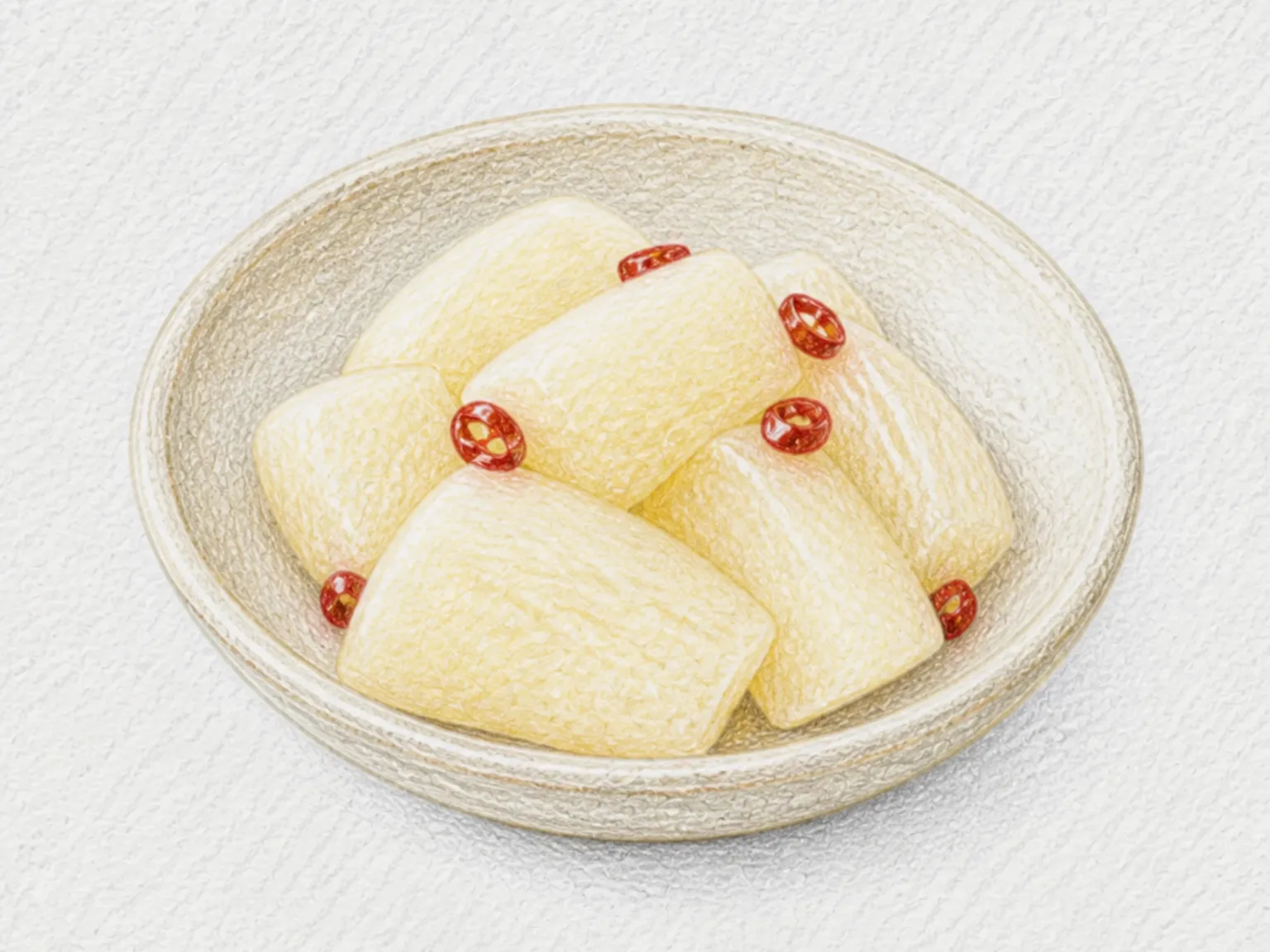
Bettara-zuke (Daikon Pickled in Amazake)
Quick answer
- Active time
- 30 min
- Waiting
- See the steps
- Level
- Easy
- Servings
- 12 servings
- Ingredients
- 4
About this dish
A white coat of amazake clings to thick daikon spears, which bend slightly yet still snap when bitten.
Read more
Unlike fully dried takuan, this Tokyo pickle keeps the radish moist, with amazake supplying a gentle sweetness. It traces back to lightly pickled daikon sold at Edo-period Ebisu observances, and bettara stalls still appear at the autumn market of Takarada Ebisu Shrine in Nihonbashi.
Ingredients
Instructions
- 1
Wash the pickling container and press plate and dry them completely.
Peel 1500g daikon, cut it in half crosswise, then quarter each section lengthwise to make 8 thick long spears.
- 2
Rub all surfaces of the daikon evenly with 35g salt and pack the pieces tightly in the container.
Add the press plate and a clean weight about half the daikon's weight, cover, and cure under refrigeration at 4°C or below for 8 to 12 hours.
- 3
After the overnight cure, pour off all collected liquid.
Give the daikon one very brief rinse under cold running water to remove surface salt, then dry it carefully with a clean towel or paper towels.
- 4
Place the daikon and 300g prepared amazake in a newly washed, dry airtight container.
Stem and seed 1 dried chili, cut it into thin rings, add it, and use a clean spatula to coat every daikon surface generously with amazake.
- 5
Seal the container and mature it in the refrigerator at 4°C or below for 2 to 3 days.
Once daily, turn the daikon with a clean spatula so the amazake contacts it evenly, and do not leave the container at room temperature during curing.
- 6
When the daikon bends slightly yet stays crisp and tastes gently sweet, slice it 8mm thick to serve.
Keep refrigerated after curing. If mold, unpleasant odor, or abnormal ropiness appears, discard the entire batch without tasting.
References checked
These references were consulted when this page was prepared or corrected. A source check does not mean the recipe was independently kitchen-tested.
- 일본 농림수산성 うちの郷土料理
ぐるなび · Checked: 2026-08-11
Use-up ingredient planner
Turn these ingredients into two more meals
The overlap excludes basic seasonings. Open the next recipe and your selected dishes will stay with you.
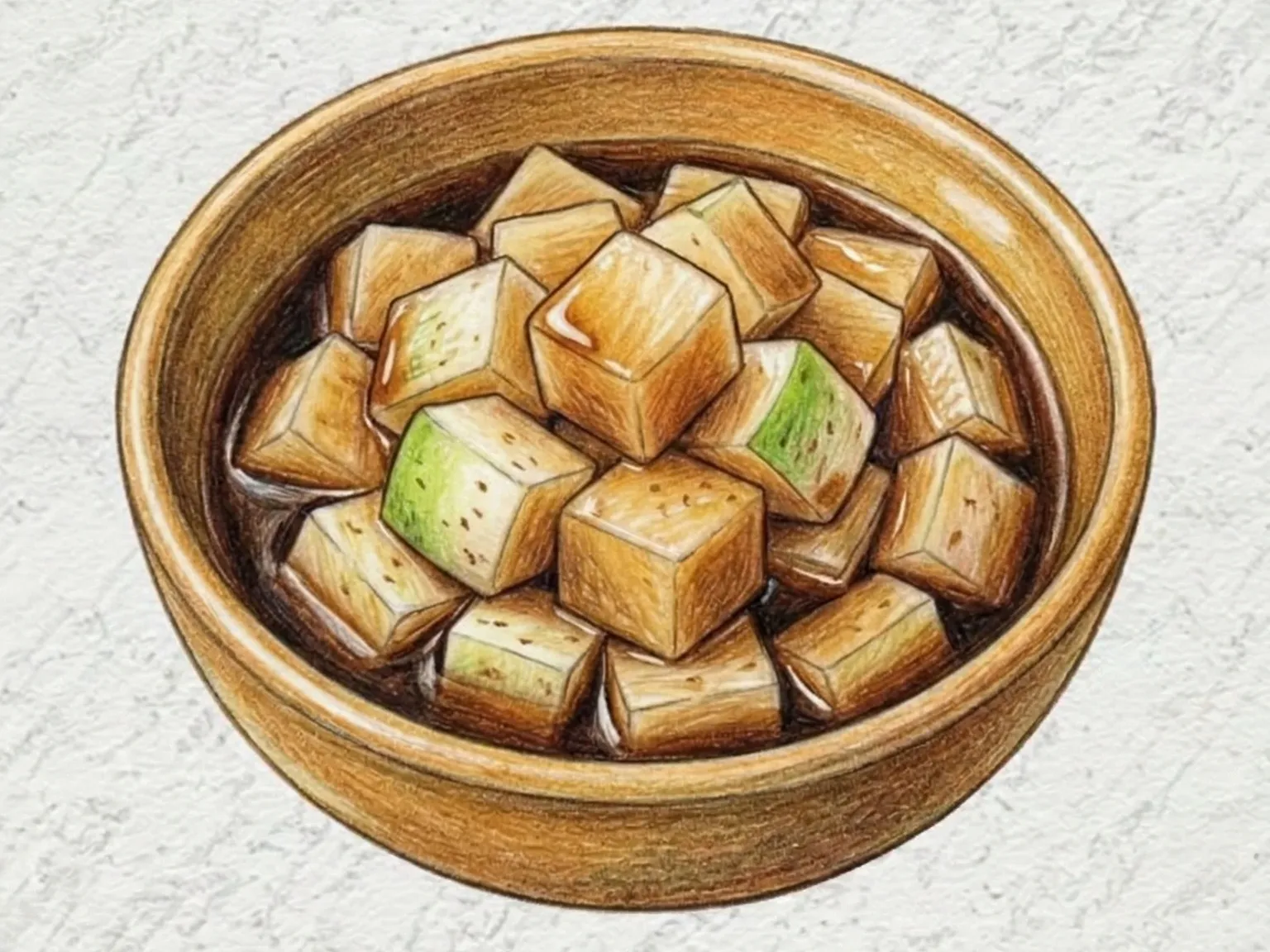
Korean Soy Pickled Radish Cubes
daikon radish, dried red chili
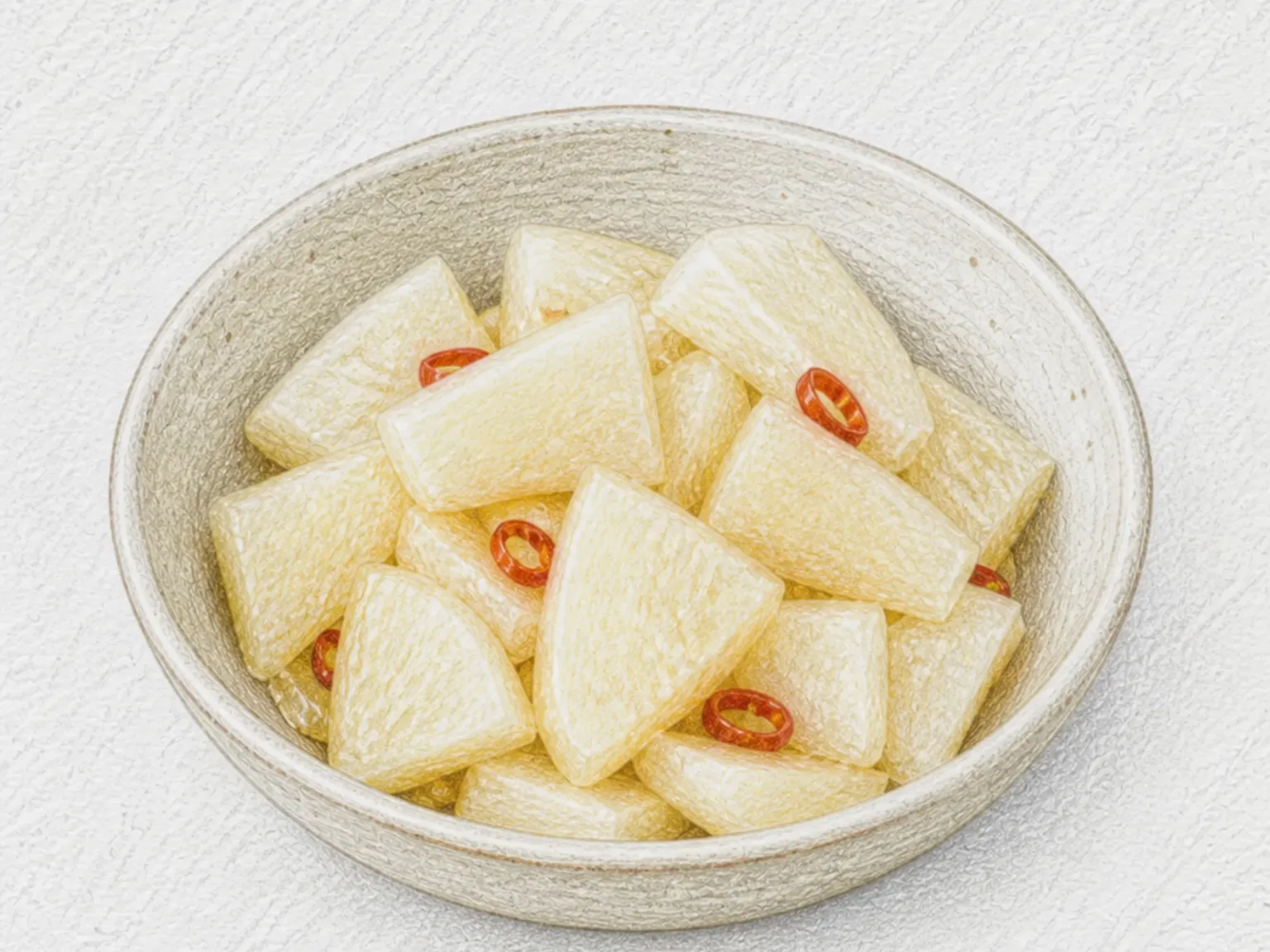
Nata-zuke (Daikon Pickled in Amazake)
daikon radish, prepared amazake
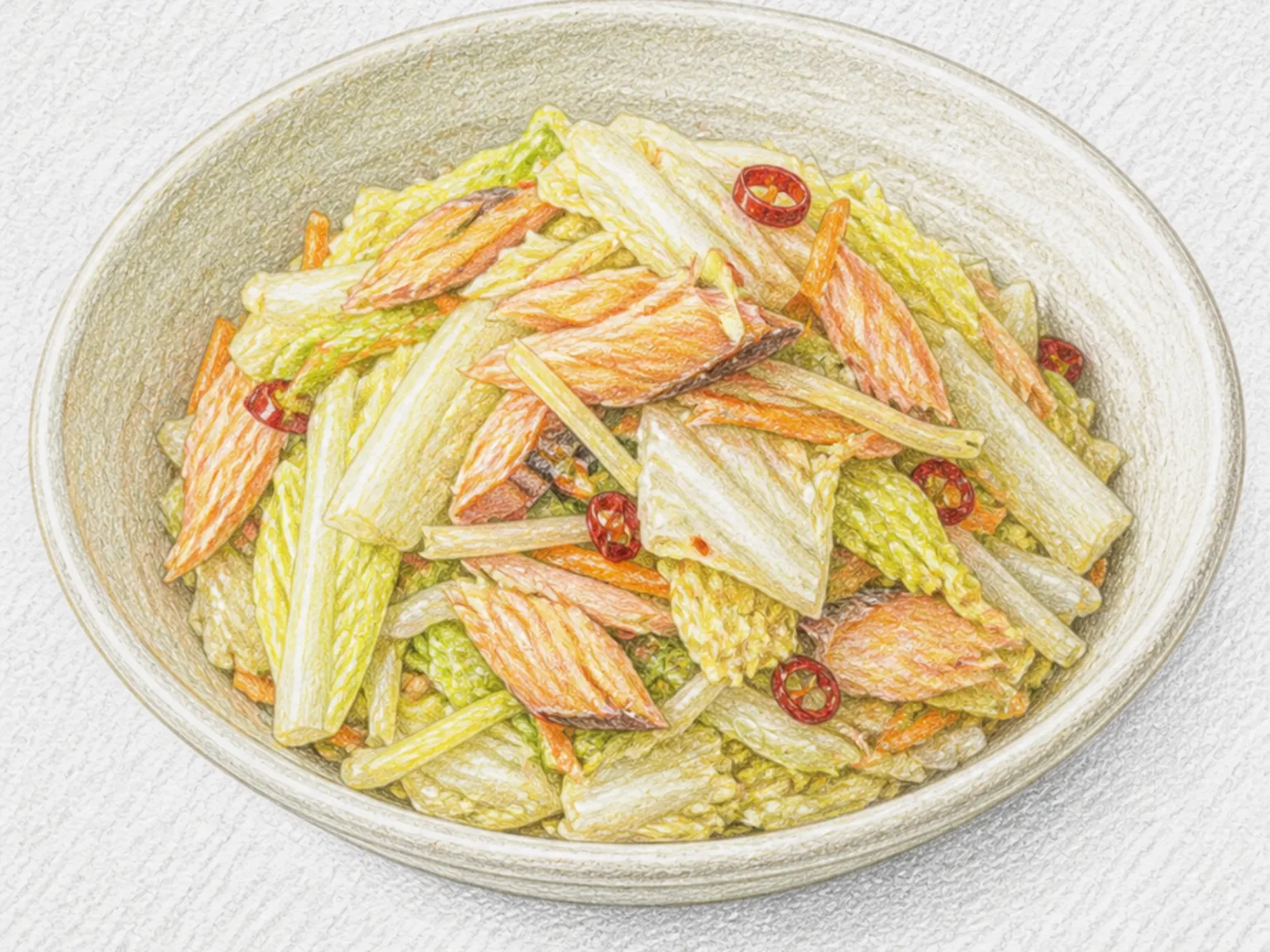
Cabbage and Trout Layered Pickle
prepared amazake, dried red chili