Korean Spicy Mixed Wheat Noodles

Korean Spicy Mixed Wheat Noodles

Quick answer

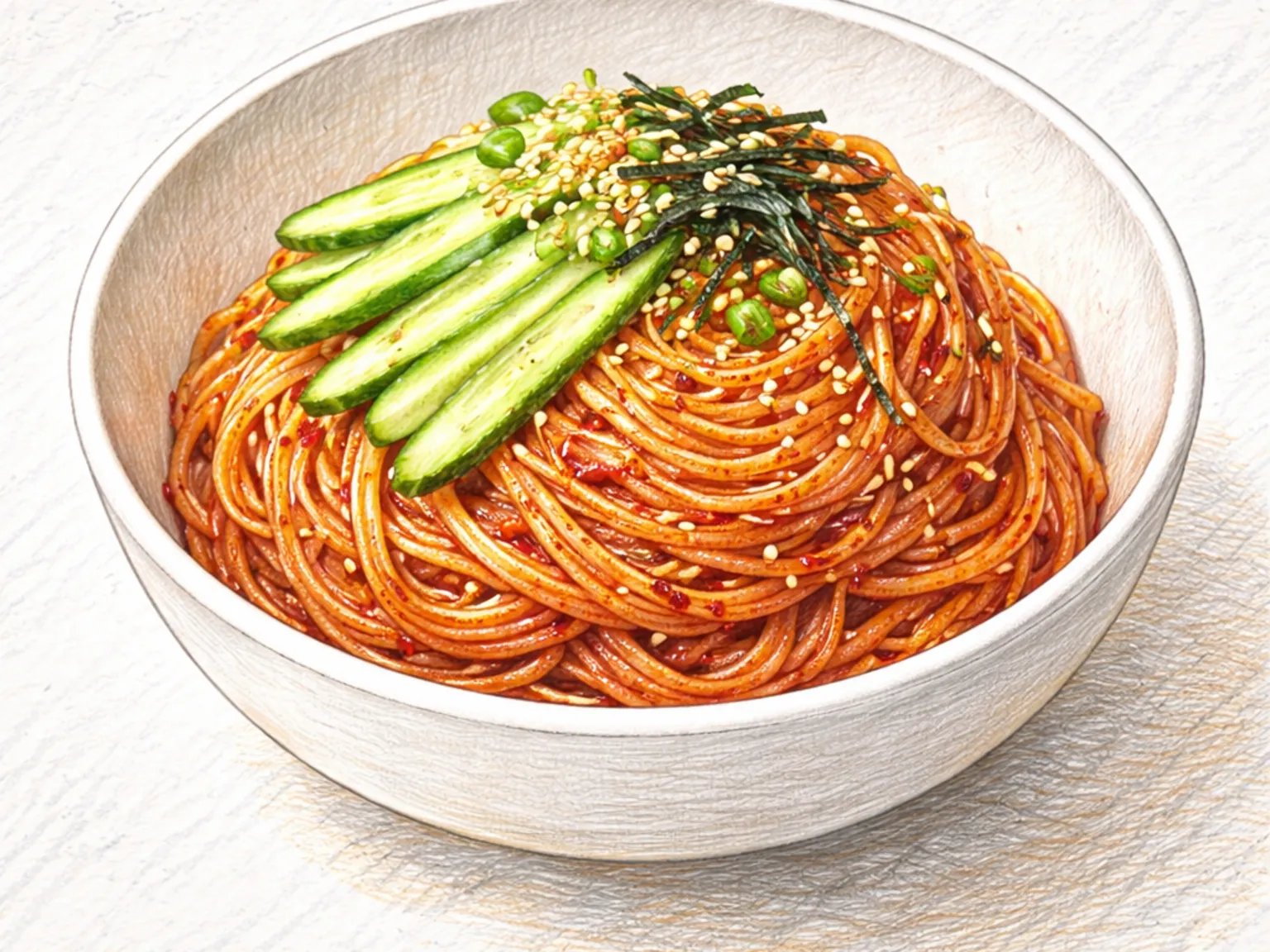
Bibim guksu is a chilled Korean noodle dish in which boiled and cold-rinsed somyeon wheat noodles are tossed in a sauce of gochujang, chili flakes, plum syrup, vinegar, s...

What makes this special

  • Gochujang, plum extract, and vinegar create a layered spicy-sweet sauce for chilled bibim guksu.
  • Gochujang, plum extract, and vinegar form a layered spicy-sweet-tart sauce
  • Base ratio per 100g noodles: 1 tbsp gochujang, 1 tbsp plum, 1 tsp vinegar
Total time
22 min
Level
Easy
Servings
2 servings
Ingredients
9
Calories
480 kcal
Protein
12 g

Key ingredients

somyeon noodlesgochujanggochugaruplum syrupvinegar

Core cooking flow

  1. 1 Tear 50 g lettuce into bite-size pieces and julienne 1/2 cucumber thinly.
  2. 2 In a mixing bowl, stir 1.5 tablespoons gochujang with 1 tablespoon gochugaru...
  3. 3 Bring a generous pot of water to a full boil, then fan in 220 g somyeon so the strands separate.

Bibim guksu is a chilled Korean noodle dish in which boiled and cold-rinsed somyeon wheat noodles are tossed in a sauce of gochujang, chili flakes, plum syrup, vinegar, soy sauce, and sesame oil. The heat from the gochujang, the sweetness of plum syrup, and the brightness of vinegar stack into a multi-dimensional flavor in every bite. Rinsing the noodles thoroughly in cold water removes excess starch, giving them a bouncy texture and allowing the sauce to cling evenly. Torn lettuce and julienned cucumber folded in at the end add crunch and release moisture that loosens the thick sauce just enough. A tablespoon of noodle cooking water can thin the sauce if needed. For 100 g of somyeon, a starting ratio of 1 tablespoon gochujang, 1 tablespoon plum syrup, and 1 teaspoon vinegar provides a reliable base to adjust from.

Prep 15min Cook 7min 2 servings

Instructions

Read the steps as a cooking flow: prep, heat, seasoning, doneness control, and finish.

6 steps
  1. 1
    Step

    Tear 50 g lettuce into bite-size pieces and julienne 1/2 cucumber thinly.

    Briefly soak the vegetables in cold water, then drain well so they stay crisp without watering down the noodles later.

  2. 2
    Season

    In a mixing bowl, stir 1.5 tablespoons gochujang with 1 tablespoon gochugaru, 1 tablespoon plum syrup, 1 tablespoon vinegar, and 1 tablespoon soy sauce. Add 1 teaspoon sesame oil and mix until glossy.

  3. 3
    Control

    Bring a generous pot of water to a full boil, then fan in 220 g somyeon so the strands separate.

    Cook over medium-high heat for about 3 minutes, lifting when the edges look slightly translucent.

  4. 4
    Heat

    Move the cooked noodles straight into cold water and rub them between your hands.

    Keep rinsing until the water runs clearer and the noodles feel cold, springy, and no longer slippery with excess starch.

  5. 5
    Season

    Shake off as much water as possible, then toss the noodles with the sauce first so every strand is coated.

    If the sauce feels stiff, loosen it with 1 tablespoon noodle cooking water.

  6. 6
    Finish

    Add the lettuce and cucumber only at the end, folding gently so they do not wilt or break.

    Serve while still cold, checking that the sauce coats the noodles without pooling heavily.

After the steps

Pick a recipe that fits this dish.

Continue with shared ingredients, meal pairings, or a similar method.

Recipes That Go Well With This

More Noodles →

Based on shared ingredients and meal pairing

Korean Spicy Noodles with Beef Pancake
Shared ingredient: somyeon noodles Noodles

Korean Spicy Noodles with Beef Pancake

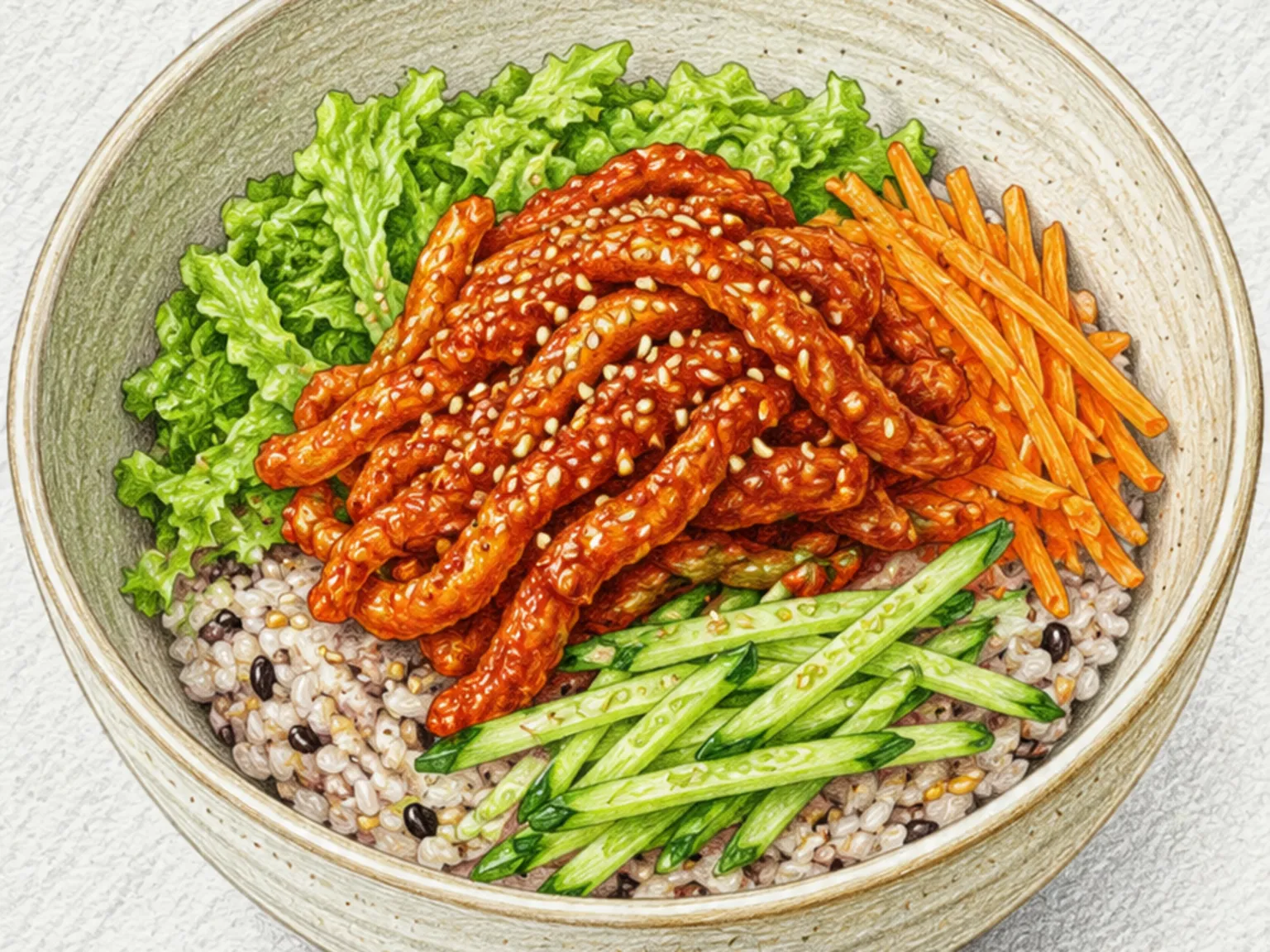
Yukjeon bibim guksu pairs pan-fried beef pancakes with spicy-tangy dressed wheat noodles. Thin slices of lean beef round are patted dry, dusted with flour, dipped in beaten egg, and fried until golden on both sides. Removing moisture before coating is what gives the yukjeon its crisp exterior and keeps the egg layer from sliding off. The dressing combines gochujang, soy sauce, vinegar, sugar, and sesame oil into a sauce that balances heat with sweet-sour brightness. Somyeon noodles are boiled and rinsed multiple times in cold water to wash off excess starch, which keeps them springy and helps the dressing cling evenly. Shredded cucumber and lettuce add freshness and crunch against the warm, savory beef.

Korean Ssukgat Perilla Bibim Somyeon
Shared ingredient: somyeon noodles Noodles

Korean Ssukgat Perilla Bibim Somyeon

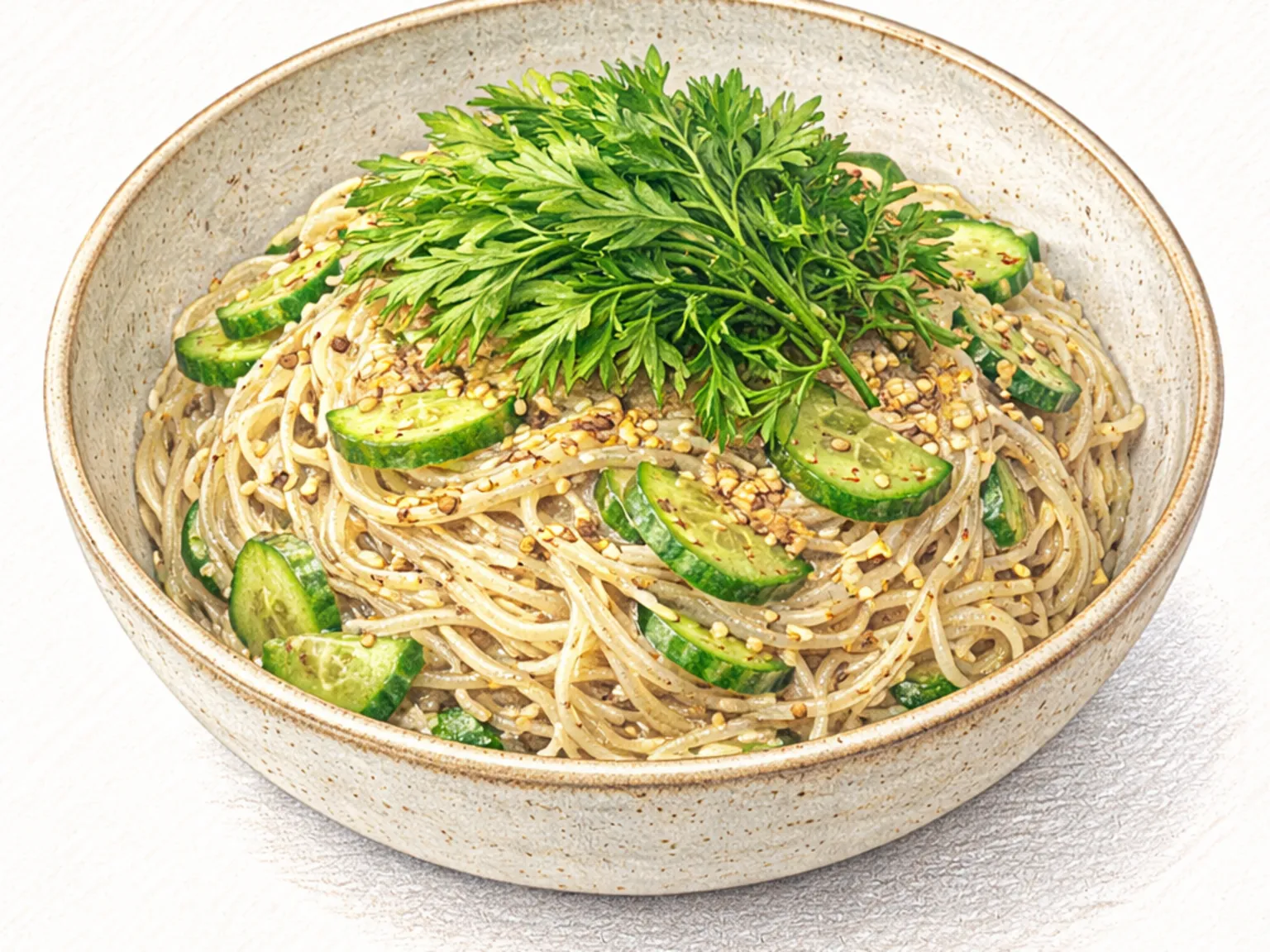
Ground perilla seeds create a nutty foundation for this cold noodle dish, while crown daisy leaves contribute a distinctive herbal bitterness. Thin somyeon noodles serve as the base, tossed in a savory dressing made from soy sauce and freshly ground perilla seeds. Julienned cucumber adds a crisp texture and freshness that contrasts with the soft strands. Preparing the noodles involves boiling and rinsing them multiple times in cold water to build elasticity and remove surface starch. Ensuring the noodles are dry prevents the sauce from thinning out during mixing. Using seeds that are toasted and ground just before serving heightens the aromatic quality of the bowl. The entire preparation takes approximately twenty-five minutes, making it an efficient option for warm weather. It lacks the heat typically associated with spicy noodles, making it approachable for newcomers. Adding chili oil provides a spicy kick for variety, or the dressing can be paired with buckwheat noodles instead. Any remaining sauce functions effectively as a topping for tofu or fresh garden salads.

Korean Braised Perilla Leaves
Serve together Side dishes

Korean Braised Perilla Leaves

Kkaennip jorim layers fresh perilla leaves with a soy-based sauce and simmers them gently - a banchan built for make-ahead storage. Kkaennip (perilla) is a distinctly Korean herb with an aromatic intensity comparable to basil or mint, yet it is rarely found outside Korean cuisine. The technique stacks five to six leaves at a time, spooning sauce between each layer so every leaf seasons evenly. Simmering on medium-low heat for eight to ten minutes wilts the leaves into soft, pliable sheets that wrap neatly around a mound of rice. The sauce combines soy sauce, gochugaru, sugar, garlic, and sesame oil - the last adding a nutty richness that complements the herb's own perfume. Refrigerated in an airtight container, kkaennip jorim lasts up to two weeks, making it one of the most economical banchan to batch-prepare.

Korean Spicy Pork Mixed Noodles
Similar recipe Noodles

Korean Spicy Pork Mixed Noodles

Jeyuk bibim-guksu tops cold mixed noodles with stir-fried spicy pork, combining two popular Korean preparations into one bowl. Pork shoulder is marinated in gochujang and gochugaru, then seared quickly so the edges caramelize while the inside stays moist and tender. Shredded cabbage and onion provide a crisp contrast to the sauced pork, and soy sauce with sugar balances the heat with savory sweetness. The temperature contrast between chilled somyeon noodles and hot, sizzling pork creates a distinctive eating experience that is one of the dish's defining pleasures. Keeping the noodles and the pork separate until the moment of serving prevents the somyeon from absorbing moisture and going soft. A final drizzle of sesame oil adds a nutty send-off.

Serve with this

Korean Shepherd's Purse & Napa Pancake
Pancakes Medium

Korean Shepherd's Purse & Napa Pancake

Naengi Baechu Jeon is a seasonal Korean pancake that features wild shepherd's purse and sweet napa cabbage. To prepare this dish, the roots of the shepherd's purse are thoroughly scrubbed to remove soil and chopped into short lengths, while the cabbage is sliced, lightly salted to draw out moisture, and squeezed. The batter consists of Korean pancake mix, rice flour, an egg, cold water, and soup soy sauce, which provides a clean base that allows the flavors of the vegetables to stand out. Mixing rice flour into the batter ensures that the edges of the pancake turn crispy and remain tender even after cooling. The prepared greens are gently folded into the mixture, then pan-fried in oil over medium heat until both sides are golden brown. It is sliced on a board and served warm.

🍺 Bar Snacks 🏠 Everyday
Prep 18min Cook 14min 4 servings
Korean Mustard Greens Pickle
Kimchi Easy

Korean Mustard Greens Pickle

Paeju mustard pickle is a quick vinegar preserve where mustard greens are cut into roughly four-centimeter pieces, packed into jars with sliced garlic, and submerged in a hot brine of vinegar, water, sugar, salt, and lemon juice. Mustard greens hold on to their peppery, nasal bite even after pickling, layering that natural heat against the sharp acidity of the brine. Lemon juice is added only after the heat is turned off, preserving the citrus aroma that would otherwise evaporate during boiling. Thicker stems absorb the brine more slowly than the leaves, so separating them and salting the stems first gives a more uniform texture throughout. The pickles are ready after twelve hours of refrigeration, but a full day of resting allows the brine to penetrate to the center of each piece and the flavors to settle into a rounder balance. Served alongside fatty meats, their peppery acidity cleans the palate effectively; tucked into a sandwich, they stand in for mustard with more complexity.

🍱 Lunchbox ⚡ Quick
Prep 12min Cook 6min 2 servings
Tofu Avocado Salad (Silken Tofu and Avocado Sesame Bowl)
Salads Easy

Tofu Avocado Salad (Silken Tofu and Avocado Sesame Bowl)

Tofu avocado salad pairs pan-seared firm tofu with ripe avocado over a bed of mixed greens, dressed in soy sauce, sesame oil, and lemon juice. Pressing the tofu thoroughly before searing allows the surface to develop a golden Maillard crust that holds its shape even after tossing with the dressing. The avocado's creamy fat contrasts with the burst of juice from halved cherry tomatoes, creating textural variety in every bite. The dressing layers three dimensions - soy sauce for salinity, sesame oil for nuttiness, and lemon juice for acidity - giving depth to otherwise mild ingredients. Cutting the avocado just before serving prevents oxidation and keeps the color clean.

🥗 Light & Healthy ⚡ Quick
Prep 15min Cook 8min 2 servings

Similar recipes

Korean Yeolmu Bibim Guksu
Noodles Easy

Korean Yeolmu Bibim Guksu

Yeolmu bibim guksu is a Korean mixed noodle dish built around young radish kimchi (yeolmu kimchi). The kimchi provides a crunchy texture and a fermented tanginess that anchors the bowl. Thin somyeon noodles are rinsed in cold water, then tossed with gochugaru or gochujang dressing, sesame oil, and sesame seeds. The heat level stays moderate, letting the kimchi's sourness come through. Total preparation is about 23 minutes, and the recipe requires no cooking beyond boiling the noodles. The main ingredients are Somyeon noodles, Yeolmu kimchi, Gochujang, and Vinegar, and the recipe depends on careful handling of noodle cooking time and sauce thickness.

🏠 Everyday 🌙 Late Night
Prep 15min Cook 8min 2 servings
Korean Gochujang Bibim Udon Cup (Spicy Mixed Udon Cup)
Street food Easy

Korean Gochujang Bibim Udon Cup (Spicy Mixed Udon Cup)

Gochujang bibim udon cup is a cold-tossed udon noodle dish served in a cup, dressed with a sauce built from gochujang, soy sauce, oligosaccharide syrup, vinegar, and sesame oil. The fermented heat of gochujang meets the acidity of vinegar to create a bright, tangy-spicy flavor profile that avoids sharpness, and the viscous syrup gives the sauce enough body to cling evenly to the thick udon strands. Raw julienned cabbage and carrot are folded in without cooking, adding a snappy crunch that contrasts the soft noodles. Cooling the noodles completely before tossing is a key step that prevents the sauce from clumping and ensures even distribution throughout the cup. The handheld cup format suits street food settings, and additional toppings such as a soft-boiled egg or seasoned seaweed can elevate it into a fuller meal.

🌙 Late Night ⚡ Quick
Prep 12min Cook 8min 2 servings
Korean Vegetable Bibim Mandu
Street food Easy

Korean Vegetable Bibim Mandu

Yachae-bibim-mandu combines pan-fried or air-fried dumplings with raw shredded cabbage, lettuce, and cucumber, all tossed in a tangy-spicy dressing of gochujang, vinegar, sugar, and sesame oil. Soaking the vegetables briefly in cold water and draining them well ensures maximum crispness, and tossing half the sauce with the greens first lets the seasoning penetrate evenly. The hot dumplings are placed on top just before serving so their fried shells stay intact against the moisture underneath. Drizzling the remaining sauce over everything ties the dish together with layers of crunch from the wrapper, snap from the vegetables, and a bright, vinegar-lifted heat from the dressing.

🧒 Kid-Friendly 🌙 Late Night
Prep 18min Cook 10min 2 servings

Tips

Loosen thick sauce with 1 tbsp noodle water.
Add vegetables last to keep them crisp.

Nutrition (per serving)

Calories
480
kcal
Protein
12
g
Carbs
84
g
Fat
11
g