Bicol Express (Filipino Pork Belly in Spicy Coconut Cream Stew)
Quick answer
Bicol Express takes its name from the train line that once ran between Manila and the Bicol region in southeastern Luzon, an area where coconut and chili peppers appear i...
What makes this special
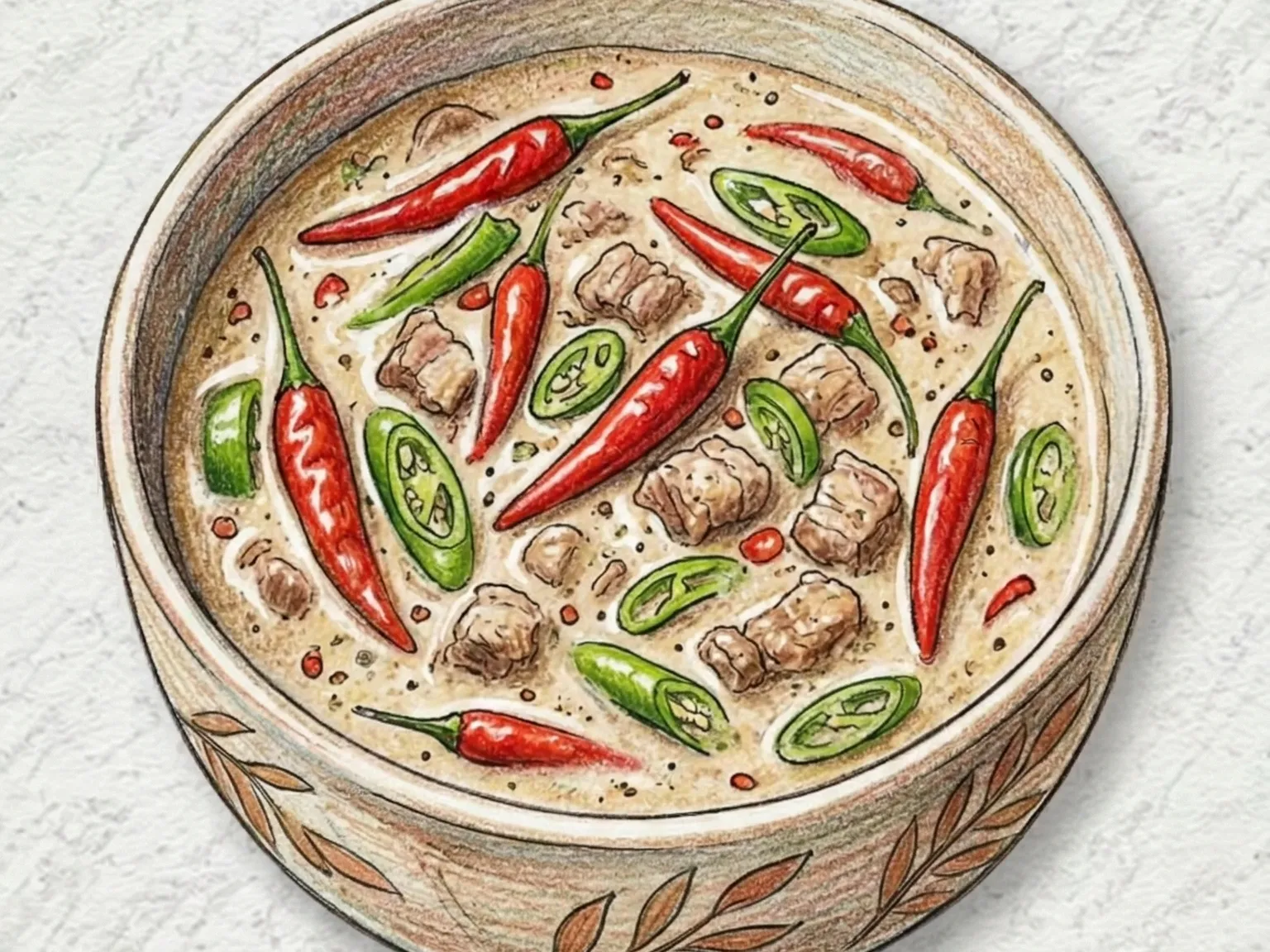
- Bicol Express is a spicy Filipino stew of pork belly simmered in coconut cream until the oil separates.
- Coconut milk evaporates until oil separates; pork belly fries in coconut fat
- Bagoong fermented shrimp paste and two kinds of chili define Bicol region heat
Key ingredients
Core cooking flow
- 1 Slice 600g pork belly thinly into bite-size pieces.
- 2 Heat a heavy pot over medium heat and add the pork belly without extra oil.
- 3 Add the minced onion, garlic, and ginger, then cook over medium heat for 3 more minutes.
Bicol Express takes its name from the train line that once ran between Manila and the Bicol region in southeastern Luzon, an area where coconut and chili peppers appear in quantities that would be considered excessive almost anywhere else in the Philippines. Thinly sliced pork belly simmers in a mixture of coconut milk and coconut cream together with fermented shrimp paste (bagoong), garlic, onion, and a generous measure of both long finger chilies and bird's eye chilies. The liquid reduces slowly over medium heat until the coconut milk splits, releasing its fat into the pan - at that point the pork begins to fry in the rendered coconut oil rather than braise in liquid, and its texture changes noticeably. The finished dish has almost no remaining sauce; a thick, creamy, oily coating clings to every piece of pork and chili. The shrimp paste operates below the surface of the sweetness provided by the coconut, laying down a deep, briny, funky foundation that defines the flavor without announcing itself. The heat from the chilies does not arrive immediately - it accumulates over successive spoonfuls. The combination of coconut, chili, and fermented shrimp reflects an ancient Bicolano flavor structure that predates the dish's catchy modern name by generations. Serving it over steamed white rice, which absorbs the rich coating as it sits on the plate, is the only way to eat it properly.
Instructions
Read the steps as a cooking flow: prep, heat, seasoning, doneness control, and finish.
- 1Prep
Slice 600g pork belly thinly into bite-size pieces.
Finely mince 1 onion, 5 garlic cloves, and 20g ginger, then slice 6 green chilies on the diagonal so they are ready to add near the end.
- 2Control
Heat a heavy pot over medium heat and add the pork belly without extra oil.
Stir for about 5 minutes until the edges turn lightly golden and enough pork fat coats the bottom of the pot.
- 3Control
Add the minced onion, garlic, and ginger, then cook over medium heat for 3 more minutes.
When the onion turns translucent, stir in 1 tablespoon shrimp paste until its raw smell softens and the fat looks seasoned.
- 4Control
Pour in 600ml coconut milk and 1.5 tablespoons fish sauce.
Once the edges begin to bubble, reduce to low heat; keep it at a gentle simmer and scrape the bottom occasionally so the coconut does not scorch.
- 5Control
Simmer gently over low heat for about 20 minutes.
When the liquid reduces and coconut oil appears on the surface, stir for 2 more minutes so the pork starts cooking in the oily sauce rather than watery liquid.
- 6Finish
Add the sliced green chilies and simmer for 5 more minutes.
Stop when the sauce clings tightly to the pork and almost no loose liquid remains, then check the saltiness and serve over warm steamed white rice.
After the steps
Pick a recipe that fits this dish.
Continue with shared ingredients, meal pairings, or a similar method.
Recipes That Go Well With This
More Asian →Based on shared ingredients and meal pairing
Laing (Filipino Bicol Dried Taro Leaf Coconut Milk Stew)
Laing is a traditional dish from the Bicol region of the Philippines, made by slowly simmering dried taro leaves in coconut milk with chili, garlic, ginger, and shrimp paste. The leaves must be fully dried rather than fresh - fresh taro leaves contain calcium oxalate crystals that cause an intense itching sensation in the mouth and throat. Once the aromatics are sauteed in coconut milk, the dried leaves are layered in and the pot is left uncovered to reduce. A critical rule in traditional preparation is to never stir the pot; stirring releases the irritants from the leaves into the liquid. As the coconut milk reduces over low heat, it concentrates into a thick, oily sauce that clings to the softened leaves. Shrimp paste contributes a deep, funky salinity, while fresh or dried chilies bring the heat that Bicolano cuisine is known for. The result is rich, spicy, and intensely savory - meant to be eaten in modest spoonfuls alongside a generous mound of steamed rice.
Sisig (Filipino Crispy Chopped Pork with Chili and Calamansi)
Sisig is a Filipino bar food built around chopped pork that is boiled first for tenderness, then pan-fried in butter until the edges turn deeply crisp. Diced onion and fresh chilies are tossed in briefly, adding crunch and a sharp bite that cuts through the richness. Calamansi juice-a small citrus native to the Philippines-brings a tart brightness that lifts the entire dish, while a finishing fold of mayonnaise binds everything together in a creamy coating without dulling the flavor. The mixture is traditionally served on a sizzling cast-iron plate so it arrives at the table still popping and hissing. Each forkful delivers a layered experience: the crunch of the fried pork, the cool tang of citrus, and the lingering heat of the chili. Sisig is inseparable from Filipino drinking culture and remains one of the country's most iconic street-to-table dishes.
Pancit Palabok (Filipino Rice Noodles with Annatto Shrimp Sauce)
Pancit palabok is a Filipino celebratory noodle dish built on thin rice noodles blanketed in an orange-hued shrimp sauce. The sauce draws its color from annatto powder, which also contributes a faint earthy sweetness, and its savory backbone from shrimp-shell stock simmered with fish sauce. Boiled egg halves and a squeeze of lime are the traditional garnish, cutting through the richness with acidity. Fried garlic, sliced scallions, and crushed chicharron scattered on top add texture contrast and bring multiple layers of flavor to a single serving. At Filipino birthday parties and holiday gatherings, palabok is presented on a large platter and shared family-style, making it one of the most recognizable celebration dishes in the cuisine.
Bibingka (Filipino Coconut Rice Cake)
Bibingka is a Filipino baked rice cake that belongs almost entirely to the Christmas season, sold warm from clay-pot stalls outside churches after Simbang Gabi, the nine-day series of dawn masses leading up to Christmas Day. For Filipinos, the smell of bibingka cooking over charcoal at four in the morning is inseparable from the feeling of the holiday itself. The batter is made from ground rice flour mixed with coconut milk, eggs, and sugar, then poured into a clay pot lined with fresh banana leaves. The pot sits between two layers of live charcoal - one below and one held above on a metal lid - so both surfaces cook simultaneously. This top-and-bottom heat is what gives bibingka its characteristic crust: lightly charred and fragrant on the outside from the banana leaves, moist and tender within. As the batter cooks, the banana leaves release a vegetal green fragrance that infuses into the rice cake and leaves faint dark marks on the underside. Midway through cooking, slices of salted duck egg are pressed into the surface alongside fresh coconut shavings, then a brush of butter is applied and the cake returns to the heat. During this final pass the sugars in the butter and batter caramelize at the edges, producing a triple wave of banana leaf, coconut, and butter aromas. The finished texture sits somewhere between a glutinous rice cake and a sponge cake - slightly sticky and chewy yet airy and soft. The salted egg cuts through the sweetness and gives each bite a complexity that plain sweetness alone cannot provide. Bibingka vendors outside Philippine churches in December, tending glowing braziers in the pre-dawn darkness, are one of the country's most enduring Christmas images.
Serve with this
Korean Sashimi Rice Bowl (Flounder Sashimi with Cho-Gochujang)
Sliced flounder sashimi sits atop julienned cucumber, lettuce, and perilla leaves over slightly cooled rice, dressed with cho-gochujang just before eating. The rice must not be piping hot because residual heat softens the sashimi and dulls its clean texture, so resting it until just warm is essential. The vinegar tang and chili warmth in cho-gochujang lift the mild fish flavor, while sesame oil and seeds leave a nutty finish on the palate. Keeping the vegetables well chilled before assembly creates a temperature contrast against the warm rice that sharpens every bite. Adding the cho-gochujang right before eating rather than in advance prevents the vegetables from weeping moisture and going limp.
Bellflower Root, Chestnut & Perilla Salad
Doraji chestnut perilla salad brings together blanched bellflower root, boiled chestnuts, and Korean pear in a combination that captures the flavors of Korean autumn. Blanching doraji tempers its raw bitterness to a clean, gentle edge and softens its crunch just enough to make it pleasant to eat without cooking out its character entirely. Boiled chestnut contributes a starchy warmth and sweetness that is entirely different from fruit sugars - it is dense and slightly powdery, more comforting than bright. Korean pear introduces cool juice and a delicate crunch that refreshes the palate between bites of root and nut. Ground perilla seeds tie the ingredients together with a nutty, faintly grassy aroma rooted in their omega-3 fatty acid content, a flavor profile that cannot be replicated by sesame alone. The dressing is built from apple cider vinegar for fruit acidity, honey for sweetness, and olive oil to emulsify and smooth the transitions between components. Both bellflower root and chestnuts peak in autumn, so the salad is at its most rewarding when made with freshly harvested seasonal ingredients. The color combination of ivory doraji, cream-colored chestnut, and pale pear gives the bowl a quiet, autumnal visual quality.
Korean Ssanghwa Herbal Tea
Ssanghwa-cha is a traditional Korean tonic tea made by slow-simmering astragalus root, angelica root, cinnamon bark, licorice, and jujube in approximately 1800 ml of water over low heat for more than fifty minutes. The prolonged extraction coaxes layered complexity from each herb, producing a brew that is simultaneously bitter, sweet, and warmly aromatic with cinnamon woven through every sip. Jujubes added during the simmer soften the sharpest herbal edges while contributing a mild natural sweetness that rounds the overall profile. Honey is stirred in after straining to let each person adjust the sweetness to taste. The tea is poured hot into a ceramic cup and finished with a small cluster of pine nuts whose oil blooms on contact with the steaming surface, releasing a gentle, nutty fragrance. The deep medicinal warmth lingers in the throat long after each sip, making the drink a reliable remedy for fatigue and cold weather.
Similar recipes
Kare-Kare (Filipino Peanut Oxtail Stew)
Kare-kare is a Filipino celebration stew built around beef shank braised until every strand of connective tissue has melted into gelatin, leaving meat that falls away from the bone at the touch of a spoon. The shank needs a minimum of sixty minutes at a steady simmer for this transformation to happen fully, and the resulting braising liquid becomes the backbone of the sauce. Glutinous rice flour is dry-toasted in a wide pan, stirred constantly until it turns pale gold and smells nutty, then whisked directly into the strained broth where it acts simultaneously as a thickener and a flavoring agent. Peanut butter is dissolved into the broth next, forming a sauce that is rich and creamy without any heaviness, because the toasted rice flour gives body more cleanly than cornstarch ever could. The braised meat goes back in and simmers together with the sauce for fifteen minutes so the flavors merge completely. Eggplant, yardlong beans, and bok choy are added in the final five to seven minutes, long enough to soften but short enough to keep their individual textures. The dish is always served alongside bagoong, a Filipino fermented shrimp paste, whose concentrated salt and pungent funk contrast forcefully with the mild, nutty sauce and elevate every spoonful.
Pandesal Milk Rolls (Soft Filipino Bread with Crumb Coating)
These small Filipino bread rolls are leavened with yeast and enriched with milk, producing an interior so soft it tears apart in cotton-like wisps. A coating of fine breadcrumbs on the outside adds a faintly sandy texture and a pale, matte appearance that distinguishes pandesal from other dinner rolls. The sweetness is deliberately understated, making the rolls versatile enough for jam at breakfast or sliced meat at lunch. Butter kneaded into the dough contributes richness without heaviness, and the crumb stays moist through the next day when stored in a sealed bag. Covering the rolls with a clean towel five minutes after baking traps steam and keeps them especially tender.