Bihun Goreng (Indonesian Stir-Fried Rice Vermicelli with Sweet Soy)
Asian Easy

Bihun Goreng (Indonesian Stir-Fried Rice Vermicelli with Sweet Soy)

Quick answer

Bihun goreng is fried rice vermicelli sold at street stalls and warung throughout Indonesia and Malaysia from early morning through midnight.

What makes this special

  • Bihun Goreng features rice vermicelli stir-fried with sweet soy sauce for a caramelized Indonesian glaze.
  • Kecap manis caramelizes instantly on the hot wok surface, glazing each noodle strand
  • Briefly soaked rice vermicelli hits a smoking wok for immediate wok hei
Total time
32 min
Level
Easy
Servings
2 servings
Ingredients
9
Calories
520 kcal
Protein
25 g

Key ingredients

rice vermicellichicken breastcabbagecarrotgarlic

Core cooking flow

  1. 1 Submerge 180g of rice vermicelli in lukewarm water for ten minutes.
  2. 2 Slice 150g of chicken breast into thin strips along the grain.
  3. 3 Heat two tablespoons of oil in a wok until it begins to smoke.

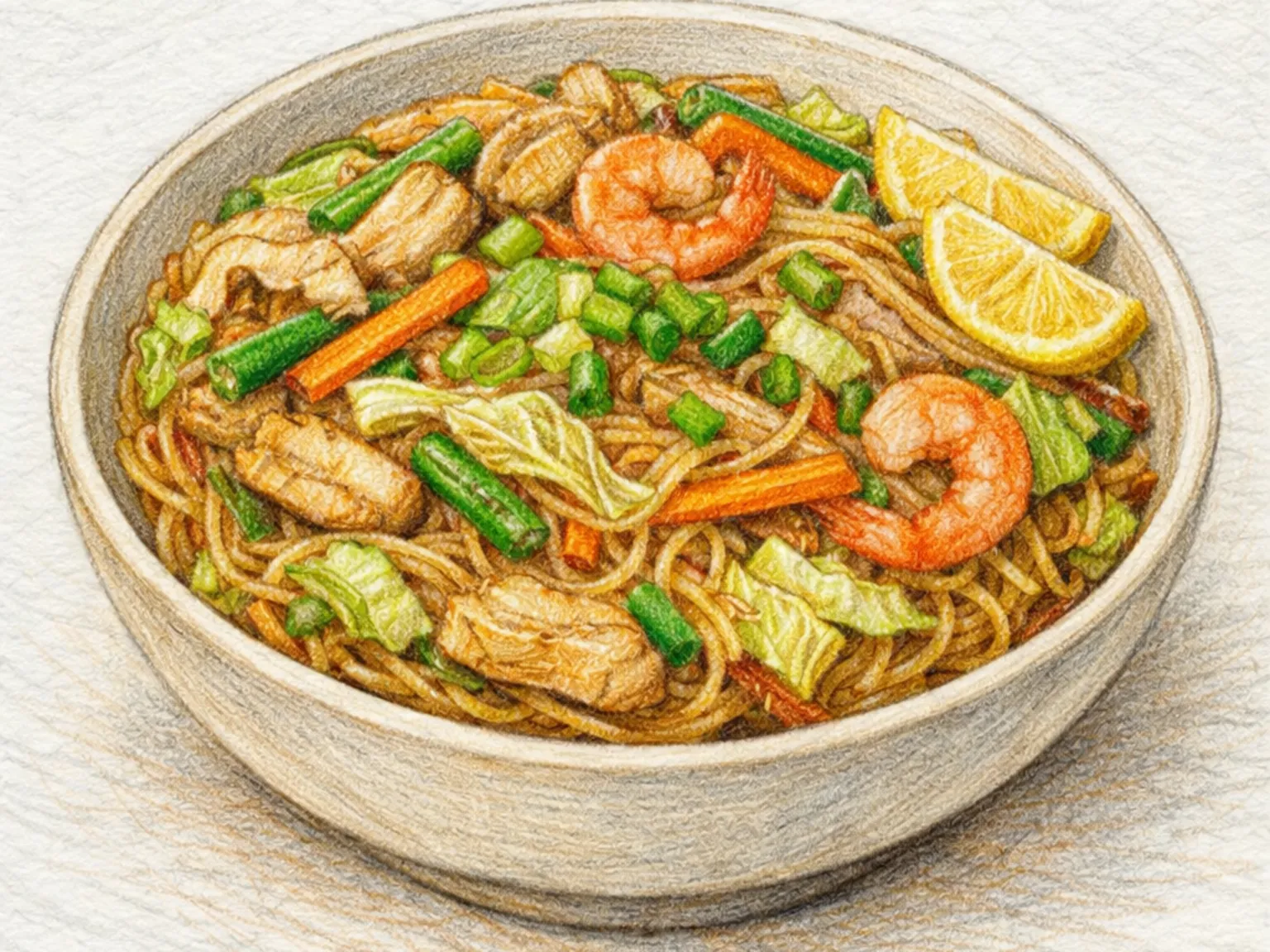
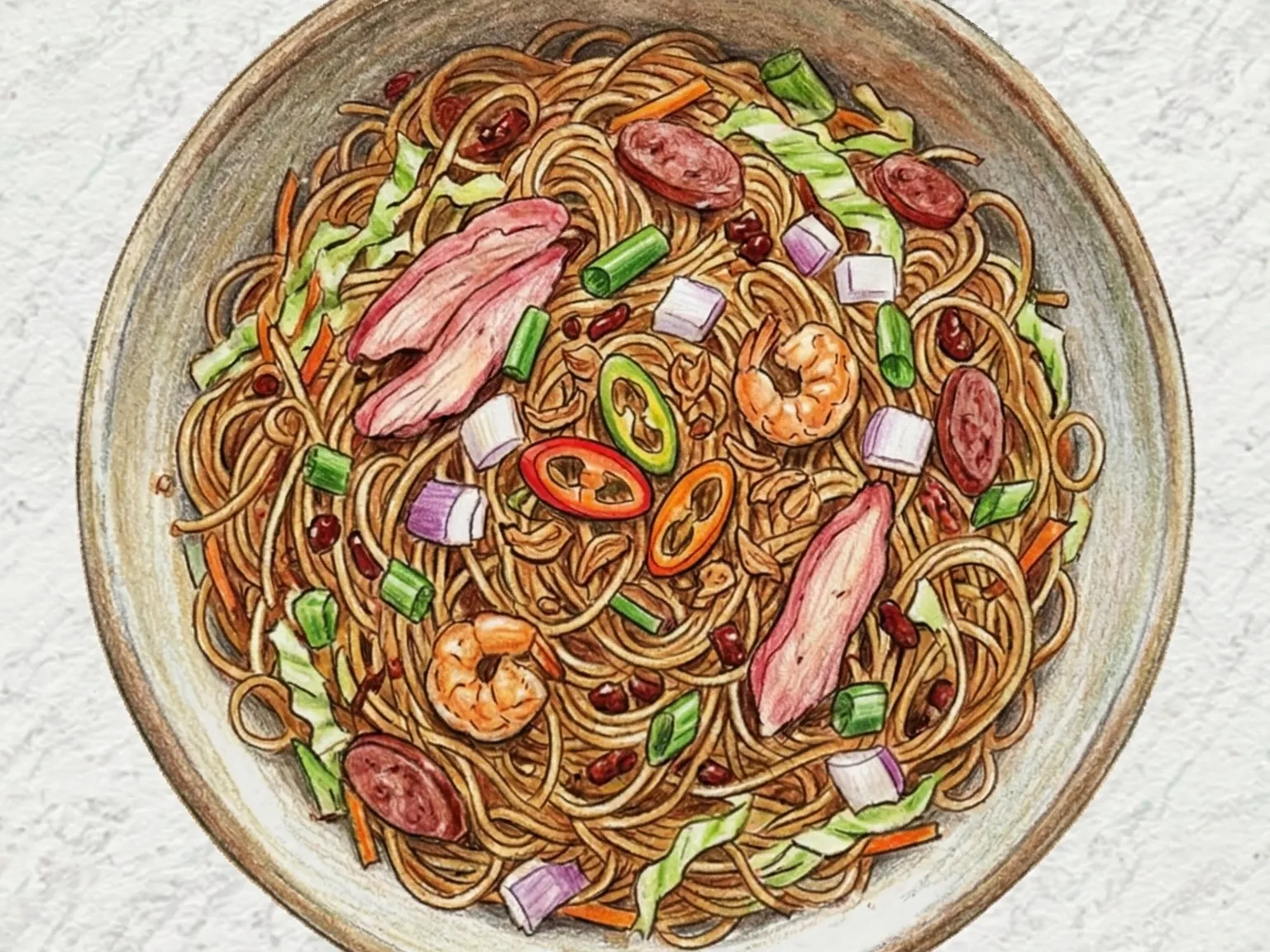
Bihun goreng is fried rice vermicelli sold at street stalls and warung throughout Indonesia and Malaysia from early morning through midnight. Thin rice noodles soaked just until pliable go into a wok heated until it smokes, alongside garlic, shallots, and a generous spoonful of sambal that sizzles the moment it hits the surface. Kecap manis, the thick Indonesian sweet soy sauce, caramelizes rapidly against the hot metal and wraps each strand in a dark, sticky glaze that is the defining characteristic of the dish. Cabbage, bean sprouts, and sliced carrot are added quickly so they retain their crunch against the softness of the noodles. The technique requires constant lifting and turning to prevent the noodles from breaking or clumping while they absorb the sauce. A fried egg laid on top, its edges lacy from being cooked in very hot oil, is the standard finish. The flavor of bihun goreng rests on four layers stacked one over another: the sweetness of kecap manis, the smokiness from the wok, the heat of the sambal, and the salt of a dash of fish sauce added at the end. The ratio shifts from vendor to vendor but the underlying structure holds across regions.

Prep 20min Cook 12min 2 servings

Instructions

Read the steps as a cooking flow: prep, heat, seasoning, doneness control, and finish.

6 steps
  1. 1
    Step

    Submerge 180g of rice vermicelli in lukewarm water for ten minutes.

    Soak only until the thin strands are pliable and soft, then drain thoroughly in a colander to remove all excess water.

  2. 2
    Heat

    Slice 150g of chicken breast into thin strips along the grain.

    Cut 120g of cabbage and 70g of carrot into matching 0.5cm matchsticks so they cook evenly with the delicate rice noodles.

  3. 3
    Heat

    Heat two tablespoons of oil in a wok until it begins to smoke.

    Add crushed garlic and one tablespoon of spicy sambal paste, stir-frying until they sizzle and release a pungent aroma.

  4. 4
    Control

    Add the chicken strips and stir-fry until the meat turns opaque.

    Toss in the sliced cabbage and carrots over high heat, cooking for one minute so they retain their signature fresh crunch.

  5. 5
    Season

    Add the soaked vermicelli along with two tablespoons of kecap manis and soy sauce.

    Use a constant lifting and turning motion to coat every strand in the thick sauce as it caramelizes.

  6. 6
    Finish

    Once the noodles have absorbed the seasoning and turned a deep glistening brown, turn off the heat.

    Transfer to a plate while steaming and top with a crispy fried egg to serve immediately.

After the steps

Pick a recipe that fits this dish.

Continue with shared ingredients, meal pairings, or a similar method.

Recipes That Go Well With This

More Asian →

Based on shared ingredients and meal pairing

Javanese Chicken Mie Goreng
Shared ingredient: cabbage Asian

Javanese Chicken Mie Goreng

Javanese chicken mie goreng is an Indonesian stir-fried noodle dish built around kecap manis, a thick, molasses-dark sweet soy sauce that caramelizes in the wok and coats the noodles in a glossy, sweet-savory glaze that is impossible to mistake for any other style of fried noodle. Shallots and garlic are fried first to form the aromatic base, then sliced chicken thigh, shredded cabbage, and scallions join the wok over high heat. The egg noodles go in last, tossing rapidly to pick up wok breath and absorb the sauce. A fried egg with a runny yolk, prawn crackers for crunch, and a wedge of lime to cut through the sweetness complete the plate in the street-stall tradition of Java. The unmistakable sweetness of kecap manis is what sets this dish apart from Chinese-style fried noodles and gives Javanese mie goreng its identity across Indonesia and beyond.

Ayam Bakar (Indonesian Grilled Chicken in Sweet Soy Marinade)
Shared ingredient: kecap manis (sweet soy sauce) Asian

Ayam Bakar (Indonesian Grilled Chicken in Sweet Soy Marinade)

Ayam bakar means 'roasted chicken' in Malay-Indonesian and is a staple street food across Java, Sumatra, and Bali, where roadside warungs grill it over coconut-shell charcoal. The preparation follows a two-stage method: the chicken first simmers in a marinade of kecap manis (sweet soy sauce), garlic, ground coriander, turmeric, and lime juice until partially cooked and deeply colored throughout. The pre-cooked pieces then move to a very hot grill where the sugar-heavy glaze caramelizes rapidly, forming dark, lacquered patches with a faint char at the edges. This two-step approach ensures the meat stays moist under the intense grill heat while the exterior achieves maximum caramelization. The surface is sticky-sweet, with turmeric's earthiness and coriander's citrusy warmth detectable beneath. Served alongside steamed white rice, raw cucumber slices, and sambal, the dish relies on the sharp chili heat of the sauce and the cool cucumber to balance the sweetness of the glaze. The smoke from coconut-shell charcoal is considered part of the flavor, though a gas or charcoal grill at home produces an acceptable result.

Gado-Gado Salad (Indonesian Peanut Sauce Veggie Plate)
Serve together Salads

Gado-Gado Salad (Indonesian Peanut Sauce Veggie Plate)

Gado-gado salad is an Indonesian composed dish that brings together blanched cabbage, bean sprouts, boiled potato wedges, pan-seared firm tofu, and halved soft-boiled eggs on a single plate, then finishes them with a thick, glossy peanut sauce. The sauce combines peanut butter, lime juice, and soy sauce into a base that layers nuttiness over a sharp, salty-sour foundation, lifting the mild flavors of every vegetable and the tofu in a single pour. Each vegetable is blanched separately and pulled from the water at a different moment: cabbage stays crisp, while bean sprouts are allowed to soften just slightly, so the finished plate holds distinct textures rather than a uniform mush. The tofu must be pressed or patted completely dry before it goes into the pan; residual moisture prevents proper browning and causes the cubes to crumble when tossed with the sauce. If the peanut sauce thickens as it sits, a tablespoon of warm water at a time is all it takes to bring it back to a pourable, coating consistency that drapes over the vegetables rather than clumping on top.

Ayam Goreng (Indonesian Spiced Fried Chicken Without Coating)
Similar recipe Asian

Ayam Goreng (Indonesian Spiced Fried Chicken Without Coating)

Ayam goreng is Indonesia's answer to fried chicken, but the technique diverges sharply from Western versions - there is no flour coating. Instead, chicken pieces are simmered in a paste of garlic, ginger, coriander, turmeric, and coconut milk until the liquid reduces to almost nothing and the spices have permeated the meat to the bone. Only then does the chicken hit hot oil, where the coconut-milk residue on the skin fries into a thin, uneven crust with a deep golden hue. The flavor is aromatic rather than salty, with turmeric's earthiness and coriander's citrus notes layered into every bite. Street stalls across Jakarta and Yogyakarta serve it with sambal, lalapan (raw vegetables), and steamed rice.

Serve with this

Korean Minari Bulgogi Bibim Udon
Noodles Medium

Korean Minari Bulgogi Bibim Udon

Minari bulgogi bibim udon is a Korean mixed noodle dish combining soy-marinated beef bulgogi with fragrant water dropwort over chewy udon noodles. The beef is marinated for ten minutes in soy sauce, garlic, and syrup, then stir-fried quickly with onion over high heat to develop caramelized edges while keeping the interior moist. Udon is blanched for two minutes and rinsed in cold water to restore its springy chew. A gochujang, soy sauce, and sesame oil dressing coats the noodles first, then the bulgogi and minari are folded in gently at the end so the herb's distinctive aroma stays intact rather than wilting away. Sesame seeds scattered on top add a final nutty accent that bridges the savory meat and the fresh, grassy minari. Adding a small amount of pear juice or kiwi juice to the marinade tenderizes the beef noticeably, which sharpens the contrast between the silky meat and the firm noodle.

🍺 Bar Snacks 🏠 Everyday
Prep 25min Cook 12min 2 servings
Korean Chestnut Latte
Drinks Medium

Korean Chestnut Latte

Bam latte is a Korean autumn drink made by blending boiled chestnuts into a smooth paste and warming it with milk. The chestnuts are pureed with water until the mixture is completely smooth, then combined with milk and heated gently on the stovetop over low heat. Maple syrup introduces a caramel sweetness over the mild, starchy flavor of the chestnuts. Ground cinnamon adds warmth, and a small amount of vanilla extract gives the overall aroma more depth. Blending the chestnuts longer yields a silkier drink; leaving some texture produces a thicker, more porridge-like consistency. The full preparation takes about twenty minutes, making it a practical homemade version of the seasonal chestnut lattes that appear in Korean cafes each autumn.

🍺 Bar Snacks 🌙 Late Night
Prep 10min Cook 20min 2 servings
Korean Dakgalbi Fried Rice
Rice Easy

Korean Dakgalbi Fried Rice

Dakgalbi bokkeumbap is a fried rice made by stir-frying gochujang-marinated boneless chicken thigh with cabbage and onion over high heat, then adding day-old rice to the pan and frying until every grain absorbs the sweet-spicy marinade. The dish originated from the Chuncheon tradition of finishing a dakgalbi meal by stir-frying the leftover sauce and scraps with rice, effectively turning what remains in the pan into a second course. Day-old rice is essential: fresh rice holds too much moisture and clumps together, while refrigerated rice separates cleanly on the hot surface and makes sufficient contact with the pan to develop slightly charred bits at the bottom. These caramelized patches add a smoky crunch that contrasts with the sauced grains above and elevate the dish beyond a simple fried rice. Cabbage and perilla leaves added at the very end of cooking retain a faint crunch that cuts through the richness of the gochujang marinade. Plating the rice with a few perilla leaves laid on top and a scatter of sesame seeds over the surface finishes the dish without requiring anything further.

🏠 Everyday ⚡ Quick
Prep 12min Cook 14min 2 servings

Similar recipes

Ayam Penyet (Javanese Smashed Fried Chicken with Sambal)
Asian Medium

Ayam Penyet (Javanese Smashed Fried Chicken with Sambal)

Ayam penyet means smashed chicken in Javanese and describes an East Javanese street dish in which the chicken is deliberately crushed with a pestle after frying. The process begins by braising the bird in turmeric and galangal-scented water until fully cooked through, then deep-frying until the skin blisters, darkens to mahogany, and turns properly crisp. The final press against a stone mortar cracks the skin open to expose the moist interior and creates irregular ridges and cavities across the surface that the sambal fills and clings to. That sambal - pounded fresh from bird eye chilies, shallots, tomato, and shrimp paste - is the defining element of the dish, delivering a ferocious heat alongside the deep, funky salinity of fermented shrimp paste. The two flavors hit at the same time and neither yields to the other. Served on a banana leaf with steamed rice, fried tofu, and raw vegetables, the full plate comes together the way street-stall food in Java typically does: quickly assembled, intensely seasoned, and eaten without ceremony.

🎉 Special Occasion 🍺 Bar Snacks
Prep 20min Cook 25min 2 servings
Singapore Rice Noodles (Curry-Spiced Stir-Fried Vermicelli with Shrimp)
Noodles Easy

Singapore Rice Noodles (Curry-Spiced Stir-Fried Vermicelli with Shrimp)

Singapore rice noodles are a Cantonese-style stir-fry of thin rice vermicelli tossed with curry powder, shrimp, and mixed vegetables over high heat. The curry powder is bloomed in hot oil at the edge of the wok to unlock its full aroma before being mixed into the noodles. Soy sauce adds seasoning depth, and bean sprouts go in during the last thirty seconds to keep their crunch. Soaking the vermicelli for only eight minutes prevents the noodles from breaking apart during stir-frying. It can be served as a noodle dish, with simple accompaniments chosen to match the sauce, broth, or topping.

🏠 Everyday 🌙 Late Night
Prep 15min Cook 12min 2 servings
Thai Soy Sauce Noodles (Wide Rice Noodles with Beef and Chinese Broccoli)
Noodles Medium

Thai Soy Sauce Noodles (Wide Rice Noodles with Beef and Chinese Broccoli)

Pad see ew is a Thai stir-fried noodle dish built around wide rice noodles, beef, Chinese broccoli, and egg, all tossed in a sauce of soy sauce, oyster sauce, and dark sugar. The central technique is wok hei through extreme heat. Without a properly scorching pan, the sauce pools at the bottom rather than adhering to the noodles, and caramelization never happens. Beef goes into the hot pan first to develop a seared surface before anything else is added. Gai lan and cracked eggs follow, the eggs scrambled loose in the same pan, then the soaked noodles and the pre-mixed sauce go in together and the whole thing is tossed hard and fast. During those few seconds of high contact heat, the sauce binds to the noodle surface and develops a slightly charred, smoky-sweet aroma that is the defining character of the dish. The thick stems of Chinese broccoli keep a satisfying crunch and introduce a mild bitterness that cuts the sweetness of the sauce. Egg fragments distributed throughout the noodles add pockets of soft, creamy texture. The finished noodles are deeply stained, and every strand carries the sauce.

🎉 Special Occasion 🌙 Late Night
Prep 15min Cook 15min 2 servings

Tips

Over-soaked vermicelli can become mushy during stir-frying.
Keep heat high for better wok aroma.

Nutrition (per serving)

Calories
520
kcal
Protein
25
g
Carbs
67
g
Fat
16
g