Bistek Tagalog (Filipino Beef Steak with Calamansi Soy Sauce)
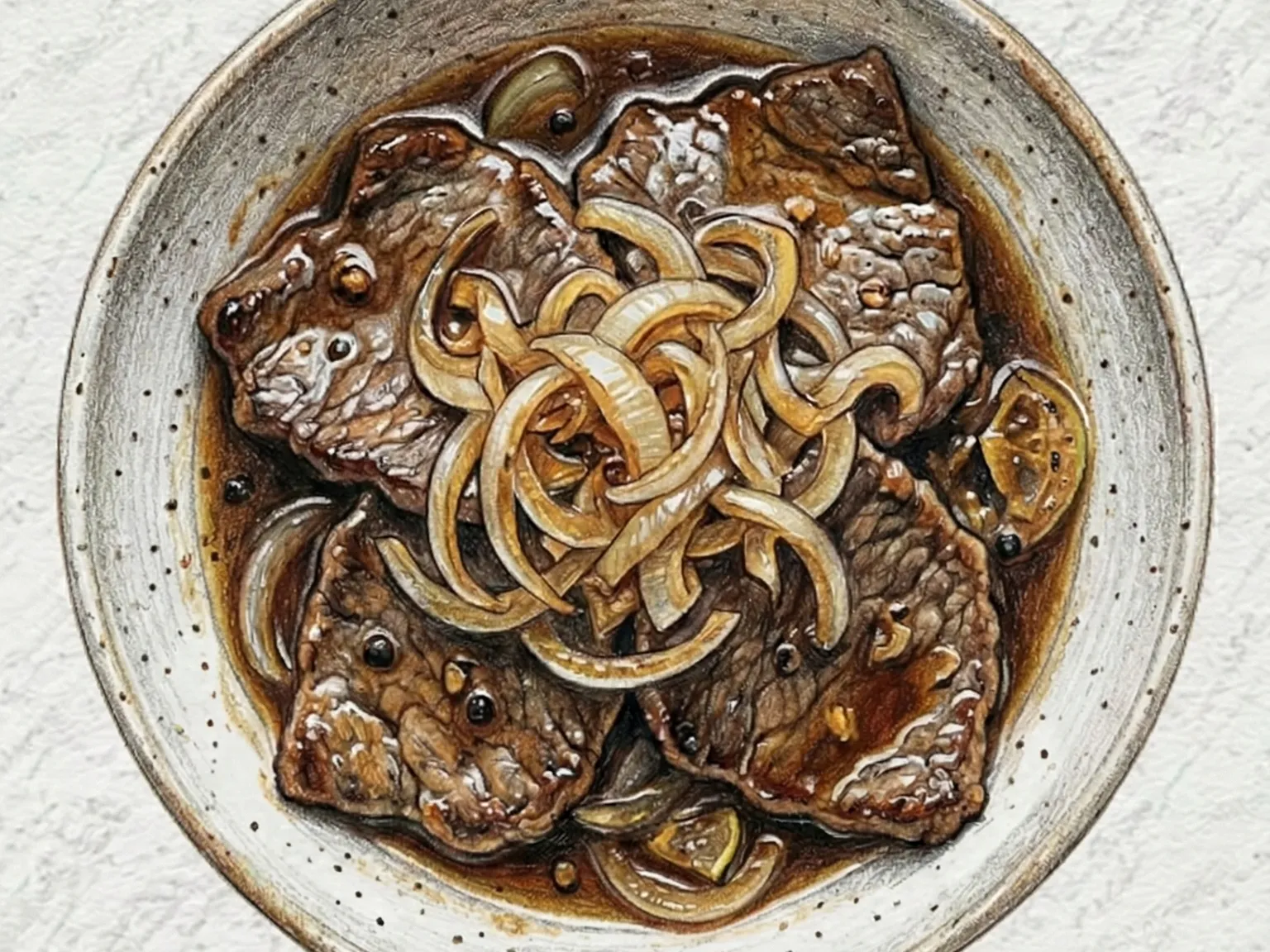
Bistek Tagalog - Filipino beef steak - adapts the Spanish bistec concept with a distinctly Philippine twist: calamansi citrus replaces wine or vinegar as the acid, producing a brighter, more tropical tang in the marinade. Thinly sliced beef sirloin soaks in a mixture of soy sauce, calamansi juice, garlic, and black pepper for at least thirty minutes, during which the acid tenderizes the fibers and the soy sauce penetrates deeply. The beef is seared quickly in a hot pan, then set aside while thick onion rings cook in the same drippings until softened and lightly caramelized. The marinade returns to the pan as a braising liquid, reducing into a dark, glossy sauce that coats the beef when everything is reunited. The finished dish has a pronounced salty-sour character - the soy provides depth while the calamansi lifts the heaviness of the meat fat. Piled high with the caramelized onion rings and always served over steamed white rice, it is one of the Philippines' most beloved weeknight meals.
Adjust Servings
Instructions
- 1
Slice beef thinly and marinate with soy sauce, lime juice, garlic, and pepper for 15 minutes.
- 2
Slice onion into thick rings.
- 3
Lightly sauté onions first, then set aside.
- 4
Cook beef quickly over high heat in the same pan.
- 5
Add remaining marinade and sugar, reduce for 1 minute, then return onions.
As an Amazon Associate, we may earn from qualifying purchases.
Tips
Nutrition (per serving)
More Recipes

Chicken Adobo (Filipino Vinegar Soy Braised Chicken)
Chicken adobo is the unofficial national dish of the Philippines, rooted in a pre-colonial preservation technique of braising meat in vinegar to extend its shelf life in tropical heat. Chicken simmers uncovered in soy sauce, cane vinegar, crushed garlic cloves, bay leaves, and whole black peppercorns until the sharp acidity of the vinegar mellows into a salty-sour sauce with caramelized depth. Once braised, the chicken is pan-fried until the skin turns golden and crisp, then reunited with the reduced sauce - the moment the crackling skin meets the thick, glossy liquid is the dish's defining pleasure. Every Filipino household has its own ratio of soy to vinegar, and the debate over whose mother makes the best adobo is a national pastime that never resolves. It is always served over steamed white rice, with extra sauce spooned over generously. Adobo famously tastes better on the second day, after the flavors have deepened overnight in the refrigerator.

Kare-Kare (Filipino Peanut Oxtail Stew)
Kare-kare is a Filipino celebration stew where beef shank is braised until fork-tender and served in a thick peanut-based sauce with vegetables. The shank requires at least sixty minutes of simmering so that its abundant connective tissue breaks down into gelatin, yielding meat that falls apart at the touch of a spoon. Glutinous rice flour is dry-toasted in a pan until lightly golden, adding a nutty fragrance before it is whisked into the broth as a thickener. Peanut butter dissolved in the strained broth forms the sauce's rich, creamy foundation, and the toasted rice flour gives it body without the slickness of cornstarch. Eggplant, yardlong beans, and bok choy are added in the final five to seven minutes so they soften without turning mushy. The traditional accompaniment is bagoong, a fermented shrimp paste whose intense saltiness and funk contrast sharply with the mild, nutty sauce.

Chicken Inasal (Bacolod Citrus Lemongrass Grilled Chicken)
Chicken inasal is the signature grilled chicken of Bacolod City in the Western Visayas, so closely tied to the place that it is often called simply 'Bacolod chicken.' The marinade - calamansi juice, cane vinegar, lemongrass, and garlic - works overnight, its acid penetrating deep into the muscle fibers to tenderize while depositing layers of citrus and herb flavor. During grilling over coconut-shell charcoal, the chicken is basted repeatedly with annatto (achuete) oil, which stains the skin a distinctive orange and keeps the surface perpetually moist so it never dries over the coals. The charcoal smoke mingles with the calamansi and lemongrass aromatics to produce a smoky-citrus flavor profile unique to inasal. Bacolod's Manokan Country - an entire street of inasal restaurants - fills with charcoal haze every evening as dozens of stalls grill simultaneously. The chicken is served with garlic rice and a small dish of chicken oil mixed with calamansi for dipping.

Sisig (Filipino Crispy Chopped Pork with Chili and Calamansi)
Sisig is a quintessential Filipino bar food built around chopped pork that is boiled first for tenderness, then pan-fried in butter until the edges turn deeply crisp. Diced onion and fresh chilies are tossed in briefly, adding crunch and a sharp bite that cuts through the richness. Calamansi juice-a small citrus native to the Philippines-brings a tart brightness that lifts the entire dish, while a finishing fold of mayonnaise binds everything together in a creamy coating without dulling the flavor. The mixture is traditionally served on a sizzling cast-iron plate so it arrives at the table still popping and hissing. Each forkful delivers a layered experience: the crunch of the fried pork, the cool tang of citrus, and the lingering heat of the chili. Sisig is inseparable from Filipino drinking culture and remains one of the country's most iconic street-to-table dishes.

Pancit Canton (Filipino Stir-Fried Egg Noodles with Chicken and Vegetables)
Pancit canton is a Filipino stir-fried egg noodle dish cooked with chicken, carrot, and cabbage in a soy sauce and oyster sauce seasoning. The noodles are parboiled to about seventy percent doneness so they finish cooking in the wok while absorbing the sauce, staying springy rather than soft. Chicken thigh is stir-fried first to render its fat and juices, then carrot and cabbage go in over high heat to keep their crunch. Soy sauce and oyster sauce combine into a salty, umami-rich glaze that coats the noodles evenly. A squeeze of fresh lemon after the heat is turned off lifts the dish with citrus brightness, cutting through the oily richness. The lemon must be added at the very end to preserve its volatile aroma.

Pandesal Milk Rolls (Soft Filipino Bread with Crumb Coating)
These small Filipino bread rolls are leavened with yeast and enriched with milk, producing an interior so soft it tears apart in cotton-like wisps. A coating of fine breadcrumbs on the outside adds a faintly sandy texture and a pale, matte appearance that distinguishes pandesal from other dinner rolls. The sweetness is deliberately understated, making the rolls versatile enough for jam at breakfast or sliced meat at lunch. Butter kneaded into the dough contributes richness without heaviness, and the crumb stays moist through the next day when stored in a sealed bag. Covering the rolls with a clean towel five minutes after baking traps steam and keeps them especially tender.