Black Forest Cake
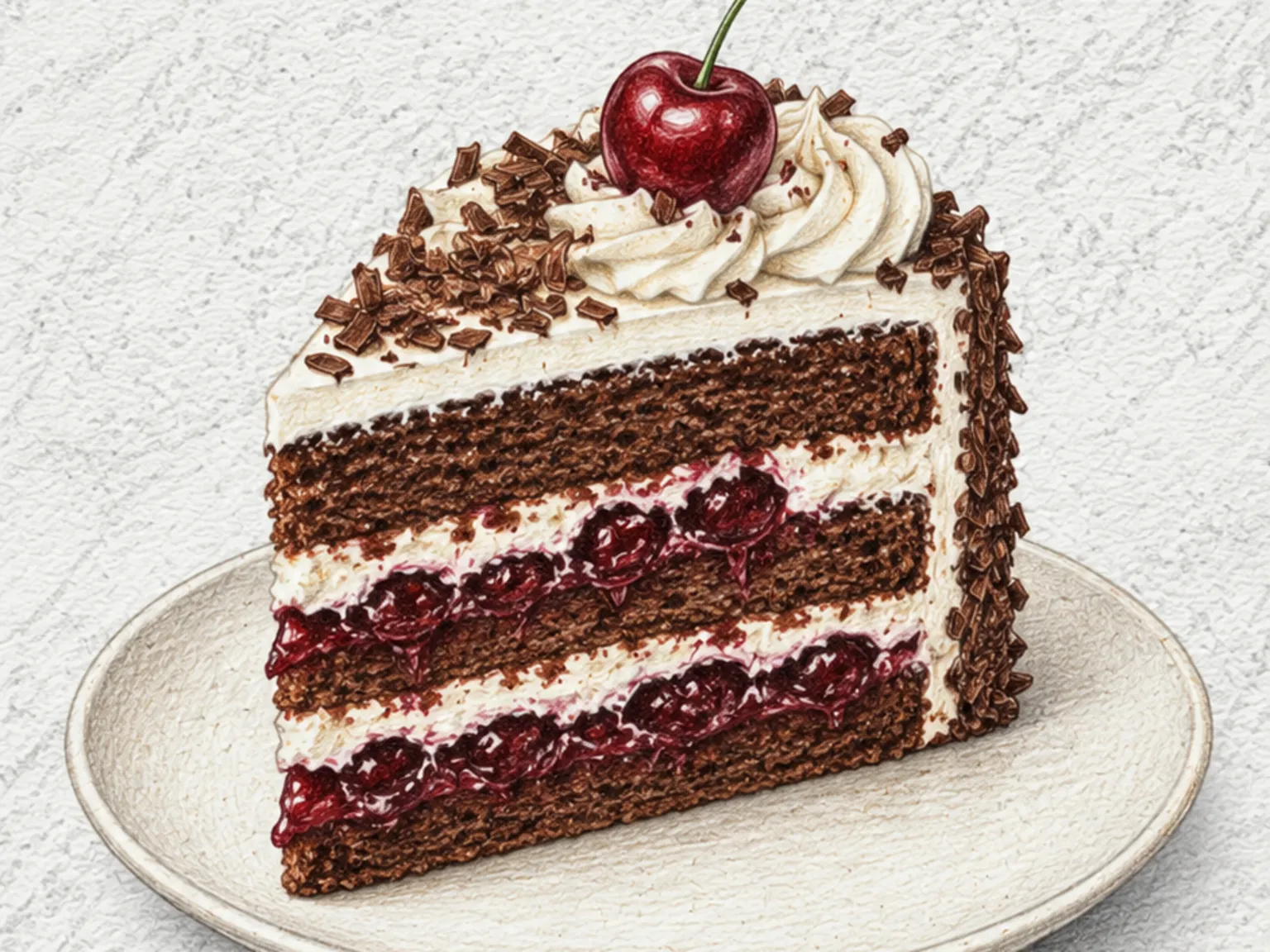
Black Forest cake is a layered chocolate cake from southwestern Germany. Dark, moist chocolate sponge layers are stacked with alternating fillings of cherry compote and whipped cream, creating a cross-section of contrasting colors and textures. The cherries provide a tart, fruity acidity that cuts through the bitterness of the cocoa, while the whipped cream acts as a neutral bridge between the two strong flavors. Traditionally, each sponge layer is brushed with Kirschwasser, a clear cherry brandy that adds subtle warmth and intensifies the cherry flavor throughout. The cake is finished with whipped cream rosettes, dark chocolate shavings, and whole cherries on top.
Adjust Servings
Instructions
- 1
Preheat oven to 175C and line a cake pan.
- 2
Whisk eggs and sugar until voluminous, then fold in flour and cocoa.
- 3
Fold in milk, pour into pan, bake 28-30 minutes, and cool.
- 4
Slice cake into 2-3 layers and whip the cream.
- 5
Layer cake with cherry compote and cream, frost outside, then finish with shaved chocolate.
As an Amazon Associate, we may earn from qualifying purchases.
Tips
Nutrition (per serving)
More Recipes

Bienenstich (German Bee Sting Cake) - Caramelized Almond and Custard Recipe
Three layers that make this German bakery classic irresistible: a shattering sheet of caramelized almonds on top, pillowy yeasted cake in the middle, and cool vanilla custard cream hiding inside. Sliced almonds are cooked in butter and sugar until they form a crunchy golden crust, then baked on enriched yeast dough. Once cooled, the cake is split and filled generously with thick custard or whipped cream. Every bite contrasts crunch, softness, and silky cream - a texture sequence no other cake delivers quite like bienenstich.

German Butter Cake (Yeasted Sheet Cake with Almond Topping)
Butterkuchen is a traditional German yeasted cake that relies on generous amounts of butter for its character. The dough is a soft, enriched bread base - similar to brioche - that rises into a pillowy sheet. Before baking, the surface is dimpled with fingertips and small pieces of cold butter are pressed into each hollow. As the cake bakes, the butter melts into caramelized pools, creating pockets of salty-sweet richness across the top. Sliced almonds scattered over the surface toast golden and crunchy, adding textural contrast to the soft crumb beneath. The finished cake is tender and buttery without being heavy, designed for slicing into squares alongside afternoon coffee. It is a staple of northern German bakeries and family kitchens, where simplicity of ingredients is the point rather than the limitation.

Strawberry Shortcake
Three layers of airy chiffon sponge are stacked with generous swirls of whipped cream and halved fresh strawberries in the style of Japanese patisseries. The sponge is made by warming eggs and sugar over a water bath before whipping to ribbon stage, which traps enough air to give each slice a pillowy, cloud-like texture. Cream is whipped to roughly eighty percent - firm enough to hold its shape between layers yet soft enough to feel silky on the tongue. Strawberry acidity cuts through the fat in the cream, keeping every bite bright rather than cloying. A light brush of simple syrup on each sponge layer before assembly adds moisture that sustains the cake through refrigeration overnight. The whole cake is then coated in cream and decorated with berries on top. This is the default birthday cake in many Japanese and Korean households, and its clean, fruit-forward flavor makes it adaptable to any seasonal fruit.

Soft Pretzel
Yeasted dough is shaped into the classic pretzel twist, briefly dipped in a boiling baking-soda bath, and baked at high heat. The alkaline solution triggers an accelerated Maillard reaction on the surface, producing the deep mahogany crust and slightly bitter, complex flavor that separates a true pretzel from ordinary bread rolls. Beneath that thin, chewy shell, the interior stays soft, airy, and faintly sweet. Coarse salt crystals pressed into the surface before baking deliver sharp, salty bursts that contrast with the mellow dough. The dip in the alkaline bath must be brief - thirty seconds at most - or the exterior turns slimy and the texture suffers. Mustard is the traditional accompaniment, its acidity and heat cutting through the bread's richness, though warm cheese sauce has become an equally popular pairing.

Pork Schnitzel
Pork Schnitzel is a definitive cutlet dish from Germany and Austria, made by pounding pork loin thin and even with a mallet, then coating it in flour, beaten egg, and breadcrumbs before frying in oil. The meat must be pounded to five millimeters or thinner so it cooks through quickly without the breading burning, and the hallmark of a proper schnitzel is a crust that puffs away from the meat rather than clinging flat. Achieving this requires generous oil - enough to submerge the cutlet halfway - and gently shaking the pan so oil flows beneath the breading to lift it. Fine breadcrumbs produce a delicate, even crust, and they should be pressed on lightly rather than compacted to maintain crispness over time. Paprika mixed into the flour adds a faint smoky warmth, and a fresh squeeze of lemon over the finished schnitzel cuts through the richness with bright acidity.

Korean Street Waffle (Crispy Folded Waffle with Jam and Cream)
Gilgeori waffle is a Korean street stall dessert made from a batter of cake flour, egg, milk, and melted butter, cooked in a waffle iron and filled with strawberry jam and whipped cream. Minimal mixing keeps gluten development low, yielding a crisp grid-patterned exterior and a fluffy interior. A brief rest on a cooling rack after baking releases steam to prevent sogginess before the waffle is folded around its filling. The batter carries a light butter fragrance without being heavy, letting the cream and jam flavors come through clearly.