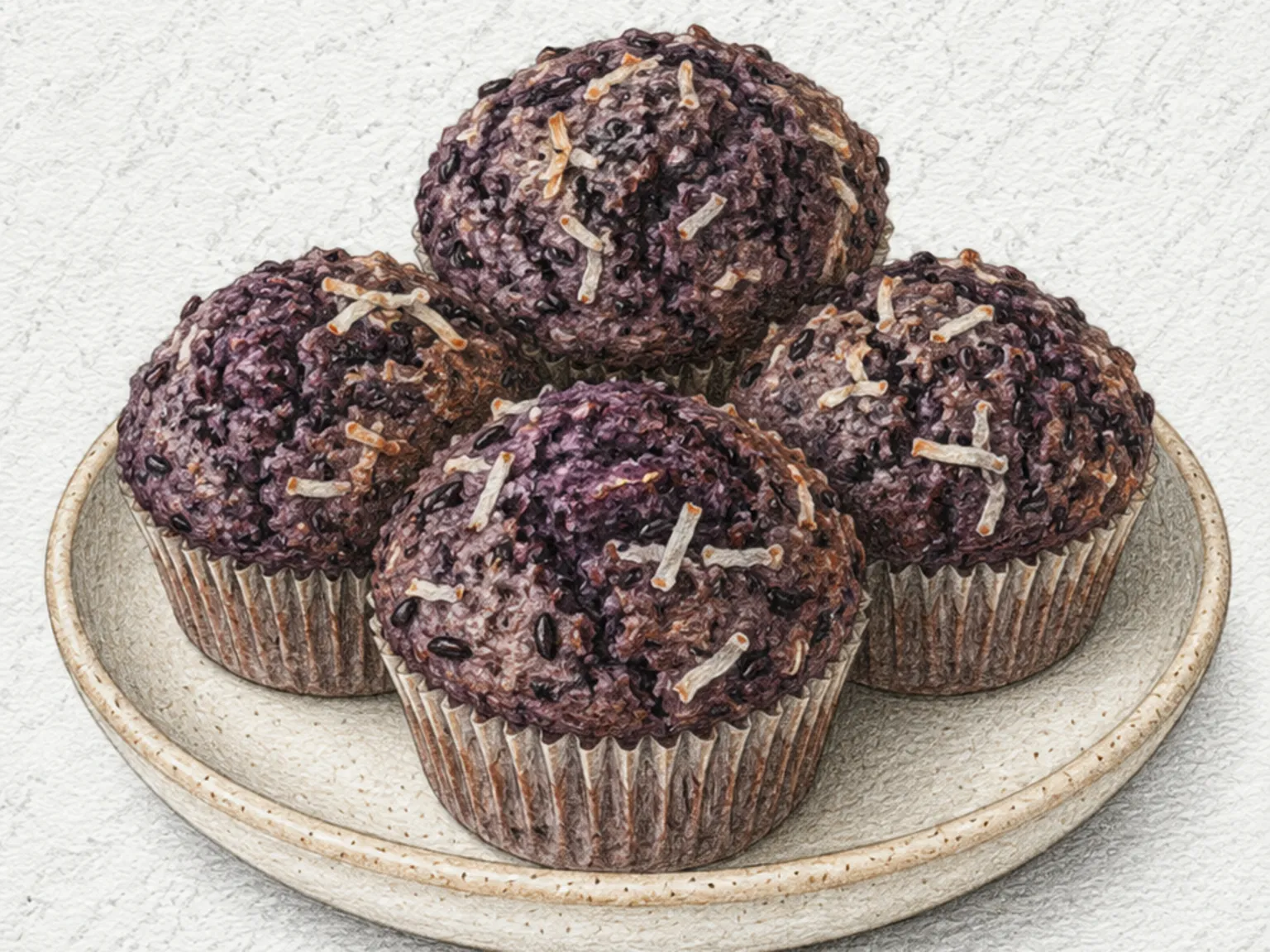
Black Rice Coconut Muffins
Quick answer
Black rice flour is blended into all-purpose flour until the batter takes on a distinctive purple-gray hue, and the grain brings a toasted, nutty quality that plain flour...
What makes this special
- Black Rice Coconut Muffins provide a nutty flavor and dense crumb through purple grain flour.
- Black rice flour tints the batter deep purple and adds nutty complexity
- Coconut milk produces a moister crumb than regular milk with subtle coconut aroma
Key ingredients
Core cooking flow
- 1 Preheat the oven fully to 180°C, and line a 12-cup muffin tray with paper cups.
- 2 Put 150g all-purpose flour, 50g black rice flour, 7g baking powder, 90g sugar, and 2g salt in a bowl.
- 3 In a separate bowl, loosen 1 egg first, then add 140ml coconut milk and 60ml neutral oil.
Black rice flour is blended into all-purpose flour until the batter takes on a distinctive purple-gray hue, and the grain brings a toasted, nutty quality that plain flour cannot provide on its own. Coconut milk stands in for regular dairy, producing a crumb that is noticeably more moist and tender than a standard muffin while the tropical scent settles into the batter without the need for any extract or flavoring. Desiccated coconut folded in before baking survives the oven and creates small chewy pockets throughout the finished crumb, varying the texture bite by bite. The anthocyanin pigments in the black rice deepen visibly on the muffin tops during baking, giving them a pronounced purple that signals the presence of the grain before a single bite is taken. Both ingredients reinforce the nutty note from their own direction, one earthy and grainy, the other sweet and tropical, and together they give the muffin more depth than a recipe built on white flour alone.
Instructions
Read the steps as a cooking flow: prep, heat, seasoning, doneness control, and finish.
- 1Step
Preheat the oven fully to 180°C, and line a 12-cup muffin tray with paper cups.
If the coconut milk has separated or thickened, stir it smooth first so it blends evenly into the batter.
- 2Season
Put 150g all-purpose flour, 50g black rice flour, 7g baking powder, 90g sugar, and 2g salt in a bowl.
Whisk until the purple rice flour is evenly dispersed and no pale flour pockets remain.
- 3Prep
In a separate bowl, loosen 1 egg first, then add 140ml coconut milk and 60ml neutral oil.
Whisk for about 30 seconds, stopping when the mixture looks smooth and no large oil slicks remain.
- 4Prep
Pour the wet mixture into the dry ingredients, then fold with a rubber spatula while scraping up from the bottom.
Stop when the batter is about 80 percent combined and a few dry streaks still show.
- 5Finish
Add 35g desiccated coconut and fold only two or three more times to finish the batter.
Divide it into the cups to about 80 percent height, and sprinkle a little extra coconut on top if desired.
- 6Heat
Bake at 180°C for 20 to 22 minutes, checking when the tops turn deep purple and lightly cracked.
They are done when the tops spring back and a skewer comes out clean, then cool completely on a rack.
After the steps
Pick a recipe that fits this dish.
Continue with shared ingredients, meal pairings, or a similar method.
Recipes That Go Well With This
More Baking →Based on shared ingredients and meal pairing
Black Rice Black Sesame Muffins
Black rice black sesame muffins bring together two of Korean baking's most distinctive ingredients into a single pastry with layered flavor and an unusual deep color. Black rice flour and cake flour form the dry base, with roasted black sesame seeds folded in to add concentrated nuttiness and tiny bursts of crunch throughout the crumb. Plain yogurt and milk provide the moisture and a faint tang that offsets the sweetness, while neutral oil keeps the fat light. During baking, the heat activates the oils within the sesame seeds, intensifying their roasted aroma as the muffins rise. The finished interior stays moist and tender, and the crust develops a subtle chew. The color is a striking deep purple-gray from the black rice. Flavor arrives in sequence: the earthy, slightly mineral depth of black rice leads, and the bold, roasted sesame note finishes. The restrained sweetness makes these muffins as well-suited to coffee or tea as they are to eating on their own.
Deulkkae Kkul Muffins (Perilla Honey Muffins)
Ground perilla seeds are folded into a quick muffin batter alongside honey and brown sugar, creating a Korean-inspired bake with a pronounced nutty fragrance and gentle sweetness. The perilla flavor is warm and toasty, somewhere between sesame and fresh herbs, and it builds with each bite rather than fading. Honey keeps the crumb moist without making it heavy, and neutral oil replaces butter so the perilla aroma stays at the forefront. Mixing the batter in only ten to twelve strokes is critical: overmixing toughens the gluten and dulls the texture. A light sprinkle of perilla powder on top before baking gives each muffin a visual cue and an extra burst of fragrance when broken open. They pair well with grain lattes, where the roasted notes in the drink echo the seed's toasted character.
Korean Dalgona Coffee (Whipped Instant Coffee Foam Milk)
Dalgona coffee is made by whipping equal parts instant coffee, sugar, and hot water with a hand mixer for three to five minutes until stiff, caramel-colored peaks form, then spooning the foam over iced milk. The whipped layer carries a concentrated, bittersweet coffee flavor that gradually blends into the cold, neutral milk below as you stir. A light dusting of cocoa powder on top introduces a faint chocolate note, and increasing the sugar slightly helps the whipped cream hold its stiff structure longer.
Injeolmi Scone (Soybean Powder & Rice Cake Scone)
This scone folds roasted soybean powder and small pieces of glutinous rice cake into a classic British scone dough, capturing the flavor of Korean injeolmi in a handheld baked form. Soybean powder mixed into the dough lends the crumb a warm, toasted nuttiness that plain flour alone cannot produce, and the tteok pieces soften and melt in the oven, leaving behind chewy, stretchy pockets scattered throughout the crumb. Cold butter cut into small pieces and worked into the dry ingredients without fully melting is what allows the scone to develop distinct flaky layers that crack at the surface while the interior stays tender and moist. Minimal mixing is the central technique: working the dough only until the ingredients just come together prevents gluten development that would produce a tough, dense result instead of the desired crumbly tenderness. A drizzle of honey or a small bowl of sweetened condensed milk served alongside echoes the traditional way injeolmi is eaten and reinforces the sweet-nutty pairing that defines the dish. Warm green tea or pu-erh makes a natural companion for the afternoon. Cutting the tteok into pieces no larger than one centimeter ensures they melt evenly through the bake rather than leaving undercooked chunks in the center.
Serve with this
Five-Grain Crispy Bars (Korean Puffed Rice and Seed Honey Bars)
Ogok gangjeong is a traditional Korean grain bar that binds five ingredients - puffed rice, toasted brown rice, sunflower seeds, pumpkin seeds, and black sesame - with a syrup of rice syrup and honey. The syrup simmers over low heat for two to three minutes to build viscosity, then gets poured over the grain mixture and pressed into a lined pan within one minute before it sets. Each bite layers the airy crunch of puffed rice against the denser chew of brown rice, while sunflower and pumpkin seeds contribute a rich oiliness and black sesame delivers a roasted undertone throughout. Cutting with a lightly oiled knife after the bars cool completely produces clean edges, and airtight storage keeps them crisp for several days.
Fruit Salad (Fresh Seasonal Fruit in Yogurt)
Fruit salad dices apple, banana, kiwi, strawberries, and blueberries into uniform bite-sized pieces and folds them gently into a light dressing of plain yogurt, honey, and lemon juice. Cutting everything to a similar size ensures an even mix of crisp, soft, and juicy textures in every spoonful. The lemon juice serves two purposes - it adds a bright acidity that ties the different fruits together and slows the oxidation that turns apple flesh brown. Banana should be added last to prevent it from turning mushy under the weight of the other ingredients. Using unsweetened yogurt lets the natural sweetness of the fruit stand out more clearly, and chilling the finished salad for about ten minutes allows the fruit juices to merge with the dressing for a more cohesive flavor.
Tuna Noodle Casserole
Tuna noodle casserole boils egg noodles one minute short of the package time, sautés onion and mushrooms in butter, builds a cream sauce with flour and milk, folds in drained tuna and half the cheddar cheese, then bakes the mixture topped with the remaining cheese at 190 degrees Celsius for 20 minutes. Undercooking the noodles is intentional - they continue absorbing sauce and softening in the oven, so fully cooked noodles turn mushy by the time the casserole is done. Toasting the flour in butter before adding milk eliminates the raw flour taste and produces a smooth sauce when the milk is poured in gradually. Draining the tuna well keeps the sauce from becoming greasy. Splitting the cheese between the sauce and the topping gives the casserole depth throughout while creating a golden, bubbling gratin crust on the surface.
Similar recipes
Rice Flour Walnut Biscuit Bars
These biscuit bars are built on rice flour and almond flour rather than wheat, producing a crumb that is tender and crumbly with minimal gluten development. Chopped walnuts folded into the dough contribute a firm, nutty crunch that punctuates the otherwise delicate texture. Brown sugar provides a caramel-like depth of sweetness, and vanilla extract ties the flavors together with a gentle warmth. Toasting the walnuts before adding them to the batter intensifies their flavor significantly - the roasted oils become more fragrant and the nuts take on a slightly bitter edge that balances the sugar. Pressing the dough evenly into the pan is important for uniform baking; uneven thickness means burnt corners and pale centers. The bars must cool completely in the pan before slicing, or they will crumble apart at the cut. Stored in an airtight container, they maintain their snap for several days. The near-absence of gluten makes these bars lighter than a traditional shortbread while still delivering the satisfying richness that butter and nuts provide.
Korean Black Rice Coconut Smoothie
This smoothie is built on cooked black rice, blended with coconut milk, banana, and ice into a thick, grain-forward drink. The black rice is cooked and cooled before blending, which gives it a chewy, starchy quality that thickens the smoothie from within and contributes a toasty grain flavor that fruit-based smoothies do not have. Anthocyanin pigments in the black rice bran stain the drink a deep purple. Coconut milk brings its fat content to bear on the coarser grain particles, smoothing the texture into something creamy and uniform. Banana adds natural sweetness and a binding thickness that allows the smoothie to come together without added sugar from the start. Date syrup deepens the sweetness further, and blending with ice brings the drink to a cold temperature while loosening the consistency. Toasted coconut chips scattered over the finished smoothie provide a layer of crunch that contrasts with the thick, smooth body below and reinforces the coconut flavor throughout.
Korean Street Egg Bread (Sweet Batter Muffin with Whole Egg)
Winter streets in Seoul feature this warm handheld snack prepared by baking a whole egg atop a sweet batter. The base consists of cake flour, baking powder, milk, and melted butter poured into muffin molds. Adding a layer of finely diced ham beneath the egg creates a salty contrast against the sweetness of the dough. When baked at 180 degrees Celsius, sixteen minutes results in a soft and runny yolk, while eighteen minutes produces a firm center. Vanilla extract mixed into the batter helps neutralize the natural scent of the egg for a clean finish. A light dusting of dried parsley on the domed surface adds a subtle herbal scent as the bread turns golden in the oven. Small amounts of shredded cheese can be added to the batter to balance the sweetness. Serving the bread while it remains warm ensures the interior stays moist. This egg bread functions well as a quick breakfast option and can be made in paper muffin cups if metal molds are unavailable.