Bo Kho (Vietnamese Lemongrass Beef Shank Stew)
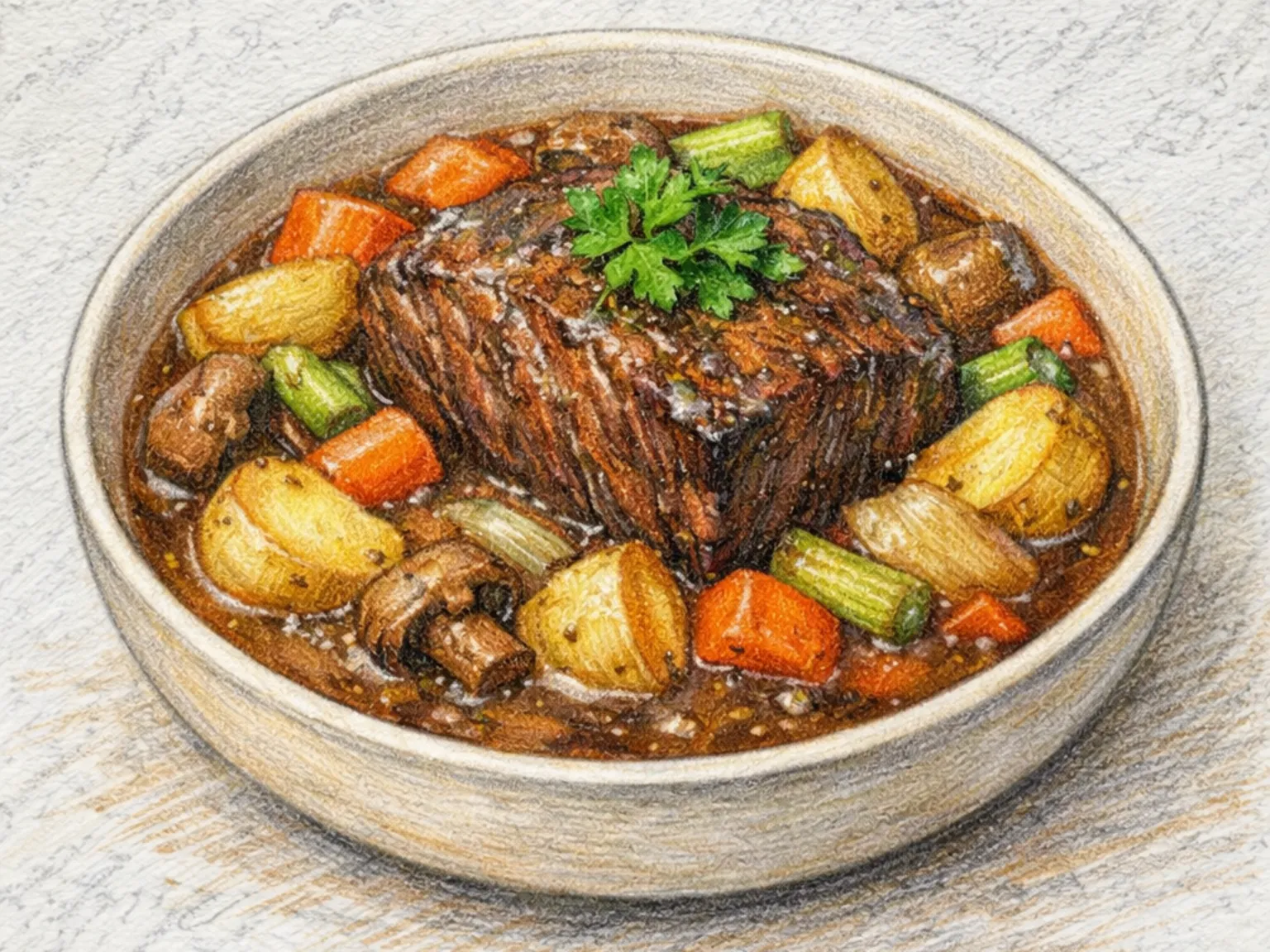
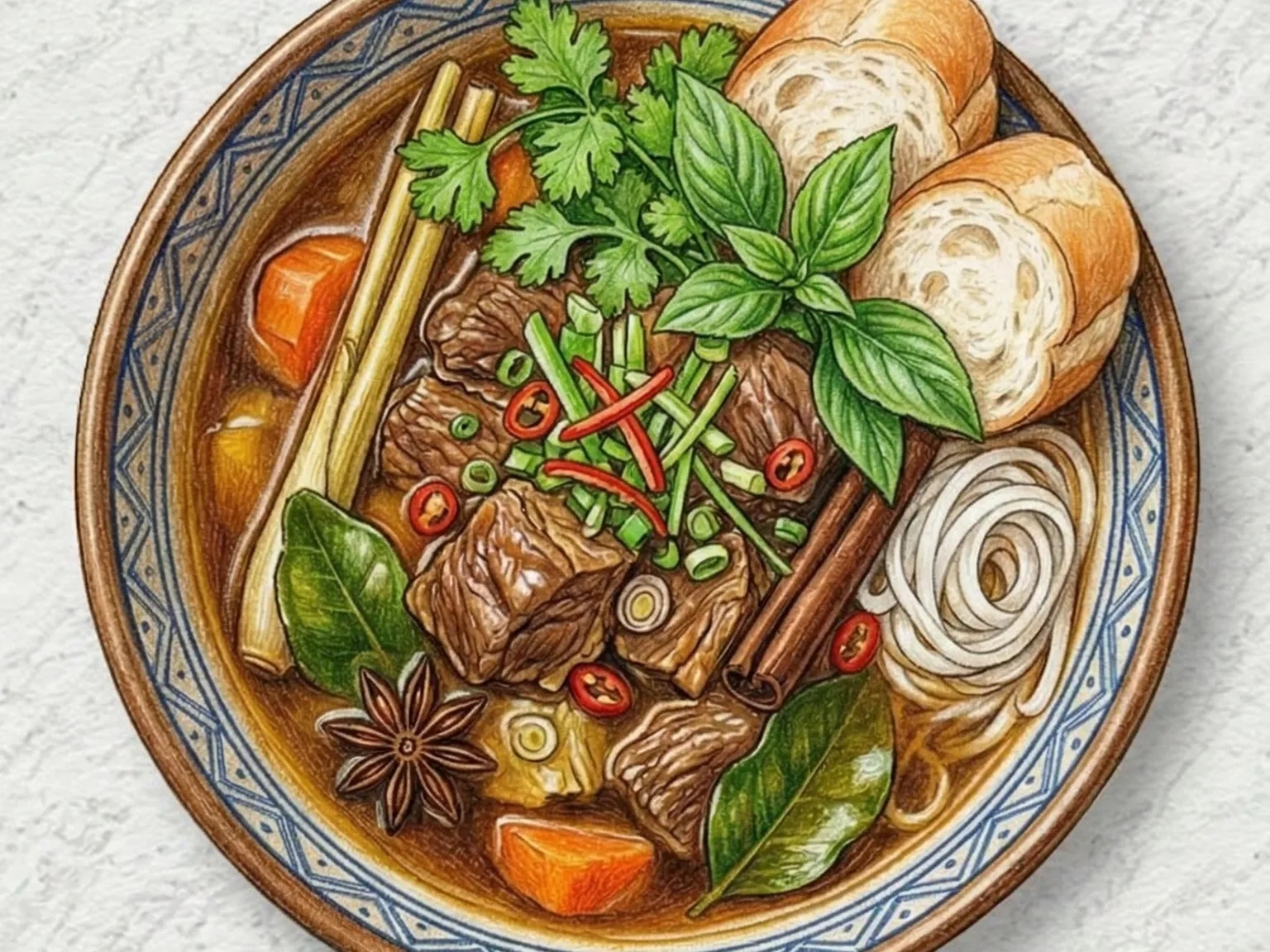
Bo kho is Vietnam's answer to beef stew, born in the southern kitchens of Saigon where French colonial influence introduced slow-braised preparations and Vietnamese cooks adapted them with local aromatics. Beef shank and tendon are cut into large chunks and braised with lemongrass, star anise, cinnamon, and annatto oil - the annatto tinting the broth a vivid orange-red that distinguishes bo kho from darker Western stews. Tomato paste and a spoonful of curry powder go in early, building a base that is simultaneously sweet, earthy, and warm. The stew simmers for two hours or more until the beef is fork-tender and the tendon has turned gelatinous, releasing its collagen into the broth and giving it a lip-coating richness. Carrots and daikon radish soften in the liquid during the final thirty minutes. Bo kho is eaten two ways - ladled over rice, or with a crusty baguette for dipping into the aromatic broth. Street vendors in Ho Chi Minh City serve it from dawn, when the morning air carries the scent of star anise from their simmering pots.
Adjust Servings
Instructions
- 1
Cut beef into chunks and marinate with fish sauce and garlic for 15 minutes.
- 2
Heat oil and sauté onion and lemongrass until aromatic.
- 3
Add beef, sear the surface, then stir in tomato paste.
- 4
Add plenty of water and simmer for at least 60 minutes.
- 5
Add carrot and cook 15 more minutes, then adjust seasoning.
As an Amazon Associate, we may earn from qualifying purchases.
Tips
Nutrition (per serving)
More Recipes

Vietnamese Beef Pho
Vietnamese beef pho begins with a broth made by simmering beef bones for eight hours or more to extract a clear yet deeply flavored stock. The defining step is dry-toasting whole spices - star anise, cinnamon sticks, and cloves - in a pan until fragrant, then charring halved onion and ginger over open flame to develop smoky sweetness before adding them to the pot. Skimming impurities from the surface throughout the cooking process is essential for maintaining the broth's signature clarity and golden transparency. Blanched rice noodles are placed in a bowl with paper-thin slices of raw beef on top, and the boiling broth is poured over to partially cook the meat, leaving it tender and faintly pink. Fish sauce adjusts the salinity, and a plate of fresh bean sprouts, lime wedges, Thai basil, and sliced chili allows each diner to customize their bowl.

Hanoi-Style Pho Bo (Vietnamese Northern Clear Beef Noodle Soup)
Hanoi-style pho bo is the original northern Vietnamese beef noodle soup, distinguished from its southern counterpart by a leaner, clearer broth and restrained garnishing. Beef bones and brisket simmer for hours with a modest hand of spices - star anise, cinnamon bark, and a few cloves - so the beef flavor leads rather than the aromatics. The broth is repeatedly skimmed until it runs nearly transparent, with no trace of grease on the surface. Paper-thin slices of raw beef placed in the bowl cook to a pale pink the moment the scalding broth is ladled over them. In Hanoi, the bowl arrives with only chopped scallion and cilantro; bean sprouts, hoisin sauce, and sriracha - common in southern and overseas versions - are absent by tradition.

Bo La Lot (Vietnamese Grilled Beef Wrapped in Betel Leaves)
Bo la lot is a southern Vietnamese dish that turns a simple mixture of seasoned ground beef into something aromatic and complex through the medium of la lot - the wild betel leaf (Piper lolot), a broad, heart-shaped leaf with a peppery, slightly medicinal fragrance found nowhere else in the Vietnamese herb garden. The beef is mixed with lemongrass, garlic, fish sauce, sugar, and five-spice powder, then wrapped tightly in the leaf and threaded onto skewers. Over a charcoal grill, the leaves char and crisp at the edges while the beef inside renders its fat into the leaf's porous surface, marrying meat juices with the leaf's volatile oils. The resulting bite is layered - smoky from the grill, peppery from the leaf, savory-sweet from the seasoned beef, and slightly numbing from the la lot's natural compounds. Eaten wrapped in lettuce with rice paper, herbs, and nuoc cham dipping sauce, it is a fixture of Vietnamese beer-garden gatherings.

Bo Luc Lac (Vietnamese Shaking Beef Sirloin Wok Stir-Fry)
Bo luc lac - 'shaking beef' - gets its name from the vigorous shaking of the wok that tosses beef cubes through smoking-hot oil, searing each face in seconds. The dish emerged from Vietnamese-French fusion cooking in Saigon's colonial era, when Western-style beef cuts became available and Vietnamese cooks adapted them with local technique. Beef tenderloin or sirloin is cubed and marinated in soy sauce, oyster sauce, garlic, and sugar, then seared in a wok so hot that each piece develops a dark, caramelized crust while the center stays pink and rare. The tossing motion - luc lac - ensures even browning without steaming. The beef is served over a bed of watercress dressed in lime juice and cracked black pepper, whose peppery bite and citric sharpness cut through the rich, soy-glazed meat. A dipping sauce of salt, pepper, and lime juice is served alongside. The contrast between the charred, deeply savory exterior and the cool, raw watercress beneath makes this dish one of Saigon's most enduring restaurant classics.

Vietnamese Spicy Beef Noodle Soup
Born in the central Vietnamese city of Hue, this spicy beef noodle soup builds its character from a broth simmered low and slow with beef shank, lemongrass stalks, fermented shrimp paste, and dried chilies. A slick of bright-red chili oil floats on the surface, signaling the heat that follows. Each spoonful delivers the shrimp paste's deep umami alongside the citrusy lift of lemongrass, creating a layered spiciness that lingers without overwhelming. The noodles used are bun, a round rice vermicelli thicker and chewier than the flat strands found in pho, giving each strand enough body to hold up against the robust broth. Bean sprouts, shredded banana flower, and a squeeze of lime are added at the table, introducing crisp texture and acidity that cut through the richness. Adding sliced pork blood sausage brings the bowl closer to the version served on Hue's streets.

Nikujaga (Japanese Beef Potato Onion Soy-Sweet Stew)
Nikujaga is the quintessential Japanese home-cooked stew, often described as the dish that defines a mother's cooking in Japan. Thinly sliced beef, potatoes, onion, carrot, and shirataki noodles are simmered in a broth of dashi, soy sauce, mirin, and sugar. The dish traces its origins to the Meiji era, when a Japanese naval officer attempted to recreate British beef stew using local ingredients - resulting in a clear, soy-based braise rather than a thick, flour-bound stew. The potatoes absorb the seasoned liquid until soft at the edges but still holding shape, while shirataki noodles soak up flavor and add a springy contrast.