Korean Spicy Braised Pufferfish
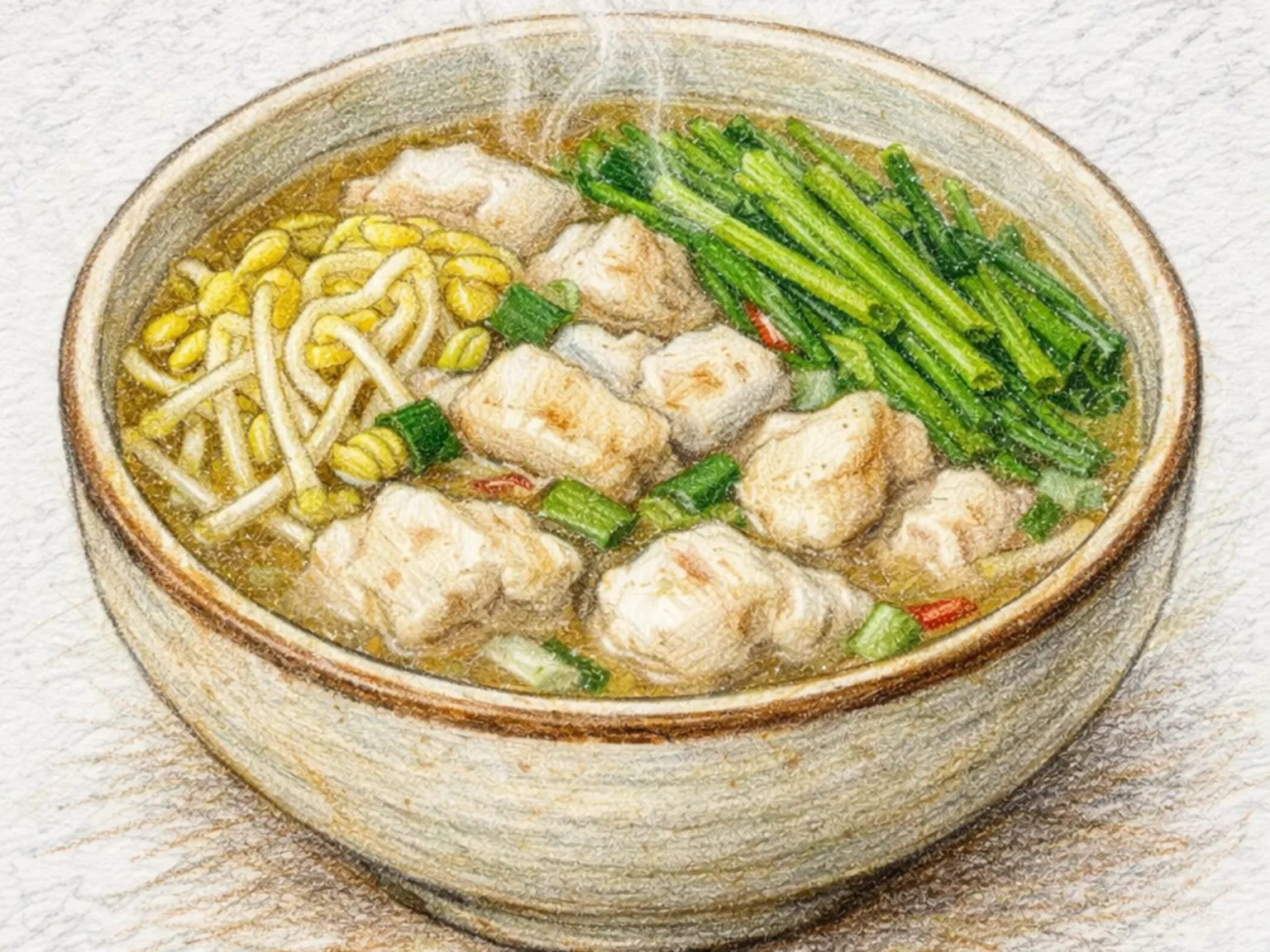
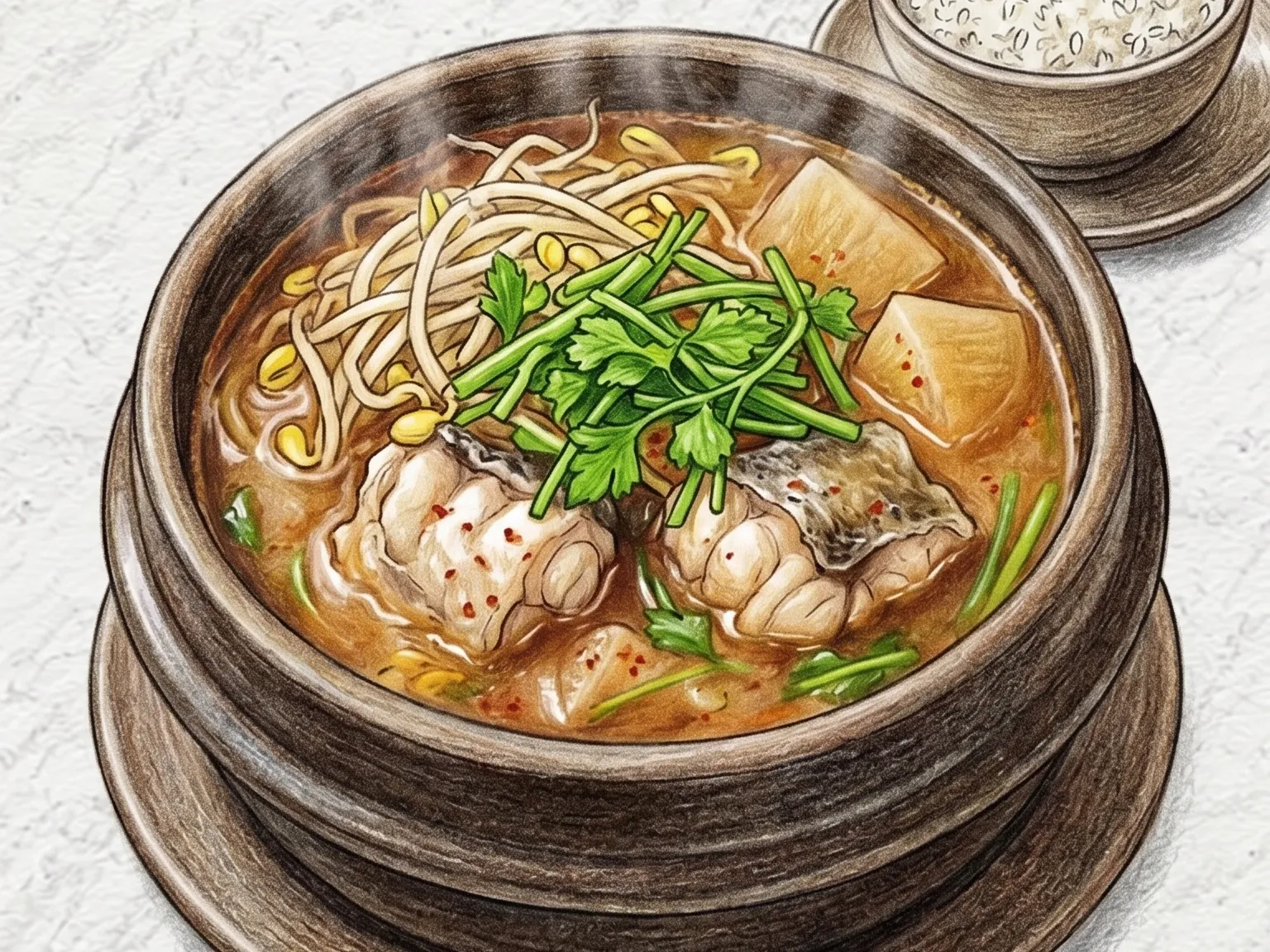
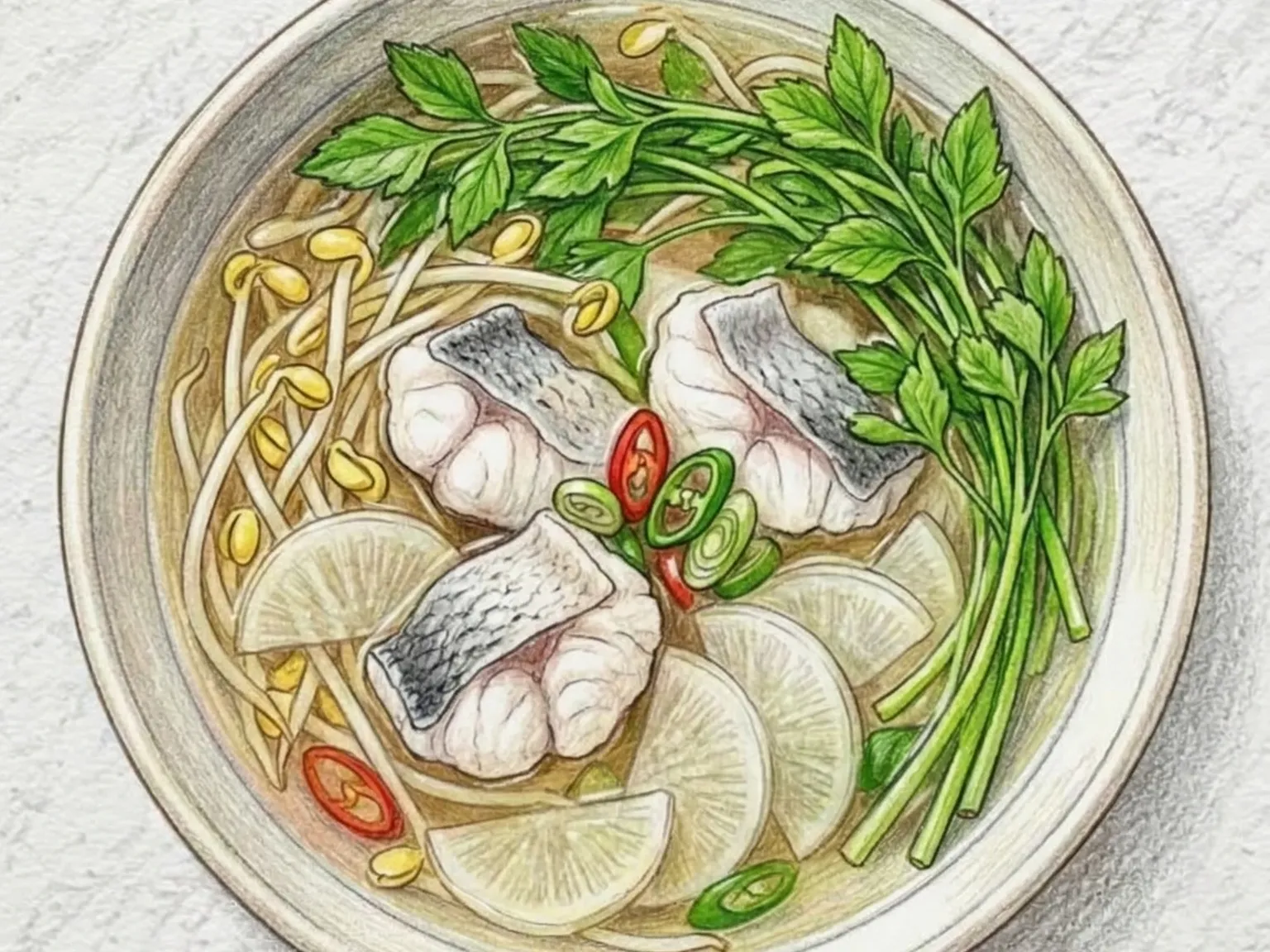
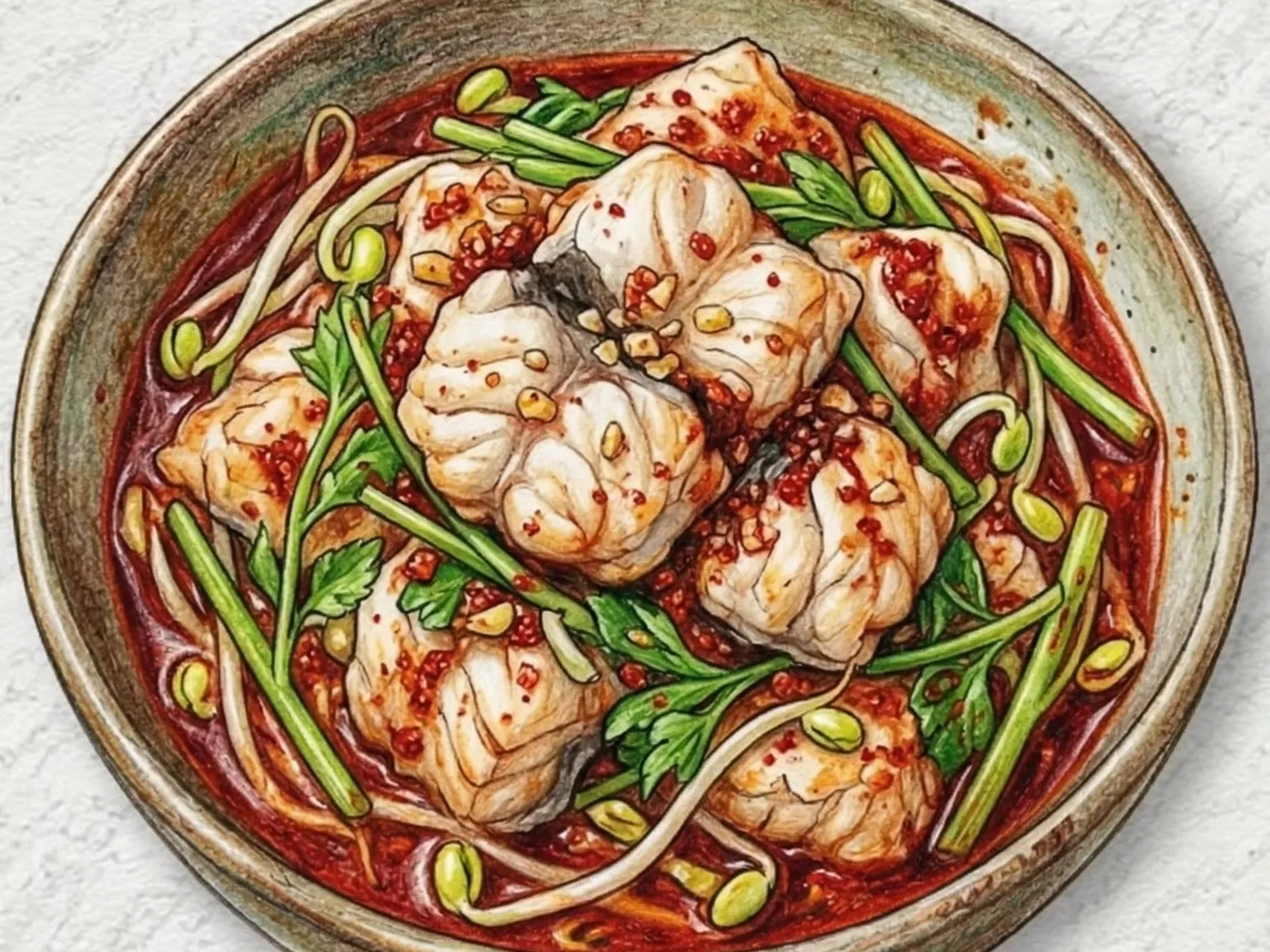
Cleaned pufferfish fillets are steamed with bean sprouts and water dropwort in a spicy gochugaru and gochujang sauce. The pufferfish meat is lean with a firm, bouncy texture that holds up well under the bold chili seasoning. Bean sprouts add crunch and a refreshing counterpoint, while water dropwort contributes its distinctive herbal fragrance. Seasoned with soy sauce and garlic, this is a coastal Korean fish dish with considerable heat.
Adjust Servings
Instructions
- 1
Rinse pufferfish fillets under running water and drain well.
- 2
Make a spicy braising liquid with gochugaru, gochujang, soy sauce, garlic, and water.
- 3
Spread bean sprouts in a pot, place fish on top, and pour in the sauce.
- 4
Cover and cook over medium heat for 20 minutes.
- 5
Add water dropwort and braise 5 more minutes for aroma.
As an Amazon Associate, we may earn from qualifying purchases.
Tips
Nutrition (per serving)
More Recipes

Korean Braised Pollock (Frozen Pollock with Radish in Spicy Sauce)
Dongtae-jjim is frozen pollock braised with Korean radish and bean sprouts in a sauce of gochugaru, soy sauce, garlic, and ginger. Using frozen rather than fresh pollock is traditional - the freezing-and-thawing process gives the flesh a firm, slightly spongy texture that holds up well in the spicy broth. Radish soaks up the chili-laced liquid and turns sweet against the heat, while bean sprouts contribute crunch and a clean, refreshing aftertaste. The sauce reduces to a shallow pool at the bottom, meant to be spooned over rice as a wintertime staple.

Korean Spicy Braised Semi-Dried Pollock
Kodari-jjim is a Korean braise of semi-dried pollock cooked with Korean radish and onion in a gochugaru and soy sauce seasoning. The drying process removes moisture and firms up the flesh, so the pollock absorbs the spicy sauce deeply while maintaining a chewy, dense bite. Radish mellows the chili heat and adds natural sweetness, and a small amount of doenjang in the sauce builds an extra layer of depth. When the liquid reduces to a thick, clinging consistency, it becomes the kind of sauce meant to be mixed directly into rice.

Korean Spicy Braised Monkfish
Agu-jjim is a signature dish of Masan, a port city in Korea's Gyeongsang-do province, where monkfish has been landed and cooked in spicy preparations for generations. The dish involves braising monkfish pieces over high heat with a thick layer of bean sprouts, all drenched in a paste of gochugaru, gochujang, soy sauce, and garlic. The monkfish flesh, which has a firm, gelatinous texture unlike any other white fish, absorbs the fiery red seasoning while the bean sprouts release enough moisture to create a natural braising liquid. Water dropwort - minari - goes in at the very end, contributing a celery-like herbal note that cuts through the heavy chili-garlic coating. Traditionally served communal-style on a large platter, agu-jjim is a staple of Korean drinking gatherings where the bold spice demands cold beer or soju.

Korean Braised Cod with Vegetables
Daegu-jjim is braised cod fillet cooked with Korean radish, onion, and green onion in a sauce of gochugaru, soy sauce, and garlic. The thick cod flesh absorbs the spiced broth while keeping its firm, flaky texture intact. Radish pieces soak up the cooking liquid and turn sweet against the chili heat, while cooking wine and garlic neutralize any fishiness. The dish finishes with just enough sauce clinging to the bottom of the pot to spoon over a bowl of rice.

Korean Spicy Braised Hairtail
Galchi-yangnyeom-jorim is a Korean braised hairtail in a spicy-sweet sauce made from chili flakes, soy sauce, and garlic. The seasoning soaks into the tender hairtail flesh during simmering, suppressing any fishiness while building layered umami. Radish pieces braise alongside the fish, softening completely and offering a textural contrast to the flaky meat. Reducing the sauce uncovered at the end concentrates the flavors into a thick, glossy glaze.

Korean Braised Butterfish
Silky butterfish braised in soy-gochugaru sauce on a bed of radish - a lean, protein-rich Korean main course at just 330 calories. The radish serves a dual purpose: it prevents the delicate fish from sticking to the bottom of the pot, and it absorbs the braising liquid as it cooks, turning into a side dish in its own right with a sweet, savory depth. Butterfish flesh is exceptionally soft, so the fillets should never be flipped during cooking; instead, the braising liquid is spooned over the top every few minutes to ensure even heat distribution. Ginger works from the start of cooking to neutralize any fishiness, while gochugaru introduces a mild heat that adds complexity without masking the clean taste of the fish. Scallion pieces dropped in during the final two minutes release their fragrance into the steam rising from the pot, tying the aromatics together. At 330 calories and 31 grams of protein, this is a lean yet nourishing main course that pairs naturally with steamed rice and a simple vegetable side.