Korean Clear Puffer Fish Soup
Soups Medium

Korean Clear Puffer Fish Soup

Quick answer

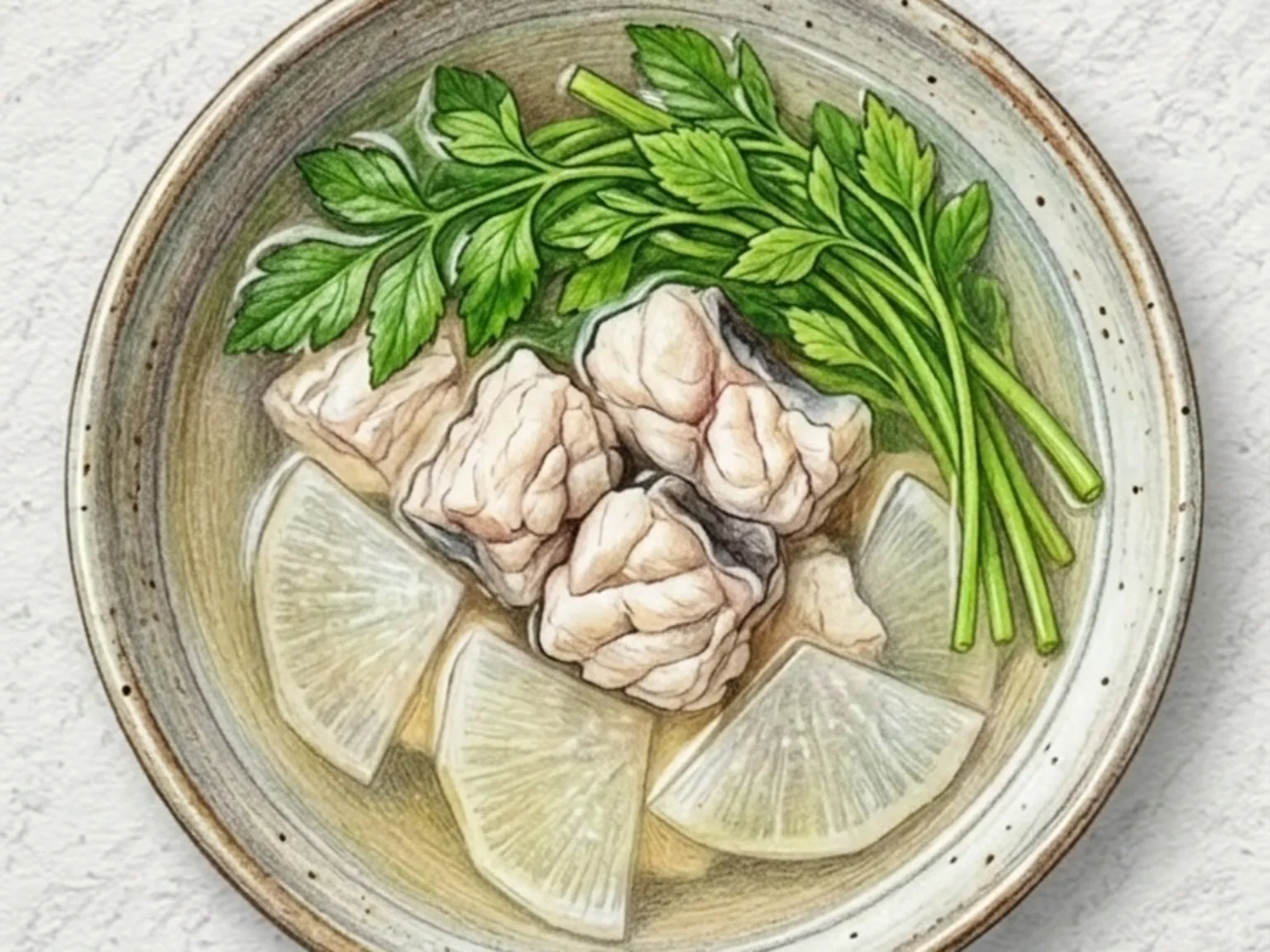
Bok-jiri is a traditional Korean clear soup featuring cleaned puffer fish, radish, and water dropwort.

What makes this special

  • Bok-jiri delivers a lean, restorative broth of puffer fish and water dropwort sharpened with Korean daikon.
  • Daikon-sweetened broth meets 10 minutes of puffer fish for lean, clean umami
  • Only commercially certified, pre-cleaned puffer fish may be used for safety
Total time
50 min
Level
Medium
Servings
2 servings
Ingredients
7
Calories
190 kcal
Protein
30 g

Key ingredients

cleaned puffer fishkorean radishwater dropwortgreen oniongarlic

Core cooking flow

  1. 1 Check that the 450g cleaned puffer fish is professionally prepared and food-...
  2. 2 Cut the 180g Korean radish into thin 3cm squares, and slice the 4 garlic cloves.
  3. 3 Put 1500ml water, the radish, and the garlic in a pot and bring it to a boil over high heat.

Bok-jiri is a traditional Korean clear soup featuring cleaned puffer fish, radish, and water dropwort. The cooking process starts by boiling sliced radish and garlic to build a mild, sweet base broth. Professionally prepared, food-safe puffer fish is then added to simmer on medium heat. Skimming off any rising foam is essential during this stage to keep the broth completely clear and light. The soup is seasoned simply with salt, allowing the natural, lean umami of the fish to shine through rather than being masked by heavy spices. In the final minute, fresh water dropwort and green onions are added, softening slightly to infuse the broth with a clean, herbal aroma that removes any remaining fishiness. This low-fat, high-protein soup is valued for its refreshing broth and is commonly served hot.

Prep 20min Cook 30min 2 servings
Recipes by ingredient → korean radish green onion garlic

Instructions

Read the steps as a cooking flow: prep, heat, seasoning, doneness control, and finish.

6 steps
  1. 1
    Prep

    Check that the 450g cleaned puffer fish is professionally prepared and food-safe, then rinse it briefly under cold water.

    Drain it in a sieve carefully so the delicate flesh does not break apart.

  2. 2
    Prep

    Cut the 180g Korean radish into thin 3cm squares, and slice the 4 garlic cloves.

    Slice the green onion diagonally into 0.5cm pieces, then cut the water dropwort into 5cm lengths.

  3. 3
    Control

    Put 1500ml water, the radish, and the garlic in a pot and bring it to a boil over high heat.

    Keep it boiling for 10 minutes, until the radish edges look translucent and the broth stays clear.

  4. 4
    Control

    Add the puffer fish and lower the heat to medium, so the soup simmers gently for about 10 minutes.

    Skim off foam as soon as it rises to keep the broth clean instead of cloudy.

  5. 5
    Season

    Add the green onion and season with 1 teaspoon of salt.

    Stir once, then taste the broth and keep the seasoning light, so the sweetness from the radish comes through before the saltiness.

  6. 6
    Finish

    Add the water dropwort at the end and boil for just 1 more minute.

    Turn off the heat when the stems soften slightly but stay bright green, then serve immediately before the herb aroma fades.

After the steps

Pick a recipe that fits this dish.

Continue with shared ingredients, meal pairings, or a similar method.

Recipes That Go Well With This

More Soups →

Based on shared ingredients and meal pairing

Korean Mild Puffer Fish Stew
Shared ingredient: korean radish Stews

Korean Mild Puffer Fish Stew

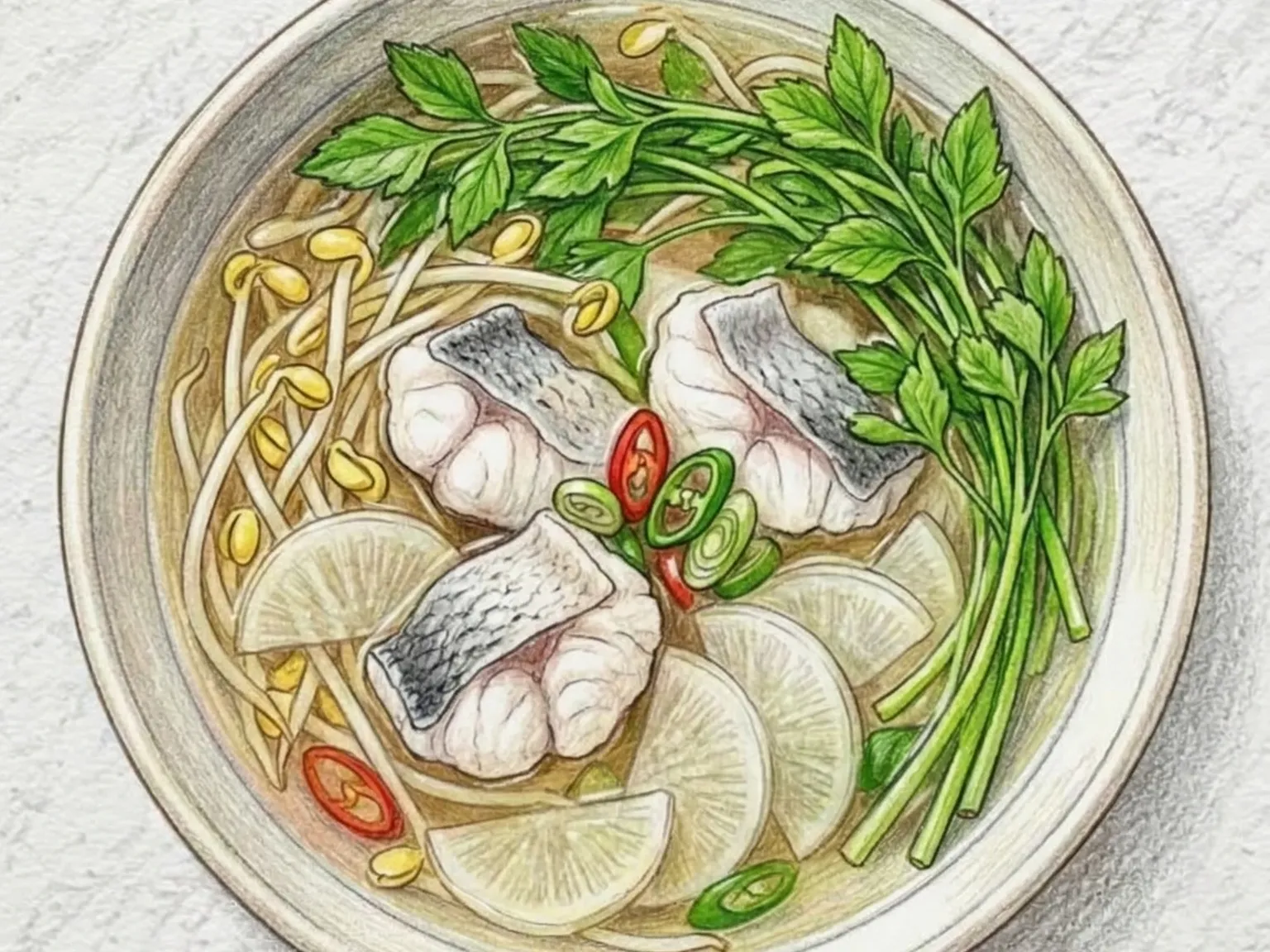
Bok-jiri-jjigae is a clear-broth stew built around puffer fish fillet simmered with Korean radish, bean sprouts, and water dropwort, seasoned lightly with soup soy sauce and salt. The dish relies entirely on the natural flavors of its core ingredients rather than heavy seasoning, so the quality of the puffer fish is the defining factor. Cooking the fish with its skin releases collagen into the broth, giving the liquid a subtle viscosity and sheen that plain fish stock cannot replicate. Radish goes in first and simmers until it turns translucent and releases its gentle sweetness into the base, while bean sprouts are added later to retain their characteristic crunch. Water dropwort and green onion go in last, their herbal fragrance layering over the clear, cooling broth just before serving. Depending on availability, different cuts can be incorporated alongside the fillet: the liver, roe sac, and skin each contribute distinct notes to the broth and change its character considerably. Beyond its role as an everyday meal, bok-jiri-jjigae has a long-standing reputation as a hangover remedy, prized for its restorative, cooling effect after a night of drinking. Soup soy sauce should be added gradually so the broth stays light and the natural flavor of the fish remains prominent. A sliced cheongyang chili added just before the end introduces sharp heat without muddying the clarity of the stock, and a block of soft tofu added alongside provides extra body and a smooth texture that absorbs the surrounding broth.

Korean White Clam Clear Soup
Shared ingredient: korean radish Soups

Korean White Clam Clear Soup

Baekhap jogae tang is a clear Korean clam soup built entirely on the flavor of hard clams, with no additional stock of any kind. The clams are soaked in salted water until fully purged of sand, then transferred to cold water in the pot and heated gradually. This slow climb from cold allows the clams to release their maximum flavor into the surrounding liquid before they even open, producing a more richly flavored broth than rapid boiling ever could. Daikon radish simmers in the same water, lending a cool, clean sweetness that tempers the clams inherent saltiness while absorbing broth flavor itself, softening into bite-sized pieces that are worth eating alongside the shellfish. A tablespoon of cheongju, Korean clear rice wine, is added early to neutralize any briny off-notes that might otherwise linger, leaving a cleaner, lighter finish. Garlic appears in small amounts only, deliberately restrained so it does not compete with the delicate shellfish flavor that is the whole point of the dish. Scallion and red chili are placed on top at the very end, contributing color and fragrance rather than direct seasoning. Salt is kept to an absolute minimum since the clam liquor itself provides all the salinity required. The soup is a lesson in simplicity: no anchovy, no kelp, no premade stock. The clams do all the work, and the result is a broth that is simultaneously light and deeply satisfying.

Korean Tofu Seaweed Egg Rice Bowl
Serve together Rice

Korean Tofu Seaweed Egg Rice Bowl

Dubu gim gyeran deopbap is a Korean rice bowl built from three pantry staples: pan-fried tofu, soft scrambled egg, and roasted seaweed flakes, all layered over a bowl of steamed rice. The tofu is pressed dry, cut into cubes, and seared until the edges turn golden before being tossed with soy sauce and syrup to form a salty-sweet glaze that coats each piece. Eggs are scrambled to a barely-set, custard-like consistency rather than cooked through, creating a deliberate contrast with the firm, glazed tofu beneath them. Crumbled seaweed scattered over the top introduces a brittle crunch and a faintly briny, toasty aroma that lingers with each bite. A final drizzle of sesame oil draws all three components together into a coherent flavor. Because tofu, eggs, and dried seaweed are refrigerator and pantry staples in most Korean households, the dish can be assembled in roughly ten minutes without a special shopping trip, making it one of the most dependable meals for busy mornings or quick lunches.

Korean Dried Pollock Radish Soup
Similar recipe Soups

Korean Dried Pollock Radish Soup

Hwangtae-muguk is an everyday Korean soup made with dried pollock strips and radish in a clean, clear broth. The pollock is first sautéed in sesame oil to coax out its characteristically nutty, savory fragrance, then water is added and the radish simmers until soft and sweet. Soup soy sauce and minced garlic provide the only additional seasoning, keeping the flavor profile transparent enough to let the pollock's concentrated umami and the radish's natural sweetness take center stage. The simplicity of the ingredient list belies the depth of the resulting broth, which tastes fuller than the sum of its parts. It is among the most frequently cooked soups in Korean homes, appearing on breakfast tables and as a reliable remedy on mornings after heavy meals. The pollock's tender, delicate flesh holds together well in the clear broth.

Serve with this

Korean Braised Burdock Root
Side dishes Easy

Korean Braised Burdock Root

Julienned burdock root is simmered in soy sauce, sugar, and corn syrup with enough water to submerge the strips, then reduced slowly until the liquid thickens into a concentrated glaze. Unlike stir-fried burdock, this braised version cooks under a lid at moderate heat, giving the tough fibers time to soften while retaining a pleasantly chewy core. Soy sauce penetrates deep into the root during the extended simmer, establishing a salty foundation that the corn syrup then balances with a mellow sweetness. As the braising liquid reduces, the sugars begin to caramelize, darkening the color and adding a layer of complexity to burdock's naturally earthy, woody flavor. The dish is done when nearly all the liquid has evaporated and each strip glistens with a thick, lacquered coating. Vinegar added at the start prevents the burdock from discoloring and contributes a faint tartness that keeps the sweetness in check. Stored in a sealed container, the jorim remains good in the refrigerator for close to ten days.

🏠 Everyday 🍱 Lunchbox
Prep 15min Cook 20min 4 servings
Korean Pickled Ginger in Soy-Vinegar Brine
Kimchi Easy

Korean Pickled Ginger in Soy-Vinegar Brine

Saenggang jangajji is a traditional Korean soy-and-vinegar pickled ginger built on one precise technique: peeling fresh ginger, slicing it as thin as possible, blanching the slices for exactly thirty seconds to blunt their raw bite without stripping fragrance, then submerging them in a hot brine of soy sauce, vinegar, water, and sugar. The brief blanch relaxes the tough fibers enough for the brine to penetrate while keeping the aromatic compounds intact. After three days of cold fermentation the sweet, salty, and sour brine soaks through every thin slice, and the sharp initial heat softens into a mellow, rounded warmth. One slice eaten alongside rice cleanses the palate between mouthfuls, and placed next to fatty cuts like pork belly or boiled pork, the pickle's acidity cuts through the grease with clarity. Blanching beyond thirty seconds dissolves the essential oils that give ginger its fragrance, which is why the timing is non-negotiable. Cutting the ginger thinner accelerates brine penetration and shortens the required aging time, and adding a single cheongyang pepper to the brine layers a clean, bright heat over the ginger's natural warmth.

🍱 Lunchbox 🏠 Everyday
Prep 20min Cook 8min 4 servings
Korean Chive Clam Jeon (Garlic Chive and Clam Seafood Pancake)
Pancakes Medium

Korean Chive Clam Jeon (Garlic Chive and Clam Seafood Pancake)

Buchu-bajirak-jeon is a seafood pancake of garlic chives and clam meat, pan-fried in a batter made with a mix of all-purpose pancake flour and rice flour. The rice flour addition increases the chew and gives the finished jeon a slightly more resilient texture than plain flour batters. Clam meat releases a briny, oceanic liquid as it cooks that seeps into the batter and flavors it throughout, while the chives add a sharp, grassy counterpoint. Minced garlic and diagonally sliced cheongyang chili worked into the batter suppress any fishiness and build a layered fragrance. A generous amount of oil in the pan over medium heat produces edges that crisp and brown like the outside of a fritter. Waiting until the bottom is fully set before flipping prevents the pancake from tearing. Served with soy dipping sauce or a seasoned soy mixture, the clean salinity of the clams comes through clearly.

🍺 Bar Snacks 🏠 Everyday
Prep 25min Cook 15min 4 servings

Similar recipes

Dongjuk-tang (Korean Surf Clam Broth)
Soups Easy

Dongjuk-tang (Korean Surf Clam Broth)

Dongjuk-tang is a Korean surf clam soup where purged clams simmer with radish in plain water to produce a briny, naturally sweet broth that needs almost no added seasoning. The radish goes in first and cooks for six minutes to build a sweet, mild base, then the clams are added for three to four minutes -- they are done the moment their shells open wide, and cooking any longer tightens and toughens the meat. Any clam that remains shut after cooking must be discarded without exception. Water dropwort stirred in at the end contributes a fresh, herbaceous fragrance that lifts the broth, and a single cheongyang chili pepper adds a mild, lingering heat that tempers the ocean flavor without masking it. The combination of clam brine, radish sweetness, and perilla creates a broth that tastes far more complex than its short ingredient list suggests.

🏠 Everyday 🥗 Light & Healthy
Prep 25min Cook 12min 2 servings
Korean Dried Pollock Potato Soup
Soups Easy

Korean Dried Pollock Potato Soup

Hwangtae-gamja-guk is a clear Korean soup built around dried pollock strips that have been wind-dried and then sauteed in sesame oil before any liquid is added. That initial stir-fry step is what separates this soup from simpler broth dishes: the heat releases a toasty, nutty fragrance from the pollock that permeates the entire pot and melds with the anchovy-kelp stock poured in afterward. Potato slices simmer alongside radish, and as they soften their edges gradually break down, giving the broth a mild, natural body without the use of starch or thickener. Radish contributes a clean, cooling sweetness that tempers the concentrated umami of the dried pollock. Soup soy sauce and minced garlic handle the seasoning, keeping the flavor profile clear and uncluttered. The pollock itself stays pleasantly chewy even after prolonged simmering, providing a protein-rich bite that makes the bowl genuinely filling. This soup is a fixture on Korean breakfast tables, valued for its ability to settle the stomach and restore energy.

🏠 Everyday 🥗 Light & Healthy
Prep 15min Cook 30min 4 servings
Korean Mussel Soup Noodles
Noodles Easy

Korean Mussel Soup Noodles

Honghap tangmyeon is a mussel noodle soup where a generous quantity of mussels is simmered to produce a deeply briny, clear broth that serves as the foundation of the entire dish without the use of prepared stock. The mussels release their concentrated sea flavor directly into the pot, and this self-made broth is what distinguishes the dish from simpler seafood noodle soups. Korean radish is cooked alongside from the start, lending a natural sweetness and a refreshing clarity to the liquid as it breaks down gently. Soup soy sauce and cooking wine adjust the seasoning and temper the salt that the mussels contribute, pulling the flavor into balance. Minced garlic and green onion build an aromatic layer that keeps any fishiness in check, leaving only a clean, deep savoriness in its place. A generous crack of black pepper over the steaming bowl sharpens the marine character of the broth and warms the palate. The noodles should not be overcooked; they need enough bite to hold up against the rich, hot liquid. A few slices of cheongyang chili on top add a brisk heat that makes the broth feel simultaneously cool and fiery, the defining sensation of good Korean seafood soup.

🍺 Bar Snacks 🌙 Late Night
Prep 18min Cook 20min 2 servings

Tips

Use only professionally cleaned, food-safe puffer fish.

Nutrition (per serving)

Calories
190
kcal
Protein
30
g
Carbs
6
g
Fat
5
g