Korean Black Raspberry Jelly

Korean Black Raspberry Jelly

Quick answer

Bokbunja jelly cups are a chilled Korean dessert made by setting bokbunja, the Korean black raspberry, with gelatin sheets and a measured addition of lemon juice for acid...

What makes this special

  • Chilled Bokbunja jelly cups balance the tartness of Korean black raspberries with a clean gelatin set.
  • Gelatin added off-heat to keep its setting power intact
  • Straining removes foam, letting the deep violet stay clear and vivid
Total time
25 min
Level
Easy
Servings
2 servings
Ingredients
7
Calories
165 kcal
Protein
3 g

Key ingredients

bokbunja juicewatersugarlemon juicegelatin sheets

Core cooking flow

  1. 1 Submerge 6g gelatin sheets fully in cold water and let them bloom for 5 minutes.
  2. 2 Combine 80ml water and 28g sugar in a small pot and stir over low heat for about 2 minutes.
  3. 3 When the syrup turns clear, turn off the heat and let it cool for 1 minute.

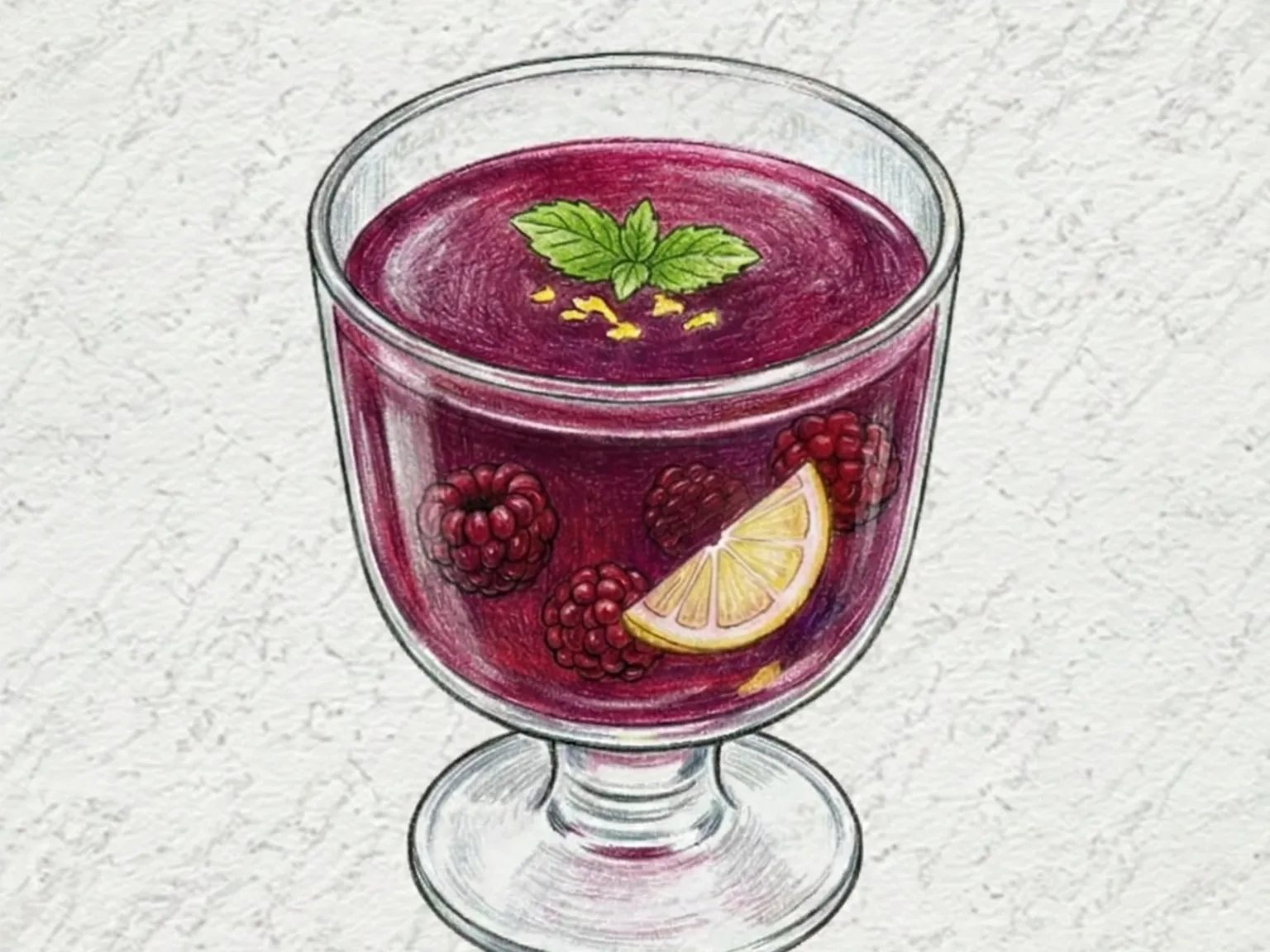
Bokbunja jelly cups are a chilled Korean dessert made by setting bokbunja, the Korean black raspberry, with gelatin sheets and a measured addition of lemon juice for acidity balance. The process requires dissolving the bloomed gelatin sheets into sugar syrup that has been removed from the heat; adding gelatin to boiling liquid breaks down its protein chains and compromises its setting ability. A single pass through a fine strainer removes air bubbles and sediment, producing a perfectly smooth surface that lets the deep purple of the bokbunja come through cleanly and without distortion. Topping each cup with fresh blueberries and a mint leaf reinforces the berry flavor while providing a sharp visual contrast against the dark jelly beneath. Bokbunja is well known in Korea as a traditional medicinal ingredient and as the base of the country's signature fruit wine; these jelly cups translate its tartness and intense pigmentation into a simple refrigerator dessert that can be prepared ahead and served straight from the cold. The result is a bright, clean finish that sits light on the palate.

Prep 15min Cook 10min 2 servings
Recipes by ingredient → lemon juice

Instructions

Read the steps as a cooking flow: prep, heat, seasoning, doneness control, and finish.

6 steps
  1. 1
    Step

    Submerge 6g gelatin sheets fully in cold water and let them bloom for 5 minutes.

    Do not use warm water, and check that the sheets bend easily and feel soft before moving on.

  2. 2
    Control

    Combine 80ml water and 28g sugar in a small pot and stir over low heat for about 2 minutes.

    The syrup should look clear, with no sugar grains left on the bottom.

  3. 3
    Step

    When the syrup turns clear, turn off the heat and let it cool for 1 minute.

    Squeeze excess water from the gelatin, add it to the syrup, and dissolve it fully with residual heat.

  4. 4
    Season

    Add 220ml bokbunja juice and 8ml lemon juice, then stir slowly so you do not trap extra bubbles.

    If the juice tastes very tart, adjust with sugar in 5g increments until balanced.

  5. 5
    Prep

    Pass the mixture once through a fine strainer to remove foam and sediment.

    Divide it evenly among cups, then leave them at room temperature for 10 minutes so excess heat can dissipate.

  6. 6
    Finish

    Refrigerate the cups for at least 2 hours until fully chilled and set.

    When the surface is smooth and the jelly jiggles with springy resistance, top with 40g blueberries and mint leaves to serve.

After the steps

Pick a recipe that fits this dish.

Continue with shared ingredients, meal pairings, or a similar method.

Recipes That Go Well With This

More Desserts →

Based on shared ingredients and meal pairing

Korean Shrimp Mandu (Chunky Shrimp and Pork Dumplings)
Serve together Street food

Korean Shrimp Mandu (Chunky Shrimp and Pork Dumplings)

Saeu-mandu are Korean dumplings filled with coarsely chopped shrimp, ground pork, garlic chives, and onion. The shrimp is intentionally left in chunky pieces so each bite delivers a distinct pop of texture alongside the pork. The filling is seasoned with sesame oil and garlic, keeping the flavor clean with a gentle seafood sweetness underneath. Steaming turns the wrappers translucent and lets the pink shrimp show through, while pan-frying gives a golden, crisp bottom that contrasts with the soft upper shell.

Korean Spicy Stir-fried Cartilage
Serve together Drinks

Korean Spicy Stir-fried Cartilage

Odolppyeo-bokkeum is a fiery Korean stir-fry of chicken cartilage marinated in a sauce of gochujang, gochugaru, soy sauce, garlic, and sugar, then cooked at maximum heat for a short burst. The cartilage delivers a distinctive crunch-then-chew that no other cut can replicate, and thorough drying with paper towels before marinating ensures the sauce clings directly to the surface. After ten minutes of marinating, the cartilage hits a ripping-hot oiled pan to pick up smoky wok char, followed by onion, green onion, and hot green chilies that are tossed until all moisture evaporates and the glaze turns glossy. Keeping the total stir-fry time brief is critical, since prolonged cooking turns the cartilage from pleasantly crunchy to unpleasantly tough.

Kimchi Cheddar Savory Scone
Serve together Baking

Kimchi Cheddar Savory Scone

Cold butter rubbed into flour creates the flaky, crumbly layers of a classic scone, but here the dough takes a savory turn with the addition of squeezed kimchi and sharp cheddar cheese. As the butter melts in the oven, it releases steam that puffs the layers apart, and between those layers the kimchi's spicy acidity and the cheddar's salty richness emerge in alternating waves. Removing moisture from the kimchi before mixing is critical; wet kimchi produces a dense, heavy dough instead of the light texture that defines a good scone. Overworking the dough develops gluten and sacrifices that crumbly snap, so the ingredients are combined just until they hold together. A brief bake at 200 degrees Celsius sets the crust golden while the interior stays tender. Eaten warm with a pat of butter, the scone delivers a pronounced sweet-salty-tangy interplay that works as well at breakfast as it does alongside a bowl of soup.

Black Sesame Pudding
Similar recipe Desserts

Black Sesame Pudding

Heukimja pudding is a chilled dessert made by warming milk and heavy cream on low heat with black sesame powder to extract its flavor, then setting the mixture with gelatin. The key to a silky consistency is stopping the heat when tiny bubbles appear at the edge of the pan, well before a full boil, which would cause the fat to separate. After seasoning with sugar and salt and straining once to remove any gritty particles, the liquid is divided into cups and refrigerated for at least two hours until set. A light dusting of black sesame powder on top before serving adds a visual accent and an extra layer of roasted, nutty fragrance. A small pinch of salt is worth adding because it subdues any residual bitterness from the sesame and makes the sweetness come through more cleanly. Gelatin sheets and powdered gelatin both work, but sheets tend to produce a smoother, cleaner result.

Similar recipes

Sweet Chestnut Confection
Desserts Medium

Sweet Chestnut Confection

Yulran is a traditional Korean chestnut confection that is prepared by boiling 300 grams of chestnuts in water for a duration of 20 minutes. Once the boiling process is complete, the chestnut flesh is removed from the shells and pressed through a fine sieve. This manual pressing continues until the texture becomes perfectly smooth. The purpose of using a sieve is to eliminate any grainy bits, which results in a chestnut paste with an even and velvety consistency. This puree is then kneaded together with a combination of honey and ground cinnamon. After the ingredients are thoroughly mixed, the paste is shaped into small, bite-sized rounds. The honey used in this recipe serves as both a source of moisture and a necessary adhesive. Its sticky property provides the strength required for the confection to hold its molded shape effectively without crumbling into pieces. Ground cinnamon is included to provide a warm spice note. This flavor is chosen because it complements the starchy and earthy sweetness of the chestnut rather than competing with the natural profile of the nut. Following the shaping process, each piece is rolled in ground pine nuts. This step coats the exterior in a mild nuttiness and introduces a subtle textural contrast against the smooth paste contained within. For a final visual touch, thin slices of jujube are placed on top as a garnish to provide a stroke of red color. The finished rounds are then placed in the refrigerator to chill for 15 minutes. This cooling period firms the surface of the paste just enough so that the confections can be picked up cleanly with the fingers without sticking to the skin. Historically, Yulran was a common fixture on the ceremonial and banquet tables of the Joseon court. It was valued for its clean and understated sweetness, which allows the natural flavor of the chestnut to remain the central focus.

🎉 Special Occasion 🧒 Kid-Friendly
Prep 25min Cook 20min 2 servings
Schisandra Fruit Punch (Korean Cold-Brewed Berry Fruit Bowl)
Desserts Easy

Schisandra Fruit Punch (Korean Cold-Brewed Berry Fruit Bowl)

Omija hwachae is a traditional Korean fruit punch made by cold-infusing dried schisandra berries in water for at least two hours to extract a vivid red liquid, then sweetening with honey. Cold extraction is not optional: hot water pulls excess astringency from the berries and makes the liquid harsh rather than bright. Only a small portion of the infusion is gently warmed to dissolve the honey before the two are combined. Scooped balls of Korean pear and watermelon sit submerged in the chilled omija broth, so each spoonful delivers a crisp, juice-filled bite against the tart-sweet liquid. Pine nuts floated on the surface add a mild fatty richness that tempers the sharpness of the schisandra acid, and serving the hwachae over generous ice keeps every component at its most vivid.

🧒 Kid-Friendly ⚡ Quick
Prep 15min Cook 5min 4 servings
Chestnut Sweet Jelly (Korean Agar-Set Chestnut White Bean Confection)
Desserts Medium

Chestnut Sweet Jelly (Korean Agar-Set Chestnut White Bean Confection)

Bam yanggaeng is built from three components: chestnut puree, white bean paste, and agar powder. Boiled chestnuts are mashed fine and combined with the bean paste, then dissolved agar, sugar, and honey are stirred into the mixture before it is brought to a brief boil. Poured into a mold and left to cool at room temperature, the agar sets the block into firm, clean-slicing slabs - a texture that comes from agar's sharp recrystallization as it cools, which produces a harder and more abrupt snap than gelatin-based confections. The starchy density of chestnuts gives the cross-section a smooth, fine-grained quality that plain bean paste lacks. A small amount of salt is critical: it draws the sweetness into focus rather than muting it. Skimming air bubbles before pouring ensures a flat, even surface. Prepared as a holiday gift in Korean households for generations, the finished block keeps in the refrigerator for about a week without losing texture.

🎉 Special Occasion 🧒 Kid-Friendly
Prep 20min Cook 15min 2 servings
Korean Black Raspberry Ade
Drinks Easy

Korean Black Raspberry Ade

Bokbunja ade starts by combining black raspberry concentrate with lime juice and honey to build a tart-sweet base before anything else is assembled. That base is poured over a cup packed with ice and frozen berries, then topped with sparkling water. The deep purple concentrate sinking through the clear carbonation creates a vivid color gradient in the glass that holds until stirred. Lime juice amplifies the berry aroma rather than masking it, and if the concentrate runs particularly strong, extra sparkling water brings it back into balance. Frozen berries function as both cooling agent and slow flavor release - as they thaw, the fruit intensity in the drink gradually deepens.

🍺 Bar Snacks ⚡ Quick
Prep 5min 2 servings
Dasik (Korean Honey-Pressed Roasted Grain Confection)
Baking Easy

Dasik (Korean Honey-Pressed Roasted Grain Confection)

Dasik is a traditional Korean pressed confection made by kneading roasted grain or nut powders with honey and pressing the mixture into carved wooden molds. Unlike baked goods, dasik holds its shape entirely through the binding power of honey, with no heat applied during preparation. This technique produces a texture that is slightly resistant at first contact, then dissolves gently at body temperature in a way that releases the full aroma of the main ingredient. Roasted soybean powder yields a nutty version, black sesame produces a deeply aromatic one, and additions of pine nut powder or cinnamon develop the flavor in different directions. The wooden molds carve decorative patterns into the surface of each piece, giving dasik a visual refinement that matches its restrained sweetness. For centuries, dasik has been a standard offering at Korean tea gatherings, and its subtle flavor remains a natural match for the gentle bitterness of green tea.

🧒 Kid-Friendly ⚡ Quick
Prep 20min 4 servings

Tips

If the juice is very tart, add sugar in 5g increments.
Do not add gelatin to boiling liquid for reliable setting.

Nutrition (per serving)

Calories
165
kcal
Protein
3
g
Carbs
36
g
Fat
1
g