Boston Cream Pie
Quick answer
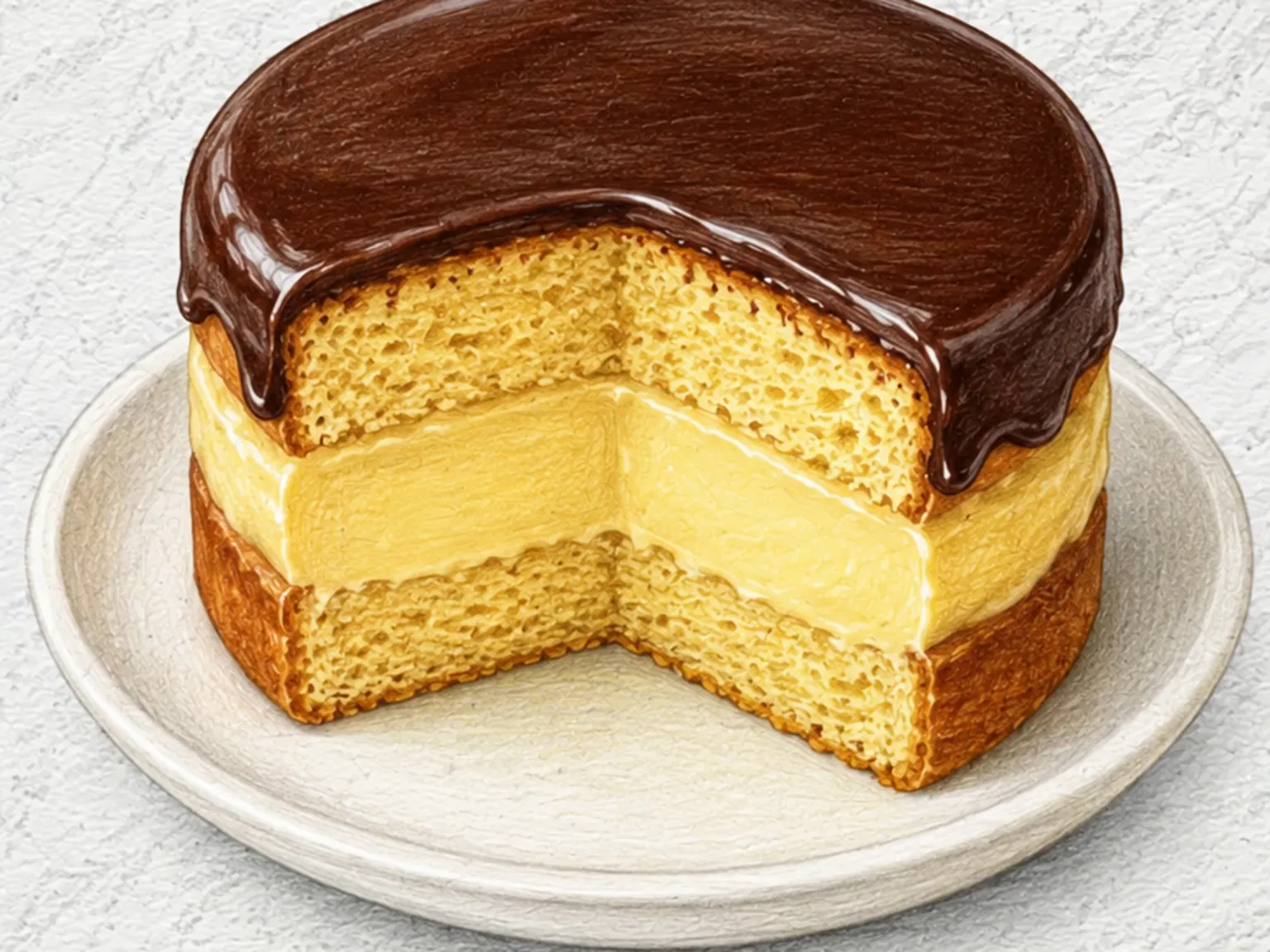
Boston cream pie is, despite its name, a layered cake rather than a pie.
What makes this special
- Two layers of tender sponge sandwich a thick vanilla custard in this classic Boston Cream Pie.
- Egg-yolk and cornstarch custard cooked thick before chilling and layering
- Dark chocolate glaze sets to a thin, glossy shell as it cools
Key ingredients
Core cooking flow
- 1 Preheat the oven to 175°C. Line the bottom and sides of an 18cm round pan wi...
- 2 Beat 3 eggs with 80g sugar for at least 5 minutes, until pale, thick, and fa...
- 3 Pour the batter into the pan and level the surface without pressing hard.
Boston cream pie is, despite its name, a layered cake rather than a pie. Two rounds of tender sponge sandwich a thick vanilla pastry cream, and the top is cloaked in a glossy dark chocolate glaze. The sponge bakes from cake flour and eggs to a fine, pillowy crumb that compresses gently under a fork without crumbling. The pastry cream -- cooked from milk, cornstarch, and egg yolks -- sets into a thick, silky custard that holds its shape when sliced but melts smoothly on the tongue. The chocolate glaze cools into a thin, shiny shell that cracks cleanly when pressed, mixing with the cream beneath. Each forkful delivers the sequence of bitter chocolate, sweet vanilla custard, and plain sponge in quick succession. Making the custard a day ahead and refrigerating it overnight ensures it holds firmly when the layers are assembled and sliced. Pour the glaze when it has cooled slightly -- warm enough to flow but not so hot that it thins out and drips unevenly.
Instructions
Read the steps as a cooking flow: prep, heat, seasoning, doneness control, and finish.
- 1Step
Preheat the oven to 175°C.
Line the bottom and sides of an 18cm round pan with parchment, then use a little of the butter to lightly grease the edges so the paper stays flat and the sponge releases cleanly.
- 2Season
Beat 3 eggs with 80g sugar for at least 5 minutes, until pale, thick, and falling in ribbons from the whisk.
Sift in 140g cake flour and fold gently from the bottom so the foam does not collapse.
- 3Heat
Pour the batter into the pan and level the surface without pressing hard.
Bake at 175°C for 25 to 30 minutes, until the center springs back and a skewer comes out clean, then cool completely before cutting.
- 4Control
Whisk 300ml milk, 70g sugar, 25g cornstarch, and 3 egg yolks in the saucepan until smooth before heating.
Cook over medium heat, stirring constantly, until thick enough that the whisk leaves clear tracks on the bottom.
- 5Step
Transfer the pastry cream to a bowl, press plastic wrap directly onto the surface, and chill until cold and firmer.
Split the cooled sponge horizontally, then spread a thick, even layer of custard over the bottom half.
- 6Season
Place the top sponge layer on the custard and align the edges.
Melt 100g dark chocolate with 90g unsalted butter over a double boiler, pour while slightly warm, then chill for 30 minutes until set before slicing.
After the steps
Pick a recipe that fits this dish.
Continue with shared ingredients, meal pairings, or a similar method.
Recipes That Go Well With This
More Baking →Based on shared ingredients and meal pairing
Chess Pie
Chess pie is a custard pie from the American South made from the shortest possible list of pantry ingredients: butter, sugar, eggs, a small amount of flour, and cornmeal. The simplicity of the ingredients does not predict the complexity of what happens in the oven. As the pie bakes, the top surface splits and forms a thin, crackled crust that shatters underfoot of a fork, while beneath it sits a dense, moisture-heavy custard carrying a deep caramel note. Cornmeal introduces a subtle grittiness and the faint sweetness specific to corn, while a splash of vinegar or buttermilk adds just enough acidity to prevent the sugar from going flat. The filling should be pulled from the oven when the edges have set but the center still trembles slightly; it continues to firm as it cools, eventually reaching a texture close to fudge. Served at room temperature, the custard softens into a smooth, yielding consistency. A spoonful of unsweetened whipped cream alongside cuts the richness without dulling the flavor.
Coconut Cream Pie
Coconut cream pie fills a blind-baked pastry shell with a thick, silky custard built from coconut milk, whole milk, egg yolks, and cornstarch. The custard is cooked directly on the stovetop, stirred constantly until it thickens enough to coat the back of a spoon without running. Once poured into the cooled crust and refrigerated for several hours, it sets firmly enough to slice cleanly, holding its shape on the plate. The coconut flavor is strong and tropical, drawing entirely from real coconut milk rather than extract or artificial flavoring, so the sweetness stays rounded and natural. A thick layer of freshly whipped cream spread over the top cuts through the density of the custard, and a generous scattering of toasted coconut flakes across the surface adds a nutty, crunchy contrast to the smooth layers below. When sliced, the cross section shows three distinct layers: a golden, crumbly crust at the base, a pale ivory custard in the middle, and white cream on top. The pie is served cold straight from the refrigerator, which keeps the custard firm and the whipped cream stable.
Chicago Deep Dish Pizza
Chicago deep dish pizza is a pie-style pizza where dough is pressed into a deep cast iron or dark metal pan to cover the bottom and climb the walls, then layered with mozzarella cheese and Italian sausage before crushed tomatoes and oregano are spread across the top. Positioning the sauce on the uppermost layer shields the cheese from direct oven heat, preventing it from scorching while the tomato reduces and concentrates over the long bake. The sausage must be pre-cooked with onion to drive off excess moisture, keeping the thick base from turning soggy under the weight of the filling. Stretching the dough wide enough to reach the rim keeps the molten contents contained during baking. After 30 to 35 minutes at 220 degrees Celsius, the pizza requires at least ten minutes of resting before slicing so the interior sets and the layers hold their shape when cut. The dish traces its origins to Pizzeria Uno in Chicago in 1943 and has since become one of the city's defining foods.
Classic Apple Pie
Apple pie has been baked in America since the colonial era, though its origins lie in 14th-century English and Dutch recipes where apples were enclosed in pastry as a way to cook fruit without a proper oven. The filling is built from tart baking apples - Granny Smith or Braeburn - tossed with sugar, cinnamon, nutmeg, a squeeze of lemon, and a spoonful of flour or cornstarch to thicken the juices as they cook. The double crust is made from cold butter cut into flour until the dough resembles wet sand, producing flaky, shattering layers when baked. As the pie bakes, the apples soften and release their juice, which the starch captures into a syrupy glaze that holds the filling together when sliced. The top crust turns deep golden and pulls away slightly from the filling, creating a hollow where steam escapes. Served warm with a scoop of vanilla ice cream - a la mode - or a slice of sharp cheddar in the New England tradition, apple pie is as much a cultural symbol as it is a dessert.
Serve with this
Black Sesame Brownies
Black sesame brownies are built on a base of dark chocolate and butter melted together over a double boiler, with roasted black sesame powder sifted in before folding. The bitter edge of the chocolate meets the toasted, grain-like aroma of the sesame, adding a nutty depth that standard brownies lack. The cake flour ratio is kept low to produce a fudgy, dense center that stays slightly underdone-looking even after the full bake at 175 degrees Celsius for twenty to twenty-five minutes. Because black sesame powder is naturally oily and prone to clumping, it must be sifted together with the flour and salt before going into the batter - skipping this step leaves uneven pockets of undistributed sesame. Pull them from the oven with a faint wobble at the center, and the residual heat finishes the interior as the pan cools. Wait until fully cool before cutting for clean edges.
Fruit Cottage Cheese Bowl
This high-protein bowl requires no cooking and comes together in under five minutes. A generous scoop of cottage cheese forms the base, and fresh strawberries, blueberries, and banana are arranged on top in whatever combination looks appealing. The cheese's mild, lactic saltiness pairs naturally with the fruit's sweetness without needing any added dressing or seasoning. Sliced almonds contribute crunch and a layer of healthy fats, while chia seeds provide omega-3s and a subtly gel-like texture once they have had a moment to absorb the moisture around them. A light drizzle of honey brings all the components together with a unifying sweetness. The simplicity of the bowl makes it a practical choice for a quick breakfast or a post-workout meal when protein matters but time is short.
Fresh Lemon Ade
Fresh lemonade is a citrus drink assembled by pouring hand-squeezed lemon juice and simple syrup over ice, then topping slowly with sparkling water. The sharp acidity of fresh lemon is tempered by the syrup's rounded sweetness, creating a balance that bottled juice cannot replicate. A tiny pinch of salt amplifies both the sweet and sour notes simultaneously, a small addition with a noticeable effect. Lemon slices and mint leaves added to the glass release fragrance continuously as the drink sits. Pouring the sparkling water last and gently preserves the carbonation through every sip, so the order of assembly matters as much as the ingredients themselves.
Similar recipes
Whoopie Pie
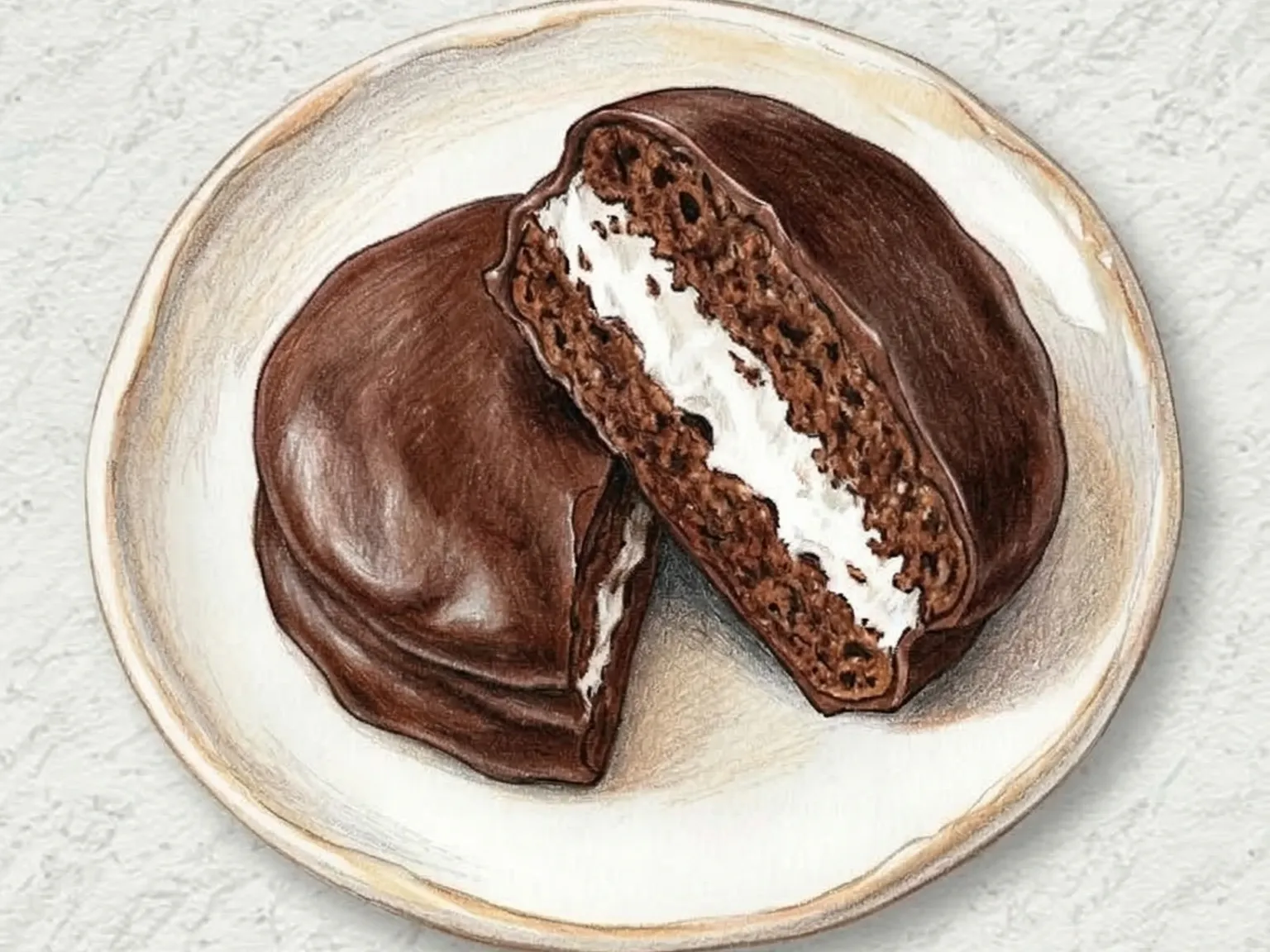
Two dome-shaped cocoa cake cookies sandwich a generous swirl of marshmallow cream, creating an American classic that straddles the line between cookie and cake. The cookies are thicker and softer than standard drop cookies, with a moist, cakey crumb that yields gently when bitten. Cocoa provides a mild bitterness that grounds the filling, while the marshmallow cream is airy, sweet, and slightly sticky. Spacing the batter mounds well apart on the baking sheet is important, as they spread during baking into the flat, round shape that defines a whoopie pie. Filling must wait until the cookies are completely cool; warm cookies melt the cream and create a messy result. Matching pairs by size before assembly produces a uniform, professional look. Stored in the refrigerator, the cream firms and seeps into the cookies overnight, producing a denser, fudgier texture that many prefer to the freshly assembled version.
Bananas Foster
Bananas Foster is a New Orleans dessert invented in the 1950s at Brennan's Restaurant, built around the simple technique of caramelizing bananas in butter and brown sugar before serving them over vanilla ice cream. The sauce begins by melting butter in a skillet and stirring in brown sugar until the two combine into a thick, bubbling caramel. Halved bananas go in cut-side down and cook just long enough to absorb the syrup while holding their shape. Ground cinnamon folded into the sauce adds a warm spice layer that keeps the sweetness from reading as flat, and a squeeze of lemon juice sharpens the overall profile. Traditional preparation calls for igniting rum poured into the hot pan - the blue flame burns off the alcohol and concentrates the molasses notes in a few dramatic seconds. The step can be skipped at home without meaningfully altering the result. Spooning the hot caramelized bananas over cold ice cream generates immediate steam, and the contrast between molten caramel and frozen cream defines every bite. The entire dish takes roughly ten minutes.
Classic Beef Burger
A classic beef burger shapes seasoned ground beef into a thick patty and sears it over high heat until a deep brown crust forms on the outside while the interior stays juicy. The Maillard reaction on the hot surface concentrates the beef flavor into that crust, and a slice of cheddar melted on top adds a salty, creamy layer. Crisp lettuce and a thick tomato slice bring moisture and freshness, while pickle slices cut through the richness with vinegar acidity. A brioche bun absorbs the rendered juices and condiments without falling apart, holding the stack together so every bite delivers all the components at once.