French Onion Tart
Western Medium

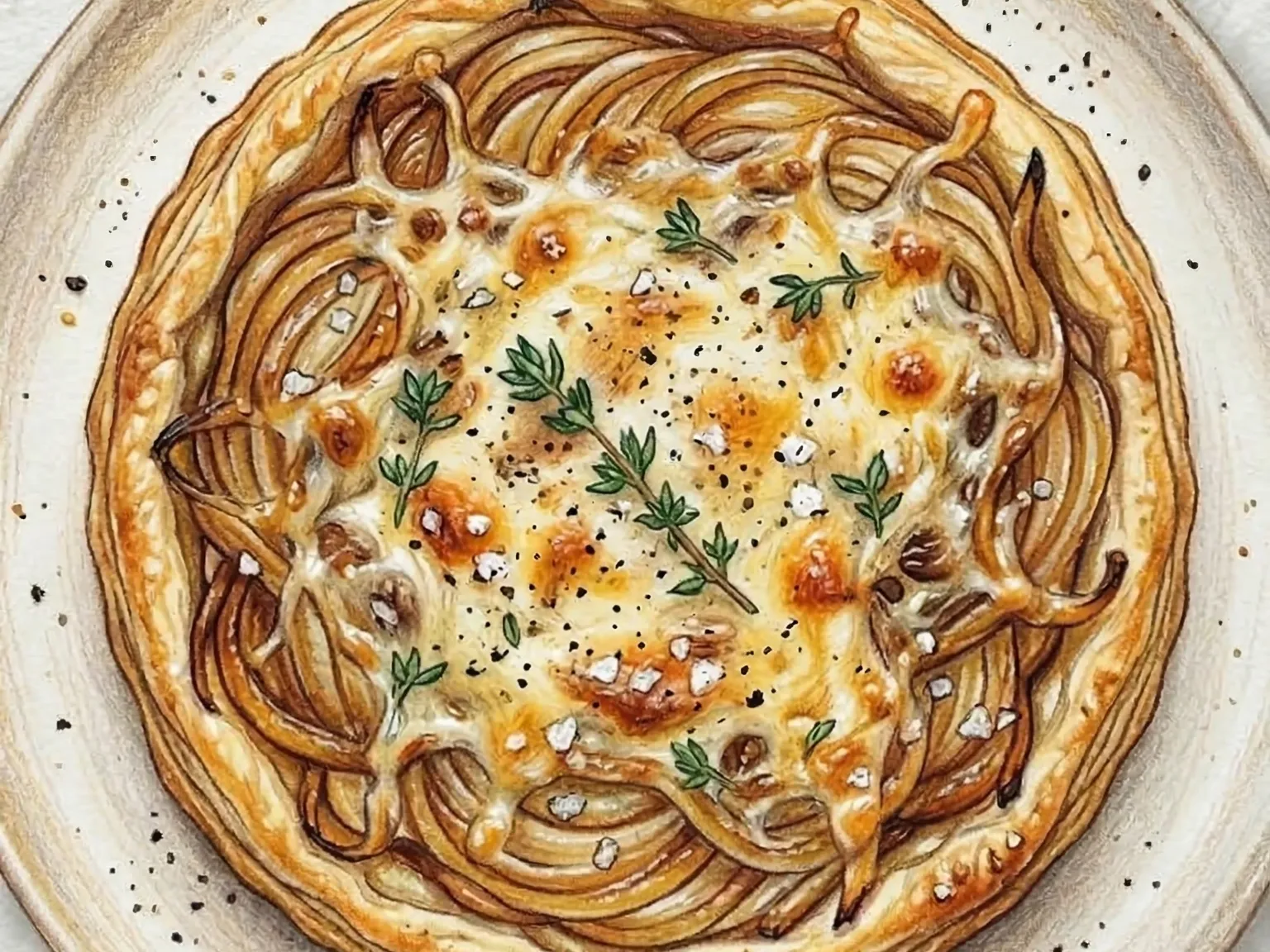
French Onion Tart

Quick answer

The preparation of a French onion tart begins with slicing onions and cooking them in butter using a low heat setting for more than twenty minutes.

What makes this special

  • French Onion Tart features slow-cooked onions that convert from raw pungency to caramel sweetness.
  • Onions cooked 20-plus minutes until raw pungency converts entirely to caramel sweetness
  • Thyme keeps the rich caramelized onion filling from tipping into heaviness
Total time
55 min
Level
Medium
Servings
4 servings
Ingredients
8
Calories
510 kcal
Protein
13 g

Key ingredients

tart doughonionsbuttergruyere cheeseheavy cream

Core cooking flow

  1. 1 Slice 3 onions lengthwise into thin 2mm pieces.
  2. 2 Melt 2 tablespoons butter in a heavy pan, then add the onions.
  3. 3 Roll 250g tart dough to 3mm thickness and press it firmly into the tart pan base and sides.

The preparation of a French onion tart begins with slicing onions and cooking them in butter using a low heat setting for more than twenty minutes. During this extended cooking duration, the onions collapse into a dark amber mixture, ensuring that their natural sweetness is fully concentrated while the sharp bite associated with raw onions is completely eliminated. Once the onions have reached this state, they are spread in an even layer over a tart shell that has already undergone blind baking to maintain its texture. A custard liquid made from a combination of eggs, heavy cream, and thyme is poured over the onions. Grated Gruyere cheese is then scattered across the top surface before the tart is transferred to an oven preheated to 190 degrees Celsius. The baking process continues until the internal filling has set into a firm consistency and the cheese layer has transformed into a browned, salty crust. The flavor of the caramelized onions is the most prominent characteristic of the dish, providing a sweetness that builds on the palate with each bite. Thyme is used to contribute a distinct herbal note, which functions to offset the richness of the dairy components and prevent the tart from becoming cloying. The addition of Gruyere cheese brings a nutty and salty element that balances the sweet and savory aspects of the tart. This specific dish is known for holding its quality well when served at room temperature, which makes it a versatile choice for inclusion in brunch menus, sequences of wine pairings, or meals eaten outdoors.

Prep 20min Cook 35min 4 servings
Recipes by ingredient → onion butter heavy cream egg

Instructions

Read the steps as a cooking flow: prep, heat, seasoning, doneness control, and finish.

6 steps
  1. 1
    Prep

    Slice 3 onions lengthwise into thin 2mm pieces.

    Keep the thickness even from end to end, because uneven slices will brown at different speeds and some pieces may burn before the rest become sweet.

  2. 2
    Control

    Melt 2 tablespoons butter in a heavy pan, then add the onions.

    Cook over low heat for 20-25 minutes, stirring now and then, until the onions collapse into a deep amber layer with no sharp raw smell.

  3. 3
    Step

    Roll 250g tart dough to 3mm thickness and press it firmly into the tart pan base and sides.

    Trim the edge, prick the bottom with a fork, and chill for 20 minutes so it shrinks less.

  4. 4
    Heat

    Bake the chilled empty shell at 190C for 10-12 minutes first.

    Remove it when the surface looks dry and the edges have just started to color, which helps the base stay crisp under the custard.

  5. 5
    Season

    Whisk 1 egg, 80ml heavy cream, 0.5 teaspoon salt, and 1 teaspoon thyme in a bowl.

    Mix until smooth with no visible streaks, remembering that the Gruyere will add more saltiness during baking.

  6. 6
    Heat

    Spread the onions in the baked shell and pour in the custard slowly so it settles between them.

    Scatter 120g grated Gruyere on top, bake at 190C for 25-30 minutes, then rest 10 minutes before slicing.

After the steps

Pick a recipe that fits this dish.

Continue with shared ingredients, meal pairings, or a similar method.

Recipes That Go Well With This

More Western →

Based on shared ingredients and meal pairing

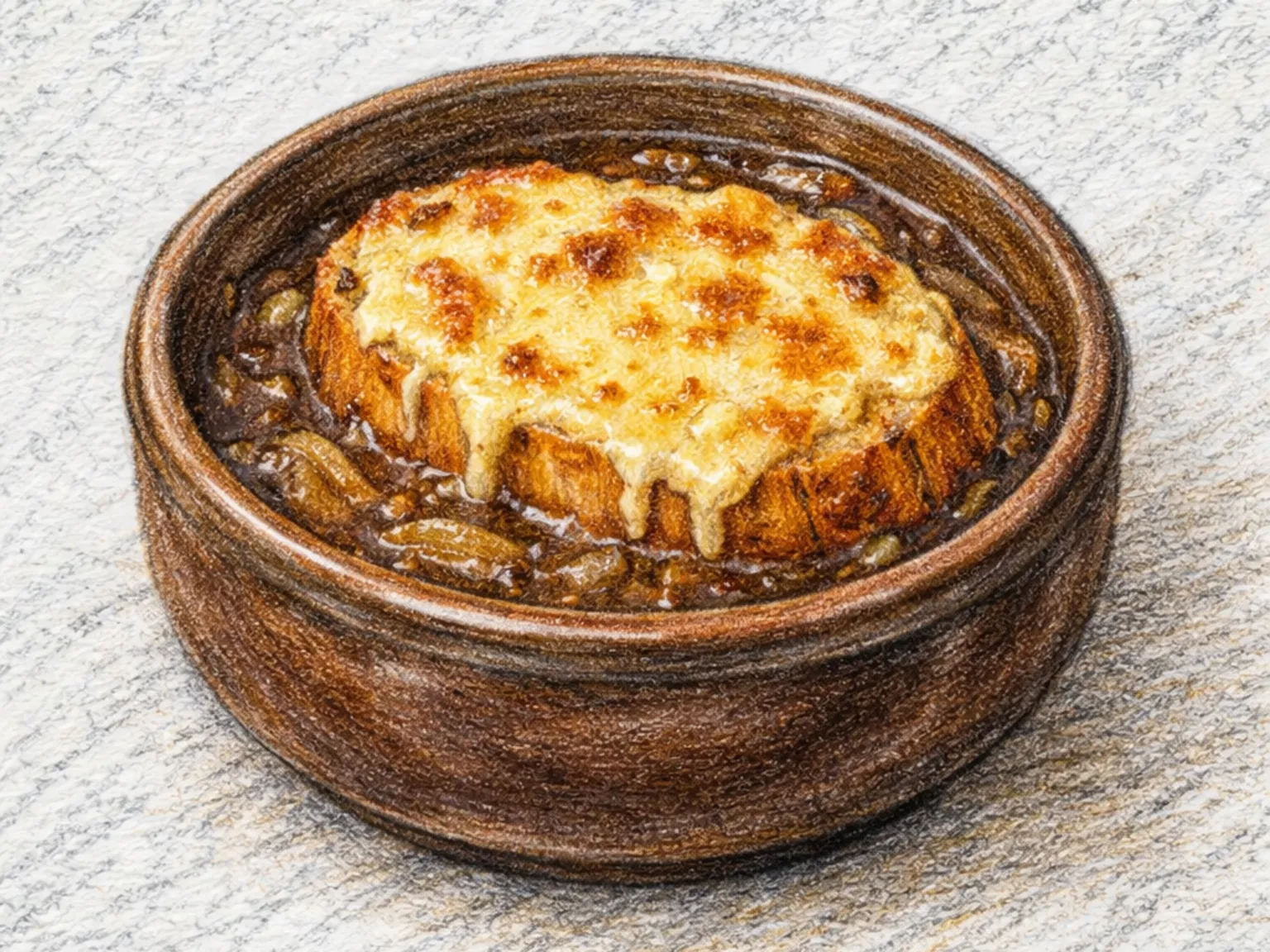
French Onion Soup
Shared ingredient: onion Western

French Onion Soup

French onion soup is built entirely on patience and heat. Thinly sliced onions are cooked in butter over low heat for forty minutes or more, slowly shedding moisture as their natural sugars transform into a deep, golden-brown mass with an intensity of sweetness and umami that raw onions cannot approach. Rushing this step causes the onions to scorch and turn bitter, so controlled, unhurried heat is the most critical variable in the recipe. Dry white wine and beef stock are then added to the caramelized onions and simmered together until the broth absorbs every layer of the onion's concentrated flavor, building complexity through a long, slow reduction. The finished soup is ladled into oven-safe crocks, topped with thick slices of toasted baguette, and blanketed with a generous layer of grated Gruyere. Under the broiler, the cheese melts, bubbles, and browns into a golden crust with long, elastic strings that stretch when broken with a spoon. Beneath that crust lies the reward: a dark, concentrated broth steeped in caramelized onion depth, with bread softened into the soup and cheese draped across every spoonful. A bowl where simple ingredients, time, and heat produce something far greater than the sum of their parts.

Quiche Lorraine
Shared ingredient: gruyere cheese Western

Quiche Lorraine

Quiche Lorraine is a French savory tart that fills a buttery pastry shell with crisp-cooked bacon, grated Gruyere cheese, and a smooth custard made from eggs, heavy cream, and milk. Blind-baking the crust for ten minutes before adding the filling is essential to prevent a soggy base. The bacon must be drained well so excess fat does not make the custard greasy. Whisking the egg mixture gently avoids incorporating too many air bubbles, which would create an uneven surface after baking. The quiche is done when the center still has a slight jiggle - removing it at this point and resting for ten minutes allows residual heat to set the custard fully, producing a clean slice with a creamy interior.

Beet and Goat Cheese Salad
Serve together Salads

Beet and Goat Cheese Salad

Beet and goat cheese salad begins with whole beets wrapped in foil and roasted at 200°C for forty-five to sixty minutes, long enough for their raw, earthy undertone to convert almost entirely into a concentrated, caramel-adjacent sweetness. Peeling the skins while the beets are still warm requires only the pressure of a paper towel - they slip off cleanly - and slicing them before they cool preserves the vivid crimson-purple cross-section that makes the dish visually striking. Crumbled goat cheese placed on the warm slices softens slightly, and its tangy acidity cuts through the dense sweetness of the roasted root rather than competing with it. Walnuts toasted briefly in a dry pan lose much of their raw bitterness, developing a nuttiness that bridges the mineral quality of the beet and the dairy sharpness of the cheese. Balsamic reduction does more than dress the plate: its concentrated sweet-tart intensity ties the separate components into a coherent whole. Arugula underneath the beet slices provides a peppery bitterness that sharpens the contrast against the sweetness, giving the salad a complexity well beyond what its short ingredient list suggests. A simple dressing of extra-virgin olive oil and lemon juice over the greens keeps the balance light and clear.

Pissaladiere (Provencal Caramelized Onion Anchovy Tart)
Similar recipe Western

Pissaladiere (Provencal Caramelized Onion Anchovy Tart)

Pissaladiere is a traditional tart from Provence in southern France, built on a thin bread dough blanketed with slowly cooked onions and adorned with anchovy fillets and black olives arranged in a lattice pattern. The onions must cook in olive oil over low heat for at least forty minutes until their moisture evaporates completely and their natural sugars caramelize into a dark, jam-like sweetness. This thick layer of onion jam makes the tart resemble a pizza visually, but the absence of tomato sauce and the primacy of onion sweetness make it an entirely different dish. The anchovies contribute sea-salt brininess and umami, while the olives add a bitter, savory counterpoint that balances the onion's sweetness. Fresh thyme leaves scattered on top before baking introduce an herbal brightness that lifts the dense, concentrated flavors.

Serve with this

Korean Cinnamon Persimmon Punch
Drinks Easy

Korean Cinnamon Persimmon Punch

Sujeonggwa is a Korean cinnamon-ginger punch made by simmering cinnamon sticks and sliced ginger in water for 25 minutes, then straining and sweetening the clear liquid with dark brown sugar. The warm, slightly sweet spice of cinnamon and the sharp rising heat of ginger meet the molasses-toned depth of the sugar, building a flavor that is spicy, sweet, and aromatic in equal measure. Quartered dried persimmon slices are added to the chilled punch, where they slowly absorb the liquid and soften into a jam-like texture over time, while floating pine nuts contribute a gentle nuttiness to each sip. Overnight refrigeration in a sealed container melds the individual flavors into something more unified, making the punch cleaner and more rounded when served cold. Sujeonggwa has long been served at Korean holiday tables during Lunar New Year and ancestral rite ceremonies, and its spiced warmth is also considered a natural digestive aid after heavy meals.

🍺 Bar Snacks 🎉 Special Occasion
Prep 10min Cook 35min 4 servings
Gotgam Cream Cheese Roll (Dried Persimmon Rolls)
Desserts Easy

Gotgam Cream Cheese Roll (Dried Persimmon Rolls)

Gotgam cream cheese roll is a no-cook Korean dessert that requires nothing more than a knife, a bowl, and a refrigerator. Dried persimmons are slit open and flattened into thin sheets, each one acting as the outer wrapper. The filling is cream cheese mixed with honey and fresh lemon juice to balance its natural richness with acidity, and finely chopped walnuts are folded in throughout to add a crunchy, nutty element to every bite. The filling is spread across the opened persimmon, which is then rolled tightly and wrapped in plastic wrap. Twenty minutes in the refrigerator firms the roll enough to slice cleanly. Dipping the knife in warm water and wiping it dry before each cut produces the smoothest cross-sections. The finished slices reveal clearly defined layers: the chewy, caramel-sweet dried persimmon on the outside, the tangy cream cheese in the middle, and flecks of walnut distributed throughout. The combination makes it a natural pairing with wine or a polished addition to a traditional holiday table.

🍺 Bar Snacks 🎉 Special Occasion
Prep 20min 2 servings
Perilla Pesto Chicken Penne
Pasta Medium

Perilla Pesto Chicken Penne

Perilla pesto chicken penne uses Korean perilla leaves and walnuts blended with olive oil into a thick, aromatic pesto that coats penne and thinly sliced seared chicken breast. Perilla leaves carry a grassy, slightly bitter fragrance with a faint sesame-like undertone that sets them entirely apart from basil - closer in character to shiso, but with a more pronounced herbal edge. Walnuts add a creamy, substantial body to the pesto and leave a lingering nuttiness after each bite. The chicken breast is seared in olive oil until golden on the outside, then sliced thin so it distributes evenly through the pasta rather than sitting in one heavy portion. Parmesan contributes salt and umami to bind the sauce, and fresh lemon juice cuts through the richness of the oil with enough acidity to keep each forkful from feeling heavy. Penne's hollow tube shape catches pesto inside as well as out, so every bite carries full flavor even when sauce coverage on the surface looks minimal.

🎉 Special Occasion 🍺 Bar Snacks
Prep 20min Cook 25min 4 servings

Similar recipes

Galette Complete (Buckwheat Crêpe with Ham Cheese Egg)
Western Medium

Galette Complete (Buckwheat Crêpe with Ham Cheese Egg)

Galette complete is a savory Breton buckwheat crepe made from a thin batter of buckwheat flour, water, eggs, and salt that rests for fifteen minutes to let the grain hydrate and the rough particles smooth out. A lightly buttered crepe pan gets a thin spread of batter that cooks until the edges turn crisp and lacy. Ham and grated Gruyere cheese are placed in the center, a whole egg is cracked on top, and the edges fold inward to form a square frame around the filling. The galette finishes cooking just until the white sets while the yolk stays runny, which is the traditional result. Buckwheat's earthy, slightly bitter character pairs naturally with the salty ham and nutty melted cheese, and the crisp folded border contrasts with the soft, custard-like center. Spreading the batter as thinly as possible is important because a thick crepe loses the light, delicate texture that defines the dish. A lid placed briefly over the pan after folding can set the white faster without overcooking the yolk.

🎉 Special Occasion 🌙 Late Night
Prep 20min Cook 15min 2 servings
Yuja Cream Cheese Tart (Korean Citron Cream Cheese No-Bake Tart)
Baking Medium

Yuja Cream Cheese Tart (Korean Citron Cream Cheese No-Bake Tart)

Yuja Cream Cheese Tart features a crunchy biscuit crust filled with a smooth, oven-baked cream cheese filling sweetened with yuja marmalade. The crust is made from crushed digestive biscuits and melted butter, pressed into a pan and baked until fragrant. For the filling, softened cream cheese is whipped with sugar, eggs, heavy cream, and Korean citron marmalade. A splash of lemon juice is added to elevate the acidity and brighten the citrus notes. This filling is poured over the pre-baked base and baked until the edges set while the center remains slightly soft. After cooling, the tart is chilled in the refrigerator for at least two hours to achieve a dense, mousse-like consistency. Resting the tart overnight allows the citrus peel to infuse the creamy filling, creating a balance of sweet and tangy flavors.

🎉 Special Occasion 🧒 Kid-Friendly
Prep 25min Cook 30min 4 servings
Tarte Bourdaloue (French Pear Almond Frangipane Tart)
Baking Medium

Tarte Bourdaloue (French Pear Almond Frangipane Tart)

A crisp tart shell is lined with frangipane - a mixture of almond flour, butter, egg, and sugar - then topped with halved or sliced pears and baked until the almond cream rises around the fruit and turns golden. The frangipane puffs gently in the oven, enveloping the pear in a dense, moist almond layer, while juice from the fruit seeps into the cream and lightens its richness. Poached pears produce the most tender result and cook evenly, but raw pears work if sliced thin enough to soften during baking. Overmixing the frangipane compacts the crumb and eliminates the delicate rise, so the batter should be combined only until the ingredients are incorporated. Scattered sliced almonds on top before baking add visual appeal and an extra layer of nutty crunch. This tart originated on Rue Bourdaloue in Paris and remains one of the essential recipes in French patisserie.

🎉 Special Occasion 🧒 Kid-Friendly
Prep 30min Cook 40min 4 servings

Tips

Slow caramelization is key for deep onion sweetness.

Nutrition (per serving)

Calories
510
kcal
Protein
13
g
Carbs
35
g
Fat
35
g