Brioche Loaf
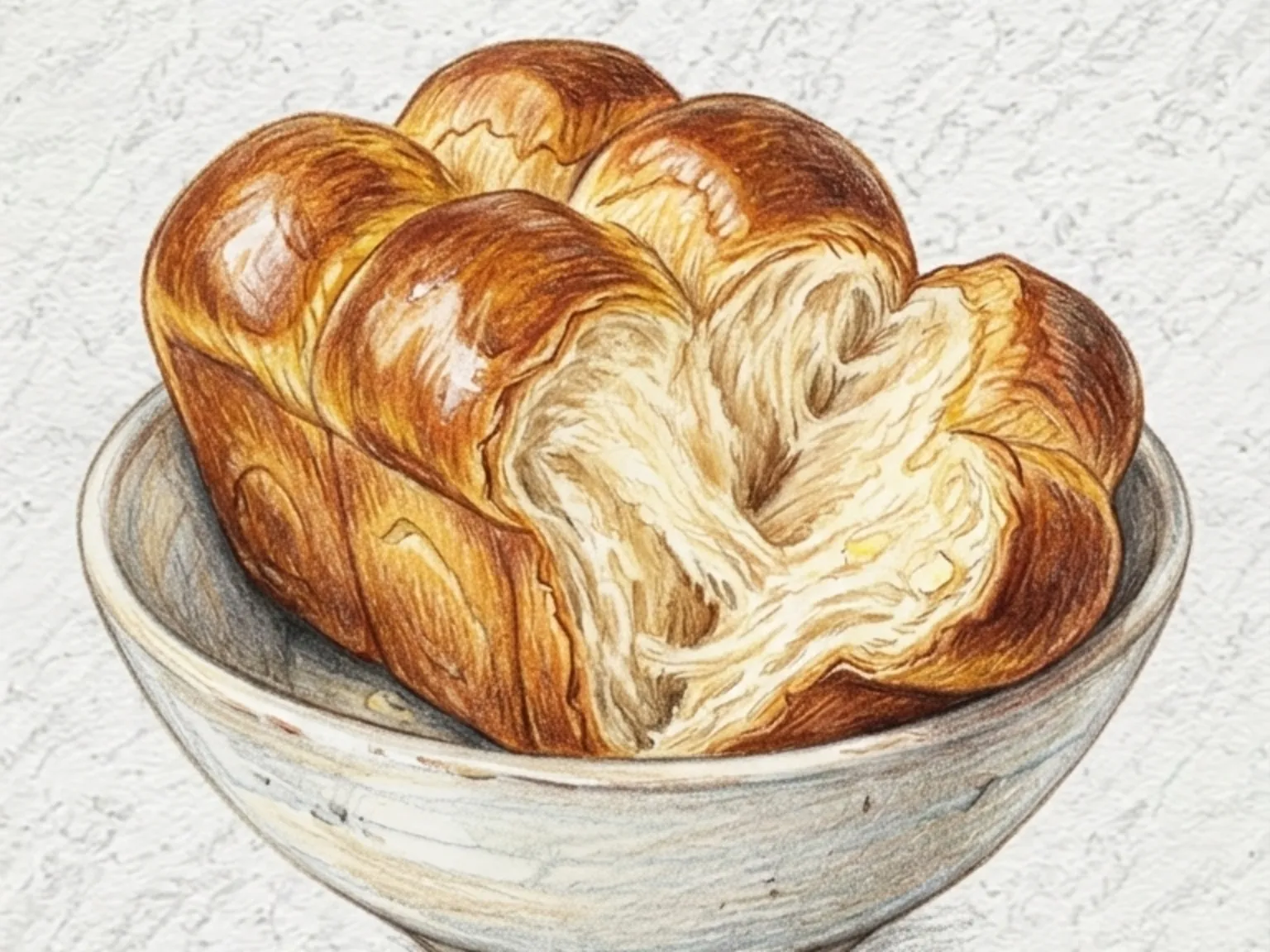
Brioche loaf is a French enriched bread distinguished by its high ratio of eggs and butter relative to flour. Softened butter is incorporated gradually during kneading until the gluten develops enough for the dough to stretch into a thin, translucent sheet. After proofing, the dough is baked in a loaf pan, developing a deep golden crust that is thin and slightly crisp, enclosing an interior with an extraordinarily fine, cotton-like crumb. The butter flavor is woven through every layer, making the bread rich enough to eat plain. A light toasting amplifies the contrast between the crisp exterior and the soft center. Brioche also serves as an elevated foundation for French toast and bread pudding.
Adjust Servings
Instructions
- 1
Mix flour, sugar, salt, and yeast; add eggs and milk and knead.
- 2
Once gluten develops, add room-temp butter bit by bit, kneading 10+ minutes until silky.
- 3
Place in a bowl, cover with wrap, and proof at room temperature for 1 hour.
- 4
Deflate, shape into a loaf pan, and proof in a warm spot for 60 minutes.
- 5
Brush with egg wash and bake at 180°C for 30-35 minutes.
- 6
Remove from pan immediately and cool completely on a wire rack.
As an Amazon Associate, we may earn from qualifying purchases.
Tips
Nutrition (per serving)
More Recipes

Classic Croissant
A classic croissant is built through lamination - a process of folding cold butter into yeast-leavened dough in successive turns to create dozens of alternating layers. Three sets of folds produce a structure so layered that when baked, the butter melts and releases steam, forcing each layer apart from within. The exterior caramelizes into a shell so thin and crisp it shatters at the slightest pressure, scattering golden flakes. The interior, by contrast, is a honeycomb of soft, airy strands held together by the ghost of dissolved butter. Tearing a warm croissant apart releases a rush of butter fragrance that fills the room. The dough itself carries a faint sweetness from sugar and milk, but the dominant flavor is pure butter, amplified and transformed by heat.

French Baguette
A baguette is a traditional French bread made from just four ingredients: bread flour, water, yeast, and salt. The simplicity of the formula means that technique in fermentation and baking determines the final quality. The dough requires a high hydration level of seventy percent or above to develop the irregular open crumb structure that gives a baguette its characteristic chewy yet airy interior. A long first fermentation builds acidity and deep wheat flavor in the dough, and during shaping the gas is only partially pressed out with gentle folds to preserve the large air pockets. Scoring (coupes) cut along the top controls how the loaf expands in the oven; a sharp blade drawn quickly prevents the dough from dragging and tearing. Introducing steam into the oven at the start of baking keeps the crust from setting too early, allowing the bread to expand fully before the surface crisps into a crackling shell. A well-made baguette crackles audibly when squeezed and reveals an interior with unevenly distributed holes of varying sizes when sliced.

Ensaymada Cheese Bread (Filipino Sweet Cheese Brioche)
Ensaymada is a Filipino sweet brioche bread topped with butter, sugar, and grated cheese, descended from the Spanish ensaimada of Mallorca but transformed into something distinctly Filipino. The dough is enriched with eggs and butter, kneaded until smooth, and given a long rise that produces a pillowy crumb with a pull-apart, cotton-like texture when torn by hand. After baking, each bun is brushed with softened butter, rolled in sugar, and covered with a generous layer of grated cheddar or Edam cheese. The combination of sweet bread and salty cheese is central to the appeal and reflects a Filipino preference for contrasting flavors within a single bite. Ensaymada is most popular during Christmas, when bakeries produce them in large quantities, but it is eaten year-round as a breakfast bread with hot chocolate or coffee.

Olive Herb Flat Bread (Leaf-Shaped Provencal Bread)
Fougasse is a flatbread from Provence in southern France, shaped with decorative slashes that resemble a leaf or wheat sheaf. The dough is enriched with olive oil and studded with Kalamata olives, rosemary, and thyme, distributing pockets of briny, herbal flavor throughout the bread. The distinctive cuts serve more than an aesthetic purpose - they increase the crust-to-crumb ratio dramatically, so thinner sections bake to a crackling crispness while thicker areas remain soft and chewy. This variation in texture within a single piece is what makes fougasse more interesting than a uniform loaf. The surface is brushed with olive oil before baking, which produces a golden, glossy finish. Best eaten warm, when the aromatic oils from the herbs and olives are most volatile. It pairs naturally with southern French dishes, charcuterie boards, or a simple bowl of good olive oil for dipping.

Jambon-Beurre (Classic Butter and Ham Baguette)
Jambon-beurre is the quintessential French everyday sandwich, made with just baguette, butter, and ham. With only three core ingredients, quality determines everything - a baguette with a shattering crust and chewy crumb, cultured unsalted butter, and thinly sliced jambon blanc are the ideal combination. The butter must be softened to room temperature so it spreads without tearing the delicate bread interior. A thin coat of Dijon mustard on one side adds a sharp, peppery note that anchors the richness of the butter against the salty ham. Sliced cornichons tucked inside provide a tart acidity that lightens the overall weight of the sandwich and keeps each bite balanced.

Garlic Butter Mussels
Garlic butter mussels are steamed in a fragrant broth of sauteed garlic, melted butter, and white wine. Onion and garlic are cooked in butter and olive oil until softened, then white wine is added and boiled briefly to drive off the alcohol while keeping the acidity and fruit notes intact. Once the mussels go in and the lid is sealed, the shells open within four to five minutes, releasing briny juices that meld with the butter-wine base into a rich, savory broth. Mussels that remain closed after cooking must be discarded. Finishing with chopped parsley and black pepper adds color and a mild sharpness, and tearing crusty baguette into the bowl to soak up the broth is the traditional way to enjoy every drop.