Korean Garlic Chive Egg Soup
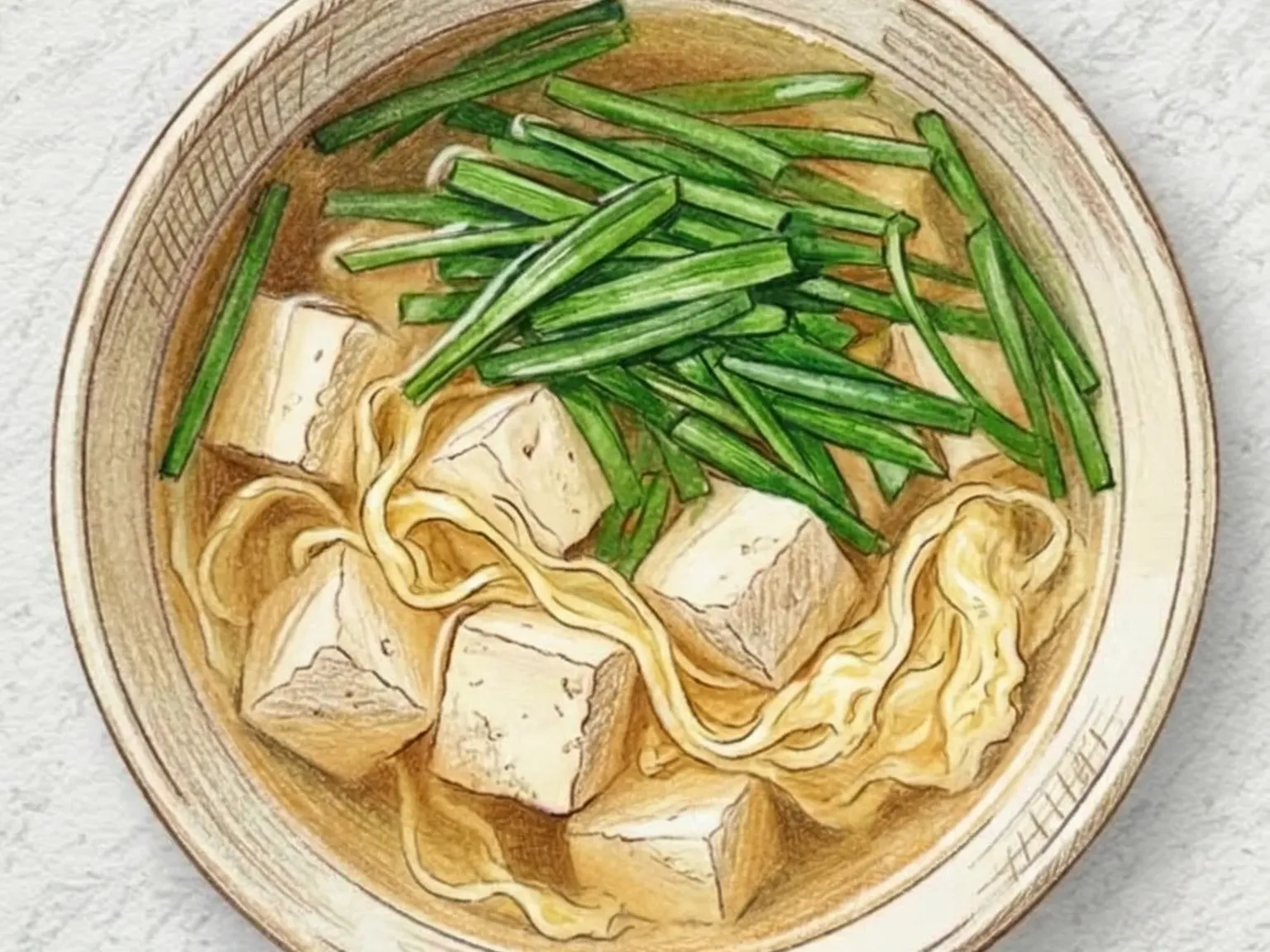
This simple home-style soup combines garlic chives, egg, and tofu in a light broth seasoned with soup soy sauce and garlic. Tofu cubes go in first to warm through, then beaten egg is poured in a slow stream and left undisturbed for thirty seconds to form silky ribbons. Chives and sesame oil are added in the final half-minute so their aroma stays vivid in the finished bowl.
Adjust Servings
Instructions
- 1
Cut chives into 4 cm lengths and cube the tofu.
- 2
Beat eggs until yolk and white are evenly combined.
- 3
Bring water to a boil and season with soup soy sauce and garlic.
- 4
Add tofu and simmer for 2 minutes at a gentle boil.
- 5
Pour in beaten egg in a thin stream; do not stir for 30 seconds.
- 6
Add chives and sesame oil, cook 30 seconds, then adjust with salt.
As an Amazon Associate, we may earn from qualifying purchases.
Tips
Nutrition (per serving)
More Recipes

Gyeran-guk (Egg Drop Anchovy Broth Soup)
Korea's quickest comfort soup - ready in under 10 minutes with just eggs, soy sauce, and garlic. A beaten egg is drizzled into rolling broth and immediately sets into delicate, flower-like ribbons that float through the clear liquid. A finish of sliced green onion and a drop of sesame oil adds fragrance without weight. The result is gentle and soothing, mild enough for anyone feeling under the weather yet satisfying enough to anchor a full meal of rice and banchan. Gyeran-guk appears on Korean dinner tables more often than almost any other soup, and its economy of ingredients makes it a reliable standby for busy weeknight dinners.

Korean Buchu Honghap Guk (Chive Mussel Soup)
Debearded mussels are simmered with radish in water to extract a briny, full-bodied stock, with rice wine added to neutralize any fishy notes. Soup soy sauce and garlic season the broth mid-cook, and Korean chives plus black pepper go in at the very end for a fragrant, clean finish. Cooking uncovered helps off-flavors escape, and any mussels that remain closed after five minutes should be removed.

Korean Scallion Egg Soup (Quick Two-Ingredient Clear Broth)
Daepa gyeran-guk is a Korean scallion and egg soup that comes together in under ten minutes with just two main ingredients. The technique of adding green onion in two stages is what gives it complexity: the first batch simmers for three minutes, sweetening the broth, while the second goes in raw at the end for a sharp, fresh bite. Egg must be drizzled in a thin stream over reduced heat and left undisturbed for thirty seconds - this creates silky ribbons rather than scrambled clumps. A splash of soup soy sauce and a drop of sesame oil round out the seasoning, turning the simplest of pantry ingredients into a bowl with surprising depth.

Korean Chive Clam Soup (Briny Clam Broth with Garlic Chives)
Purged clams are simmered with Korean radish to build a refreshing, naturally sweet stock, then garlic chives and cheongyang chili are stirred in at the end for fragrance and heat. Boiling the radish first for five minutes establishes a mild sweetness that balances the briny clam liquor. The chives go in last to keep their vivid green color and grassy aroma intact, and any clams that fail to open are discarded.

Korean Egg Porridge (Silky Sesame-Scented Rice Porridge)
Soaked rice is first stir-fried in sesame oil to release its starch aroma, then simmered in water on low heat for 20 minutes with frequent stirring until the grains dissolve into a smooth base. Beaten eggs are drizzled in at the very end and gently folded for just one minute, creating soft ribbons of egg throughout the porridge without overcooking. Soup soy sauce and salt provide restrained seasoning that lets the sesame fragrance carry the flavor, while chopped green onion on top adds a mild sharpness. The result is a clean, mild bowl that sits easy on the stomach.

Korean Stir-fried Chives and Shrimp
Deveined shrimp are dried thoroughly and seared over high heat until their shells turn pink, then tossed briefly with garlic chives for a stir-fry that takes under ten minutes from cutting board to plate. Removing every trace of surface moisture before the shrimp hit the pan is the single most important step; residual water generates steam and turns the sear into a braise, leaving the shrimp pale and soft instead of lightly caramelized. Sliced garlic goes into the oil first to build an aromatic base that clings to every ingredient. One tablespoon of soy sauce paired with a teaspoon of oyster sauce amplifies the natural seafood umami without tipping the dish into excessive saltiness, and black pepper sharpens the finish. The chives must go in last and cook for no more than sixty seconds; any longer and they lose their vivid color and turn stringy. At 220 calories with 26 grams of protein per serving, this dish fills the role of a satisfying yet light side that pairs well with steamed rice or slides neatly into a packed lunch.