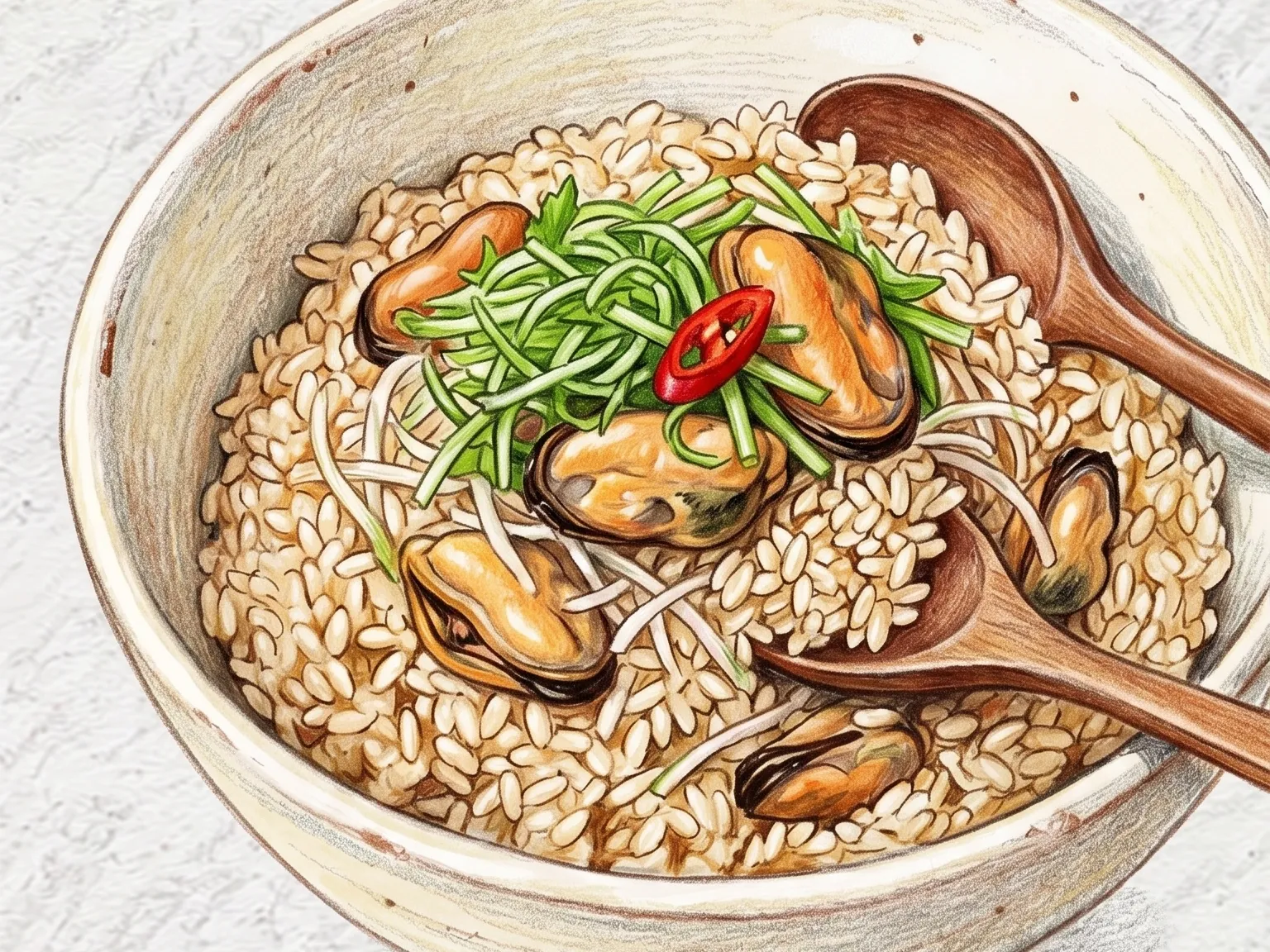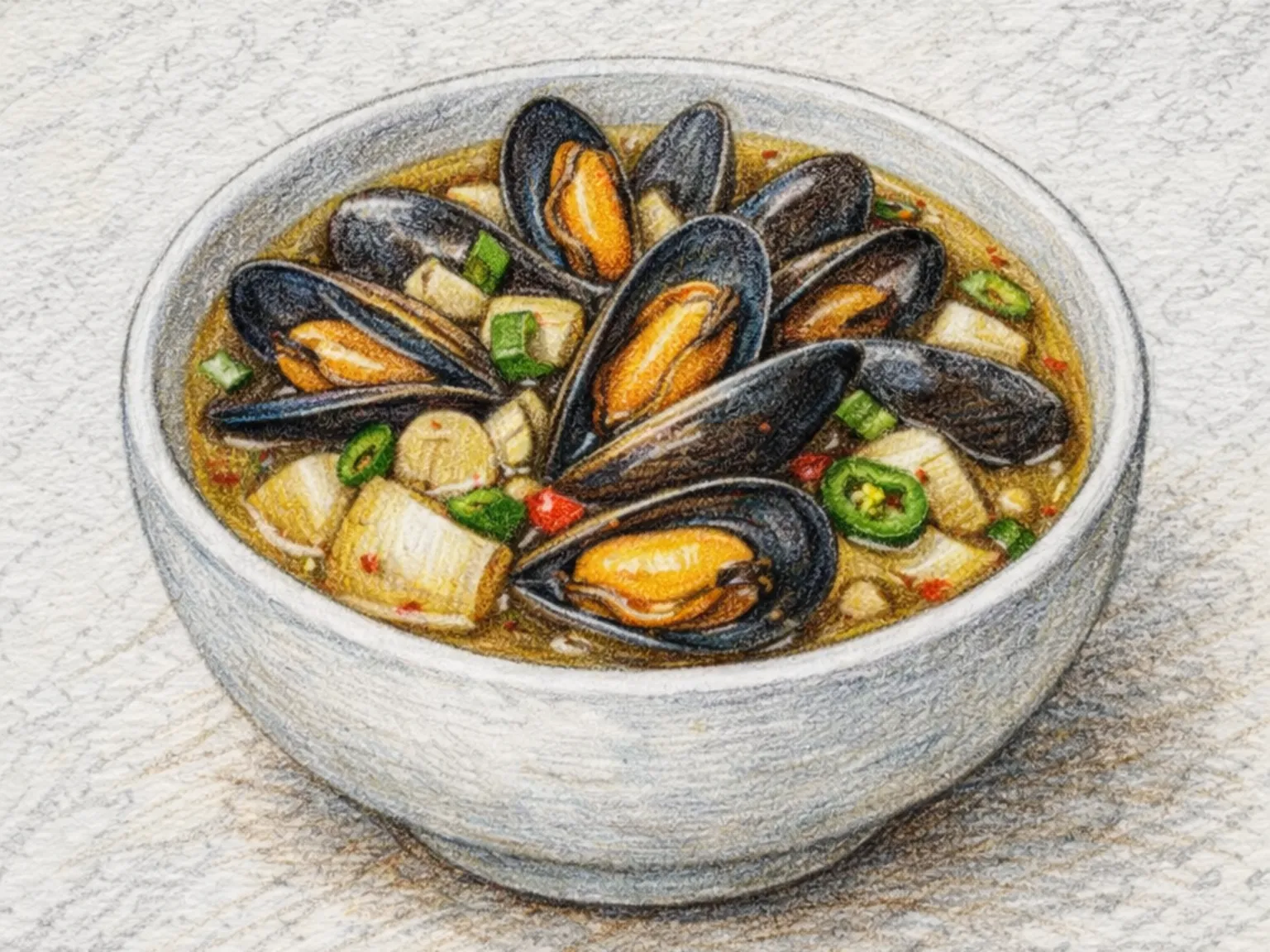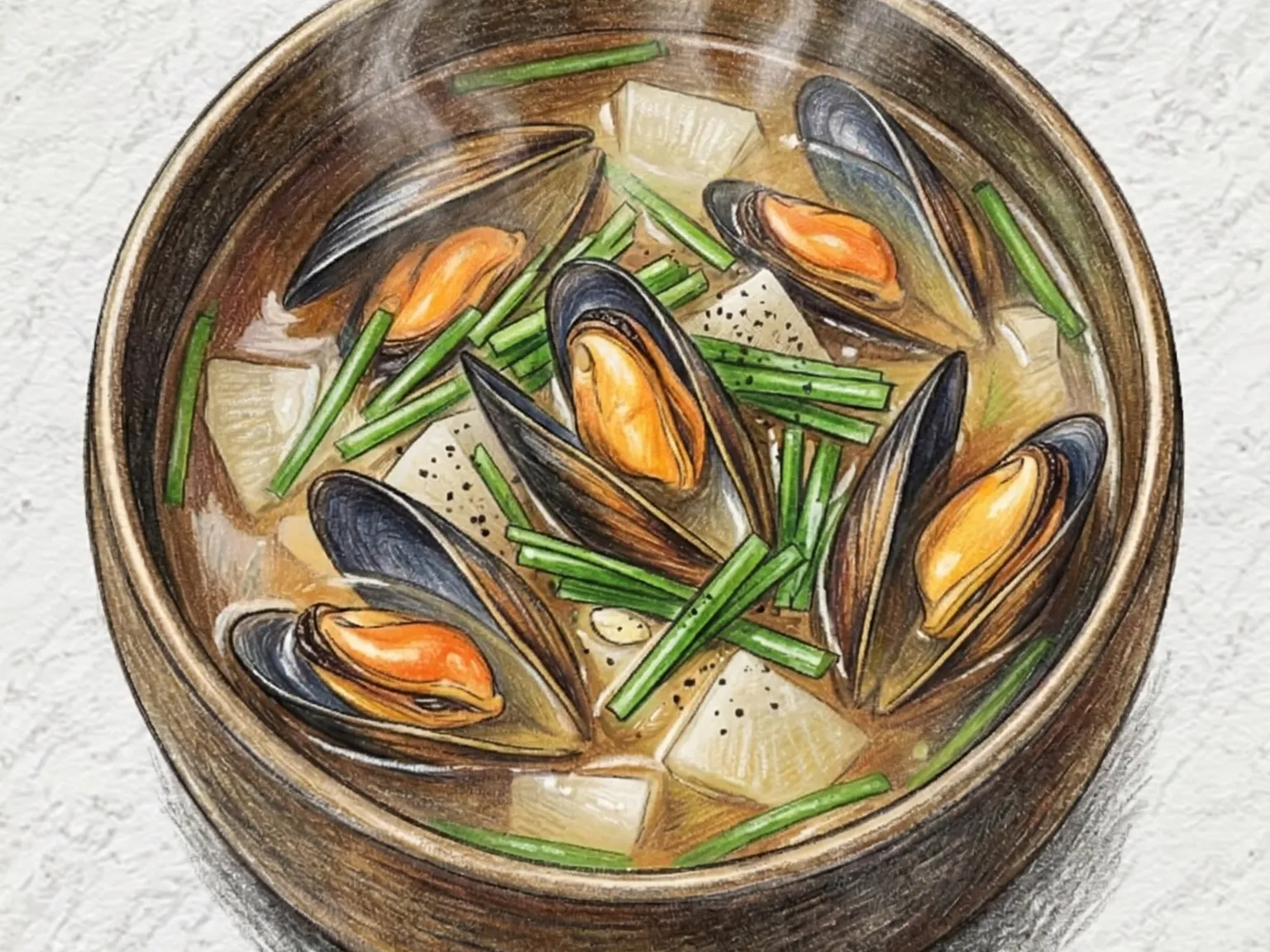
Korean Buchu Honghap Guk (Chive Mussel Soup)
Debearded mussels are simmered with radish in water to extract a briny, full-bodied stock, with rice wine added to neutralize any fishy notes. Soup soy sauce and garlic season the broth mid-cook, and Korean chives plus black pepper go in at the very end for a fragrant, clean finish. Cooking uncovered helps off-flavors escape, and any mussels that remain closed after five minutes should be removed.
Adjust Servings
Instructions
- 1
Remove mussel beards, scrub clean, and drain.
- 2
Thinly slice radish and cut chives into 4 cm pieces.
- 3
Boil water with radish for 8 minutes to build a refreshing base.
- 4
Add mussels and rice wine, boil uncovered for 5 minutes, and discard unopened mussels.
- 5
Add garlic and soup soy sauce, then simmer 3 more minutes.
- 6
Add chives and pepper, boil for 1 minute, then turn off heat immediately.
As an Amazon Associate, we may earn from qualifying purchases.
Tips
Nutrition (per serving)
More Recipes

Korean Garlic Chive Egg Soup
This simple home-style soup combines garlic chives, egg, and tofu in a light broth seasoned with soup soy sauce and garlic. Tofu cubes go in first to warm through, then beaten egg is poured in a slow stream and left undisturbed for thirty seconds to form silky ribbons. Chives and sesame oil are added in the final half-minute so their aroma stays vivid in the finished bowl.

Korean Mussel Seaweed Soup
Honghap-maesaengi-guk is a winter specialty from Korea's southern coast that pairs fresh mussels with maesaengi, a hair-thin green seaweed harvested in cold water. The seaweed is briefly sautéed in sesame oil before water and mussels are added, and as the pot simmers, the broth turns a deep green with a mineral-rich ocean fragrance. Soup soy sauce and garlic provide just enough seasoning to frame the natural salinity without masking it. The textural contrast is central to the experience: maesaengi slides across the palate in silky strands while the mussels offer a firm, meaty chew. Each spoonful delivers both the vegetal depth of seaweed and the concentrated brininess of shellfish, making it a dish greater than the sum of its two main ingredients.

Korean Chive Clam Soup (Briny Clam Broth with Garlic Chives)
Purged clams are simmered with Korean radish to build a refreshing, naturally sweet stock, then garlic chives and cheongyang chili are stirred in at the end for fragrance and heat. Boiling the radish first for five minutes establishes a mild sweetness that balances the briny clam liquor. The chives go in last to keep their vivid green color and grassy aroma intact, and any clams that fail to open are discarded.

Korean Radish Greens Mussel Soup
Mucheong-honghap-guk is a Korean home-style soup that draws its broth from fresh mussels and its body from doenjang-seasoned dried radish greens. The mussels open during simmering and release a briny, mineral-rich liquor that serves as the soup's stock, eliminating the need for a separate anchovy or beef base. Dried radish greens, previously boiled until tender and dressed with doenjang, are added to the mussel broth, where they absorb the seafood flavor while contributing their own earthy, fermented depth. The textural contrast is a quiet pleasure: chewy mussel meat against the fibrous, slightly toothy greens. Garlic and green onion anchor the aromatics, and an optional Cheongyang chili adds a thread of heat that sharpens the overall flavor without overpowering the shellfish. The soup comes together quickly once the greens are pre-prepared, making it a weeknight-friendly dish in coastal regions where mussels are plentiful. Despite its simplicity, the layering of seafood brine and fermented soybean paste gives the broth a surprising complexity that rewards slow, attentive sipping.

Korean Mussel Soup Noodles
Honghap tangmyeon is a mussel noodle soup where a generous amount of mussels is simmered to produce a deeply briny, clear broth. Korean radish cooks alongside the mussels, lending the liquid a natural sweetness and a clean finish. Soup soy sauce and cooking wine adjust the seasoning, while minced garlic and green onion build an aromatic layer that keeps any fishiness at bay. A light dusting of black pepper over the steaming bowl sharpens the broth's marine character and warms the palate.

Korean Shrimp Mulmandu in Light Broth
Saeu-mulmandu-broth is a Korean dumpling soup where shrimp dumplings are simmered in a clear broth seasoned with soup soy sauce and garlic. The shrimp goes into the pot first to build a seafood base before the dumplings are added, so the wrappers absorb that briny depth as they cook. Green onion is stirred in at the end for a fresh aromatic lift, and the broth is finished with salt and pepper. Despite its light, transparent appearance, the soup carries layered flavor from both the shrimp stock and the filling inside each dumpling.