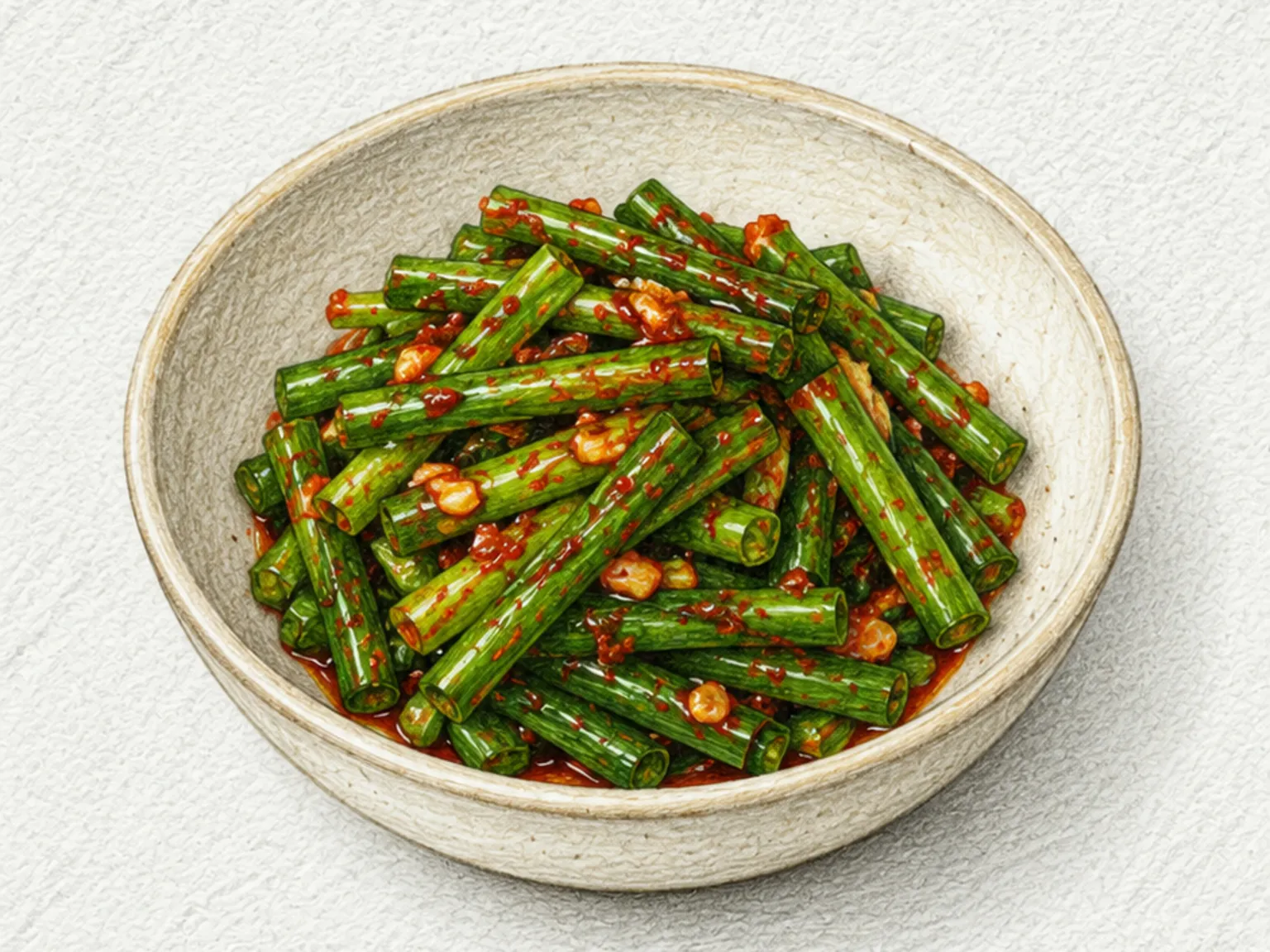
Korean Chive Kimchi (Spicy Garlic Chive Quick Kimchi)
Mix 2 tbsp red pepper flakes, 1 tbsp fish sauce, 1 tbsp minced garlic, and 1 tsp sugar, and let the paste stand for about 2 minutes so the flakes absorb the fish sauce and thicken. Add 300 g chives cut into 5 cm lengths and toss for about 1 minute, lifting from the bottom with the fingertips. Bruised chives wilt quickly and smell grassy, so do not press or knead, and stop when the stems are coated red but still springy.
Quick answer
- Active time
- 15 min
- Waiting
- See the steps
- Level
- Easy
- Servings
- 4 servings
- Ingredients
- 5
About this dish
Garlic chives are tossed straight into a paste of gochugaru, anchovy fish sauce, garlic and sugar with no salting and no fermentation, making this one of the fastest kimchi styles.
Read more
The fish sauce supplies the briny depth that aged kimchi would build over days, and the chives' garlicky bite pushes the red pepper heat forward. Letting the chili flakes absorb the fish sauce for a couple of minutes before adding the chives avoids dry, patchy spots. Cutting the chives to 5 cm lets the paste reach inside the hollow stems and out to the leaf tips. Because pressing or kneading wilts them fast, the chives are lifted gently from below and left alone once the stems are coated red but still springy. It can be served right away, and after a night in the refrigerator the seasoning spreads evenly and the flavor mellows slightly, which suits grilled pork or noodles.
Ingredients
Instructions
- 1
Rinse 300 g Korean chives several times under cold running water, shaking the stems gently to release any grit.
Drain in a colander until water no longer drips heavily from the cut ends.
- 2
Spread the chives on a board and remove yellow tips or tough base pieces.
Cut them into even 5 cm lengths so the seasoning reaches both the hollow stems and leafy ends evenly.
- 3
In a wide bowl, combine 2 tablespoons gochugaru, 1 tablespoon fish sauce, 1 tablespoon minced garlic, and 1 teaspoon sugar before adding the chives. Stir until the sugar starts dissolving into the fish sauce.
- 4
Let the seasoning stand for about 2 minutes so the pepper flakes absorb the fish sauce and thicken.
If dry red specks remain on the bowl, stir again until the paste looks evenly moist.
- 5
Add the chives to the seasoning and toss for about 1 minute, lifting from the bottom with your fingertips.
Do not press or knead, because bruised chives wilt quickly and release a grassy smell.
- 6
Stop when the stems are coated red but still springy.
Serve right away with rice, noodles, or grilled pork belly, or pack into an airtight container and refrigerate overnight for a softer, more even flavor.
Use-up ingredient planner
Turn these ingredients into two more meals
The overlap excludes basic seasonings. Open the next recipe and your selected dishes will stay with you.
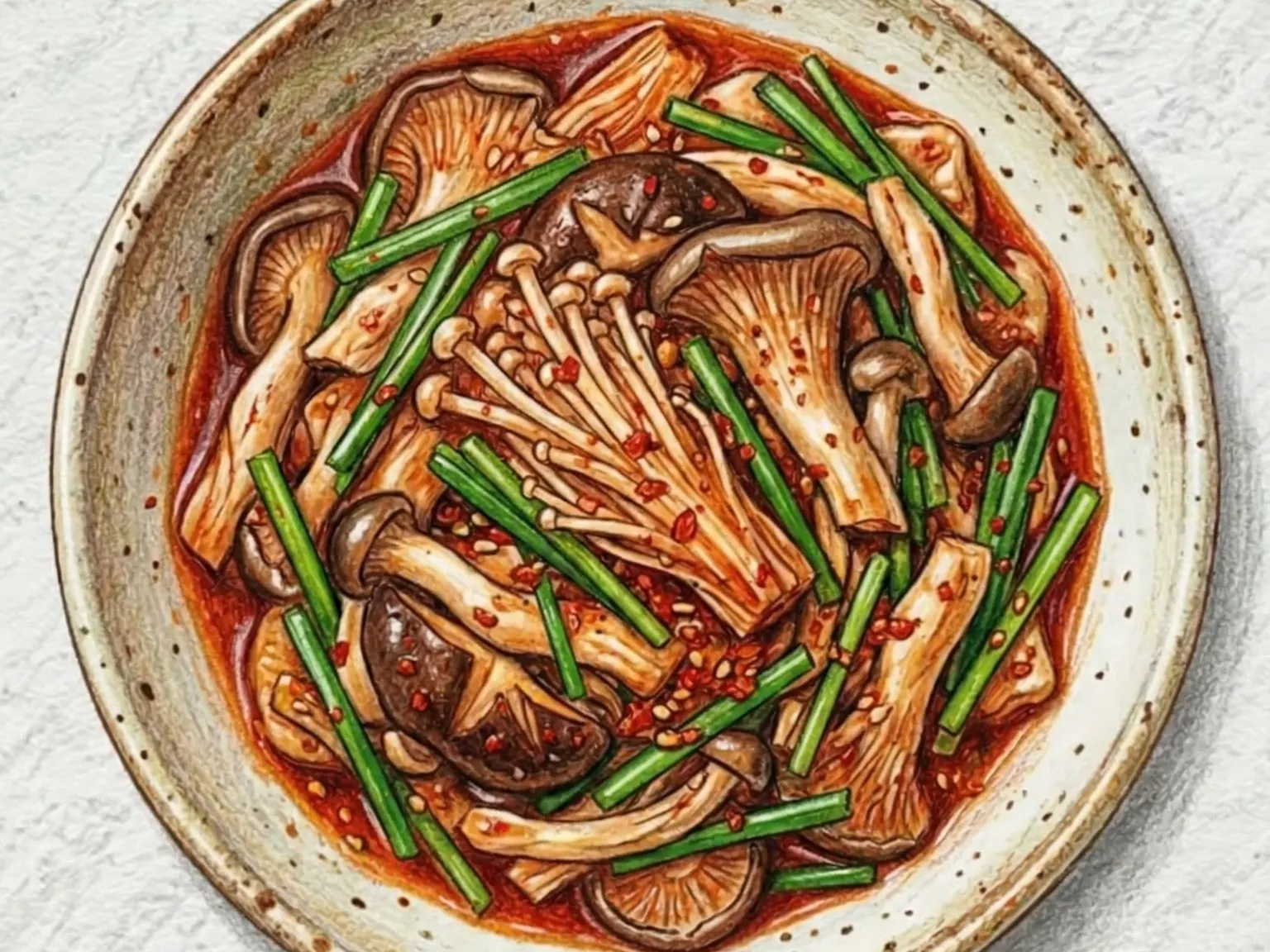
Korean Beoseot Kimchi (Mushroom Kimchi)
Korean chives, Fish sauce
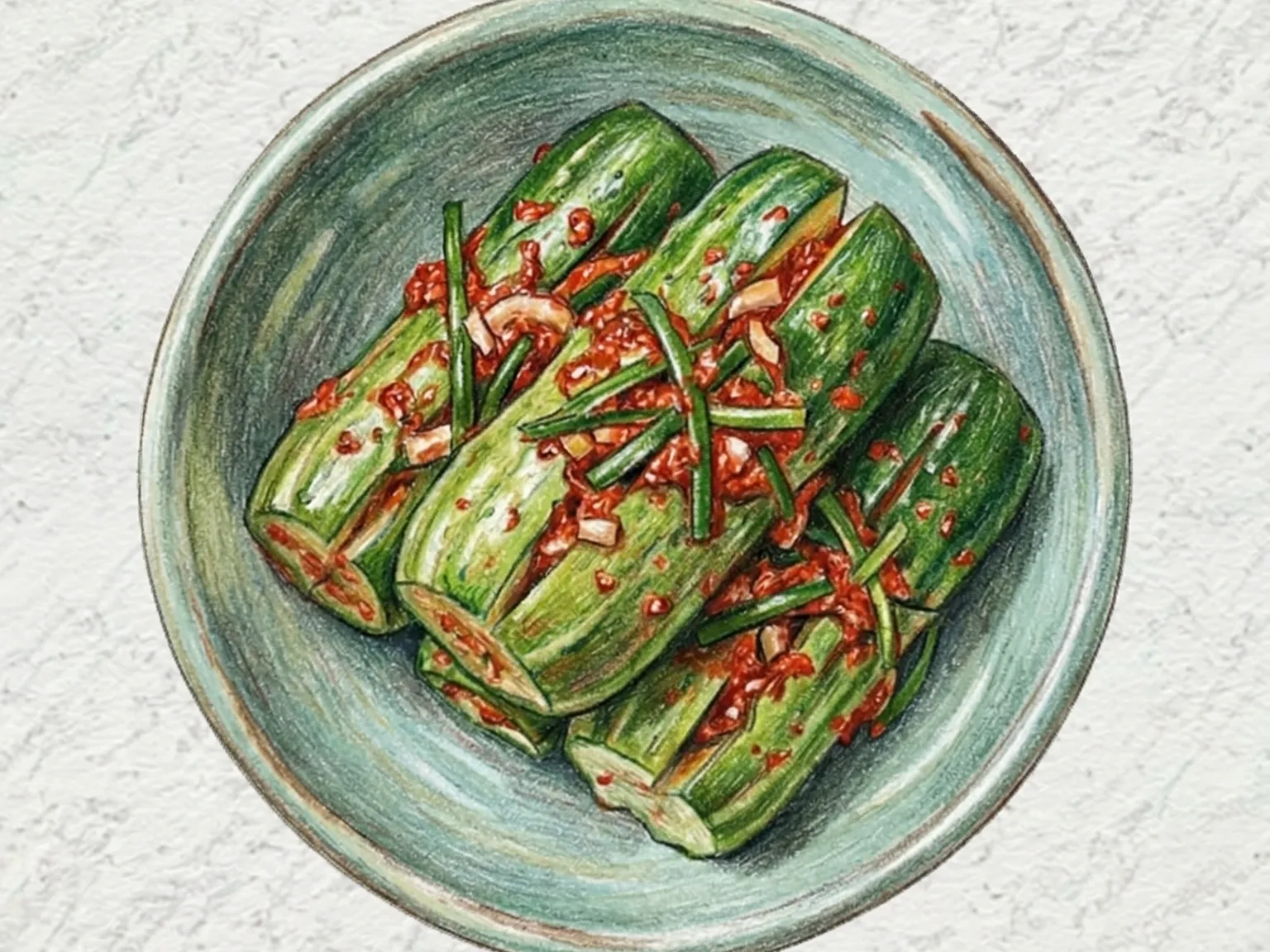
Korean Stuffed Cucumber Kimchi
Korean chives, Fish sauce
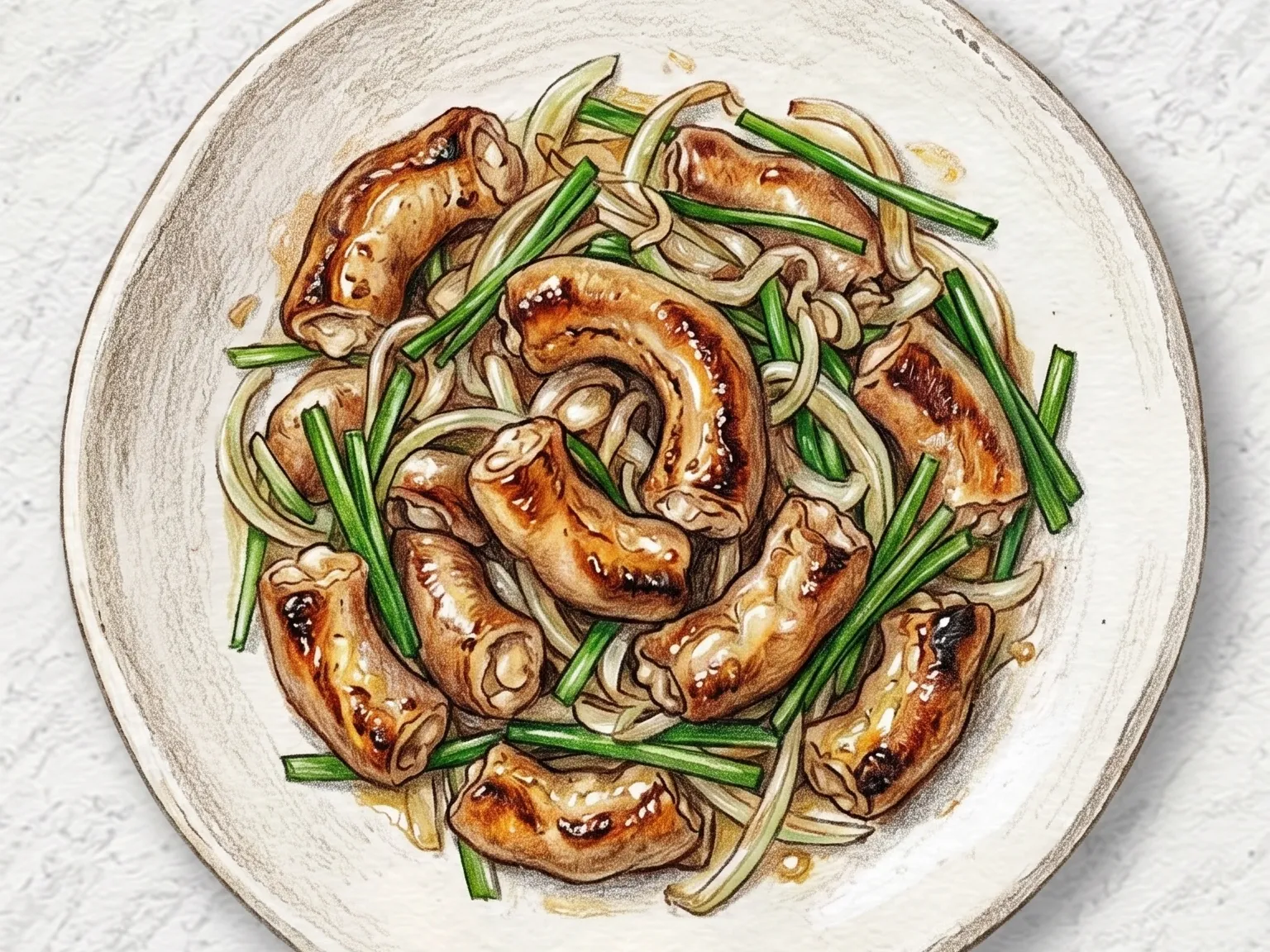
Korean Grilled Beef Daechang
Korean chives