Korean Seasoned Garlic Chives
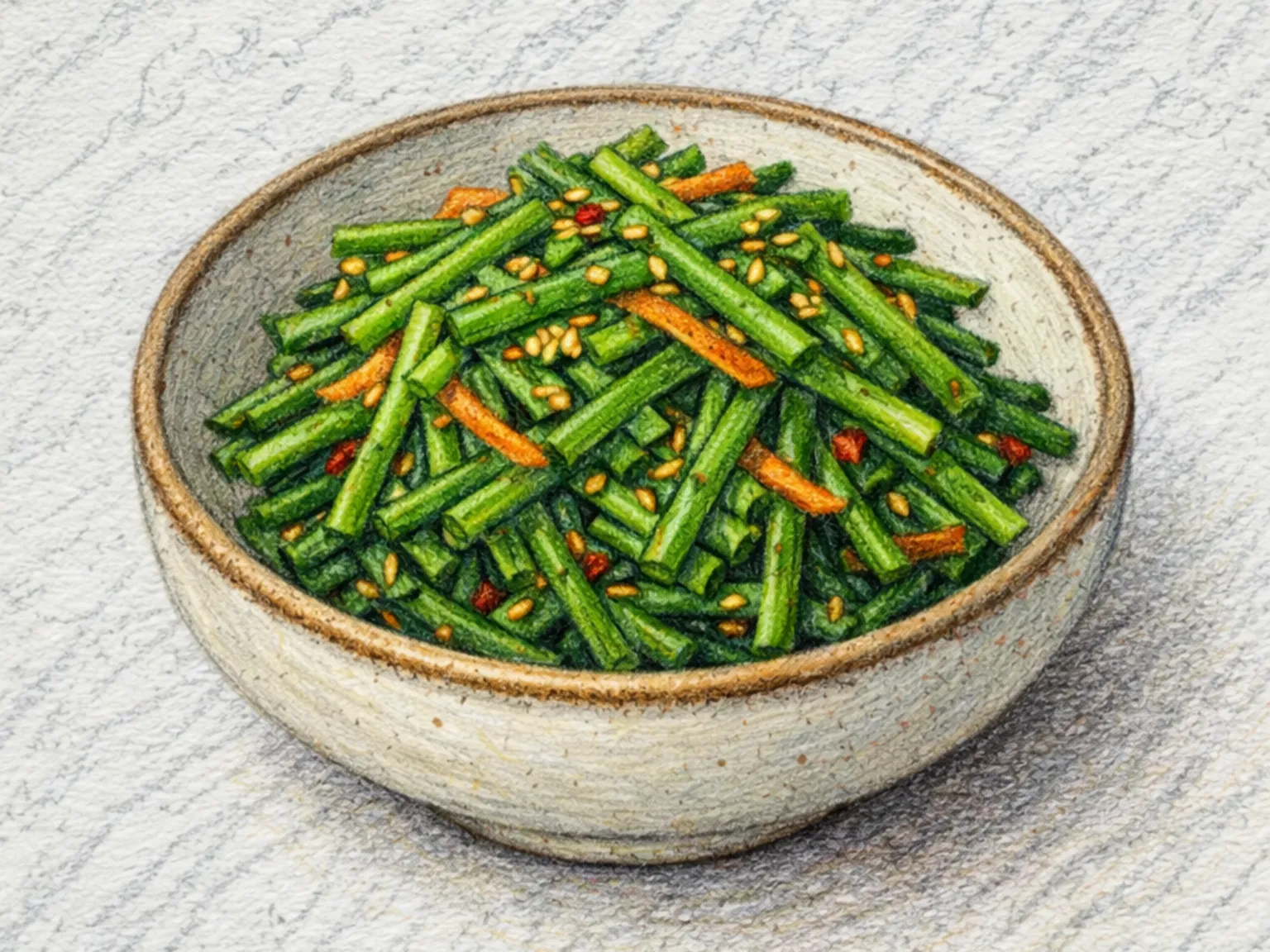
Unlike buchu kimchi, this raw chive muchim uses soy sauce and vinegar rather than fish sauce, producing a brighter, acidic result. The chives stay raw, tossed by hand under twenty seconds - longer and they bruise, releasing liquid. Gochugaru adds color and heat, while vinegar and sugar create a sweet-tart dressing contrasting with natural pungency. Must be eaten the same day before the chives wilt. A sharp, punchy side that cuts through oily main dishes.
Adjust Servings
Instructions
- 1
Cut chives into 5 cm pieces, rinse lightly, and drain.
- 2
Mix gochugaru, soy sauce, vinegar, sugar, and garlic in a bowl.
- 3
Add chives and gently toss by hand for about 20 seconds.
- 4
Add sesame oil and sesame seeds, then toss once more quickly.
- 5
Serve immediately, or rest 5 minutes for deeper flavor.
As an Amazon Associate, we may earn from qualifying purchases.
Tips
Nutrition (per serving)
More Recipes

Korean Spicy Seasoned Deodeok
Deodeok - Codonopsis lanceolata - is a mountain root used in Korean cooking and folk medicine for centuries. Its flesh is fibrous and sticky, with a ginseng-like bitterness. Peeled and pounded with a mallet to split fibers into ribbon-like shreds, then soaked in cold water to draw out bitterness. A gochujang-vinegar dressing with garlic, sugar, and gochugaru clings to each strand's rough surface. The finished dish is chewy and resinous, with a sweet-sour-spicy glaze.

Korean Seasoned Cockle Salad
Kkomak-muchim is a seasoned cockle banchan synonymous with Beolgyo in Jeollanam-do, a town known for Korea's finest cham-kkomak (true cockles) harvested from its nutrient-rich tidal flats from November through March. Cooking technique matters enormously: once the water begins to boil, stirring in one direction only ensures the shells open evenly, and the cockles must be pulled at the four-minute mark before the meat contracts and toughens. Shells are pried open immediately, the meat collected and drained. The dressing - gochugaru, soy sauce, vinegar, sugar, and garlic - adds a tangy-spicy layer over the cockle's naturally briny, springy flesh. Chopped green onion goes in for freshness, followed by sesame oil and seeds. A ten-minute rest after dressing allows the sauce to penetrate the dense cockle meat. This is one of the most sought-after seasonal banchan in Korean cuisine.

Korean Seasoned Cucumber Pickle Salad
Oiji-muchim takes oiji - cucumber that has been salt-brined for a month or longer - rinses out the excess salinity, and dresses it in a sweet-sour-spicy sauce. Oiji is a traditional Korean preserved food: summer cucumbers are submerged in a concentrated salt brine and aged until their moisture migrates out, transforming the texture from fresh and crisp into something firm, almost crunchy-chewy - a chew fundamentally different from raw cucumber. If the pickle is too salty, soaking in cold water for thirty minutes to an hour draws the brine down to a palatable level. After thorough squeezing, the cucumber pieces are tossed with gochugaru, vinegar, sugar, sesame oil, minced garlic, and scallion. Vinegar and sugar layer a bright sweet-sour dimension over the pickle's inherent saltiness, balancing it for pairing with rice. Julienned oiji absorbs more dressing and delivers a different eating experience than diagonal-cut slices - each approach has its advocates. Made during the summer cucumber glut, oiji keeps refrigerated for over a month.

Korean Seasoned Stonecrop Salad
Dollnamul - stonecrop, Sedum sarmentosum - is a succulent herb found along Korean stream banks in spring. Its plump, jade-green leaves burst with a mildly sour, grassy juice when bitten. Unlike most namul, dollnamul is never cooked - even seconds of heat destroy its crunch. Dressed immediately with gochugaru, vinegar, fish sauce, garlic, and sugar, it stays crisp and bright. The fish sauce provides a fermented undercurrent beneath the vinegar's sharpness. Must be eaten minutes after assembly.

Korean Garlic Scape Kimchi
Maneul jong kimchi is a Korean garlic scape kimchi made by lightly brining the scapes, then dressing them in a paste of gochugaru, fish sauce, and plum syrup blended with pureed onion and pear. The scapes' sharp, peppery garlic aroma survives fermentation while the stems maintain their crisp snap, delivering alternating waves of heat and umami with each bite. Pear lays a fruit sweetness into the base that buffers the chili intensity, and fish sauce adds the fermented depth expected in Korean kimchi. Trimming the woody bottoms before seasoning improves the texture, and the flavor settles into balance after about two days of fermentation.

Korean Spicy Braised Tofu
Spicy dubu-jorim pan-sears firm tofu slabs cut 1.5 centimeters thick until golden on both sides, then braises them in a sauce of soy sauce, gochugaru, garlic, and sugar. Searing first firms the tofu so it holds its shape through the eight-minute simmer, during which onion and green onion cook alongside in the reducing liquid. The chili flakes deliver a direct, persistent heat that penetrates the tofu as the sauce thickens, balanced by the sugar's sweetness. A final circle of sesame oil ties the flavors together with a roasted, nutty aroma.