Korean Stir-fried Chives and Shrimp

Korean Stir-fried Chives and Shrimp

Quick answer

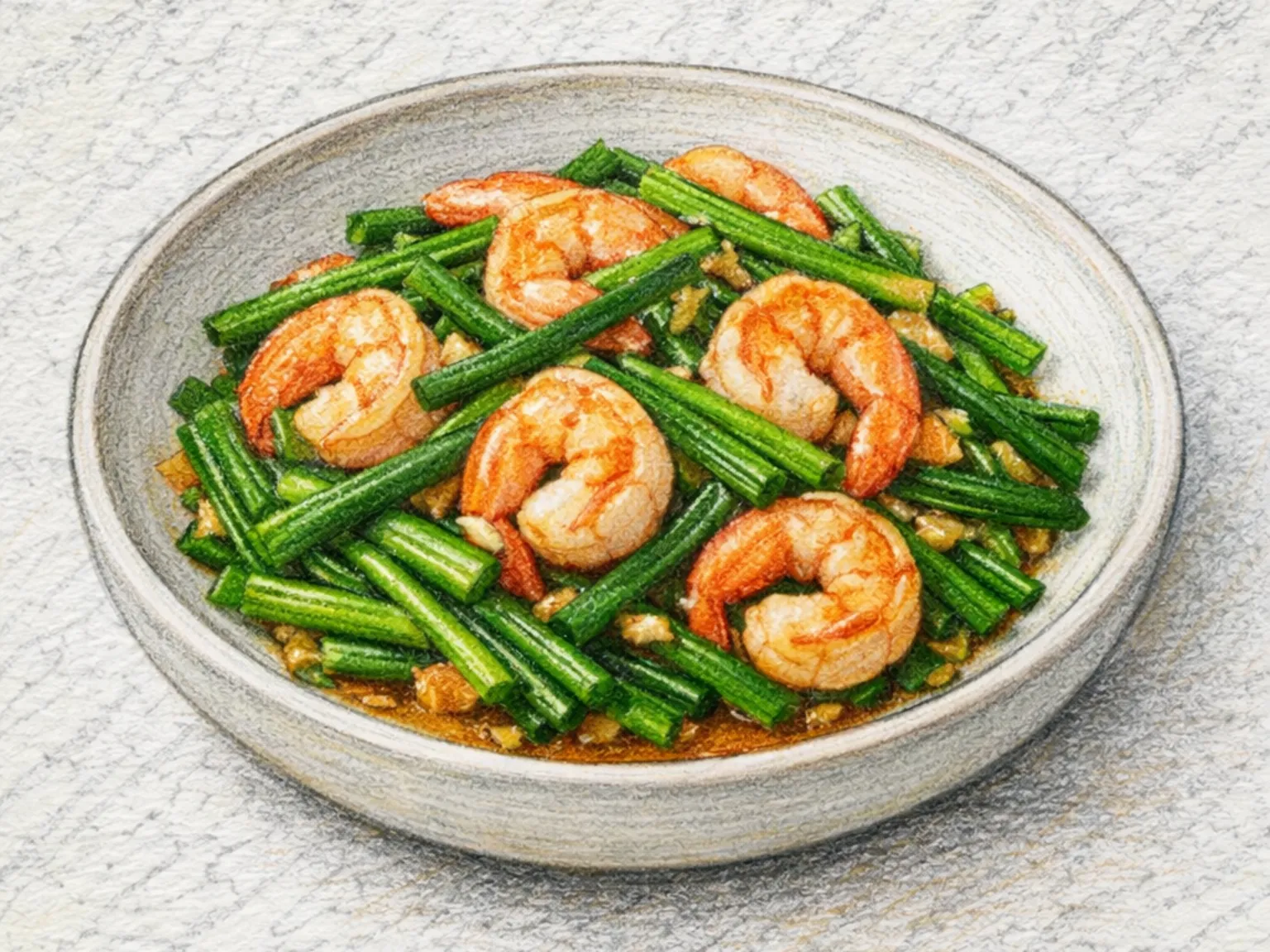
Deveined shrimp are dried thoroughly and seared over high heat until their shells turn pink, then tossed briefly with garlic chives for a stir-fry that takes under ten mi...

What makes this special

  • Dry-seared shrimp develop a browned surface before a quick toss with fresh garlic chives.
  • Completely dry shrimp sizzle immediately on contact, browning the surface
  • Sliced garlic infused in oil first creates an aromatic base for shrimp and chives
Total time
20 min
Level
Easy
Servings
2 servings
Ingredients
7
Calories
220 kcal
Protein
26 g

Key ingredients

shrimpgarlic chivesgarlic clovessoy sauceoyster sauce

Core cooking flow

  1. 1 Devein 220 g of shrimp, then press kitchen towels over the surface and between the curves until fully dry.
  2. 2 Cut 120 g of garlic chives into 5 cm lengths, separating the firmer pale stems from the green leaves.
  3. 3 Heat the pan over high heat until the oil will spread easily, then add 1 tab...

Deveined shrimp are dried thoroughly and seared over high heat until their shells turn pink, then tossed briefly with garlic chives for a stir-fry that takes under ten minutes from cutting board to plate. Removing every trace of surface moisture before the shrimp hit the pan is the single most important step; residual water generates steam and turns the sear into a braise, leaving the shrimp pale and soft instead of lightly caramelized. Sliced garlic goes into the oil first to build an aromatic base that clings to every ingredient. One tablespoon of soy sauce paired with a teaspoon of oyster sauce amplifies the natural seafood umami without tipping the dish into excessive saltiness, and black pepper sharpens the finish. The chives must go in last and cook for no more than sixty seconds; any longer and they lose their vivid color and turn stringy. At 220 calories with 26 grams of protein per serving, this dish fills the role of a satisfying yet light side that pairs well with steamed rice or slides neatly into a packed lunch.

Prep 12min Cook 8min 2 servings
Recipes by ingredient → shrimp garlic soy sauce

Instructions

Read the steps as a cooking flow: prep, heat, seasoning, doneness control, and finish.

6 steps
  1. 1
    Step

    Devein 220 g of shrimp, then press kitchen towels over the surface and between the curves until fully dry.

    If the shrimp still feel damp, pat them again so they can sear instead of steam.

  2. 2
    Prep

    Cut 120 g of garlic chives into 5 cm lengths, separating the firmer pale stems from the green leaves.

    Slice 4 garlic cloves thinly and keep them ready, because they will brown quickly once they hit hot oil.

  3. 3
    Control

    Heat the pan over high heat until the oil will spread easily, then add 1 tablespoon of cooking oil and the sliced garlic.

    Stir for about 20 seconds, stopping when the garlic edges turn lightly golden, not brown.

  4. 4
    Step

    Add the shrimp in a single layer as much as possible and keep the heat high for 1 minute 30 seconds.

    Stir just enough to coat them in garlic oil, and move on when they turn pink and begin curling into a C shape.

  5. 5
    Season

    Add the pale chive stems first with 1 tablespoon of soy sauce and 1 teaspoon of oyster sauce, then toss quickly.

    Keep the ingredients moving so the sauce coats the shrimp without scorching on the hot pan bottom.

  6. 6
    Finish

    Add the green chive leaves and 1/4 teaspoon black pepper, then finish within 1 minute.

    Turn off the heat as soon as the chives look vivid and just wilted, and serve immediately so they stay fragrant and tender.

After the steps

Pick a recipe that fits this dish.

Continue with shared ingredients, meal pairings, or a similar method.

Recipes That Go Well With This

More Stir-fry →

Based on shared ingredients and meal pairing

Korean Garlic Chive & Clam Stir-fry
Shared ingredient: garlic chives Stir-fry

Korean Garlic Chive & Clam Stir-fry

Clams purged in salt water are steamed with rice wine until their shells open, then stir-fried with garlic chives, soy sauce, and oyster sauce. Rice wine strips away briny off-notes while amplifying the clean oceanic umami, and the liquid the clams release as they open provides a built-in sauce that needs no extra seasoning. Garlic chives go in during the last 40 seconds only; longer exposure to heat wilts them into a stringy mass and disperses their aroma. Sliced red chili contributes more visual contrast than actual heat, and a final drizzle of sesame oil rounds out the overall character. Any clam that fails to open after steaming should be discarded. The dish suits both a drinking table alongside soju and a dinner spread as a protein-rich rice side.

Korean Garlic Scape Clam Stir-fry
Shared ingredient: oyster sauce Stir-fry

Korean Garlic Scape Clam Stir-fry

Maneuljjong-jogae-bokkeum is a Korean stir-fry of clam meat and garlic scapes tossed quickly over high heat with soy sauce, oyster sauce, and minced garlic. The clams contribute a briny, oceanic depth that merges with the salty-sweet seasoning, while the garlic scapes, cut into 4 cm pieces and barely cooked, retain their firm, snappy crunch. Diagonally sliced red chili added partway through builds a gentle warmth without overwhelming the seafood flavor. Since clams toughen with prolonged heat, they go in last and cook for no more than 30 to 60 seconds. Finishing with a few drops of sesame oil rounds out the dish with a nutty fragrance, and a scattering of shredded green onion adds freshness to each serving.

Korean Kimchi Fried Rice (Kimchi Bokkeumbap)
Serve together Rice

Korean Kimchi Fried Rice (Kimchi Bokkeumbap)

Finely chopped aged kimchi is stir-fried together with ground pork until the fermentation tang of the kimchi and the fat rendered from the pork combine into a deep, layered umami base. Kimchi juice is added to the pan along with gochujang and a measured touch of sugar, glazing the rice in a spicy-sweet coating. High heat throughout the stir-fry is what keeps each grain separate and lightly crisp rather than soft and clumped; the pan also needs to be fully heated before the ingredients go in, or the rice will stick. A soft-fried egg placed on top lets the runny yolk temper the heat when it is broken and mixed in, and using well-fermented, deeply soured kimchi noticeably shifts the depth of the flavor. Adding spam or canned tuna are equally common household variations, and the dish adapts readily to whatever is available. A drizzle of sesame oil just before serving lifts a toasty, nutty fragrance over the finished bowl.

Korean Napa Cabbage Shrimp Stir-fry
Similar recipe Stir-fry

Korean Napa Cabbage Shrimp Stir-fry

Baechu saeu bokkeum is a Korean stir-fry of napa cabbage and medium shrimp seasoned with soy sauce and fish sauce. The shrimp are deveined and scored along the back so they curl attractively and absorb seasoning more readily. They go into a hot oiled pan first for thirty seconds to sear the surface, then are removed while the cabbage stems are stir-fried until slightly wilted. Soy sauce, fish sauce, and minced garlic are added along with the cabbage leaves, and the shrimp return to the pan for a final thirty-second toss so everything seasons evenly. Sliced cheongyang chili and scallion go in last for a hit of heat and freshness. The entire stir-fry stays under three to four minutes of active cooking, which preserves the crunch of the cabbage stems and the firm bite of the shrimp. The combination of soy sauce and fish sauce provides a layered saltiness that brings out the natural sweetness of both the cabbage and the shrimp.

Serve with this

Korean Seasoned Glasswort Salad
Side dishes Easy

Korean Seasoned Glasswort Salad

Sebalnamul-muchim features 220 grams of glasswort, a succulent coastal plant that carries a natural salinity from the tidal flats where it grows. A 10-second blanch in boiling water is enough to barely soften the thin stems while preserving their distinctive pop when bitten. The dressing of gochugaru, vinegar, plum extract, and sesame oil coats the tender shoots without masking their inherent briny flavor. Thinly sliced onion adds a sweet crunch, and the plum extract mellows the vinegar's sharpness into a rounded tartness. Because no additional salt is needed, the final seasoning relies entirely on the balance between acid, sweetness, and the glasswort's own minerality.

🥗 Light & Healthy 🏠 Everyday
Prep 8min Cook 1min 4 servings
Korean Kimchi Mandu Jjigae (Kimchi Dumpling Stew)
Stews Easy

Korean Kimchi Mandu Jjigae (Kimchi Dumpling Stew)

Kimchi mandu jjigae drops whole frozen kimchi dumplings straight into a simmering pot of aged kimchi, tofu, and anchovy stock. The dumpling wrappers absorb the broth as they cook, swelling plump and moist, while the kimchi filling inside echoes the stew's tangy base and doubles the fermented depth. Gochugaru and soup soy sauce add a clean chili heat, and firm tofu cubes absorb the spiced broth for a softer textural contrast. Because the dumplings themselves carry seasoning, it is better to start with less sauce and adjust after tasting the broth. This is a filling, no-fuss meal that needs nothing more than a bowl of steamed rice alongside it.

🏠 Everyday ⚡ Quick
Prep 8min Cook 15min 2 servings
Korean Soft Tofu Soup (Mild Clear Broth with Silken Tofu)
Soups Easy

Korean Soft Tofu Soup (Mild Clear Broth with Silken Tofu)

Sundubu-guk is the gentler sibling of the more widely known sundubu-jjigae, trading the latter's fiery red broth for a clear, mild soup that puts silken tofu front and center. The base is a simple anchovy and kelp stock, seasoned with soup soy sauce and nothing more assertive, so the broth stays transparent and clean on the palate. Blocks of unpressed soft tofu are slipped into the simmering liquid and heated just until they are warmed through - overcooked sundubu loses the trembling, custard-like texture that defines the dish. Each spoonful collapses gently on the tongue, releasing a faint, sweet soybean flavor that pairs effortlessly with the umami-rich stock. A small addition of salted shrimp paste can be stirred in at the table to introduce a subtle marine depth without disrupting the soup's calm character. This is the soup Koreans turn to when appetite is low, digestion needs rest, or the body simply craves something warm and uncomplicated. It is equally suitable for young children and elderly diners, and its quiet simplicity is precisely its strength.

🏠 Everyday ⚡ Quick
Prep 5min Cook 15min 4 servings

Similar recipes

Korean Garlic Scape Bacon Stir-fry
Stir-fry Easy

Korean Garlic Scape Bacon Stir-fry

Maneuljjong bacon bokkeum is a side dish built around rendered bacon fat. Bacon goes into the pan first over low heat until the white fat turns translucent and releases its fragrant, smoky oil, and that rendered fat then becomes the cooking medium for the garlic scapes and onion that follow. No additional cooking oil is needed, and the depth of flavor that results from this single step makes the dish taste far more complex than its short ingredient list suggests. Garlic scapes bring a sharp, grassy bite and a satisfying crunch that disappears quickly if they sit on the heat too long, so the pan temperature is turned up at the end for a fast, high-heat finish. Soy sauce sets the salty foundation, and a drizzle of oligosaccharide syrup coats every piece in a thin, glossy lacquer that softens the salt with restrained sweetness. Because bacon is already heavily seasoned, the soy sauce should be added gradually and tasted as you go rather than measured out in advance. A scatter of toasted sesame seeds over the finished dish adds one more layer of nutty fragrance.

🏠 Everyday 🍱 Lunchbox
Prep 8min Cook 9min 2 servings
Korean Stir-fried Dried Shrimp
Side dishes Easy

Korean Stir-fried Dried Shrimp

Geon-saeu-bokkeum transforms a handful of dried shrimp, a Korean pantry staple, into a quick, crunchy banchan that earns its reputation as a rice thief. The shrimp are dry-toasted in a pan first to drive off residual moisture, intensifying their briny aroma and building the foundation for a crisp final texture. Soy sauce, rice syrup or oligosaccharide, and garlic are added and reduced over low heat until the shrimp are wrapped in a thin, glossy sweet-salty glaze. The timing matters: the moment the syrup bubbles once, the heat must drop immediately, because leaving it even slightly too long hardens the coating into a tooth-testing shell rather than a pliable lacquer. A finish of sesame oil and whole sesame seeds adds a nutty warmth that rounds out this compact side dish. Finely sliced Cheongyang chili mixed in during the last minute produces a spicier variation, and a small handful of almonds or peanuts stirred in enriches the chew. The finished banchan keeps well in a sealed container at room temperature for several days, making it as practical as it is flavorful.

🏠 Everyday 🍱 Lunchbox
Prep 5min Cook 8min 4 servings
Korean Stir-fried Potato and Shrimp
Side dishes Medium

Korean Stir-fried Potato and Shrimp

Gamja-saeu-bokkeum pairs julienned potatoes with shell-on medium shrimp in a clean, garlic-forward stir-fry. The potatoes are soaked in cold water first to remove surface starch, as skipping this step leads to clumping in the pan and a starchy, heavy texture. Garlic sizzles in oil to build an aromatic base before the shrimp go in, cooking until half-done so their natural sweetness transfers to the potato strips when the two are combined. Seasoned with nothing more than salt, pepper, and a finish of sesame oil, this banchan lets the contrast between the potato's floury bite and the shrimp's springy snap carry the dish. Thin slices of Cheongyang chili pepper can be added for a clean, sharp heat that makes the stir-fry even more compatible as a rice side dish. The combination of orange shrimp, pale yellow potato, and green chili also gives the finished plate a natural visual balance.

🏠 Everyday 🍱 Lunchbox
Prep 15min Cook 10min 4 servings

Tips

Cook chives briefly to keep their color and aroma.
Dry shrimp well to avoid watery stir-fry.

Nutrition (per serving)

Calories
220
kcal
Protein
26
g
Carbs
6
g
Fat
10
g