Korean Army Stew (Spam & Ramen Spicy Fusion Pot)
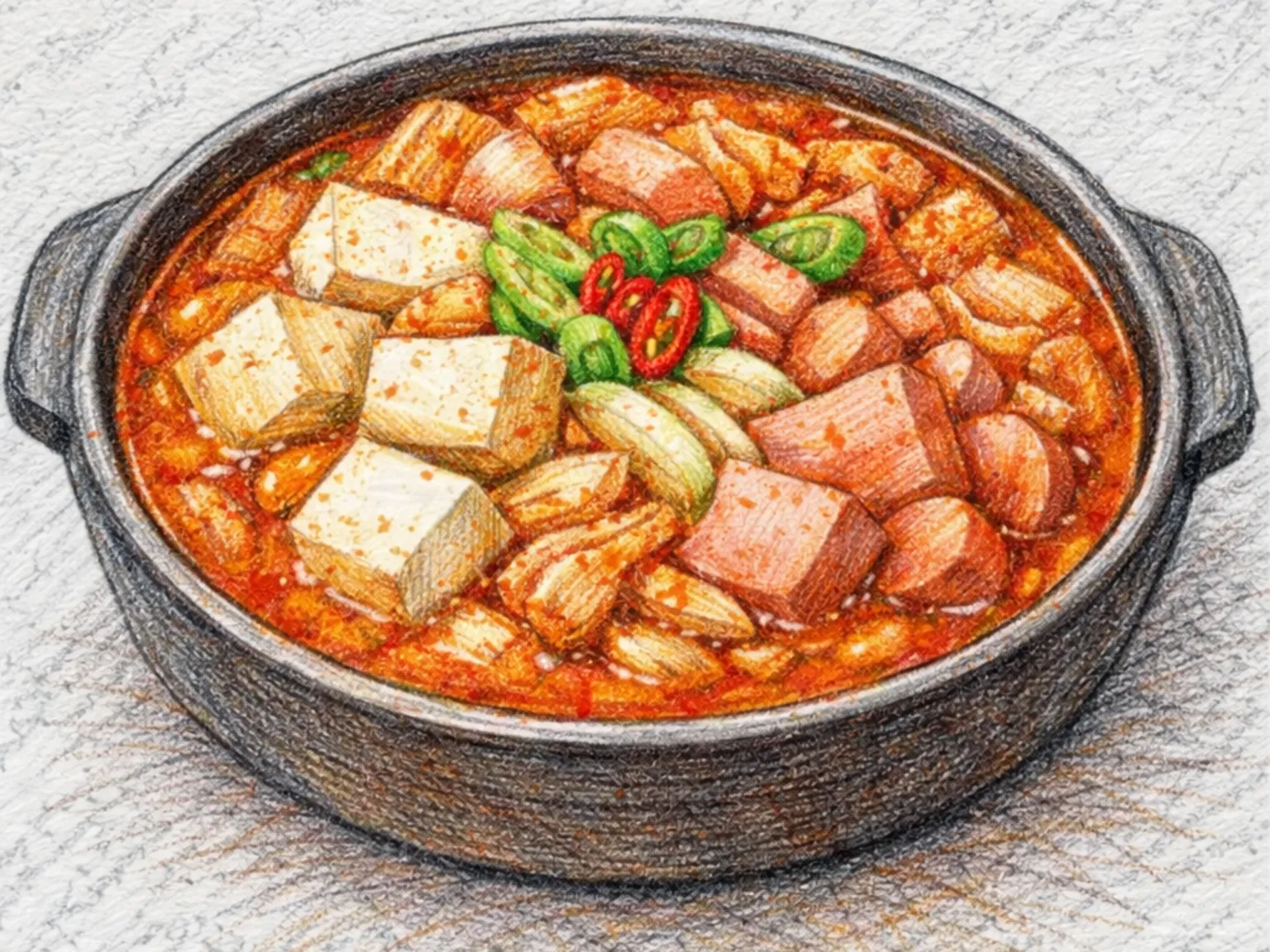
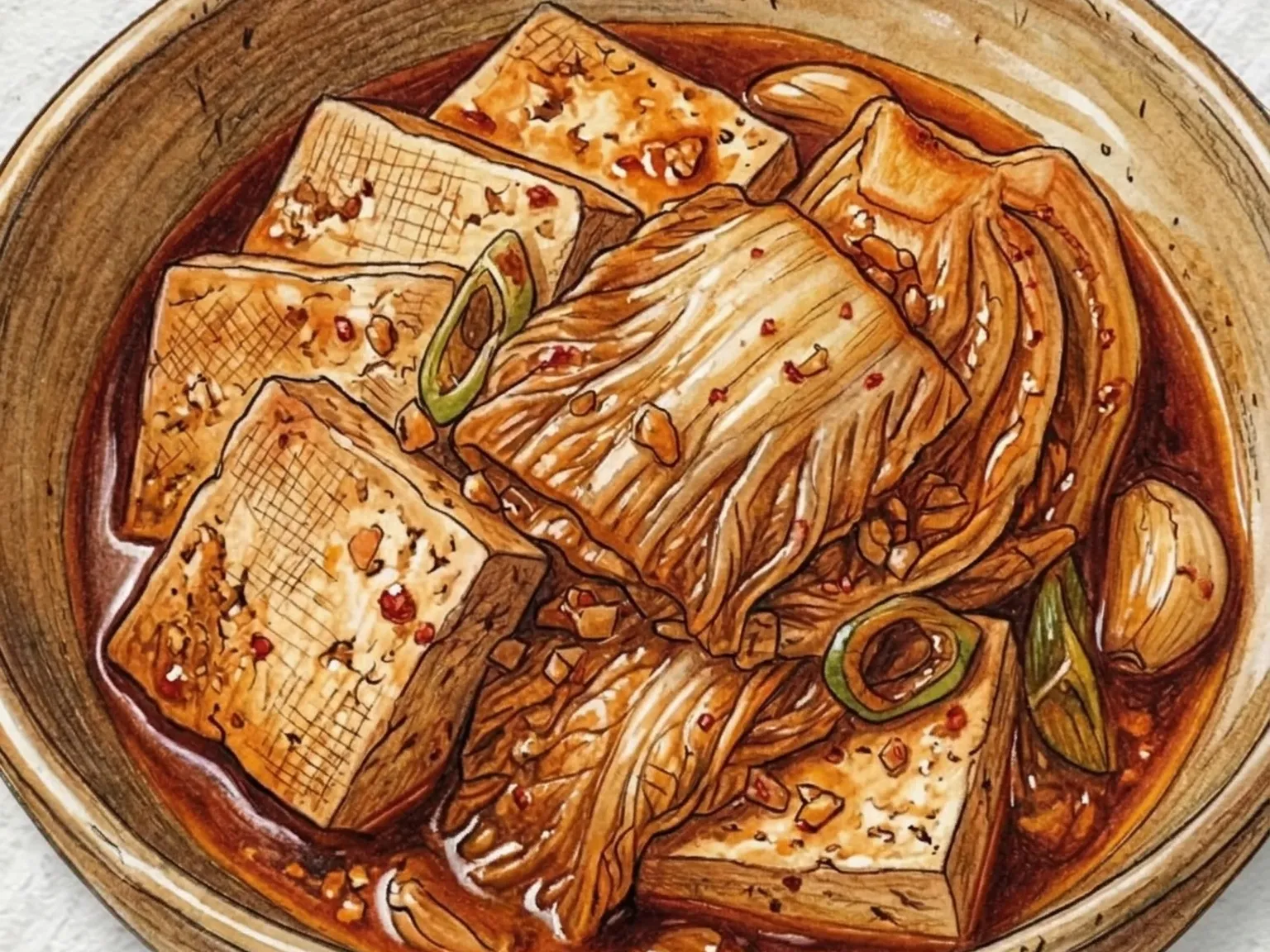
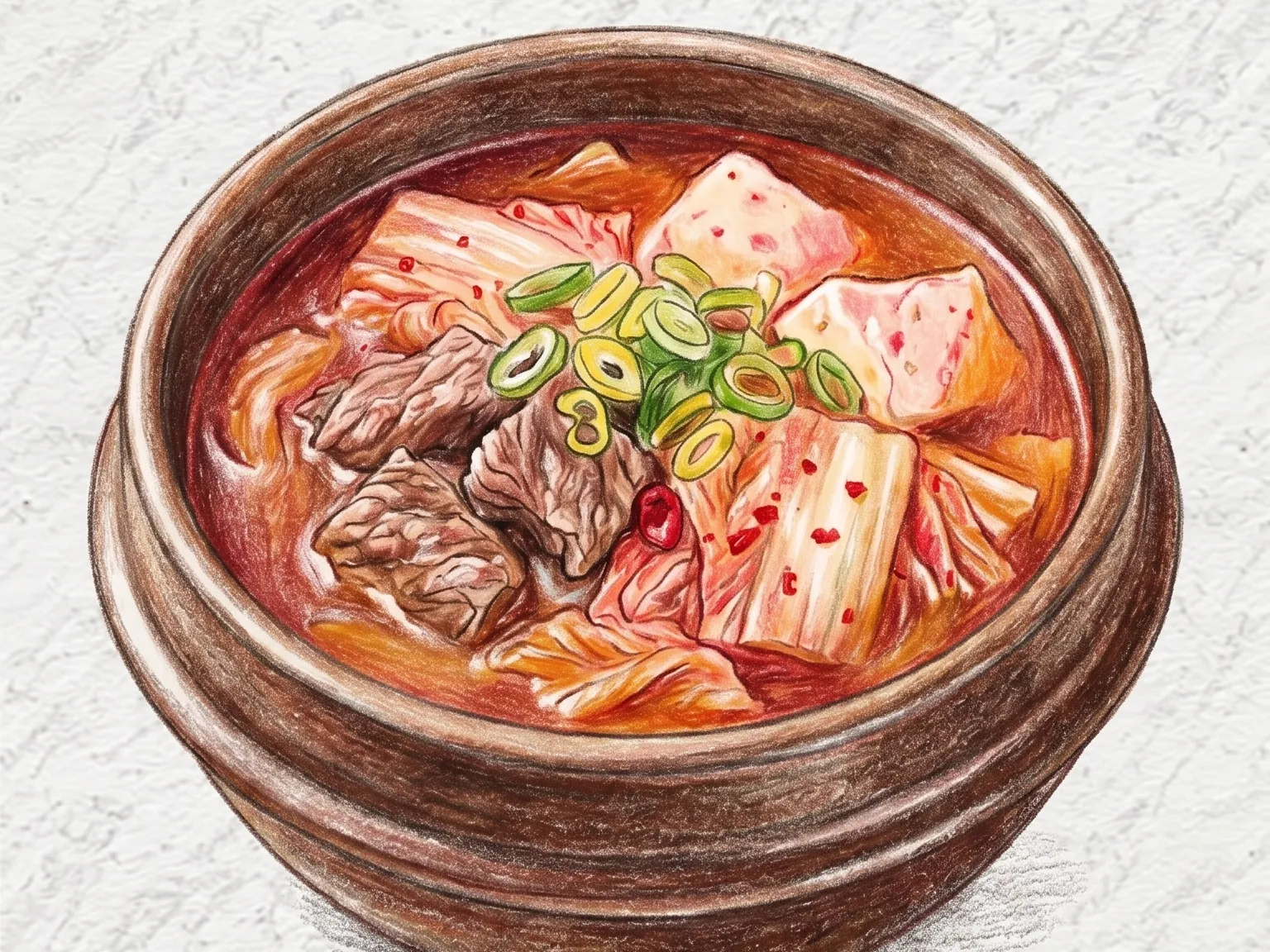
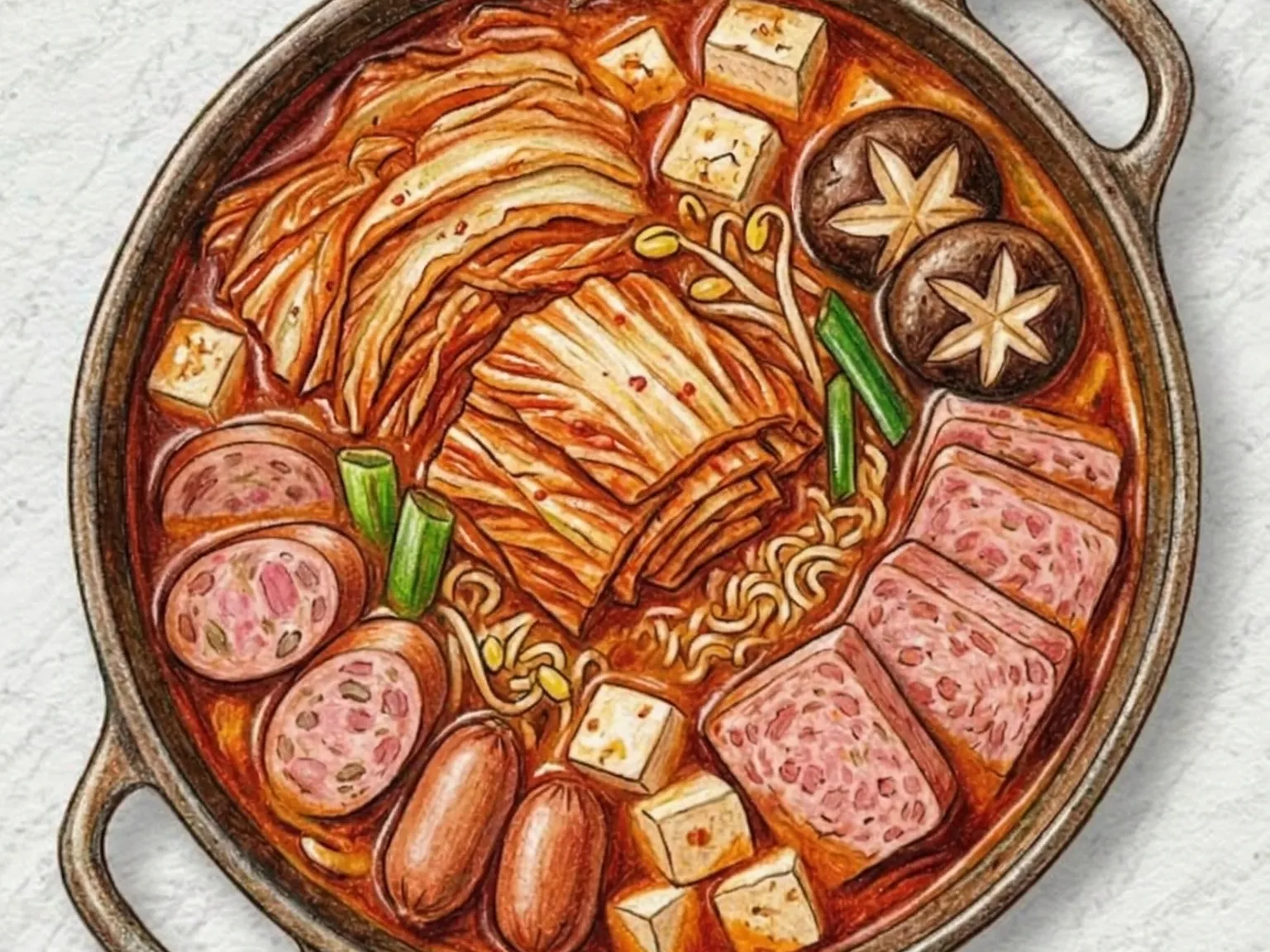
Budae jjigae piles Spam, sausages, instant ramen noodles, rice cakes, tofu, and kimchi into a single pot of spicy gochugaru-and-gochujang broth. Born near U.S. military bases in Uijeongbu after the Korean War, it blends Korean and American pantry staples into a bold, communal stew. Each ingredient contributes a different texture - from the chewy rice cakes to the springy noodles - all unified by the fiery, deeply seasoned stock.
Adjust Servings
Instructions
- 1
Slice 200g spam and 4 sausages 0.5cm thick. Cut tofu into bite-size pieces.
- 2
Arrange kimchi, spam, sausage, tofu, and rice cakes neatly in rows in a wide pot.
- 3
Mix 2 tbsp gochugaru, 1 tbsp gochujang, 1 tbsp soy sauce, and 1 tbsp garlic for the seasoning.
- 4
Place seasoning in the center, pour 1L water, and bring to a boil on high heat.
- 5
Once boiling, dissolve seasoning into broth and simmer on medium heat for 10 minutes.
- 6
Add instant noodles, cook 3 more minutes, then top with green onion to finish.
As an Amazon Associate, we may earn from qualifying purchases.
Tips
Nutrition (per serving)
Variations
Seoul-Style Army Stew
Seoul-style army stew balances ham and vegetables for a savory yet clean profile. It becomes even better with ramen noodles in the rich broth.
Ham-Packed Budae Jjigae
This ham-heavy budae jjigae leans into a salty, rich flavor profile. It becomes extra satisfying when simmered with ramen noodles.
More Recipes

Korean Ham-Packed Budae Jjigae
This generously loaded budae jjigae features thick slices of Spam and Vienna sausages as its protein base, simmered alongside well-fermented kimchi in a large pot of stock. Gochujang and Korean chili flakes build a layered heat, while the kimchi's sourness cuts through the saltiness of the processed meats. Adding a bundle of ramen noodles toward the end lets them soak up the deeply flavored broth. With 900ml of stock, this is a communal dish meant to be shared around the table.

Korean Uijeongbu-Style Budae Jjigae
Uijeongbu-style army stew combines luncheon meat, cocktail sausages, well-fermented kimchi, and baked beans in a spicy anchovy-stock broth. Gochujang and Korean chili flakes build the fiery red base, while tofu and onion mellow out the flavors. A block of instant noodles goes in at the end to soak up the broth. Originating from the area near a former US military base, this communal hot-pot dish is designed to be shared straight from the bubbling pot.

Korean Seoul-Style Army Stew
Seoul-style budae jjigae uses a rich anchovy stock base, setting it apart from versions that rely on plain water. Spam, mini sausages, baked beans, and kimchi simmer in the stock with gochujang and chili flakes, while the baked beans lend a subtle sweetness and creamy body to the broth. A block of instant ramen noodles goes in at the end to soak up the spicy, umami-rich soup.

Korean Tomato Beef Rib Stew
This fusion-style stew pairs beef short ribs with ripe tomatoes in a broth seasoned with gochujang and gochugaru. The ribs are simmered until the broth is deeply infused with beefy richness, and the tomatoes break down to add natural acidity and sweetness. Potato chunks cook until fluffy, lending substance, while onion rounds out the broth's sweetness. The combination of soy sauce and chili paste with tomato's brightness creates a flavor that feels both novel and familiar.

Soybean Paste Stew with Clams
Korea's most comforting one-pot stew -- briny clams pop open in a bubbling doenjang broth, releasing their salty liquor into fermented soybean paste for a flavor no other stew can match. Manila clams are purged of sand, then added to a pot of doenjang-laced broth where they pop open and surrender their salty liquor into the soup, transforming the base from merely savory to sea-tinged and complex. Zucchini softens in the bubbling liquid and contributes a natural sweetness, while blocks of tofu act as sponges, soaking up the broth and bursting with hot, flavorful liquid when bitten. Sliced cheongyang chili peppers are stirred in to cut through the heaviness of the fermented paste and lift the overall flavor. The stew is served bubbling in an earthenware pot alongside rice - many Koreans spoon the broth directly over their bowl - and adapts to any season: light with summer vegetables from the refrigerator, or piping hot in a stone pot during winter.

Dried Persimmon Ricotta Nut Salad
Dried persimmon ricotta nut salad arranges chewy sliced gotgam and soft ricotta cheese over arugula and chicory greens, topped with toasted walnuts and pine nuts and dressed with balsamic vinegar and olive oil. Slicing the persimmon into 0.7 cm rounds exposes the dense, sticky interior, creating a textural contrast against the creamy, mild ricotta. Toasting the nuts in a dry pan over low heat for two to three minutes draws their oils to the surface and deepens the nutty fragrance noticeably. When the persimmon is especially sweet, an extra half-teaspoon of balsamic vinegar brings the acid needed to restore balance. Ricotta releases moisture quickly on contact with dressed greens, so it should be added only at the moment of serving.