Korean Braised Dried Pollack
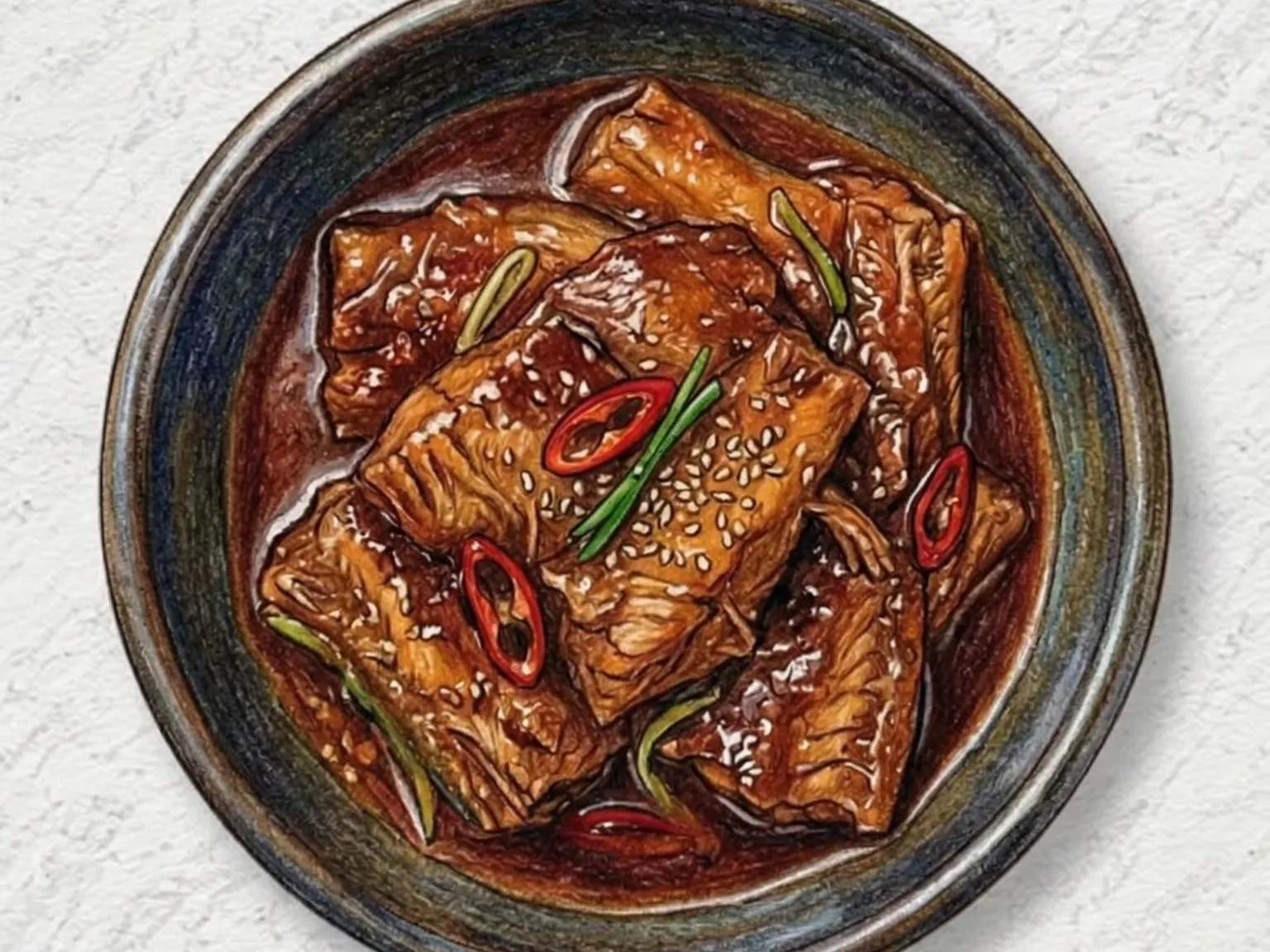
Dried pollack - bugeo - is traditionally hung on racks in Gangwon-do's frigid mountain air through freeze-thaw cycles. The strips rehydrate in cold water, then braise in soy sauce, gochujang, sugar, and garlic. As liquid reduces, the pollack absorbs the sweet-salty-spicy sauce, becoming deeply stained with a spongy texture that holds moisture. Finished with sesame oil, bugeo jorim tastes better after a day and keeps nearly a week - a classic fridge banchan.
Adjust Servings
Instructions
- 1
Soak dried pollack in cold water 20 minutes, then squeeze dry.
- 2
Mix soy sauce, gochujang, sugar, syrup, and garlic for the glaze.
- 3
Place pollack in pan, add glaze, and braise over medium heat.
- 4
When liquid is nearly gone, finish with sesame oil and sesame seeds.
As an Amazon Associate, we may earn from qualifying purchases.
Tips
Nutrition (per serving)
More Recipes

Korean Braised Lotus Root
Lotus root rounds are simmered in soy sauce, sugar, and corn syrup until each slice glistens with a translucent, caramel-colored glaze. Cooking activates the starch in the lotus root, turning the exterior smooth and the interior pleasantly sticky, a texture unique to this root vegetable. As the soy sauce permeates the flesh, the ivory color deepens into a clear amber that signals the seasoning has reached the center. A splash of vinegar at the start prevents discoloration and introduces a faint tartness that prevents the sweetness from becoming cloying. The corn syrup reduces over low heat for fifteen to twenty minutes, forming a glass-like coating that catches the light on every surface. Because the liquid seeps through the root's hollow channels, every bite delivers consistent flavor regardless of angle. The finished jorim retains its crunch at the core while the outer layer yields with a gentle chew, and refrigerated in a sealed container the dish stays good for well over a week.

Korean Braised Potatoes (Soy-Glazed Braised Potato Banchan)
Gamja-jorim - soy-braised potatoes - is among the top five most frequently made banchan in Korean households, alongside kimchi, kongnamul, and gyeran-mari. Small potatoes are parboiled whole until just fork-tender, then transferred to a mixture of soy sauce, sugar, rice syrup, garlic, and water. The braising happens over medium-low heat for fifteen minutes with the lid off, allowing the sauce to reduce gradually into a thick, syrupy glaze. Constant gentle stirring prevents the soft potatoes from sticking or breaking apart. As the liquid evaporates, each potato develops a dark amber, lacquered surface while the interior remains starchy and yielding. The taste is straightforwardly sweet-salty with a garlic undertone - comfort food in its most elemental form. Korean mothers often make a large batch on weekends, refrigerating it to serve cold throughout the week. The dish improves overnight as the glaze continues to penetrate the potato's interior.

Korean Braised Anchovy Side Dish
Myeolchi-jorim simmers tiny dried anchovies in soy sauce, rice syrup, and garlic into a moist, glazed banchan that contrasts fundamentally with stir-fried anchovy preparations. Where bokkeum chases crispness, jorim aims for softness - the anchovies absorb the braising liquid over a sustained simmer, becoming pliant and saturated with sweet-salty flavor throughout their interior. A one-minute dry toast removes any fishiness before soy sauce, syrup, minced garlic, and water go into the pan, simmering uncovered on low heat for ten minutes. As the liquid reduces, a sticky, dark glaze wraps around each anchovy; unlike the bokkeum, pressing one between your teeth releases a rush of seasoned juice from within. Sesame seeds and sesame oil stirred in off-heat add a final layer of nuttiness. Once fully cooled, the reduced sauce thickens further into an almost jelly-like coating that holds the anchovies together. Refrigerated in an airtight container, myeolchi-jorim keeps for over a week.

Korean Braised Tofu in Spicy Sauce
Dubu-jorim is arguably the single most frequently made tofu dish in Korean home kitchens. The technique is straightforward but the sequence matters: tofu must be fried first to build a crust that holds its shape during braising, then simmered in a sauce that penetrates through that crust into the soft interior. The braising liquid - soy sauce, gochugaru, garlic, sugar, and water - reduces around the tofu slabs for eight to ten minutes, concentrating into a thick, spicy-sweet glaze. The finished tofu has three distinct zones: a dark, slightly chewy exterior where sauce has caramelized, a transitional layer where seasoning has seeped in, and a pristine white center that provides a bland, creamy contrast. Korean home cooks often make a double batch on Sunday, refrigerating half for weekday lunches. The dish dates back to Buddhist temple cooking traditions where tofu was the primary protein.

Korean Soy-Braised Deodeok Root
Deodeok-jorim is mountain root braised in soy sauce, rice syrup, garlic, and sesame oil. The root's distinctive bitter-herbal aroma softens as the sweet-salty glaze coats it during simmering, while the interior stays dense and slightly chewy. A single green chili adds a quiet heat at the finish, and sesame seeds scattered on top bring a toasted nuttiness. It is a banchan that preserves the wild, earthy character of foraged deodeok and pairs naturally with other vegetable side dishes on a Korean table.

Korean Soy Braised Eggplant
Gaji-jorim is a Korean braised eggplant dish simmered in soy sauce until the flesh is thoroughly tender and saturated with seasoning. The sweet-salty sauce permeates evenly through the eggplant as it cooks down. A finishing drizzle of sesame oil and a sprinkle of sesame seeds add a nutty aroma to each serving. Despite using only eggplant as the main ingredient, the slow braising concentrates the flavors into a compelling rice accompaniment.