Korean Beef and Octopus Hot Pot
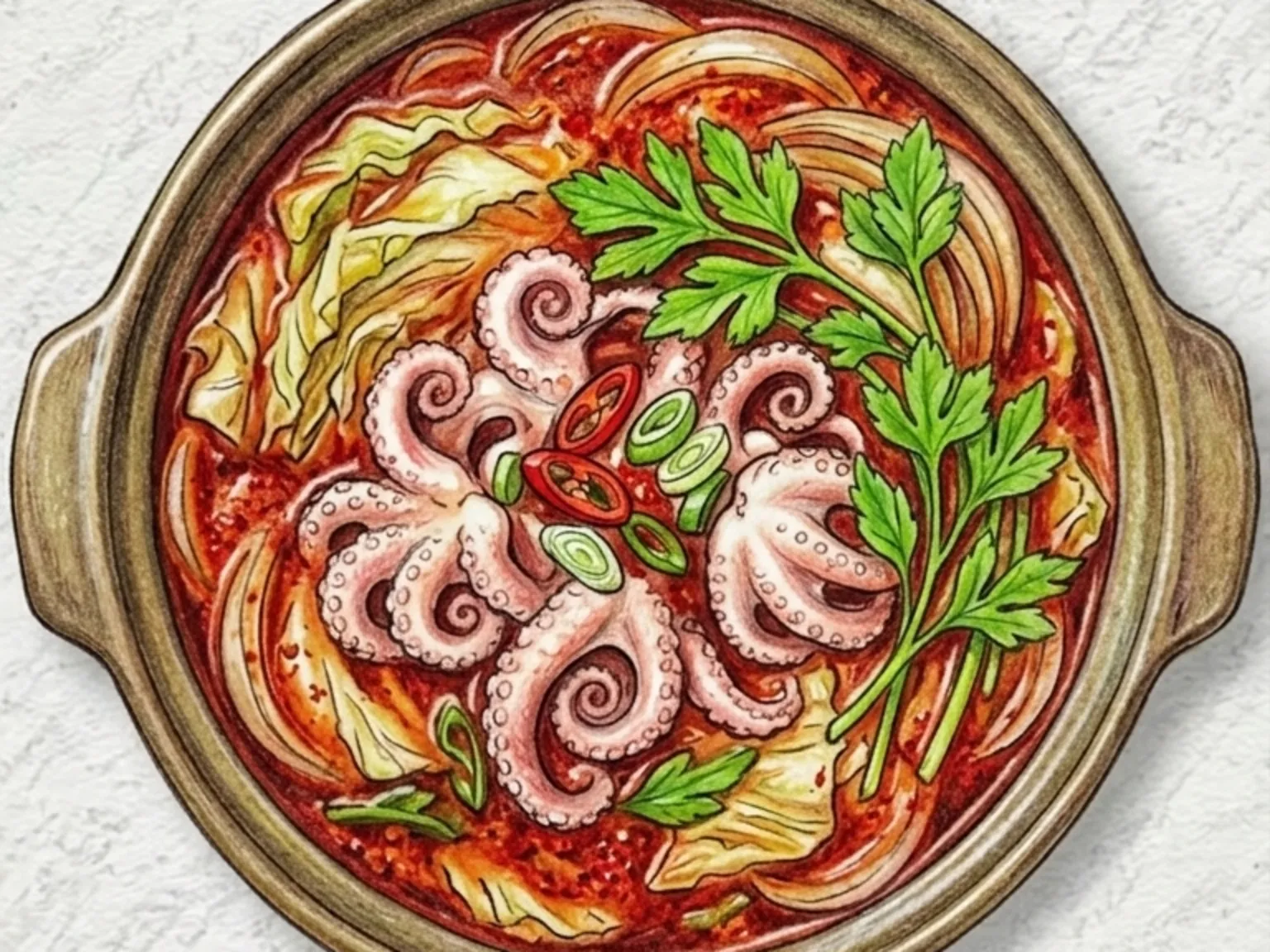
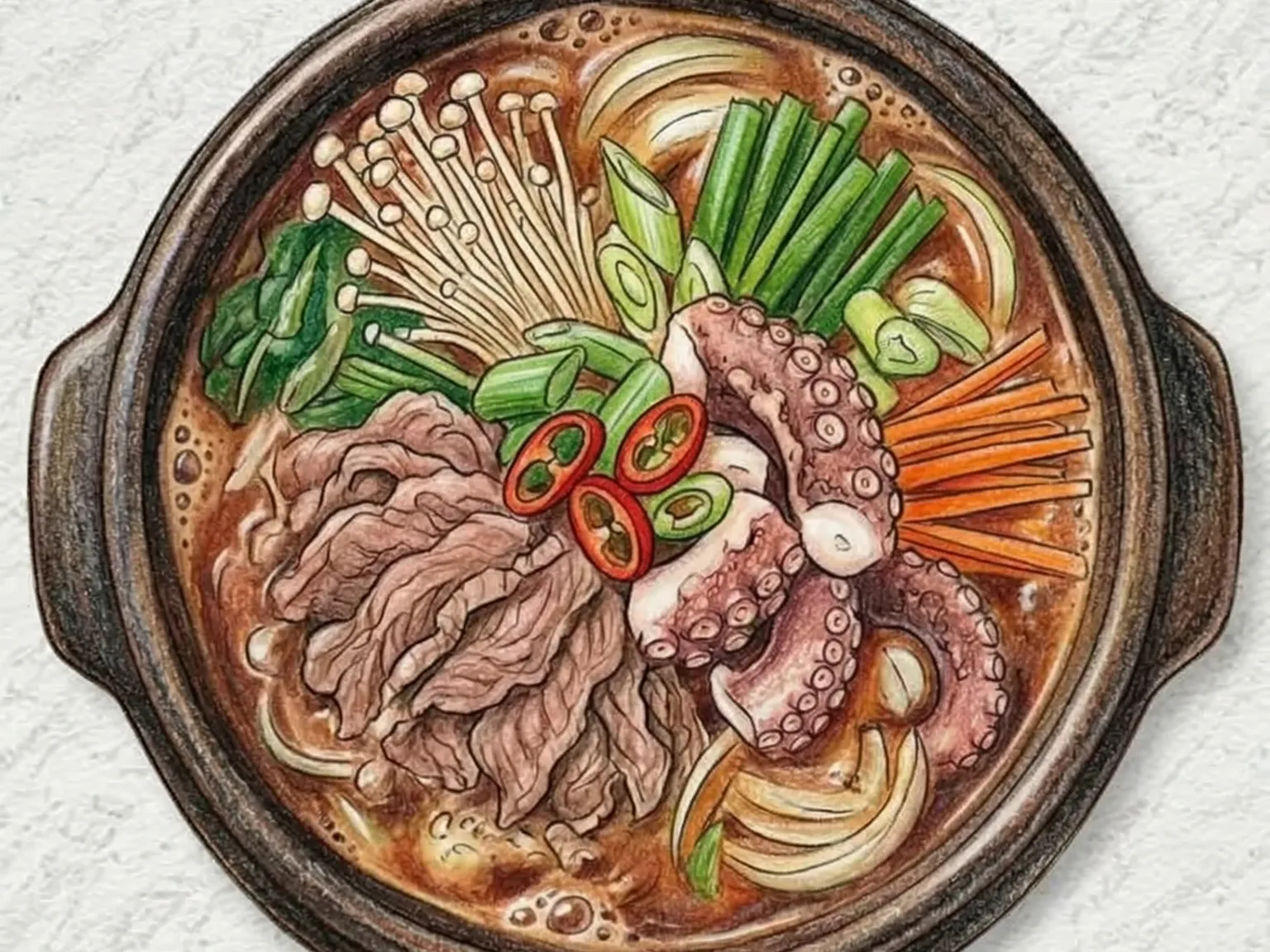
Bulnak jeongol is a hot pot that pairs sliced beef with fresh octopus in an anchovy-kelp broth. The beef enriches the stock with a meaty depth, while the octopus adds a firm, bouncy chew that holds up through simmering. Napa cabbage and water dropwort lighten the pot with their fresh, vegetal notes, making the whole dish feel balanced despite its generous protein portions.
Adjust Servings
Instructions
- 1
Clean octopus with salt, cut into pieces, and prepare thin beef slices.
- 2
Prep cabbage, onion, and water dropwort for hot pot.
- 3
Layer vegetables in the pot, then add beef and octopus.
- 4
Mix soy sauce and garlic into broth, pour in, and bring to a boil.
- 5
Simmer on medium for 10 minutes, skimming foam.
- 6
Serve promptly before octopus overcooks and toughens.
As an Amazon Associate, we may earn from qualifying purchases.
Tips
Nutrition (per serving)
More Recipes

Korean Octopus Hot Pot (Spicy Gochujang Broth with Herbs)
Nakji jeongol is a spicy Korean hot pot starring small octopus simmered with napa cabbage, water parsley, and onion in an anchovy stock laced with gochujang and gochugaru. The octopus should be cooked briefly to keep its signature springy, chewy texture. The broth develops a layered heat from both the chili paste and flakes, while water parsley cuts through the spice with its fresh, herbal bite.

Korean Seafood Hot Pot (Shrimp, Squid & Crab Spicy Pot)
Haemul jeongol is a seafood hot pot loaded with shrimp, Manila clams, squid, and a whole blue crab, all simmered together in a kelp stock seasoned with gochujang and gochugaru. Each type of seafood contributes its own character - the clams release their liquor, the crab sweetens the broth, the squid adds chew, and the shrimp bring a clean bite. Tofu and zucchini round out the pot. Served bubbling in a wide vessel at the table, it is a communal dish built for sharing.

Korean Octopus and Tofu Hot Pot
This Korean hot pot features octopus and tofu in a clear anchovy broth seasoned simply with soup soy sauce and garlic. The octopus pieces are springy and firm, while the tofu softens in the simmering broth. Korean radish lends subtle sweetness, and water dropwort adds a fresh herbal note with its celery-like crunch. Served bubbling at the table, yeonpo jeongol is a communal dish meant for sharing throughout the meal.

Korean Kimchi Beef Dumpling Hot Pot
This hearty hot pot combines frozen dumplings, sliced beef, and kimchi simmered together in anchovy stock seasoned with gochujang and soup soy sauce. Napa cabbage, enoki mushrooms, and tofu add layers of texture to the bubbling broth. The umami from the dumpling filling mingles with the tangy, spicy kimchi to create a deeply flavored soup that warms from the inside out.

Korean Braised Short Ribs
Galbi-jjim is one of Korea's most celebrated braised dishes, built on thick-cut beef short ribs that simmer for over an hour in a glaze of soy sauce, Asian pear juice, sugar, garlic, and sesame oil. The long cooking breaks down the collagen in the ribs until the meat practically slides off the bone, while the sauce reduces into a dark, glossy coating that is simultaneously sweet, salty, and deeply savory. Radish and carrot chunks absorb the braising liquid and soften into something almost buttery, while chestnuts and jujubes, often added for holidays, contribute subtle sweetness and a festive look. The finished dish glistens on the plate, and a single spoonful of sauce over steamed rice is enough to make the grain disappear. Galbi-jjim appears on Chuseok and Lunar New Year tables but is equally welcome on an ordinary weekend when the house deserves to smell extraordinary.

Korean Seafood Hot Pot Soup
Haemul-tang is a Korean seafood hot pot that throws together crab, shrimp, clams, and squid in a fiery, brick-red broth. The liquid starts with gochugaru and plenty of garlic, building a spicy base that the seafood then amplifies with its own briny juices. Radish chunks soften as the pot bubbles, thickening the broth slightly and adding a cool sweetness behind the heat. Green onions and cheongyang peppers go in toward the end for a sharp, vegetal bite. The magic of haemul-tang lies in the convergence of flavors: crab shells release a sweet, crustacean stock; clams open to spill their liquor; shrimp and squid contribute distinct textures from snappy to chewy. The pot is brought to the table still at a rolling boil, and diners pick through the shells and tentacles while the broth continues to concentrate.