Hanoi Bun Cha (Charcoal Grilled Pork Patties with Rice Noodles)
Asian Medium

Hanoi Bun Cha (Charcoal Grilled Pork Patties with Rice Noodles)

Quick answer

Bun cha defines the lunchtime rhythm of Hanoi.

What makes this special

  • Hanoi Bun Cha serves charcoal-grilled pork patties and belly in a light dipping sauce with noodles.
  • Coconut-charcoal grill chars both pork belly slices and hand-formed patties
  • Grilled pork soaks in warm nuoc cham broth rather than dipping sauce
Total time
50 min
Level
Medium
Servings
4 servings
Ingredients
9
Calories
620 kcal
Protein
34 g

Key ingredients

ground porkpork shoulder slicesrice vermicellifish saucesugar

Core cooking flow

  1. 1 Mix 300g ground pork and 300g pork shoulder with 1 tbsp fish sauce, 1 tbsp s...
  2. 2 Shape the seasoned ground pork into flat patties about 4cm wide and 1cm thic...
  3. 3 Place the pork on a hot grill or pan over medium heat and cook while flippin...

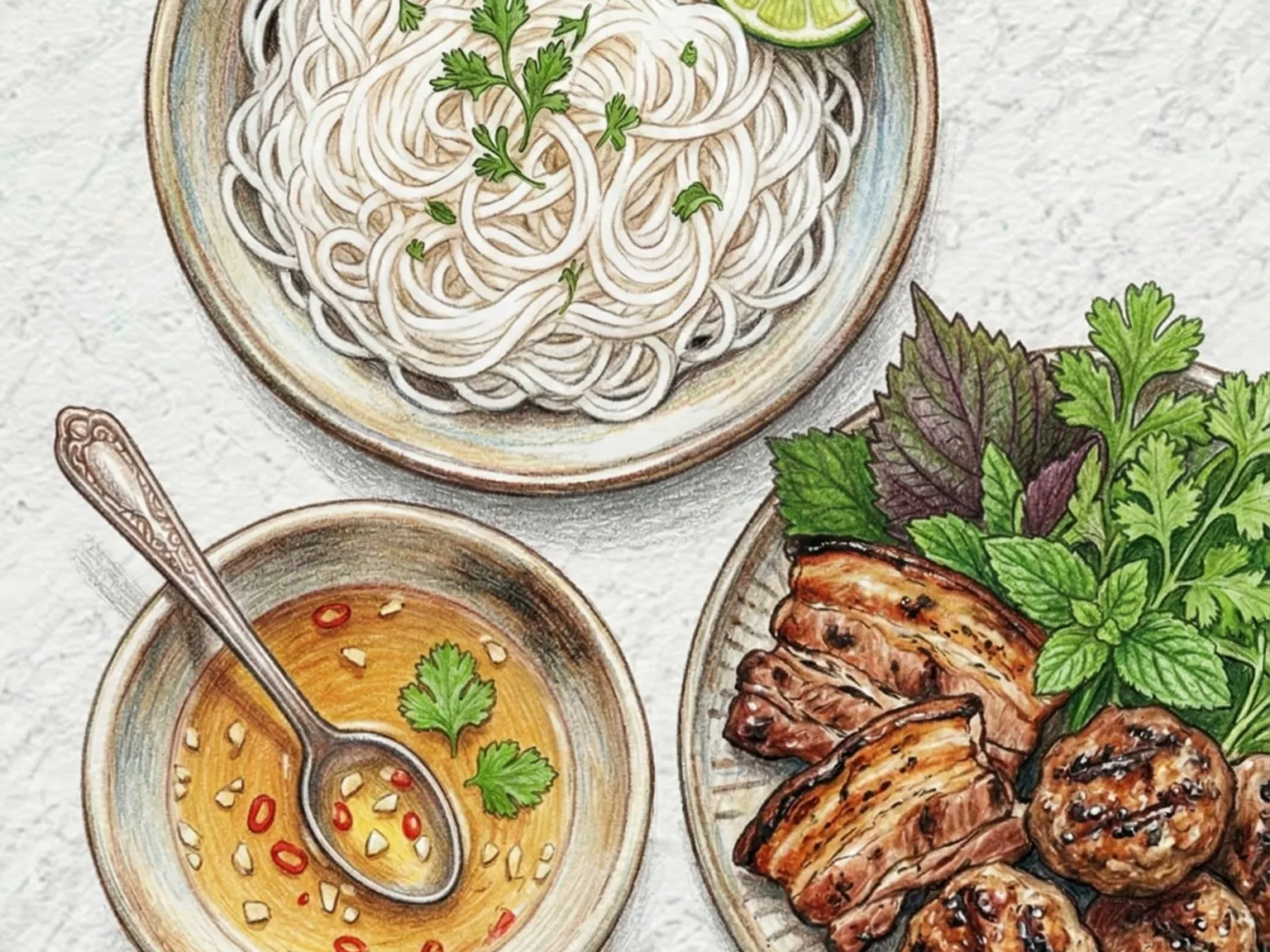
Bun cha defines the lunchtime rhythm of Hanoi. Every alley in the Old Quarter fills at midday with the smoke of charcoal grills, the sound of fat hitting hot coals, and the caramel-edged smell of pork charring at the edges. Two forms of pork are grilled simultaneously: fatty sliced pork belly and small, hand-shaped patties of seasoned ground pork. Both cook over coconut-shell charcoal until the edges blacken and the fat renders into drippings, carrying the smoke of the fire into every bite. The grilled meat drops directly into individual bowls of warm dipping broth - a sweetened fish sauce sharpened with vinegar, garlic, and chili. This broth sits between a condiment and a light soup, and diners naturally drink a little of it between bites of meat and noodles. Rice vermicelli arrives on a separate plate alongside a full mound of fresh herbs: perilla, mint, lettuce, and dill. The ritual of eating matters as much as the ingredients - noodles are dipped into the broth, a piece of pork is retrieved, wrapped in fresh herbs, and eaten in one bite. In 2016, Barack Obama and Anthony Bourdain ate bun cha at a simple Hanoi street stall. The restaurant preserved the table they occupied behind a glass case, a response that says everything about how deeply this dish is bound to the city.

Prep 30min Cook 20min 4 servings
Recipes by ingredient → fish sauce garlic carrot

Instructions

Read the steps as a cooking flow: prep, heat, seasoning, doneness control, and finish.

7 steps
  1. 1
    Season

    Mix 300g ground pork and 300g pork shoulder with 1 tbsp fish sauce, 1 tbsp sugar, and 0.5 tbsp minced garlic, massaging well to ensure even seasoning and marinating for 20 minutes.

  2. 2
    Season

    Shape the seasoned ground pork into flat patties about 4cm wide and 1cm thick, then flatten the pork shoulder into bite-sized pieces so they cook evenly without curling on the grill.

  3. 3
    Control

    Place the pork on a hot grill or pan over medium heat and cook while flipping frequently until the edges are slightly charred, the fat renders out, and a rich smoky aroma develops.

  4. 4
    Season

    Mix 300ml of warm water with 3 tbsp fish sauce, 2 tbsp sugar, 3 tbsp lime juice, and the remaining garlic, stirring constantly until the sugar dissolves completely and the broth is balanced.

  5. 5
    Season

    Slice 100g of carrot into very thin 0.2cm pieces and add them to the dipping sauce, allowing them to soak for 10 minutes to absorb the flavors while maintaining their fresh, crunchy texture.

  6. 6
    Heat

    Boil 400g rice vermicelli, rinse in cold water to remove excess starch, and arrange them on a large platter alongside 200g of fresh herbs and the grilled pork, keeping the components separate.

  7. 7
    Season

    Pour the warm sauce into individual bowls, then dip the noodles and pork into the broth before wrapping them in fresh herbs to enjoy the balance of smoky meat and colorful, tangy sauce.

After the steps

Pick a recipe that fits this dish.

Continue with shared ingredients, meal pairings, or a similar method.

Recipes That Go Well With This

More Asian →

Based on shared ingredients and meal pairing

Vietnamese Grilled Pork Vermicelli
Shared ingredient: fish sauce Noodles

Vietnamese Grilled Pork Vermicelli

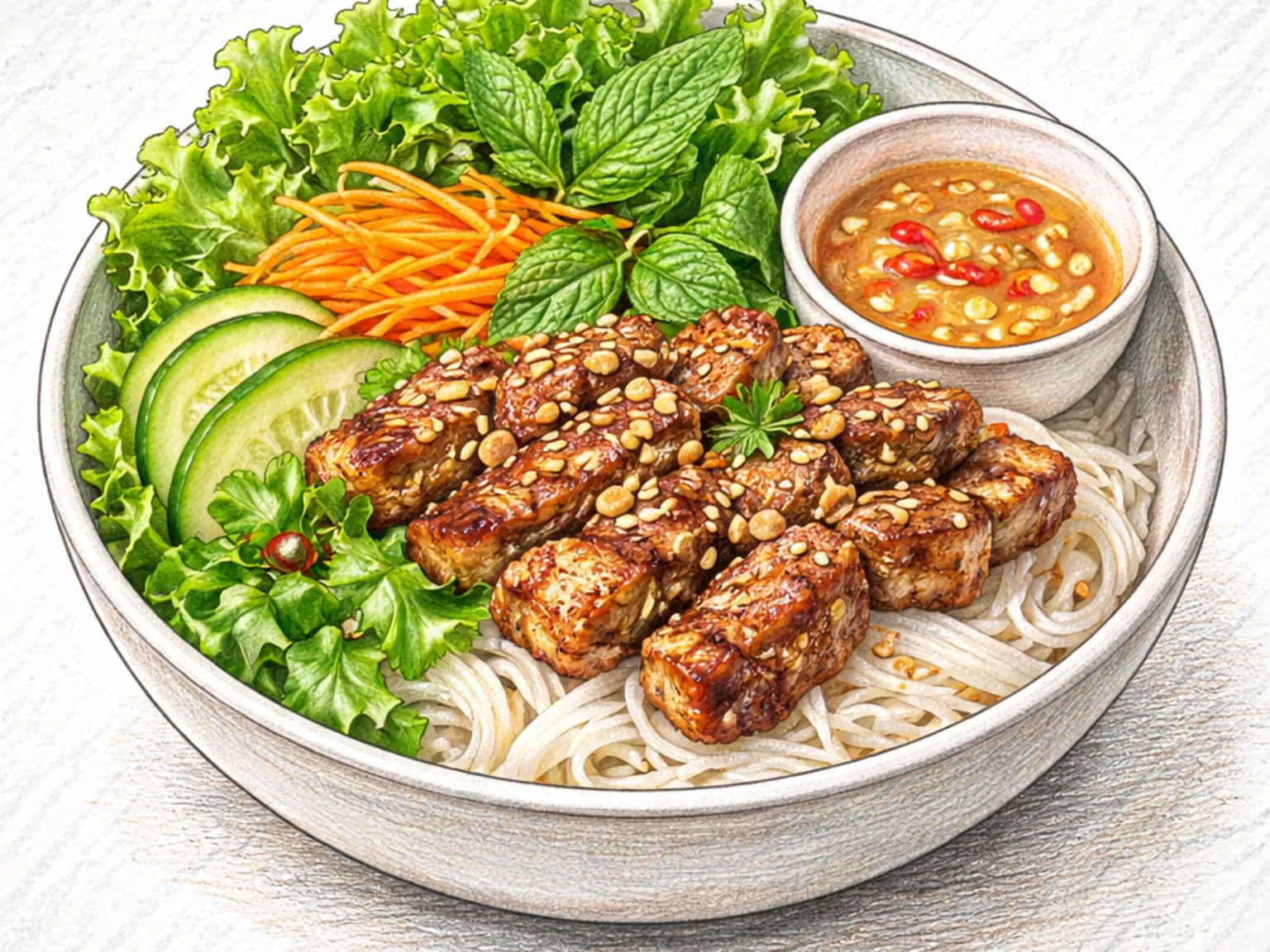
Charcoal-grilled pork is placed over cold rice vermicelli and eaten mixed with nuoc cham in this southern Vietnamese noodle bowl. The pork marinates in fish sauce, sugar, and garlic before grilling, so direct heat caramelizes the surface sugars into a deep brown crust while the interior holds its moisture. Fresh mint, cilantro, and coarsely crushed roasted peanuts are scattered on top, layering herbal fragrance with crunch. Nuoc cham, built from lime juice, sugar, fish sauce, and chili, is the sweet-sour-salty binding agent that pulls together the warm meat, cool noodles, and raw herbs into a single coherent bowl. The temperature contrast between hot pork and chilled vermicelli is central to the eating experience. Pickled daikon and carrot add a final note of acidity that keeps each bite clean. No broth is needed; the bowl is filling and bright.

Hanoi-Style Pho Bo (Vietnamese Northern Clear Beef Noodle Soup)
Shared ingredient: fish sauce Asian

Hanoi-Style Pho Bo (Vietnamese Northern Clear Beef Noodle Soup)

Hanoi-style pho bo is the original northern Vietnamese beef noodle soup, distinguished from its southern counterpart by a leaner, clearer broth and restrained garnishing. Beef bones and brisket simmer for hours with a modest hand of spices - star anise, cinnamon bark, and a few cloves - so the beef flavor leads rather than the aromatics. The broth is repeatedly skimmed until it runs nearly transparent, with no trace of grease on the surface. Paper-thin slices of raw beef placed in the bowl cook to a pale pink the moment the scalding broth is ladled over them. In Hanoi, the bowl arrives with only chopped scallion and cilantro; bean sprouts, hoisin sauce, and sriracha - common in southern and overseas versions - are absent by tradition.

Vietnamese Spicy Beef Noodle Soup
Serve together Noodles

Vietnamese Spicy Beef Noodle Soup

Bun bo Hue is a spicy beef rice noodle soup from the central Vietnamese city of Hue, distinguished from northern-style pho by the defining combination of lemongrass and fermented shrimp paste that gives the broth its assertive, layered character. Beef shank simmers for hours at low heat to yield a rich, collagen-heavy stock, and it is into this base that dried chilies, lemongrass stalks, and a measured quantity of mam ruoc, the fermented shrimp paste specific to central Vietnam, are introduced, building a spiciness that is complex rather than simply hot. A bright-red slick of chili oil floating on the surface signals the heat level before the first sip, and that first spoonful delivers the deep umami of the shrimp paste layered beneath the citrusy, grassy brightness of lemongrass, a combination unlike anything in other Vietnamese noodle soups. The noodles, called bun, are thick, round rice noodles chewier and more substantial than the flat strands in pho, with enough body to stand up to the heavy, assertive broth without becoming waterlogged. Bean sprouts, shredded raw banana flower, and a squeeze of lime are served alongside and added at the table, where their crisp textures and sharp acidity cut directly through the richness and temper the heat. Sliced pork blood sausage and braised pig's knuckle are the traditional additions that bring the bowl into full alignment with what is served in the street stalls of Hue itself.

Cha Ca La Vong (Hanoi Turmeric Fish with Dill on Tabletop Grill)
Similar recipe Asian

Cha Ca La Vong (Hanoi Turmeric Fish with Dill on Tabletop Grill)

Cha ca La Vong is the defining dish of a single street in Hanoi's Old Quarter - Cha Ca Street takes its name from the restaurant that has been serving this one recipe and nothing else since the late nineteenth century. The dish is almost exclusively Hanoian; it barely appears in southern Vietnamese cooking, and the original La Vong restaurant remains open at the same address today. Firm white fish fillets, traditionally snakehead or catfish, are marinated in a paste of turmeric, galangal, fermented shrimp paste, and rice flour, then pan-fried in oil until the turmeric stains the surface a vivid, saturated yellow and a thin crust forms along the outside. The sizzling pan arrives at the table set over a small tabletop burner and the fish continues to cook as diners add large handfuls of fresh dill and scallion directly into the pan. The herbs wilt almost instantly on contact with the hot oil, and dill's intense anise-forward fragrance fills the table as they do. The visual impact of yellow-stained fish against the bright green dill collapsing into the pan is one of the dish's most recognizable qualities. The fish is eaten spooned over thin rice vermicelli and accompanied by roasted peanuts and additional fresh herbs. The critical element is the dipping sauce: mam tom, a pungent fermented shrimp paste thinned with fresh lime juice and a little sugar, whose funk and acidity cut through the oil and turmeric and transform the flavor of every bite. Few dishes anywhere can claim a single-item restaurant with over a century of unbroken operation, and Cha ca La Vong is one of them.

Serve with this

Vietnamese Lotus Stem Shrimp Salad
Salads Medium

Vietnamese Lotus Stem Shrimp Salad

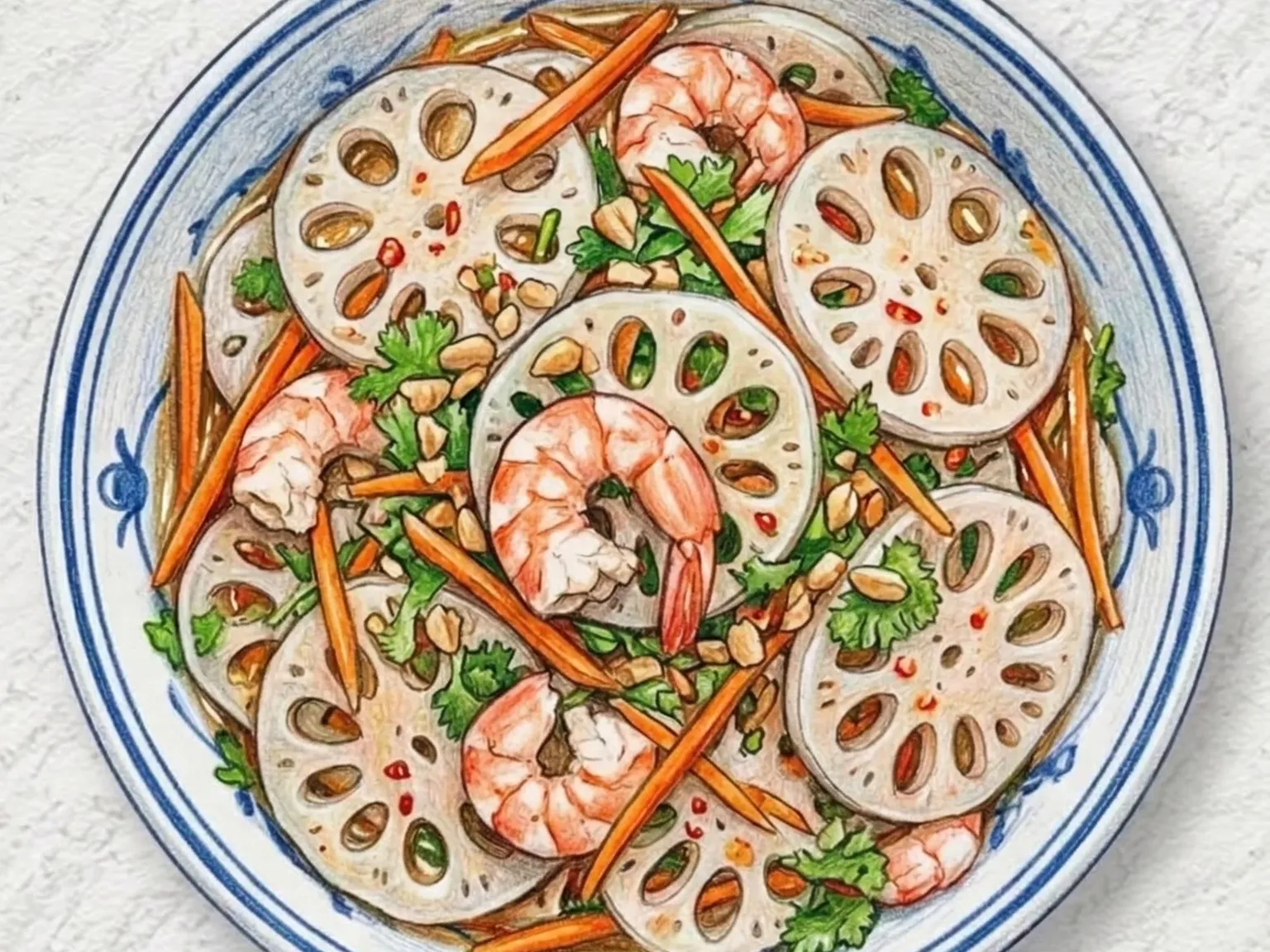
Goi ngo sen is a traditional Vietnamese salad of thinly sliced lotus stem, blanched shrimp halved lengthwise, julienned carrot, and cilantro dressed in a fish sauce and lime vinaigrette. Soaking the lotus stem in diluted vinegar water for ten minutes is not optional: it removes the astringent edge while keeping the crisp, snapping texture that defines the dish, and skipping this step leaves a rough, bitter aftertaste no amount of good dressing can fix. Blanching the shrimp for two to three minutes and splitting them open lengthwise exposes more cut surface for the dressing to penetrate. The dressing combines fish sauce, lime juice, and sugar in a ratio that hits salty, sour, and sweet simultaneously, making the natural umami of the seafood stand out rather than recede. Letting the salad rest for at least five minutes after tossing gives the dressing time to soak into each ingredient and allows the flavors to settle into one another.

🥗 Light & Healthy 🏠 Everyday
Prep 20min Cook 5min 2 servings
Korean Crispy Potato Pancake
Drinks Easy

Korean Crispy Potato Pancake

Gamja-jeon is a Korean potato pancake made by finely grating raw potatoes, letting the starch settle out of the liquid for at least ten minutes, discarding the water, and folding the settled starch back into the pulp to improve binding. Waiting long enough for full starch separation is what gives the batter enough cohesion to hold together when the pancake hits the hot pan. Spreading the batter as thinly as possible produces glass-crisp edges while the center retains a chewy, starchy bite characteristic of potato starch. The first side must cook all the way through and the underside must firm up completely before any attempt to flip, and using two spatulas simultaneously makes the turn fast enough to keep the pancake intact. Frying both sides over medium heat until evenly golden delivers a crust that is crisp on the outside while the center stays moist. A dipping sauce of soy sauce, vinegar, and minced cheongyang green chili cuts through the oily richness with sharpness and heat.

🍺 Bar Snacks ⚡ Quick
Prep 15min Cook 12min 2 servings
Korean Salmon Pot Rice (Salmon Fillet Steamed Directly on Rice)
Rice Medium

Korean Salmon Pot Rice (Salmon Fillet Steamed Directly on Rice)

A whole salmon fillet is placed directly on top of rice in a heavy pot before cooking begins. As the rice steams, the salmon's oils melt downward and seep between the grains, lending a natural richness and sheen without any added fat. During the resting stage the fish finishes cooking gently, turning tender enough to flake apart with chopsticks and mix evenly through the rice. A soy-wasabi sauce drizzled over the bowl and stirred in adds a sharp, salty kick that carries through to the last spoonful.

🎉 Special Occasion 🏠 Everyday
Prep 10min Cook 25min 2 servings

Similar recipes

Com Tam Suon Nuong (Broken Rice with Grilled Pork)
Asian Medium

Com Tam Suon Nuong (Broken Rice with Grilled Pork)

Com tam translates literally as broken rice, named after the fractured grains left over from milling that were once too damaged to sell and eaten only by those who could afford nothing better. In Ho Chi Minh City, what began as subsistence food became a morning institution. The smaller, porous grains cook drier than whole rice and absorb sauces and meat juices more efficiently, turning an unwanted byproduct into a texture worth seeking out. Suon nuong, the charcoal-grilled pork chop, is the centerpiece. The meat soaks for at least an hour in a marinade of lemongrass, garlic, fish sauce, and sugar before hitting the coals. Under direct heat, the marinade caramelizes against the bone, building a sticky, slightly charred crust that carries both sweetness and smoke. The assembled plate puts the grilled chop over broken rice, topped with shredded egg crepe, pickled daikon and carrot, and a generous pour of nuoc mam pha, the sweet-salty-sour dipping sauce made from fish sauce, lime, sugar, and fresh chili. Across the city, com tam stalls open before dawn and the morning ritual of pulling a motorbike over to eat a quick plate at a sidewalk table is part of the daily rhythm of the place.

🎉 Special Occasion 🍺 Bar Snacks
Prep 25min Cook 20min 2 servings
Bun Rieu (Vietnamese Crab and Pork Tomato Noodle Soup)
Asian Hard

Bun Rieu (Vietnamese Crab and Pork Tomato Noodle Soup)

Bun rieu is a Vietnamese noodle soup from the north built on two unconventional foundations: freshwater paddy crabs and fermented shrimp paste. Together they produce a broth of unusual complexity that is simultaneously sweet, savory, and funky in ways that fish-sauce-based soups are not. Small river crabs are pounded whole, shell and all, in a mortar, then mixed with water and strained through a sieve to extract a turbid, intensely crab-scented liquid. This liquid is heated gently over low flame until the crab proteins coagulate into a soft, custard-like mass that floats to the surface, forming the crab cake that defines the dish. Tomatoes are added to the simmering broth and break down over time, tinting it red and contributing a fruity acidity that balances the crab richness. Mam tom, the fermented shrimp paste, is kept tableside and stirred in individually according to each diner's tolerance for pungency. A single spoonful transforms the broth into something considerably more intense and complex. Rice vermicelli provides a neutral base, while fried tofu puffs absorb broth during cooking and release it in each bite. Morning glory greens add a vegetable counterpoint. In Hanoi, bun rieu vendors typically specialize in this one soup, ladling hundreds of bowls from a single pot each morning before selling out by noon.

🎉 Special Occasion 🌙 Late Night
Prep 25min Cook 40min 4 servings

Tips

Use high heat and short cooking for better char and aroma.
Chilling the dipping sauce in advance improves flavor.

Nutrition (per serving)

Calories
620
kcal
Protein
34
g
Carbs
68
g
Fat
23
g