Vietnamese Grilled Pork Vermicelli
Quick answer
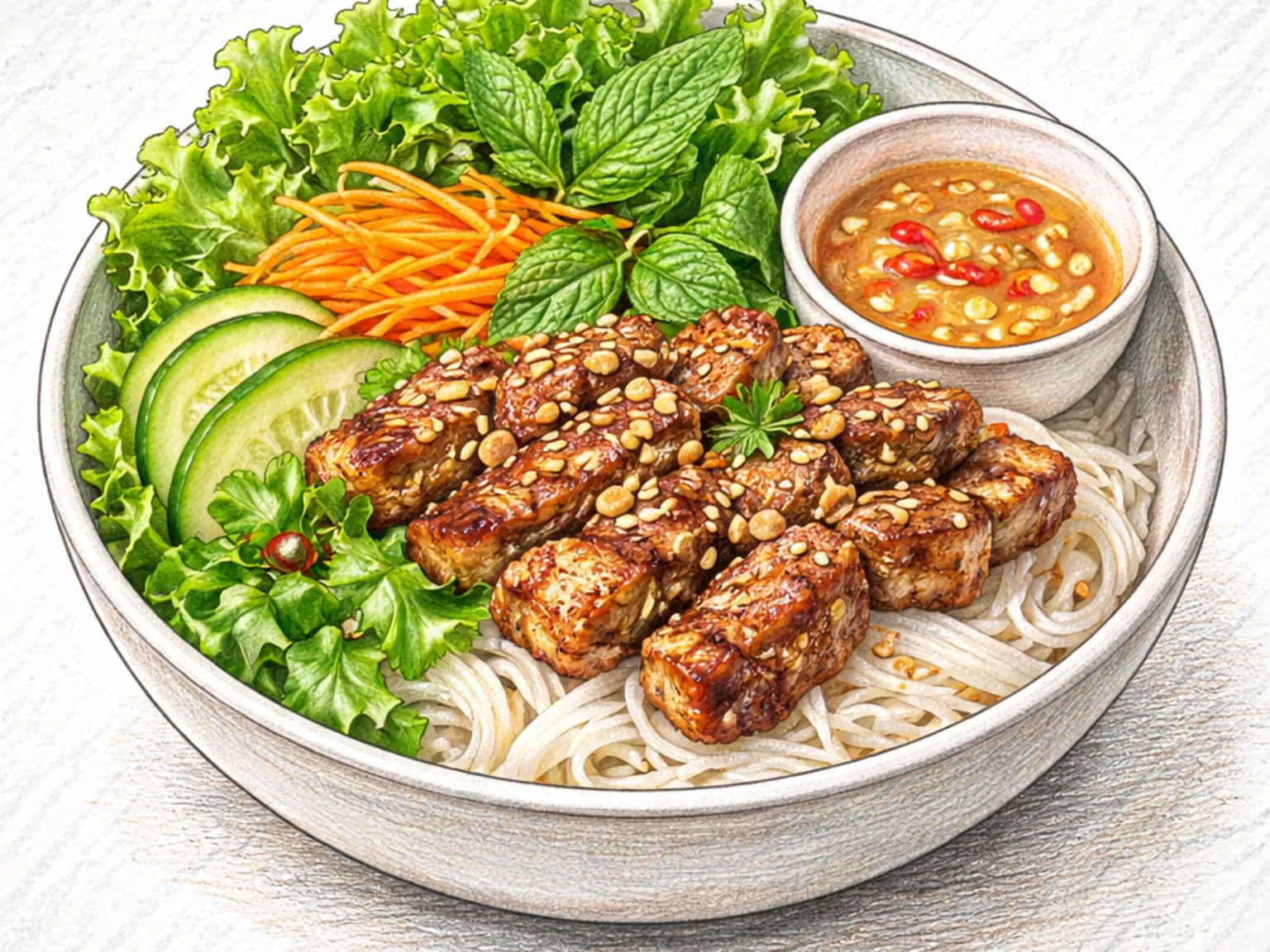
Charcoal-grilled pork is placed over cold rice vermicelli and eaten mixed with nuoc cham in this southern Vietnamese noodle bowl.
What makes this special
- Caramelized grilled pork sits atop cold rice vermicelli for this southern Vietnamese noodle bowl.
- Fish sauce and sugar marinade caramelizes on direct heat into a dark crust
- Searing hot grilled pork against cold rice vermicelli is the dish's core contrast
Key ingredients
Core cooking flow
- 1 Thinly slice 220g pork, then massage with 1 tbsp fish sauce, 1 tbsp sugar, a...
- 2 Julienne 80g lettuce, cucumber, and carrot into thin strips, soak briefly in...
- 3 Cook 250g rice vermicelli in boiling water until tender, rinse under cold wa...
Charcoal-grilled pork is placed over cold rice vermicelli and eaten mixed with nuoc cham in this southern Vietnamese noodle bowl. The pork marinates in fish sauce, sugar, and garlic before grilling, so direct heat caramelizes the surface sugars into a deep brown crust while the interior holds its moisture. Fresh mint, cilantro, and coarsely crushed roasted peanuts are scattered on top, layering herbal fragrance with crunch. Nuoc cham, built from lime juice, sugar, fish sauce, and chili, is the sweet-sour-salty binding agent that pulls together the warm meat, cool noodles, and raw herbs into a single coherent bowl. The temperature contrast between hot pork and chilled vermicelli is central to the eating experience. Pickled daikon and carrot add a final note of acidity that keeps each bite clean. No broth is needed; the bowl is filling and bright.
Instructions
Read the steps as a cooking flow: prep, heat, seasoning, doneness control, and finish.
- 1Season
Thinly slice 220g pork, then massage with 1 tbsp fish sauce, 1 tbsp sugar, and 1 tbsp minced garlic and marinate for 15 minutes.
- 2Step
Julienne 80g lettuce, cucumber, and carrot into thin strips, soak briefly in cold water to keep them fresh, and drain.
- 3Heat
Cook 250g rice vermicelli in boiling water until tender, rinse under cold water multiple times to remove starch, and drain in a colander.
- 4Control
Heat a pan or grill over high heat, cook the marinated pork until golden brown on both sides, let cool slightly, then cut into bite-sized pieces.
- 5Season
Mix the remaining 1 tbsp fish sauce, 0.5 tbsp sugar, and lime juice in a small bowl to make a tangy sweet dressing.
- 6Heat
Arrange the noodles, vegetables, and grilled pork in a bowl in layers, then drizzle the dressing evenly over everything and toss before eating.
After the steps
Pick a recipe that fits this dish.
Continue with shared ingredients, meal pairings, or a similar method.
Recipes That Go Well With This
More Noodles →Based on shared ingredients and meal pairing
Hanoi Bun Cha (Charcoal Grilled Pork Patties with Rice Noodles)
Bun cha defines the lunchtime rhythm of Hanoi. Every alley in the Old Quarter fills at midday with the smoke of charcoal grills, the sound of fat hitting hot coals, and the caramel-edged smell of pork charring at the edges. Two forms of pork are grilled simultaneously: fatty sliced pork belly and small, hand-shaped patties of seasoned ground pork. Both cook over coconut-shell charcoal until the edges blacken and the fat renders into drippings, carrying the smoke of the fire into every bite. The grilled meat drops directly into individual bowls of warm dipping broth - a sweetened fish sauce sharpened with vinegar, garlic, and chili. This broth sits between a condiment and a light soup, and diners naturally drink a little of it between bites of meat and noodles. Rice vermicelli arrives on a separate plate alongside a full mound of fresh herbs: perilla, mint, lettuce, and dill. The ritual of eating matters as much as the ingredients - noodles are dipped into the broth, a piece of pork is retrieved, wrapped in fresh herbs, and eaten in one bite. In 2016, Barack Obama and Anthony Bourdain ate bun cha at a simple Hanoi street stall. The restaurant preserved the table they occupied behind a glass case, a response that says everything about how deeply this dish is bound to the city.
Bun Bo Nam Bo (Vietnamese Dry Beef Noodle Bowl with Herbs)
Bun bo nam bo - literally 'southern beef noodles' - is a Hanoi take on southern Vietnamese flavors, assembled as a dry noodle bowl rather than a soup. The dish layers cold rice vermicelli with stir-fried beef marinated in lemongrass and garlic, then tops it with a generous pile of fresh herbs: cilantro, Thai basil, mint, and perilla. Crushed roasted peanuts and fried shallots scatter on top, contributing crunch and a background sweetness. The binding element is nuoc cham - the sweet-sour-salty-spicy sauce built from fish sauce, lime, sugar, garlic, and chili - poured over and tossed through at the table. The beef is seared on maximum heat for under a minute so it stays medium-rare inside while the lemongrass marinade caramelizes along the edges. The pleasure of the bowl is in its temperature contrasts: cold noodles, cold herbs, warm beef, and room-temperature sauce all meeting in each chopstick-lifted tangle. Found on nearly every street in Hanoi's Old Quarter, it is the reliable lunch for office workers who return to their preferred stall day after day.
Vietnamese Lotus Stem Shrimp Salad
Goi ngo sen is a traditional Vietnamese salad of thinly sliced lotus stem, blanched shrimp halved lengthwise, julienned carrot, and cilantro dressed in a fish sauce and lime vinaigrette. Soaking the lotus stem in diluted vinegar water for ten minutes is not optional: it removes the astringent edge while keeping the crisp, snapping texture that defines the dish, and skipping this step leaves a rough, bitter aftertaste no amount of good dressing can fix. Blanching the shrimp for two to three minutes and splitting them open lengthwise exposes more cut surface for the dressing to penetrate. The dressing combines fish sauce, lime juice, and sugar in a ratio that hits salty, sour, and sweet simultaneously, making the natural umami of the seafood stand out rather than recede. Letting the salad rest for at least five minutes after tossing gives the dressing time to soak into each ingredient and allows the flavors to settle into one another.
Vietnamese Mi Quang (Turmeric Noodles with Pork and Shrimp)
Mi quang is a noodle dish from the Quang Nam province in central Vietnam, built on wide, turmeric-tinted rice noodles dressed with pork, shrimp, and a deliberately small amount of intensely concentrated broth. The defining characteristic of the dish is that ratio. Where most noodle soups are meant to be submerged, mi quang uses just enough broth to moisten the noodles, making it closer to a dressed noodle than a soup bowl. Pork is marinated in fish sauce and turmeric before cooking, which simultaneously tints the meat yellow and saturates it with fermented savory depth. Simmering it briefly with chicken stock draws out a small volume of broth with a concentrated, meaty intensity that would taste overwhelmingly strong on its own but calibrates perfectly when distributed across a full serving of noodles. Shrimp are kept separate and cooked quickly by sautéing or grilling rather than simmering, which keeps them springy rather than soft. The noodles are cooked, rinsed under cold water so they do not stick, and placed in a bowl before the meat, shrimp, and broth go on top. Bean sprouts add a raw crunch that contrasts directly with the soft noodles, while crushed roasted peanuts contribute a dry, nutty texture that absorbs some of the broth. A squeeze of lime at the end sharpens the entire flavor profile and balances the richness.
Serve with this
Korean Chive Clam Jeon (Garlic Chive and Clam Seafood Pancake)
Buchu-bajirak-jeon is a seafood pancake of garlic chives and clam meat, pan-fried in a batter made with a mix of all-purpose pancake flour and rice flour. The rice flour addition increases the chew and gives the finished jeon a slightly more resilient texture than plain flour batters. Clam meat releases a briny, oceanic liquid as it cooks that seeps into the batter and flavors it throughout, while the chives add a sharp, grassy counterpoint. Minced garlic and diagonally sliced cheongyang chili worked into the batter suppress any fishiness and build a layered fragrance. A generous amount of oil in the pan over medium heat produces edges that crisp and brown like the outside of a fritter. Waiting until the bottom is fully set before flipping prevents the pancake from tearing. Served with soy dipping sauce or a seasoned soy mixture, the clean salinity of the clams comes through clearly.
Korean Stir-fried Balloon Flower Root
Doraji -- balloon flower root -- has been cultivated in Korea for centuries, valued in cooking and herbal medicine alike. The raw root carries a pronounced bitterness from saponins, so it must be shredded into thin strips, rubbed vigorously with salt, left for ten minutes, then rinsed twice in cold water. The salt scrub draws out the saponins while preserving the root's firm, snappy bite. A base of green onion goes into the pan first to build a fragrant oil, then the prepared doraji stir-fries for two minutes before gochujang, soy sauce, and oligosaccharide syrup go in for another three minutes. The heat is raised at the end to drive off moisture, so the sauce tightens and clings to each strip rather than pooling in the pan. The result is a glossy, sweet-spicy banchan with a distinctly chewy pull.
Chicken Mu (Korean Fried Chicken Radish Pickle)
The crunchy, sweet-sour radish pickle served with every order of Korean fried chicken - now easy to make at home in under 15 minutes. Cubed radish is submerged in a cooled brine of vinegar, sugar, salt, and whole black peppercorns. Using fully cooled brine rather than hot is critical for maintaining the radish's firm, snapping crunch. Ready to eat after one day of refrigeration, its bright acidity cleanses the palate between bites of crispy chicken. Stored in a glass jar, this pickle keeps for over a week.
Similar recipes
Vietnamese Spicy Beef Noodle Soup
Bun bo Hue is a spicy beef rice noodle soup from the central Vietnamese city of Hue, distinguished from northern-style pho by the defining combination of lemongrass and fermented shrimp paste that gives the broth its assertive, layered character. Beef shank simmers for hours at low heat to yield a rich, collagen-heavy stock, and it is into this base that dried chilies, lemongrass stalks, and a measured quantity of mam ruoc, the fermented shrimp paste specific to central Vietnam, are introduced, building a spiciness that is complex rather than simply hot. A bright-red slick of chili oil floating on the surface signals the heat level before the first sip, and that first spoonful delivers the deep umami of the shrimp paste layered beneath the citrusy, grassy brightness of lemongrass, a combination unlike anything in other Vietnamese noodle soups. The noodles, called bun, are thick, round rice noodles chewier and more substantial than the flat strands in pho, with enough body to stand up to the heavy, assertive broth without becoming waterlogged. Bean sprouts, shredded raw banana flower, and a squeeze of lime are served alongside and added at the table, where their crisp textures and sharp acidity cut directly through the richness and temper the heat. Sliced pork blood sausage and braised pig's knuckle are the traditional additions that bring the bowl into full alignment with what is served in the street stalls of Hue itself.
Com Tam Suon Nuong (Broken Rice with Grilled Pork)
Com tam translates literally as broken rice, named after the fractured grains left over from milling that were once too damaged to sell and eaten only by those who could afford nothing better. In Ho Chi Minh City, what began as subsistence food became a morning institution. The smaller, porous grains cook drier than whole rice and absorb sauces and meat juices more efficiently, turning an unwanted byproduct into a texture worth seeking out. Suon nuong, the charcoal-grilled pork chop, is the centerpiece. The meat soaks for at least an hour in a marinade of lemongrass, garlic, fish sauce, and sugar before hitting the coals. Under direct heat, the marinade caramelizes against the bone, building a sticky, slightly charred crust that carries both sweetness and smoke. The assembled plate puts the grilled chop over broken rice, topped with shredded egg crepe, pickled daikon and carrot, and a generous pour of nuoc mam pha, the sweet-salty-sour dipping sauce made from fish sauce, lime, sugar, and fresh chili. Across the city, com tam stalls open before dawn and the morning ritual of pulling a motorbike over to eat a quick plate at a sidewalk table is part of the daily rhythm of the place.
Vietnamese Chicken Salad
Goi ga is a Vietnamese chicken salad served throughout the country as a beer snack and appetizer, one of the most practical dishes the cuisine has for hot weather when something cool, sharp, and light is what the body wants. A whole chicken is poached in water until just cooked through, then cooled completely before being shredded by hand along the grain. Hand-shredding rather than knife-cutting matters here: the torn fibers create irregular surfaces with greater surface area, so the dressing clings to the meat rather than pooling at the bottom of the bowl, and the textured chew is noticeably different from cleanly sliced chicken. Shredded cabbage, onion, and carrot form the vegetable base, combined with Vietnamese coriander known as rau ram, cilantro, and fresh mint. The dressing is fish sauce, fresh lime juice, sugar, sliced fresh chili, and minced garlic, whisked together until the sugar dissolves. The dressing acidity pulls the chicken out of its mildness, and the fish sauce depth meets the watery crunch of the vegetables to produce a balance that reads as light but not bland. Fried shallots and crushed roasted peanuts scattered over the top add a crunchy layer that makes the salad feel complete rather than spare. At bia hoi, the informal fresh-beer street bars found across Vietnam, goi ga is among the first dishes ordered and typically arrives at the table before the first cold glass is poured.