Korean Fish-Shaped Bread (Sweet Red Bean Filled Wheat Waffle)

Korean Fish-Shaped Bread (Sweet Red Bean Filled Wheat Waffle)

Quick answer

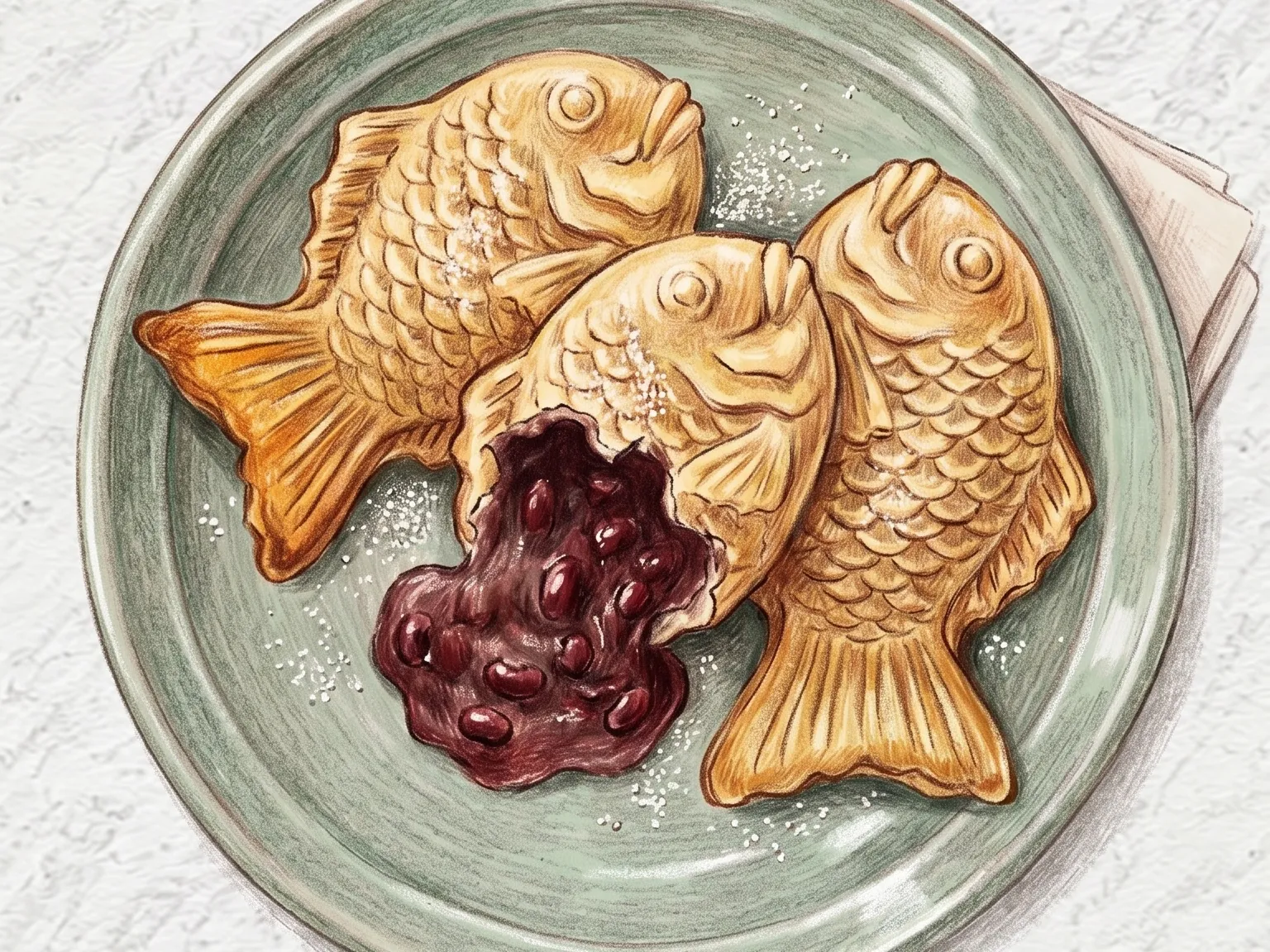
Bungeoppang is a Korean fish-shaped pastry made by filling a heated iron mold with wheat batter and sweet red bean paste.

What makes this special

  • A preheated iron mold creates the thin, crisp shell of this sweet red bean-filled fish pastry.
  • Tail section is thinnest and crisps first in the fish-shaped mold
  • Bean paste concentrated in the belly delivers a slow, dense sweetness
Total time
35 min
Level
Medium
Servings
8 servings
Ingredients
5
Calories
180 kcal
Protein
4 g

Key ingredients

All-purpose flourEggSugarBaking powderSweet red bean paste

Core cooking flow

  1. 1 Mix 200 g flour, 20 g sugar, and 1 teaspoon baking powder first so the leavening spreads evenly.
  2. 2 Check the batter before heating the mold.
  3. 3 Set the fish-shaped mold over medium heat and preheat both sides for 2 to 3 minutes.

Bungeoppang is a Korean fish-shaped pastry made by filling a heated iron mold with wheat batter and sweet red bean paste. The preheated mold creates a thin, crisp shell on the outside while the interior bakes into soft, pillowy dough cradling the dense, smooth bean filling. The red bean paste has a thick consistency that flows slowly when bitten into, delivering a concentrated sweetness. The tail section bakes crispiest because the batter layer is thinnest there, while the belly holds the largest pocket of filling - giving each part of the fish a distinct texture. A staple of Korean winter street stalls, it is eaten hot, straight from the mold.

Prep 20min Cook 15min 8 servings
Recipes by ingredient → cake flour egg baking powder

Instructions

Read the steps as a cooking flow: prep, heat, seasoning, doneness control, and finish.

6 steps
  1. 1
    Season

    Mix 200 g flour, 20 g sugar, and 1 teaspoon baking powder first so the leavening spreads evenly.

    Add 1 egg, then pour in 150 ml water little by little while whisking to break up lumps.

  2. 2
    Step

    Check the batter before heating the mold.

    It should be slightly thinner than pancake batter and flow slowly from a spoon; if it is too thick, add a small splash of water so it can reach the corners.

  3. 3
    Control

    Set the fish-shaped mold over medium heat and preheat both sides for 2 to 3 minutes.

    Brush or spray on a thin coat of oil, reaching the tail and belly details so the crisp shell releases cleanly.

  4. 4
    Step

    Pour batter into one side of the mold until it is about 70 percent full.

    Divide the 200 g sweet red bean paste and place it in the belly center, leaving the edges and tail slightly clear to prevent overflow.

  5. 5
    Control

    Press the red bean paste lightly so it sits in place, then cover it with a thin layer of remaining batter.

    Level the surface before closing the mold so the filling does not squeeze out at the seams.

  6. 6
    Finish

    Close the mold and cook over medium heat for 2 minutes, then flip and cook the other side for 2 more minutes.

    Remove it when both sides are golden and the tail feels crisp; serve hot from the mold.

After the steps

Pick a recipe that fits this dish.

Continue with shared ingredients, meal pairings, or a similar method.

Recipes That Go Well With This

More Street food →

Based on shared ingredients and meal pairing

Korean Chrysanthemum Bean Cakes
Shared ingredient: egg Street food

Korean Chrysanthemum Bean Cakes

Gukhwa-ppang is a Korean winter street pastry baked in a chrysanthemum flower-shaped cast-iron mold, filled with sweet red bean paste at the center. The batter of flour, baking powder, sugar, milk, egg, and melted butter is stirred together with minimal mixing to keep gluten development low, then poured to fill only one-third of the mold before a spoonful of bean paste is placed in the middle and covered with more batter, ensuring the filling sits centered in the finished pastry. Cooking over medium-low heat for three to four minutes on each side produces a golden crust with sharply defined flower-petal ridges pressed into the surface, while the bean paste inside stays soft and flows when the pastry is broken apart. It is often grouped with bungeoppang as a sibling street food, but the dough ratio is heavier and the shell is noticeably thicker, giving it a stronger bread-forward flavor and a slightly smaller proportion of filling to outer crust. The pastry is best eaten immediately after cooking, while the exterior is still crisp and the paste still hot. In recent years vendors have begun filling gukhwa-ppang with cream, chocolate, and sweet potato paste as alternatives to the traditional red bean filling.

Korean Chocolate Custard Bungeoppang
Shared ingredient: egg Street food

Korean Chocolate Custard Bungeoppang

Choco-custard bungeoppang is a variation of Korean fish-shaped bread made with cocoa powder worked into the batter and filled with chocolate custard cream. The cocoa gives the shell a darker brown color than the classic red-bean version and produces a bitter chocolate aroma as it bakes in the cast-iron mold. The chocolate custard inside flows out like cream when bitten while still warm, delivering a rich, concentrated sweetness that contrasts with the faint bitterness of the cocoa shell. The mold must reach full temperature before pouring the batter to ensure a properly crisp shell, and the custard filling should be spooned into the center in small amounts to prevent leaking at the seam. With both the batter and filling built on chocolate, the finished pastry stacks layers of deep sweetness and mild bitterness that differ noticeably from the earthier flavor of the traditional red-bean filling.

Korean Pine Nut Cold Noodles
Serve together Noodles

Korean Pine Nut Cold Noodles

Jat naengmyeon serves cold noodles in a milky-white broth made by blending pine nuts finely with cold water. The fat naturally present in the pine nuts emulsifies with the water to create a creamy, dairy-free liquid that carries a rich, deep nuttiness and a gentle, clean sweetness. Shredded cucumber adds a crisp, refreshing bite that lightens the dense broth, and a slice of Korean pear introduces a fruity sweetness that broadens the flavor without competing with the pine nut base. The seasoning is nothing more than salt, which preserves the delicate character of the pine nuts without masking them. Soaking the pine nuts in cold water for thirty minutes before blending produces a smoother consistency and a brighter, more opaque white color in the finished broth.

Korean Sweet Red Bean Bun
Similar recipe Street food

Korean Sweet Red Bean Bun

Danpat-ppang is a Korean sweet red bean bun made from a yeasted dough of bread flour, sugar, butter, and egg, put through a one-hour first rise and thirty-minute second rise before baking at 180 degrees Celsius for fifteen minutes. Each bun is filled with about thirty grams of sweet red bean paste and sealed shut, so the paste softens into a dense, sweet layer inside as the bread bakes. Skipping the second rise produces a tight, dense crumb, so both fermentation stages matter. An egg wash brushed across the surface gives the bun a glossy, deep brown finish, while the yeast-leavened interior stays pillowy and moist. The concentrated sweetness of the red bean filling sits in contrast to the mild, lightly enriched dough around it. Danpat-ppang has held its place on Korean bakery shelves for decades and remains one of the first items regulars reach for.

Serve with this

Korean Seaweed Salad (Tangy Chili-Vinegar Dressed Miyeok)
Side dishes Easy

Korean Seaweed Salad (Tangy Chili-Vinegar Dressed Miyeok)

Miyeok-muchim consists of rehydrated seaweed seasoned with either a vinegared chili paste called cho-gochujang or a vinegared soy sauce known as cho-ganjang. In Korean culinary traditions, this preparation represents one of the most frequent methods for consuming seaweed outside of the traditional soup typically served on birthdays. To prepare the foundation of the dish, approximately thirty grams of dried miyeok requires a twenty-minute immersion in water. During this period, the volume of the seaweed expands by eight to ten times its original size, which results in a quantity sufficient for two individual portions. A frequent error made by individuals unfamiliar with this ingredient involves using an excessive amount of the dried seaweed because the dramatic scale of its expansion is often underestimated. Following the soaking stage, the seaweed undergoes a brief blanching process in boiling water. This technique intensifies the color of the miyeok into a vivid green while simultaneously reducing the strong marine odor associated with the raw plant. Immediately after blanching, a thorough rinse in cold water is required to lock in the specific texture of the seaweed, which is characterized as being both slippery and bouncy. For the dressing, the spicy cho-gochujang variation combines fermented chili paste with vinegar and sugar to create a profile that is sweet, sour, and spicy. This combination serves to temper the inherent saltiness found in the seaweed. Many versions of the dish include thinly julienned cucumber to provide a crisp textural contrast to the silkiness of the miyeok. Alternatively, the cho-ganjang dressing offers a more subtle flavor for individuals preferring a clean taste without the heat of chili. From a nutritional standpoint, a single portion contains roughly fifty kilocalories and is recognized as a significant source of dietary fiber and iodine. These attributes make the dish a consistent feature in Korean home cooking focused on health and nutrition. The salad is typically kept in the refrigerator and served chilled, making it particularly refreshing during the summer months when people often experience a decrease in their appetite.

🏠 Everyday 🍱 Lunchbox
Prep 20min 2 servings
Candied Sweet Potato
Desserts Easy

Candied Sweet Potato

Goguma mattang is a Korean candied sweet potato snack made by cutting peeled sweet potatoes into large chunks and deep-frying them at 170 degrees Celsius until the interior turns floury and soft. A syrup of sugar, corn syrup, water, and a measured splash of soy sauce is cooked separately until large, foamy bubbles form - the visual cue for adding the fried sweet potatoes. Everything must be coated within thirty seconds to lock in a thin, glass-like caramel shell that crisps and turns translucent as it cools. The soy sauce shifts the flavor from purely sweet to a rounded, slightly savory depth. Pre-draining surface moisture from the cut sweet potatoes reduces oil splatter during frying and helps the syrup grip the pieces evenly. Black sesame seeds are scattered over the finished pieces for a toasted, nutty note, and each piece is spread individually on parchment paper while still warm so they cool without sticking together.

🏠 Everyday 🧒 Kid-Friendly
Prep 15min Cook 20min 4 servings
Korean Black Rice Latte (Purple Grain Milk Drink)
Drinks Medium

Korean Black Rice Latte (Purple Grain Milk Drink)

Heukmi latte is a grain-based drink made by soaking black rice for at least two hours, boiling it until completely soft, and then blending it smooth with milk. Without adequate soaking, the rice does not cook through evenly, and the blended result will be grainy rather than silky. Glutinous rice flour stirred into the blender adds viscosity, giving the drink a fuller, creamier body that coats the palate as it goes down. Maple syrup contributes a caramel-like sweetness that sits comfortably over the toasted, earthy character of the grain, while vanilla extract rounds out the aromatic range and keeps the flavor from smelling too starchy. A pinch of salt added at the very end prevents the sweetness from dominating and pulls the flavors into balance. The deep purple color comes naturally from the anthocyanin pigments in the black rice bran, making the drink visually striking before the first sip. It can be served warm straight from the blender or refrigerated and enjoyed cold.

🍺 Bar Snacks 🌙 Late Night
Prep 12min Cook 18min 2 servings

Similar recipes

Korean Steamed Buns (Fluffy Yeast-Leavened Buns with Sweet Red Bean)
Street food Medium

Korean Steamed Buns (Fluffy Yeast-Leavened Buns with Sweet Red Bean)

Hoppang is a Korean steamed bun made from yeast-leavened bread flour dough enriched with milk, filled with sweet red bean paste and cooked in a steamer. The dough rises during proofing to become pillowy and elastic, turning moist and springy once steamed. The dense sweetness of the red bean filling seeps into the surrounding bread layer, and placing the sealed side down during steaming prevents splitting. A small addition of salt to the dough sharpens the sweetness and creates a subtle contrast that keeps the flavor from becoming flat. Adequate proofing time is equally important: the longer the dough ferments within reason, the more evenly distributed the gas bubbles, which means a consistently light, open crumb after steaming. It is a classic Korean winter street snack, traditionally sold piping hot from steam carts at outdoor stalls and convenience stores throughout the cold season.

🧒 Kid-Friendly
Prep 45min Cook 15min 4 servings
Korean Flounder Seaweed Soup
Soups Easy

Korean Flounder Seaweed Soup

Gajami miyeok-guk is a seaweed soup built around a whole flounder simmered directly in the pot. Rehydrated miyeok is stir-fried in sesame oil before the liquid is added, a step that transforms the raw seaweed fragrance into something richer and more rounded. Once the flounder is added and the pot comes to a simmer, the mild, subtly sweet flesh of the white fish slowly infuses the broth, while the collagen released from the bones gives the soup a quiet viscosity and depth that water alone cannot produce. Soy sauce and garlic are the only seasonings needed, allowing the natural flavor of the fish and seaweed to carry the soup without interference. Blanching the flounder briefly in boiling water before adding it to the pot draws out blood and removes any trace of fishiness, resulting in a cleaner, more delicate broth. Along the East Sea coast, gajami miyeok-guk has traditionally been served as postpartum recovery food in place of the more common beef seaweed soup, valued for its lightness, digestibility, and the clean nourishment provided by the fish broth.

🏠 Everyday 🥗 Light & Healthy
Prep 20min Cook 20min 2 servings
Korean Raw Fish Cold Noodles
Noodles Medium

Korean Raw Fish Cold Noodles

Hoe naengmyeon places slices of fresh white fish sashimi over chewy cold buckwheat noodles and brings everything together with a spicy-sweet sauce. The gochujang-based dressing is built with generous amounts of vinegar and sugar, so the heat arrives alongside a sharp tang that complements the mild, springy texture of the fish rather than overpowering it. The fish should be sliced thin and evenly so that it distributes throughout the noodles when mixed. Shredded cucumber and radish contribute a cool crunch that contrasts with the silky sashimi and the dense chewiness of the noodles beneath. A halved soft-boiled egg and a scattering of sesame seeds finish the bowl. The dish is meant to be mixed vigorously so that every strand of noodle, piece of fish, and strip of vegetable is coated in the vivid red sauce, though eating it piece by piece before mixing lets you taste each component separately. The dish traces its roots to the cold noodle culture of the Sokcho and Hamhung regions in Gangwon Province and is now a popular summer specialty at naengmyeon restaurants and raw fish eateries across the country.

🍺 Bar Snacks 🎉 Special Occasion
Prep 20min Cook 5min 2 servings

Tips

Preheat the mold thoroughly to prevent sticking.

Nutrition (per serving)

Calories
180
kcal
Protein
4
g
Carbs
34
g
Fat
3
g