Japanese Braised Pork Belly
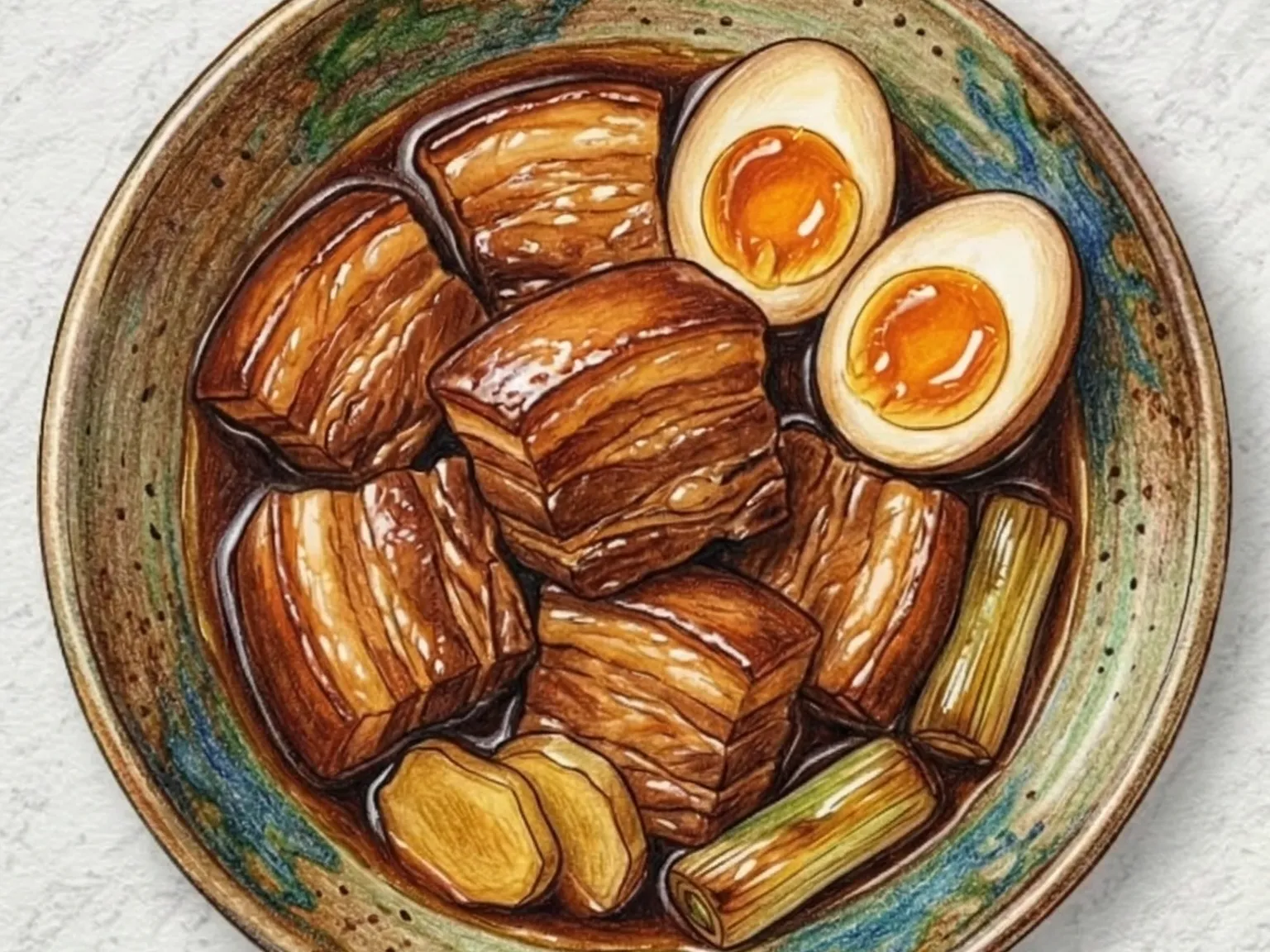
Thick cubes of pork belly are blanched for five minutes to purge impurities, then simmered for fifty minutes in water with ginger and green onion until the fat layers turn translucent and yielding. The parboiled meat is transferred to a fresh pot with soy sauce, mirin, and sugar, where it braises over medium-low heat for another thirty minutes as the liquid reduces by half and lacquers each piece in a dark, glossy coat. Mirin carries away any residual off-odors along with its alcohol while depositing a gentle sweetness into the pork, and ginger neutralizes the musky quality that belly fat can develop during long cooking. Boiled eggs added to the braising liquid absorb the soy-mirin mixture through their whites, turning amber and picking up flavor all the way to the yolk. Cooling the finished dish and reheating it once transforms the texture further: collagen that dissolved during cooking sets into a gel while cold, then melts again upon warming, thickening the sauce into something close to a demi-glace. Skimming the solidified fat from the chilled surface removes excess grease without dulling the flavor.
Adjust Servings
Instructions
- 1
Cut pork belly into large cubes and blanch for 5 minutes.
- 2
Simmer pork with water, ginger, and scallion for 50 minutes.
- 3
Transfer pork to a fresh pot with soy sauce, mirin, sugar, and boiled eggs.
- 4
Add 300 ml cooking broth and braise for 30 minutes over medium-low heat.
- 5
Reduce sauce by half, then rest briefly before serving.
As an Amazon Associate, we may earn from qualifying purchases.
Tips
Nutrition (per serving)
More Recipes

Japanese Braised Pork Belly
Kakuni is a Japanese braised pork belly dish where thick-cut slabs are simmered for hours in soy sauce, mirin, sake, and ginger until the fat renders completely and the meat yields to the lightest pressure of chopsticks. The mirin builds a gentle sweetness that rounds out the soy sauce's salinity, while ginger keeps the pork tasting clean throughout the long braise. The reduced cooking liquid glazes each piece in a dark, glossy coat that concentrates the flavor on the surface. Served over steamed rice or with a dab of hot mustard, the contrast between the rich pork and the sharp condiment defines this dish.

Japanese Simmered Yellowtail and Daikon
Yellowtail and daikon radish are simmered together in a dashi-based sauce of soy sauce, mirin, and sake. The fatty yellowtail becomes flaky and rich as it cooks, while the daikon absorbs the concentrated braising liquid and turns translucent. Sugar adds a gentle sweetness to balance the salty soy, and fresh ginger cuts through the fishiness. This is a quintessential Japanese home-cooked dish, best made in winter when yellowtail is at its fattiest.

Japanese Ginger Soy Braised Chicken
Toriniku shigureni is a Japanese-style simmered dish of ground chicken cooked down with julienned ginger, soy sauce, mirin, and sugar until most of the liquid evaporates. The chicken is browned first over medium heat, then ginger is added for its sharp bite before the braising liquid goes in. As the sauce reduces over six minutes, it concentrates into a sweet-salty glaze that clings to the meat. The ginger tames any gamey notes while adding warmth, making this a versatile topping for rice bowls or a compact side dish for packed lunches.

Buta Shogayaki (Japanese Ginger Pork Stir-Fry with Soy Mirin Glaze)
Buta shogayaki - pork ginger stir-fry - is one of the most frequently cooked dishes in Japanese home kitchens, appearing in bento boxes, teishoku set meals, and university cafeterias across the country. Thinly sliced pork loin or shoulder is marinated briefly in a mixture of soy sauce, mirin, sake, and a generous amount of freshly grated ginger. The ginger serves a dual purpose: its enzymes tenderize the meat during the short marinade, and its sharp, aromatic heat carries through the finished dish. The pork is seared quickly in a hot skillet - overlapping is avoided so each slice makes direct contact with the pan and develops a caramelized edge rather than steaming. The marinade is poured in during the final thirty seconds, reducing rapidly into a glossy, sweet-savory glaze that coats every piece. Served over shredded raw cabbage that provides a cool, crunchy contrast to the hot, saucy meat, shogayaki is the kind of meal that Japanese workers crave at the end of a long day - fifteen minutes from pantry to plate, deeply satisfying, and impossible to tire of.

Chinese Red-braised Pork Belly
Hongshao rou is a traditional Chinese red-braised pork belly dish where thick-cut pork is slowly simmered in soy sauce, sugar, cooking wine, ginger, and scallion. The meat is first seared to render excess fat, then braised on low heat until the seasoning penetrates deeply. As it cooks, the pork becomes fork-tender and the sauce reduces into a thick, glossy glaze with a deep reddish hue. It is one of the most beloved home-cooked dishes across China, served simply over steamed rice.

Pork Rice Bowl (Sweet-Salty Glazed Pork over Rice)
Butadon is a Japanese pork rice bowl originating from Obihiro, Hokkaido, where thin slices of pork are simmered with onion in a sauce of soy sauce, mirin, and sugar until the meat absorbs every drop of the sweet-salty glaze. The onion melts down during cooking, adding natural sweetness that deepens the sauce. Served over a mound of steamed rice, it is straightforward comfort food - no complex techniques, no long ingredient lists, just well-balanced flavors that come together quickly. The caramelized edges of the pork develop a slight char that adds dimension to the otherwise smooth, saucy topping. It makes an excellent weeknight dinner when time is short but satisfaction cannot be compromised.