Butter Cookies
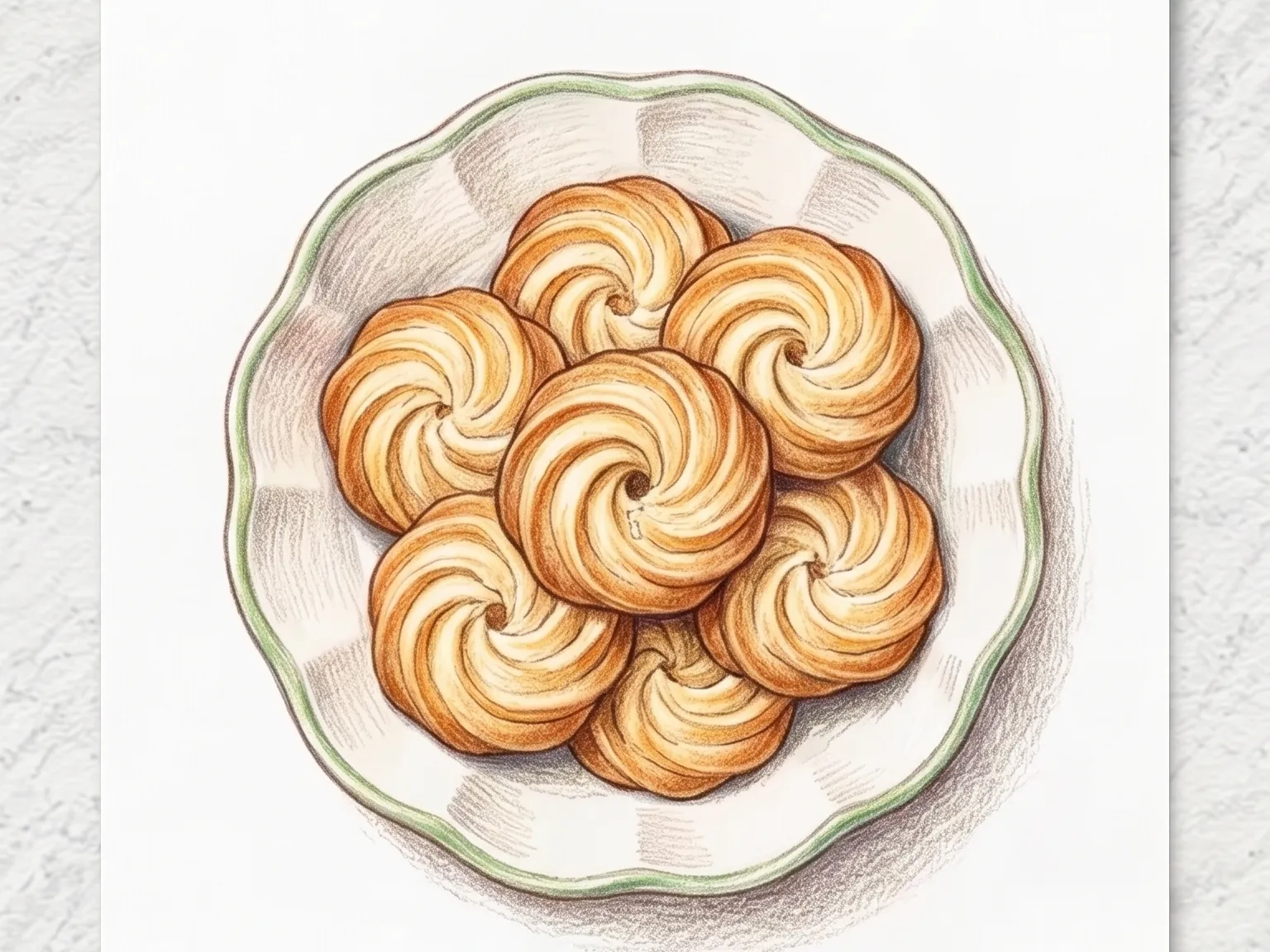
Butter cookies are a classic pastry built on the flavor of high-quality butter, aiming for a melt-in-the-mouth texture and a clean, rich aroma. Unsalted butter is creamed thoroughly with powdered sugar to incorporate air, creating the foundation for a crumbly, delicate crumb. Egg yolk and cake flour are mixed in just enough to form a smooth dough, and vanilla essence adds a sweet depth that complements the butter. Piped into flower or ring shapes, the cookies bake until the thin edges turn crisp while the thicker centers remain tender. The sweetness is deliberately restrained, so the butter's own flavor comes through unobstructed. Stored in an airtight tin, the cookies maintain their snap for over a week.
Adjust Servings
Instructions
- 1
Soften butter to room temperature and cream with powdered sugar.
- 2
Beat in egg yolks and vanilla extract.
- 3
Sift in cake flour and mix gently until combined.
- 4
Pipe or cut into shapes and bake at 175°C for 12 minutes.
As an Amazon Associate, we may earn from qualifying purchases.
Tips
Nutrition (per serving)
More Recipes

Cinnamon Rolls
Cinnamon rolls are yeasted enriched dough baked into spirals of butter, cinnamon, and brown sugar. The dough, rich with milk, butter, and eggs, rises into a crumb soft enough to pull apart in layers by hand. A thick layer of softened butter and cinnamon-sugar is spread on the rolled dough before it is coiled tightly and sliced into rounds. During baking, the sugar melts and caramelizes between the coiled layers, and the cinnamon aroma filling the kitchen is arguably the main event. A cream cheese glaze poured over the hot rolls melts into a tangy coating that keeps the sweetness balanced.

Shortbread Cookies
Shortbread is built on a high ratio of butter to flour, with just enough sugar to sweeten, producing a cookie that crumbles on contact and dissolves into a wave of pure butter flavor. The dough demands minimal handling - overworking it develops gluten and turns the tender crumb tough and biscuit-like. Cold butter cut into the flour creates the sandy, friable texture that defines a proper shortbread. Chilling the shaped dough before baking prevents spreading, ensuring clean edges and a uniform thickness. Powdered sugar yields a finer, more delicate crumb, while granulated sugar introduces a subtle crunch and slightly coarser grain. Traditionally scored into wedges or stamped into rounds, shortbread keeps well in a tin and actually improves after a day, as the butter flavor mellows and permeates the flour more evenly. It is the natural companion to a cup of strong black tea.

Apple Crumble
Apple crumble appeared in British kitchens during World War II, when butter and sugar rationing made traditional pie crusts impractical - the crumble topping required far less fat and no rolling. Sliced apples are tossed with sugar, lemon juice, and a pinch of cinnamon, then piled into a baking dish and covered with a rough mixture of flour, oats, butter, and brown sugar rubbed together by hand until it resembles coarse breadcrumbs. In the oven, the fruit collapses and bubbles while the topping bakes into a golden, craggy layer that is crunchy on the peaks and slightly chewy where it meets the fruit juices below. The contrast between the hot, soft, almost sauce-like apple beneath and the crisp, buttery rubble on top is what makes the dish work. Served with vanilla ice cream or custard, the cold cream against the steaming fruit creates one more layer of contrast. It remains the default British home dessert, assembled in ten minutes from store-cupboard ingredients.

Classic Croissant
A classic croissant is built through lamination - a process of folding cold butter into yeast-leavened dough in successive turns to create dozens of alternating layers. Three sets of folds produce a structure so layered that when baked, the butter melts and releases steam, forcing each layer apart from within. The exterior caramelizes into a shell so thin and crisp it shatters at the slightest pressure, scattering golden flakes. The interior, by contrast, is a honeycomb of soft, airy strands held together by the ghost of dissolved butter. Tearing a warm croissant apart releases a rush of butter fragrance that fills the room. The dough itself carries a faint sweetness from sugar and milk, but the dominant flavor is pure butter, amplified and transformed by heat.

Sole Meunière (Butter-Fried Sole with Brown Butter Sauce)
Sole meuniere is a French classic where delicate sole fillets are seasoned with salt and pepper, dredged lightly in flour, and pan-fried in butter for two to three minutes per side until a thin golden crust forms. The flour coating must be minimal - just enough to create a crisp barrier that protects the tender fish without masking its flavor. The fish is flipped only once because the fillets are fragile and break apart with repeated handling. After the fish is removed, the butter remaining in the pan is cooked further until it turns brown and smells of toasted hazelnuts, then finished with a squeeze of lemon juice and chopped parsley. This brown butter sauce is the heart of the dish, its nutty richness elevating the mild, sweet flesh of the sole while the lemon's acidity keeps every bite clean and bright.

Green Tea Dasik Cookies (No-Bake Korean Matcha Pressed Cookies)
Nokcha dasik are Korean pressed tea cookies formed by binding roasted soybean powder and matcha with honey, rice syrup, and a touch of sesame oil, then stamping the mixture in a traditional wooden mold. No oven or heat is needed; the key is achieving a moisture ratio that lets the dough hold together under pressure without cracking. On the tongue, the cookie dissolves gently, releasing the toasty depth of roasted soybean first, followed by the grassy bitterness of green tea that cleans the palate. The embossed pattern from the mold gives each piece a refined, ornamental appearance, and a brief air-dry at room temperature firms the surface enough for neat storage.