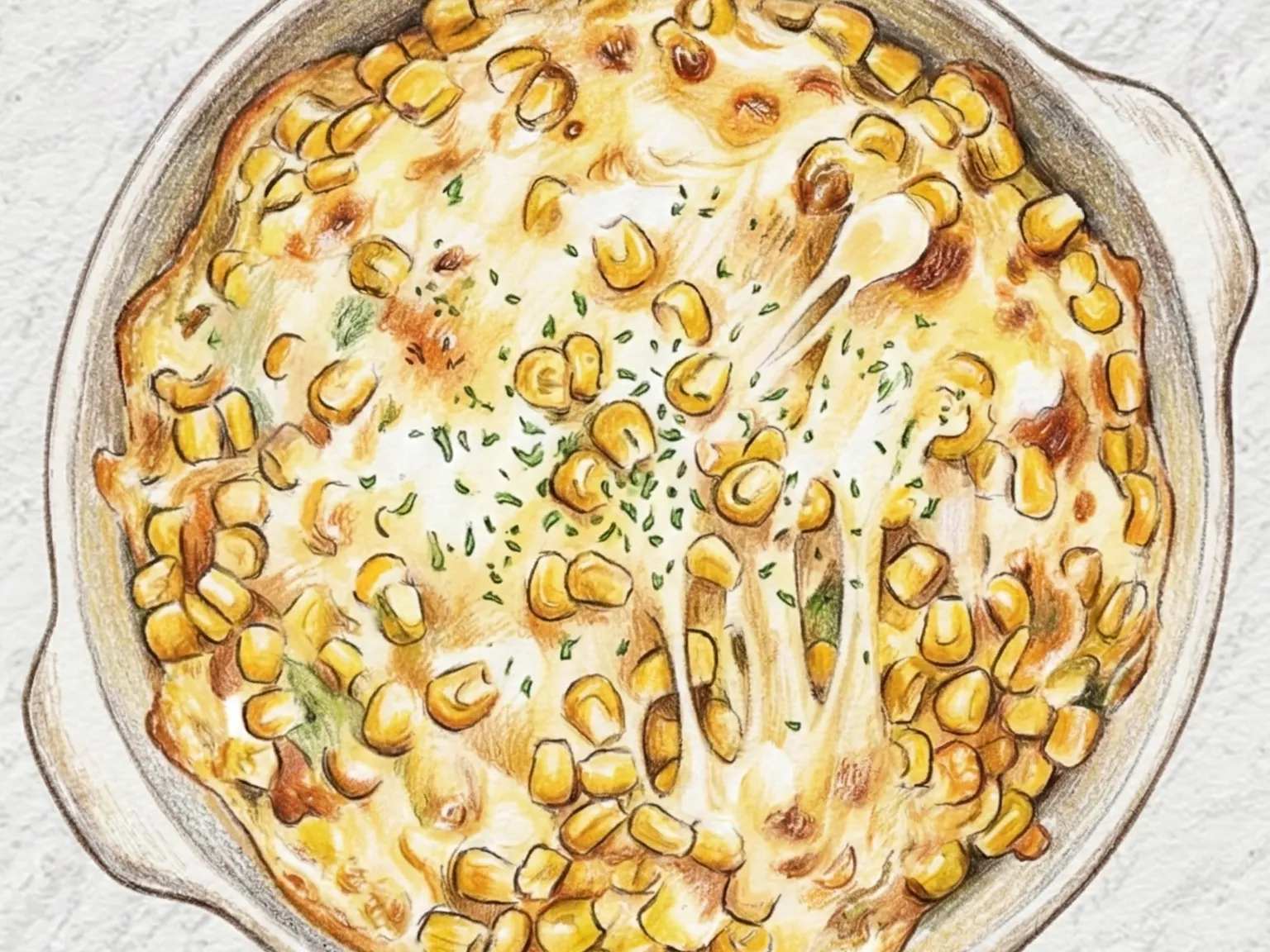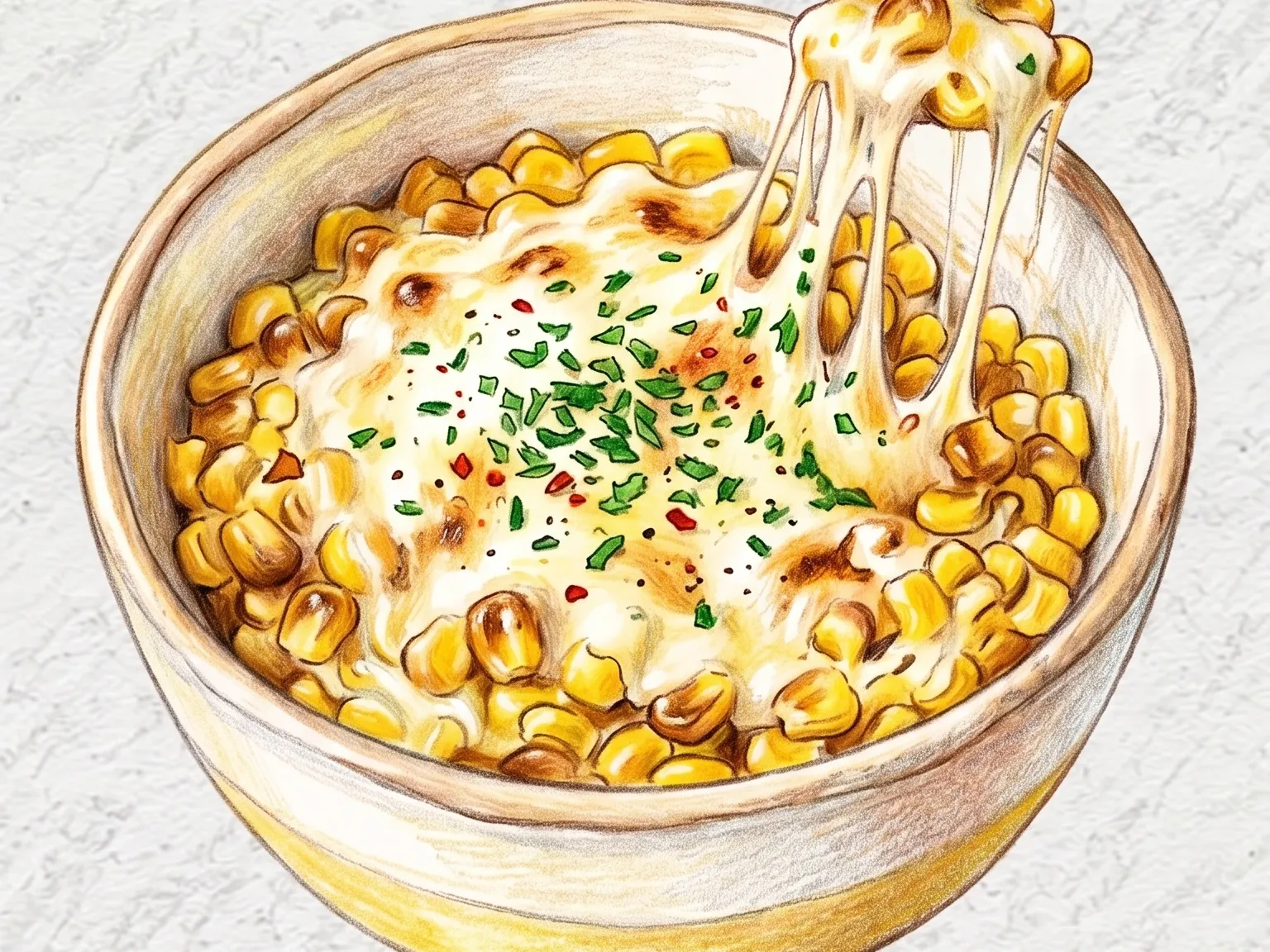
Korean Beoteo Oksusu Cup (Butter Corn Cup)
Butter corn cup is a Korean street snack made by stir-frying drained sweet corn in butter, then mixing it with mayonnaise and topping it with mozzarella in a heatproof cup before a final round of heating. Cooking the corn in butter drives off residual moisture from the canned or frozen kernels and lightly caramelizes their surfaces, concentrating the natural sweetness and adding a layer of nuttiness that plain steamed corn cannot provide. Mayonnaise coats every kernel in a creamy, slightly tangy film, while the mozzarella melted over the top creates a stretchy, gooey cheese layer that pulls apart with each spoonful. Sugar, salt, and black pepper balance the overall profile into a sweet-salty combination with just enough seasoning to keep the corn flavor central. A sprinkle of parsley adds a faint herbal note at the finish. The dish is rich from the combination of butter and mayonnaise, and mozzarella loses its stretch quickly as it cools, which makes eating it immediately out of the cup the correct approach.
Adjust Servings
Instructions
- 1
Drain the corn thoroughly in a sieve.
- 2
Melt butter in a pan and stir-fry corn for 2 minutes to remove moisture.
- 3
Add mayonnaise, sugar, salt, and pepper, then mix evenly.
- 4
Divide into heatproof cups and top with mozzarella.
- 5
Heat in a microwave or oven until the cheese melts.
- 6
Finish with parsley and serve immediately.
As an Amazon Associate, we may earn from qualifying purchases.
Tips
Nutrition (per serving)
Goes Well With

Korean Sweet Corn Latte (Butter Sauteed Corn Milk Drink)
Sweet corn latte begins by sauteing cooked corn kernels in butter until fragrant, then simmering them in milk to draw out the corn's natural sugars before blending everything smooth. The butter amplifies the starchy, roasted aroma during the initial saute, coating each kernel so that the fat-soluble flavor compounds dissolve fully into the milk during the five-minute simmer. Blending the mixture until completely smooth and then straining it through a fine sieve removes any remaining hull pieces, producing a texture as silky as a custard sauce. This straining step makes a noticeable difference in the final quality. Condensed milk adds a rounded sweetness, and a small amount of white pepper introduces a faint spiced warmth that gives the drink depth beneath the sweetness. It works equally well served hot in a ceramic mug or chilled and poured over ice; the corn aroma remains vivid in both versions.

Gotgam Cream Cheese Roll (Dried Persimmon Rolls)
Gotgam cream cheese roll is a no-cook Korean dessert that requires nothing more than a knife, a bowl, and a refrigerator. Dried persimmons are slit open and flattened into thin sheets, each one acting as the outer wrapper. The filling is cream cheese mixed with honey and fresh lemon juice to balance its natural richness with acidity, and finely chopped walnuts are folded in throughout to add a crunchy, nutty element to every bite. The filling is spread across the opened persimmon, which is then rolled tightly and wrapped in plastic wrap. Twenty minutes in the refrigerator firms the roll enough to slice cleanly. Dipping the knife in warm water and wiping it dry before each cut produces the smoothest cross-sections. The finished slices reveal clearly defined layers: the chewy, caramel-sweet dried persimmon on the outside, the tangy cream cheese in the middle, and flecks of walnut distributed throughout. The combination makes it a natural pairing with wine or a polished addition to a traditional holiday table.

Korean Rolled Omelette (Layered Vegetable Egg Roll)
Gyeran-mari - Korean rolled omelette - is a staple of Korean lunchboxes and dinner tables, a dish every Korean home cook masters early. Finely diced carrot, onion, and scallion are mixed into beaten eggs and poured in a thin stream across a lightly oiled rectangular pan. When the egg layer is half-set, it is rolled from one side to the other, then more egg mixture is poured beside the roll and the process repeats three to four times, building concentric yellow layers visible when sliced. Air trapped between the thin sheets gives the omelette its characteristic pillowy softness. Temperature control is critical - too hot and the egg browns; too cool and the layers will not bond. After cooking, wrapping the roll in a bamboo mat or kitchen towel for two minutes sets its shape into a clean cylinder. Found in school cafeterias, picnic bento boxes, and family dinners across Korea.

Korean Tteok and Ramyeon (Instant Ramen with Chewy Rice Cakes)
Tteok-ramyeon is a Korean shortcut dish that adds chewy rice cakes to a pot of instant ramen. The rice cakes absorb the spicy broth as they cook, intensifying the seasoning while providing a bouncy texture that instant noodles alone lack. An egg or a slice of cheese is often cracked in near the end for added richness. The entire dish is ready in about 13 minutes with no knife skills required - just boiling water and timing. It is one of the most common late-night snacks in Korea.
More Recipes

Korean Street Ham & Egg Toast
Gilgeori ham egg toast is the foundational version of Korean street toast, the style found at early-morning carts across Seoul and other cities where vendors cook to order on flat griddles. The core is a pan-fried patty of beaten egg mixed with finely shredded cabbage and carrot, cooked flat and golden on both sides. Ham slices are seared on each side for about thirty seconds so the edges caramelize slightly and the surface color deepens without drying out. The bread is pressed onto a buttered pan until the exterior crisps while the crumb stays soft. Ketchup and sugar together form the sauce, and this combination is what separates the Korean street toast from any generic egg sandwich. Sugar in the sauce creates a sweet-salty pull that plays against the savory ham and egg, and omitting it produces something noticeably different in character. Without cheese, this version is lighter and less rich than variations that add a slice, making it more approachable as an early meal. The contrast between the crunchy toasted bread and the soft, yielding egg layer is the defining textural quality.

Korean Mala Cup Tteokbokki
This cup-style tteokbokki blends gochujang with mala sauce to combine Korean chili heat and the numbing tingle of Sichuan peppercorn in a single dish. Rice cakes and fish cake go into the pot with the sauce, then cook over medium heat for six to seven minutes with constant stirring as the liquid reduces into a thick, clinging glaze that coats each piece heavily. Stopping to stir is not optional: the rice cakes stick and scorch on the bottom without continuous movement. Sliced green onion goes in at the end for fragrance. Because mala sauce saltiness varies considerably between brands, beginning with one tablespoon and tasting as you add more prevents overseasoning. Additional gochugaru raises the chili heat independently of the numbing sensation, while increasing the mala sauce proportion amplifies the tingle. The format mirrors the convenience-store cup tteokbokki experience and requires minimal equipment, making it a fast option when few tools are available.

Korean Grilled Jjondeugi (Sweet Spicy Glazed Wheat Cracker Snack)
Jjondeugi-gui is a nostalgic Korean street snack made by gently heating thin pressed-wheat sheets over low heat until they become pliable, then applying a sauce of gochujang, soy sauce, sugar, oligosaccharide syrup, minced garlic, and sesame oil before returning them to the heat. The warming process shifts the sheets from rigid to genuinely chewy, and the sugars in the sauce caramelize slowly against the surface, building a sticky, sweet-spicy glaze that concentrates with each pass. Because the marinade has a high sugar content, applying it in a single thick coat scorches the outside before the heat can work evenly through the sheet. The correct technique is to brush on a thin layer, grill briefly, then repeat two or three times until the glaze has depth and the interior is fully softened. The finished pieces are cut into bite-size sections with kitchen scissors and served immediately while still warm.

Korean Sausage Skewers
Sosiji kkochi are Korean sausage skewers made by scoring Vienna sausages deeply along their length and threading two or three onto wooden sticks, then pan-frying them until golden brown all over. The score marks serve a functional purpose: as the sausages heat, the cuts open up, allowing heat to penetrate to the center more evenly and creating edges that caramelize slightly and turn crisp. A thin film of oil in a medium-heat pan and steady rotation ensures even color across the entire surface, producing a skin that snaps on the outside while the inside stays juicy and springy. Ketchup and mustard are the classic accompaniments, with the tomato sweetness and the sharp, pungent bite of the mustard complementing the salt and fat of the sausage. Threading rice cakes between the sausage pieces transforms the skewer into a sotteok-sotteok style, a widely popular Korean street food variation. The dish comes together in under fifteen minutes and requires no special equipment beyond a pan and wooden skewers, making it a practical choice for a quick snack, a children's side dish, or a lunchbox item that holds up well at room temperature.

Korean Corn Cheese (Buttery Skillet Corn Mozzarella)
Korean corn cheese starts with drained canned corn tossed in mayonnaise, sugar, and black pepper, then sauteed with diced onion in butter before being spread flat in the pan and topped with a generous layer of mozzarella. The lid goes on over low heat until the cheese melts into a stretchy, golden sheet that locks the corn mixture underneath. A teaspoon of sugar pushes the corn's natural sweetness forward, and the fat from the mayonnaise blends with the cheese to produce a rich, creamy texture that coats every kernel. For a finished crust, broiling at 220 degrees Celsius for five minutes chars the surface and adds a toasty, slightly smoky layer on top. Sliced green onion or chopped parsley scattered over the finished dish cuts through the richness and adds a fresh note.

Korean Street Egg Bread (Sweet Batter Muffin with Whole Egg)
Winter streets in Seoul feature this warm handheld snack prepared by baking a whole egg atop a sweet batter. The base consists of cake flour, baking powder, milk, and melted butter poured into muffin molds. Adding a layer of finely diced ham beneath the egg creates a salty contrast against the sweetness of the dough. When baked at 180 degrees Celsius, sixteen minutes results in a soft and runny yolk, while eighteen minutes produces a firm center. Vanilla extract mixed into the batter helps neutralize the natural scent of the egg for a clean finish. A light dusting of dried parsley on the domed surface adds a subtle herbal scent as the bread turns golden in the oven. Small amounts of shredded cheese can be added to the batter to balance the sweetness. Serving the bread while it remains warm ensures the interior stays moist. This egg bread functions well as a quick breakfast option and can be made in paper muffin cups if metal molds are unavailable.