Butter Tart (Canadian Gooey Brown Sugar Tart)
Quick answer
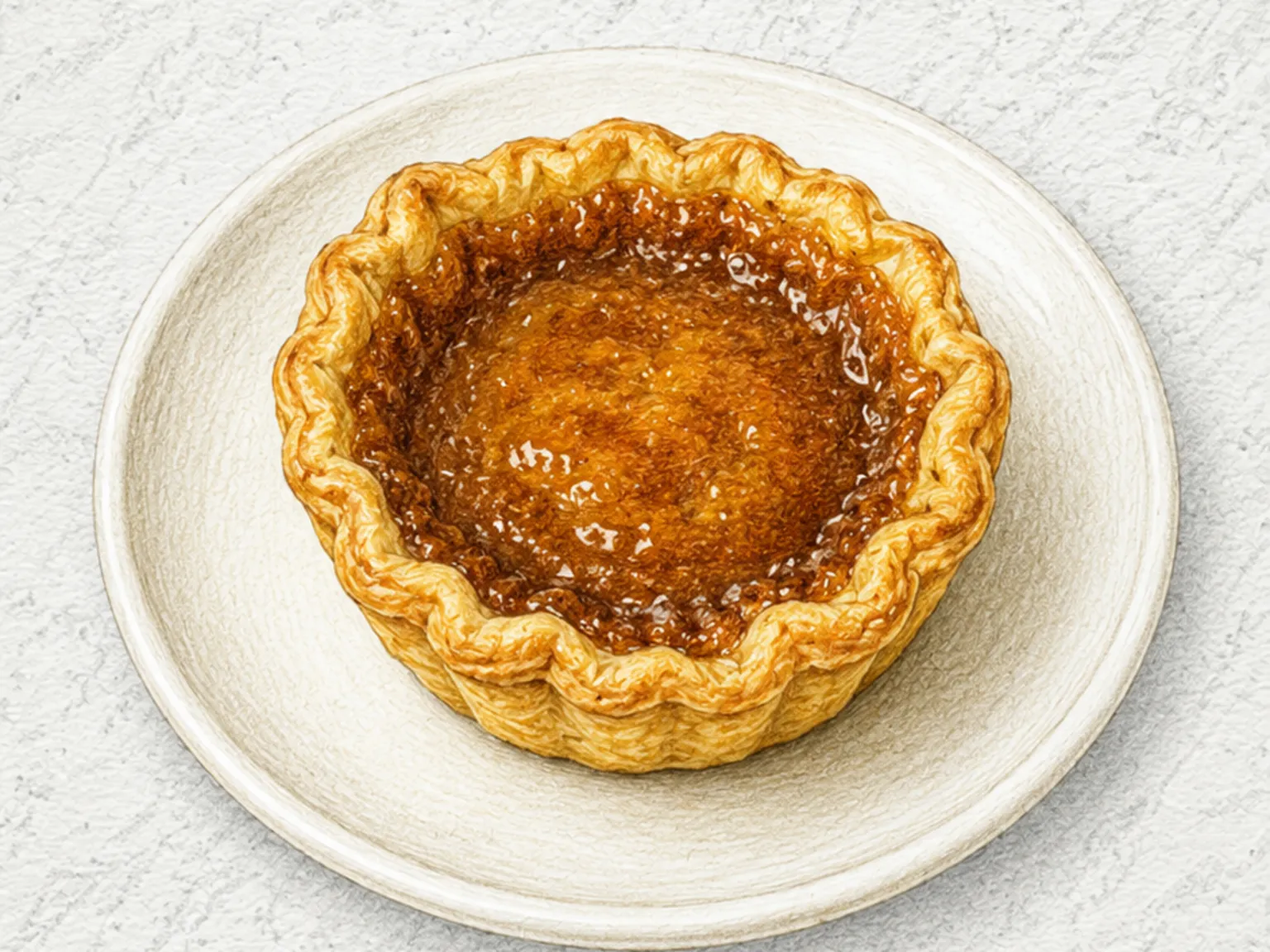
Butter tarts are a Canadian institution -- small pastry shells filled with a mixture of butter, brown sugar, eggs, and corn syrup or maple syrup, baked until the edges se...
What makes this special
- Brown sugar, butter, and egg bake inside flaky pastry edges that set while the center stays molten.
- Filling sets at the edges but stays molten-gooey at the center
- Pulling at 20-22 minutes while the center still quivers is the critical timing
Key ingredients
Core cooking flow
- 1 Preheat the oven to 190°C and set the 6 tart shells securely in their pan or on a baking tray.
- 2 Put 90g unsalted butter in a saucepan and melt it slowly over low heat.
- 3 Turn off the heat and cool the mixture below 50°C so the egg does not scramble.
Butter tarts are a Canadian institution -- small pastry shells filled with a mixture of butter, brown sugar, eggs, and corn syrup or maple syrup, baked until the edges set while the center remains gloriously gooey and molten. The brown sugar creates a toffee-like depth that goes well beyond ordinary sweetness, and the egg binds the filling into something suspended between liquid caramel and soft custard. The pastry shell must be baked firm enough to hold the sticky interior without softening, delivering a shatteringly crisp, flaky contrast with every bite. Getting that balance right between a set edge and a still-flowing center is the defining technical challenge of the recipe -- a few minutes too long in the oven and the filling turns grainy and tight. Some versions fold in plump raisins, chopped walnuts, or pecans for texture and flavor, though committed purists argue the unadulterated butter filling needs no embellishment. Served slightly warm, the caramel fragrance intensifies and the center flows freely; cooled to room temperature, the filling firms to a pleasant, chewy consistency that holds its shape when cut. Either way, the ratio of buttery, molten center to a shatteringly crisp pastry defines a properly made butter tart, and the debate between runny-center and firm-center devotees is one Canada has never quite settled.
Instructions
Read the steps as a cooking flow: prep, heat, seasoning, doneness control, and finish.
- 1Step
Preheat the oven to 190°C and set the 6 tart shells securely in their pan or on a baking tray.
Divide the 40g raisins evenly among them, making sure they are not wet so the pastry stays crisp.
- 2Control
Put 90g unsalted butter in a saucepan and melt it slowly over low heat.
Add 120g brown sugar and stir until the coarse grains mostly disappear and the mixture looks glossy, thick, and syrupy.
- 3Prep
Turn off the heat and cool the mixture below 50°C so the egg does not scramble.
Whisk in 1 egg, 60ml heavy cream, and 1 teaspoon vanilla extract until smooth and fully blended.
- 4Step
Stir the filling once more to even out the texture, then pour it only to about 80% of each tart shell.
Overfilling can make it bubble over, scorch the edges, and soften the bottom crust.
- 5Heat
Bake at 190°C for 20-22 minutes.
Remove the tarts when the edges are set, small bubbles rise in the center, and the middle still jiggles slightly rather than looking fully firm.
- 6Finish
Cool the tarts at room temperature for 20 minutes so the filling settles into a soft, chewy set.
Serve slightly warm for a runnier center, or cooled for a firmer texture that holds its shape.
After the steps
Pick a recipe that fits this dish.
Continue with shared ingredients, meal pairings, or a similar method.
Recipes That Go Well With This
More Baking →Based on shared ingredients and meal pairing
Blondie Bars
Blondie bars take the dense, fudgy structure of brownies and replace the chocolate with the caramel depth of browned butter and brown sugar. Cooking the butter slowly until it turns a deep golden-brown color produces a pronounced nutty, toasted aroma that functions as the flavor backbone of the entire bar - more complex than plain melted butter can deliver. Brown sugar dissolves into the browned butter and contributes a toffee-like sweetness with a molasses undertone that white sugar simply cannot replicate. Eggs and vanilla extract add warmth, richness, and depth to round out the flavor. Using a modest amount of flour is deliberate: too much tips the texture toward cakey, while the right quantity keeps the baked bars dense, chewy, and slightly underdone in the center. The surface develops a thin, crackly shell during baking, while the interior stays soft and slightly sticky - that contrast of textures is central to a properly made blondie. The bars must cool completely before slicing; cutting too early causes them to collapse and lose their clean edges.
Brown Sugar Cinnamon Rolls
Brown sugar replaces white sugar in the filling of these cinnamon rolls, contributing a molasses-like depth that elevates the pastry well beyond the standard version. The yeast dough, enriched with milk, egg, and butter, rises into a soft elastic sheet that rolls easily around the dark sugar and cinnamon mixture. During baking, the brown sugar melts into a sticky caramel layer that clings to every spiraled edge. The rolls emerge darker in color and richer in character, carrying a mineral sweetness that white sugar cannot replicate. Cinnamon warmth penetrates every layer from edge to center without fading at the core. A cream cheese glaze drizzled over the hot rolls immediately after baking introduces a tangy counterpoint that prevents the sweetness from becoming one-dimensional, and the contrast between the warm, dark filling and the cool, pale glaze makes each pull-apart layer worth eating slowly.
Chapssal Kkwabaegi (Glutinous Rice Twist Donuts)
Chapssal-kkwabaegi are Korean twisted donuts made from a yeasted dough of glutinous rice flour and bread flour, proofed until nearly doubled, shaped by twisting pairs of ropes together, and fried at 170 degrees Celsius. The high ratio of glutinous rice flour gives the interior a notably chewy pull that sets these apart from standard wheat donuts, though over-proofing turns that chew tough rather than springy. Maintaining oil temperature at 170 degrees keeps the shell golden and crisp while minimizing grease absorption, so the finished donut stays light in hand. Tossing them in cinnamon sugar immediately after draining lets the residual heat partially melt the crystals into a thin, clinging sweet crust.
Brown Butter Chocolate Chip Cookies
Brown butter chocolate chip cookies build on the familiar template by introducing browned butter, which is cooked over medium heat until the milk solids caramelize and turn golden, releasing an aroma of toasted hazelnuts and toffee that standard melted or creamed butter cannot produce. The browned butter is combined directly with brown sugar while still warm, which helps it dissolve completely and speeds up the mixing process. A high ratio of brown sugar relative to white sugar produces cookies with thin, crisp edges and a dense, chewy center that sinks slightly when pressed. Dark chocolate cut into rough chunks melts unevenly during baking, leaving some pockets fully liquid and others still partially solid, creating texture variation in each bite. Flaky sea salt pressed lightly onto the tops of the cookies before baking sharpens the sweetness and amplifies the chocolate flavor in a way that fine salt mixed into the dough cannot replicate. Fresh from the oven the cookies look underdone and collapse slightly when touched, but ten minutes of resting on the pan allows the structure to set: the edges firm up to a gentle snap while the center stays yielding and fudgy.
Serve with this
Calzone
Calzone rolls pizza dough into a circle, fills one half with ricotta, mozzarella, diced ham, and fresh basil, then folds into a half-moon shape, seals the edges with a fork, and bakes until golden at 220 degrees Celsius. Leaving a two-centimeter border free of filling is critical -- overstuffing causes steam pressure to burst the seam during baking. Brushing a thin line of water along the edge before pressing firmly with a fork creates a tighter seal that holds through the full bake. Fifteen to twenty minutes in a well-preheated oven produces a crisp, burnished exterior while the interior heats the ricotta into a soft cream and melts the mozzarella into long, stretchy strings. Brushing olive oil on the surface before baking adds a richer color and a slight nuttiness to the crust. Tomato sauce served on the side for dipping provides an acidic counterpoint that cuts through the dense cheese filling and keeps each bite feeling balanced.
Korean Crispy Potato Pancake
Gamja-jeon is a Korean potato pancake made by finely grating raw potatoes, letting the starch settle out of the liquid for at least ten minutes, discarding the water, and folding the settled starch back into the pulp to improve binding. Waiting long enough for full starch separation is what gives the batter enough cohesion to hold together when the pancake hits the hot pan. Spreading the batter as thinly as possible produces glass-crisp edges while the center retains a chewy, starchy bite characteristic of potato starch. The first side must cook all the way through and the underside must firm up completely before any attempt to flip, and using two spatulas simultaneously makes the turn fast enough to keep the pancake intact. Frying both sides over medium heat until evenly golden delivers a crust that is crisp on the outside while the center stays moist. A dipping sauce of soy sauce, vinegar, and minced cheongyang green chili cuts through the oily richness with sharpness and heat.
Halloumi Persimmon Arugula Salad
Halloumi persimmon arugula salad combines golden pan-seared halloumi cheese, thinly sliced sweet persimmon, peppery arugula, soaked red onion, and walnuts in a white balsamic dressing. Halloumi's unusually high melting point allows it to be seared directly in a dry pan without softening into a puddle; two to three minutes per side is the right window to build a golden, lightly crisp crust while keeping the interior dense and chewy. Cooking beyond that point makes the cheese rubbery and unpleasant. The natural fructose in sweet persimmon creates a pronounced sweet-salty contrast against the brined cheese, and arugula's sharp, peppery bite anchors the balance between those two poles. Red onion should be soaked in cold water for at least ten minutes before adding it, which draws out most of the bitterness and raw pungency while leaving behind a mild, fresh sweetness that does not overwhelm the other ingredients. The dressing of white balsamic vinegar, olive oil, honey, and black pepper is lighter in color and noticeably gentler in acidity than dark balsamic, so it ties all the components together without masking the persimmon's pale gold or the arugula's deep green.
Similar recipes
Churros
Churros are fried dough sticks made from a simple paste of water, flour, salt, and sometimes a touch of sugar. The dough is piped through a star-shaped tip, which creates ridges along the length. These ridges increase the surface area exposed to hot oil, producing maximum crunch across every inch while the interior stays soft and pillowy. Straight from the fryer, they are rolled in cinnamon sugar, which clings to the warm, oily surface and creates a sweet, spiced crust. The traditional pairing is thick Spanish hot chocolate -- closer to a warm ganache than a drink -- into which the churros are dipped. The bitterness of the chocolate and the sweetness of the cinnamon sugar play off each other, and the contrast between the crisp dough and the dense liquid makes each dip satisfying. Churros wait for no one: they are at their best within ten minutes of frying, after which the crispness fades as residual oil migrates inward.
Sole Meunière (Butter-Fried Sole with Brown Butter Sauce)
Sole meuniere is a French classic where delicate sole fillets are seasoned with salt and pepper, dredged lightly in flour, and pan-fried in butter for two to three minutes per side until a thin golden crust forms. The flour coating must be minimal - just enough to create a crisp barrier that protects the tender fish without masking its flavor. The fish is flipped only once because the fillets are fragile and break apart with repeated handling. After the fish is removed, the butter remaining in the pan is cooked further until it turns brown and smells of toasted hazelnuts, then finished with a squeeze of lemon juice and chopped parsley. This brown butter sauce is the heart of the dish, its nutty richness elevating the mild, sweet flesh of the sole while the lemon's acidity keeps every bite clean and bright.
Ssiat Hotteok (Korean Sweet Seed Pancake)
Ssiat-hotteok is a Korean street snack made from a yeast-leavened dough stuffed with a mixture of brown sugar, cinnamon, sunflower seeds, and pumpkin seeds, then pressed flat in an oiled pan until the outside crisps and the inside turns molten. The dough must proof until it doubles in size before dividing into eight portions; each portion is filled and the seam pinched shut firmly, because a loose seal allows the melted sugar to escape and burn against the pan. Slow cooking on low heat develops a thin, crisp crust on the exterior while the brown sugar inside dissolves into a sticky syrup that carries the warmth of the cinnamon and the crunch of the seeds. Activating the yeast in warm milk rather than water adds a subtle dairy richness to the dough, producing a softer, more rounded result than versions made with water alone.