Flaky Oven Biscuits
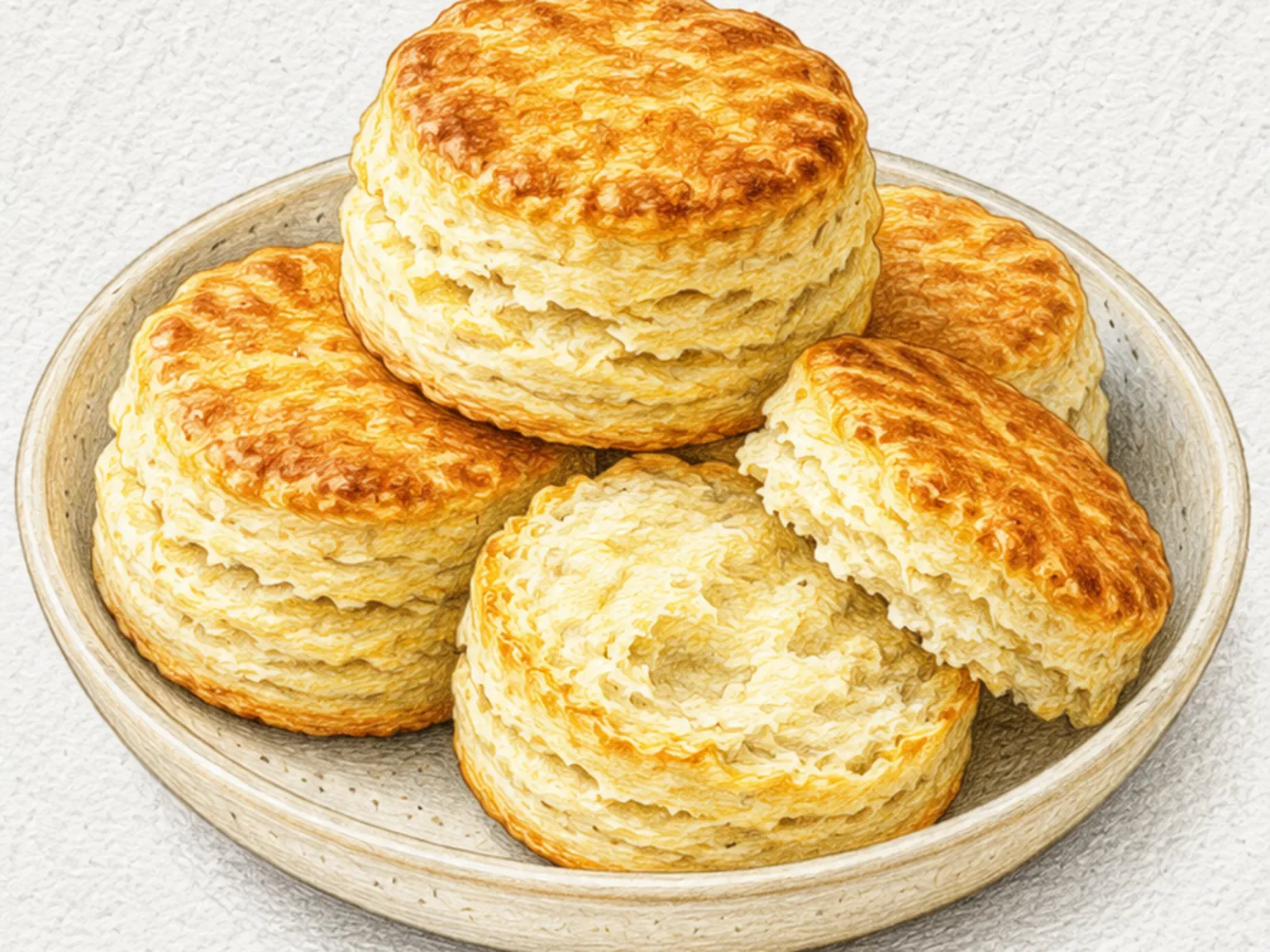
Buttermilk biscuits are built on the tension between cold butter and high oven heat. Cubes of chilled butter are cut into flour until pea-sized pieces remain, and the dough is brought together quickly with buttermilk - just enough mixing to bind, no more. In the oven, the butter melts and releases steam, forcing the dough apart into flaky, irregular layers. The exterior bakes to a golden, slightly crisp shell while the interior stays soft and crumbly. Buttermilk provides a faint tanginess that sharpens the overall flavor and reacts with baking soda to give the biscuits additional lift. Overworking the dough is the most common mistake, as it develops gluten and produces a tough, bread-like result instead of the tender, pull-apart texture that defines a good biscuit. Split while still warm and spread with butter and jam, they are a cornerstone of American Southern breakfast.
Adjust Servings
Instructions
- 1
Preheat oven to 220°C and line a tray with parchment paper.
- 2
Whisk flour, baking powder, baking soda, and salt in a bowl.
- 3
Rub in cold butter until pea-sized bits remain and texture is sandy.
- 4
Add buttermilk and honey, then mix only 10-12 strokes until just combined.
- 5
Fold dough once, pat to 2 cm thickness, and cut rounds onto the tray.
- 6
Brush tops with melted butter and bake 13-15 minutes until golden, then cool on a rack.
As an Amazon Associate, we may earn from qualifying purchases.
Tips
Nutrition (per serving)
More Recipes

Maple Bacon Cornbread Muffins
Cornmeal gives this American muffin a gritty, toasty crumb that sets it apart from all-flour versions, while crisp bacon bits and maple syrup create a pronounced sweet-salty dynamic in every bite. The batter combines cornmeal and all-purpose flour with buttermilk, whose acidity reacts with baking powder for a good rise and also keeps the crumb moist despite the cornmeal's tendency to dry out. Bacon is cooked until shattering-crisp, drained, crumbled, and folded into the batter just before portioning. Maple syrup contributes not only sweetness but also a woody, caramel-edged flavor that complements the smokiness of the bacon. Mixing the wet and dry ingredients just until the flour disappears is essential; over-stirring toughens the muffin. At 200 degrees Celsius, the muffins dome and crack across the top within 18 to 20 minutes, signaling that the center has set. Served warm with butter, the muffin becomes a one-piece brunch that needs nothing alongside it.

Banana Bread
Banana bread is a quick bread leavened with baking soda rather than yeast, eliminating the need for a rising period. Overripe bananas with heavily spotted peels are ideal because their elevated sugar content and softer texture mash easily and keep the crumb moist. Melted butter and a single egg provide richness and structure, while vanilla extract deepens the banana aroma. The batter comes together in one bowl and bakes at 170 degrees Celsius for roughly sixty minutes. Testing doneness by inserting a toothpick into the center is the most reliable method: it should come out clean. The flavor actually intensifies overnight as the banana sugars continue to permeate the crumb.

Earl Grey Banana Bread
Overripe bananas and finely ground Earl Grey tea leaves come together in a quick bread that smells of bergamot and caramelized fruit. The tea leaves are ground to a powder and folded directly into the batter, releasing their floral citrus oils throughout the crumb during baking. Ripe bananas provide enough natural sugar to keep the added sweetener modest, while butter and milk ensure the loaf stays moist for days. The top splits open naturally in the oven, revealing the soft interior beneath a lightly crusted surface. Each slice carries a layered aroma where banana warmth meets bergamot brightness, a combination that works because both share citrus-adjacent notes. A pat of butter on a warm slice is all the accompaniment this bread needs.

Peach Cobbler
Sliced peaches are tossed with sugar and lemon juice, spread in a baking dish, and covered with spoonfuls of biscuit batter that bakes into a golden, slightly craggy topping. In the oven, the fruit juices bubble up around the edges and seep into the base of the dough, creating a zone where crisp crust meets soft, fruit-soaked interior. The lemon sharpens the peach flavor and prevents it from tasting flat under all the sugar. If the peaches lack sweetness on their own, an extra tablespoon of sugar in the fruit layer compensates without making the topping heavier. Served warm with a scoop of vanilla ice cream, the contrast between hot cobbler and cold cream is as much a part of the experience as the flavor itself.

Cornbread
Cornbread is a Southern American quick bread made from cornmeal, flour, sugar, baking powder, milk, egg, and melted butter, baked until golden. Mixing the wet and dry ingredients separately and combining them with minimal stirring prevents overdeveloping gluten, which keeps the crumb tender and moist rather than tough. Baking at 200 degrees Celsius for twenty-two to twenty-five minutes produces a crisp exterior with a lightly sweet, nutty interior characteristic of cornmeal. The bread pairs well with stews, chili, and soups - its coarse grain absorbs broth and sauce effectively.

Green Bean Casserole
Green bean casserole bakes blanched green beans in a mushroom cream sauce, then tops them with crispy fried onions for a contrast of textures that defines this American holiday side dish. Blanching the beans for just three minutes and shocking them in ice water preserves their bright green color and a slight crunch that survives the oven. Sauteing onion and mushrooms in butter, stirring in flour to build a roux, and gradually adding milk produces a smooth cream sauce infused with earthy mushroom flavor. After twenty minutes in the oven, the casserole is pulled out and topped with fried onions, then returned for five more minutes so the onions crisp without burning. The finished dish layers the crunch of the topping against the creamy sauce and tender-crisp beans.