Korean Steamed Pomfret (Whole Fish with Soy Ginger Sauce)
Quick answer
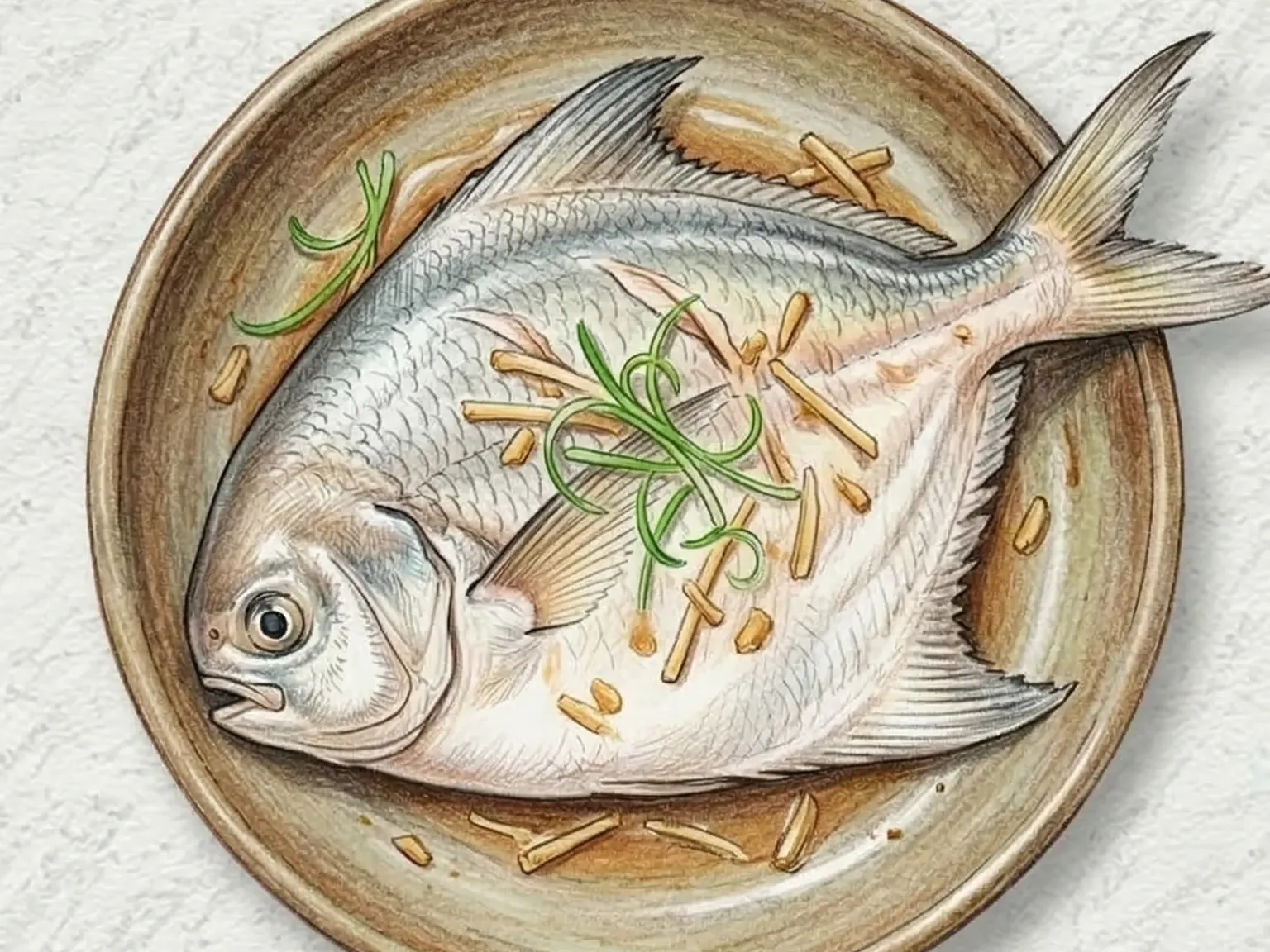
Whole pomfret is gently steamed with soy sauce, rice wine, ginger, and green onion into a clean, mild preparation.
What makes this special
- Byeongeo jjim presents thin-fleshed pomfret steamed whole to separate cleanly from the bone.
- Thin-fleshed pomfret steamed whole separates cleanly from the bone
- Ginger and scallion added in two stages for layered aroma and odor control
Key ingredients
Core cooking flow
- 1 Clean 600 g pomfret by removing the scales and innards, then rinse it under running water and pat it dry.
- 2 Slice 15 g fresh ginger into thin matchsticks.
- 3 Bring the steamer water to a strong boil until steady steam is visible before adding the fish.
Whole pomfret is gently steamed with soy sauce, rice wine, ginger, and green onion into a clean, mild preparation. Pomfret has thin, delicate flesh that separates from the bone with little effort after steaming, making it easy to eat. Ginger and green onion together neutralize any fishiness while the soy sauce provides subtle salt and a light color. A thin drizzle of sesame oil at the end adds a toasted, nutty aroma without masking the fish. The result is a non-spicy, low-fat dish that works well for a wide range of diners.
Instructions
Read the steps as a cooking flow: prep, heat, seasoning, doneness control, and finish.
- 1Season
Clean 600 g pomfret by removing the scales and innards, then rinse it under running water and pat it dry.
Make three shallow scores on each side at 2 cm intervals so the seasoning reaches the thin flesh.
- 2Prep
Slice 15 g fresh ginger into thin matchsticks.
Split 1 green onion lengthwise and cut it into 5 cm pieces, keeping half for the first steaming and half for the final aromatic layer.
- 3Control
Bring the steamer water to a strong boil until steady steam is visible before adding the fish.
Lay half the ginger and green onion over the pomfret, cover tightly, and steam over medium-high heat for 8 minutes.
- 4Control
Check doneness when the flesh turns opaque and the edges of the scores open slightly.
If the thickest part still looks translucent, cover again and steam 2-3 minutes longer instead of overhandling the fish.
- 5Control
In a small pan, combine 2 tbsp soy sauce, 1 tbsp rice wine, and 150 ml water, then warm over medium heat.
Turn off the heat as soon as bubbles appear around the edge so the sauce stays light.
- 6Finish
Pour the hot sauce evenly over the steamed pomfret, then add the remaining green onion and 1 tsp sesame oil.
Cover and steam 3 more minutes, just until the onion aroma rises, then serve immediately while the flesh is soft.
After the steps
Pick a recipe that fits this dish.
Continue with shared ingredients, meal pairings, or a similar method.
Recipes That Go Well With This
More Steamed →Based on shared ingredients and meal pairing
Korean Braised Butterfish
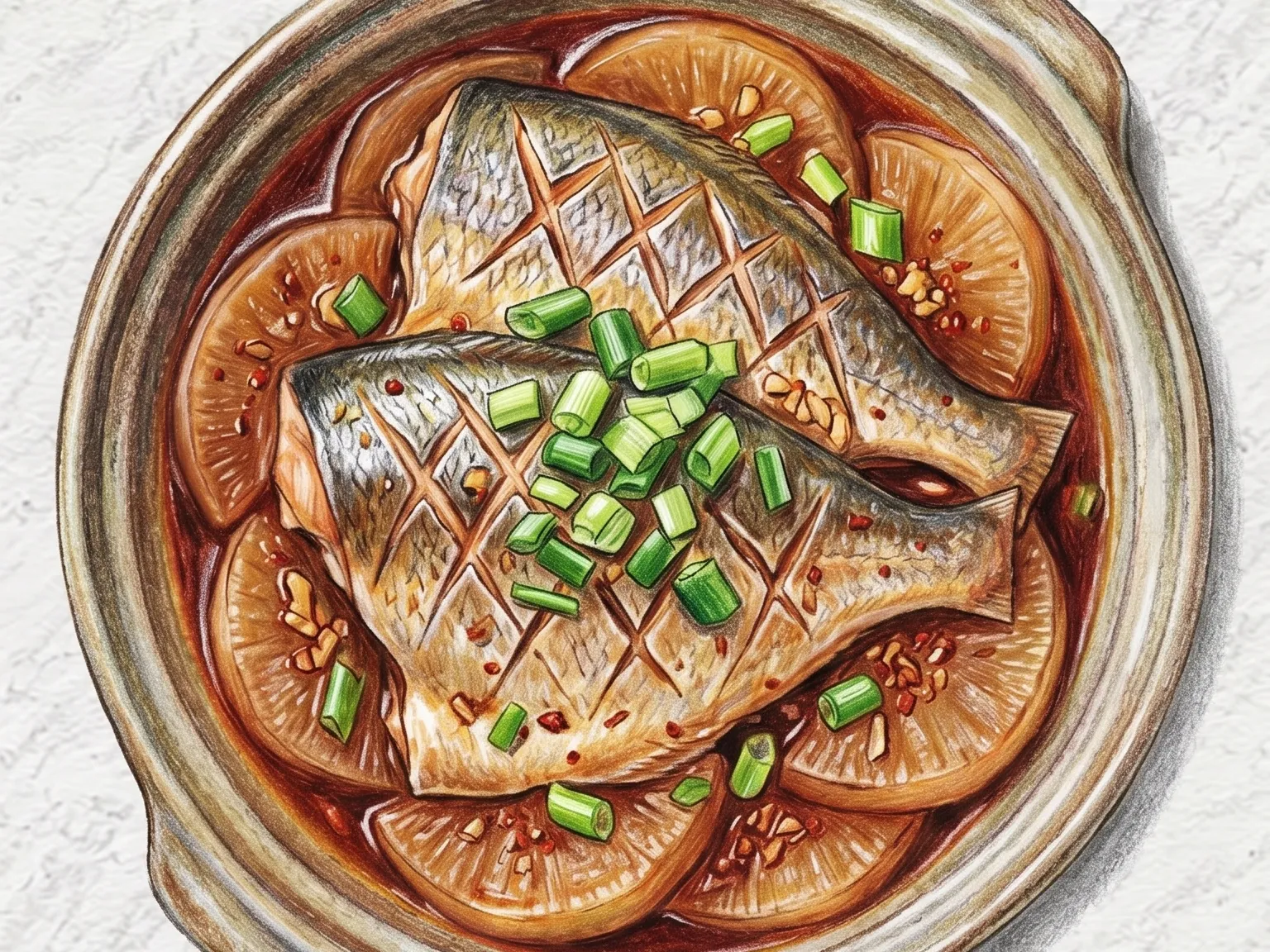
Byeongeo jorim is a Korean braised fish dish in which scored butterfish is set on a bed of sliced radish and slowly cooked in a soy-gochugaru braising liquid with garlic and ginger. Scoring the fish allows the seasoning to penetrate to the center of each fillet. The radish layer on the pot bottom serves two purposes: it cushions the delicate fish to prevent it from sticking and breaking apart, and it absorbs the braising liquid as it cooks, becoming a deeply savory, slightly sweet side dish on its own. Butterfish flesh is exceptionally fragile, so the fillets are never flipped during cooking. Instead, the braising liquid is spooned continuously over the surface to ensure even heat and even seasoning on top. Ginger added at the start neutralizes any fishiness, and gochugaru provides a mild, building heat that adds complexity to the clean flavor of the fish without masking it. Scallion pieces dropped in during the final two minutes release fragrance into the steam, rounding out the aromatic profile of the finished dish. At 330 calories and 31 grams of protein per serving, byeongeo jorim is a lean, nutritionally complete main course that pairs naturally with steamed rice.
Korean Steamed Flounder (Whole Flatfish with Soy Garlic Sauce)
Gajami-jjim is a Korean steamed flounder dish prepared with a light soy sauce seasoning, onion, and green onion. Rice wine is added during cooking to neutralize any fishiness while keeping the flesh moist. The seasoning is restrained-soy sauce and garlic provide just enough flavor without masking the flounder's naturally mild, clean taste. With its soft texture and few bones, this dish works well as an everyday banchan alongside rice and soup.
Korean Seasoned Bellflower Root
Doraji -- balloon flower root -- has been used in Korean cooking since the Goryeo dynasty, valued as both a medicinal herb and a staple namul ingredient. Unlike doraji-bokkeum, which stir-fries the root with gochujang and heat, this cold muchim preserves the characteristic firm, snappy crunch that makes doraji distinctive. The roots are shredded along the grain into thin strips, then vigorously rubbed with salt to draw out the saponins responsible for their sharp bitterness, and rinsed multiple times until the water runs clear. A seasoning of gochujang, vinegar, sugar, and sesame oil works into each fibrous strand, layering sweet, sour, and spicy notes over the residual earthiness of the root. This banchan appears on both Chuseok and Seollal holiday tables as one of the five-color namul, where the white of the doraji root represents the metal element in the five-phase system. Because the root holds its crunch well, this dish can be prepared ahead of time without losing texture, making it a practical choice for large gatherings.
Korean Steamed Rockfish (Spicy Gochugaru Radish Braise)
Ureok-jjim is a Korean spicy steamed rockfish cooked with Korean radish, onion, and green onion in a gochugaru and soy sauce broth. Rockfish has firm, well-defined flesh that holds its shape through the cooking process, and scoring the skin lets the bold seasoning reach deep into the meat. Radish softens in the braising liquid and absorbs the chili heat while contributing natural sweetness, and ginger keeps the fish tasting clean. The remaining sauce is concentrated enough to spoon over rice, delivering a hit of spicy, salty flavor with every bite.
Serve with this
Korean Cockle & Water Parsley Mixed Rice
Kkomak-minari bibimbap is a seasonal rice bowl that comes together when cockles are at their peak in early spring, pairing the ocean sweetness of briefly blanched cockle meat with the clean, grassy sharpness of raw water parsley (minari). The cockle meat is rinsed in light salt water to remove any residual sand, then blanched for no more than thirty seconds in boiling water so the flesh stays springy rather than contracting into a rubbery texture. Julienned carrot and zucchini are each stir-fried separately, controlling moisture and flavor independently, then set aside to cool before assembly. A bowl of well-steamed rice is layered with the blanched cockles, the sauteed vegetables, and the raw minari placed on top last to protect its volatile fragrance from the heat below. A bibimbap sauce made from gochujang, sesame oil, minced garlic, and a touch of vinegar ties everything together when mixed, balancing the briny umami of the cockles against the brightness of the parsley. Sesame oil and toasted sesame seeds added at the end round the flavors and give the bowl a warm, nutty finish.
Korean Rice Cake Soup (New Year Sliced Rice Cake Beef Broth)
Tteokguk is the soup that marks the Korean New Year - eating a bowl is said to add one year to your age, and no Lunar New Year table is complete without it. Thinly sliced oval rice cakes made from garaetteok, a long cylindrical rice cake, are dropped into a clear beef broth that has been carefully skimmed of fat until it gleams. In the hot liquid, the rice cake surfaces soften just enough to release a faint starch that gives the broth the barest hint of body, while the interiors hold a dense, satisfying chew. The broth itself is kept deliberately simple - brisket simmered low and slow, seasoned only with soup soy sauce and salt - so that the rice cakes and their subtle sweetness remain the focus. Beaten egg swirled into the boiling soup forms wispy threads that add a delicate texture, and strips of egg garnish, crushed seaweed, and sometimes sliced scallion complete the bowl. Despite its apparent simplicity, tteokguk carries deep cultural weight: the white color of the rice cakes symbolizes purity and a fresh start, and the round shape of the slices represents coins and wishes for prosperity.
Korean-Style Cabbage Pickle
Yangbaechu pickle is a quick Korean-style vinegar pickle made by pouring a hot brine of vinegar, sugar, salt, and whole black peppercorns over bite-sized pieces of cabbage and carrot. The hot liquid wilts the vegetables just enough to help them absorb the brine while they retain a firm, snappy crunch throughout. Whole peppercorns contribute a subtle, aromatic heat that gives the finished pickle more depth than a plain vinegar soak would produce. After a single day of refrigeration the pickle is ready to eat, and it pairs especially well alongside fried cutlets, burgers, or any dish that benefits from a bright, acidic counterpoint to cut through richness. The carrot adds a note of natural sweetness and keeps the color vivid. Kept in a sealed container, the pickle is at its crunchiest within the first week, though the flavors become more rounded and pronounced as the vegetables continue to absorb the brine over time.
Similar recipes
Korean Steamed Octopus (Whole Salted Radish Broth)
Muneo-jjim is a Korean steamed whole octopus dish prepared by scrubbing the octopus vigorously with coarse salt to remove slime and any off-odor, then cooking it in a pot layered with radish and green onion. Submerging the head end first and lifting it in and out of the boiling water two or three times causes the tentacles to curl inward naturally, resulting in an attractive presentation before the full cook begins. Simmering for about fifteen minutes and then resting off the heat with the lid on produces a texture that is springy and chewy without turning tough. The radish adds mild sweetness to the water while green onion draws out any fishiness, so the resulting broth carries a clean, subtle depth of its own. Once cooked, the octopus is sliced on the diagonal into manageable pieces and served with a simple dipping sauce of sesame oil mixed with salt. That combination lets the octopus's natural ocean flavor and nuttiness come through without interference. The dish works equally well as a drinking accompaniment or an everyday banchan, and the technique scales from a small arm to a full-sized octopus without adjustment.
Korean Spicy Steamed Squid
Ojingeo-jjim is a Korean spicy steamed squid dish cooked with onion and green onion in a sauce of gochugaru, gochujang, and soy sauce. The key is keeping the total cooking time to around ten minutes, starting on high heat and finishing on medium, so the squid stays chewy rather than turning rubbery. Gochujang provides a thick, coating heat while the chili flakes add a sharper spiciness on top. One final toss at the end ensures every piece is evenly glazed with the red sauce. This quick-cooking dish works equally well as a banchan alongside rice or as an accompaniment to drinks.
Abalone Seaweed Salad
This salad centers on abalone, the shellfish that haenyeo - Jeju Island's female free-divers - have harvested by hand for centuries, descending without oxygen tanks to pry the mollusks from the sea floor. The abalone is blanched for just 40 seconds, a precise window that preserves its springy texture and keeps the delicate sweetness and ocean flavor intact. Overcooked abalone turns tough quickly, so the short blanching time is more technique than convenience. Rehydrated sea mustard, thinly sliced cucumber, and red cabbage round out the bowl. The dressing - lemon juice, plum syrup, soup soy sauce, and a touch of vinegar - is calibrated to support the seafood's natural brininess rather than cover it. The combination of chewy abalone, slippery seaweed, and crunchy raw vegetables creates three distinct textures throughout, which sustains interest from first bite to last. Serve cold as a light appetizer before grilled dishes, or as a standalone side during summer. The quality of the abalone shows plainly with so few ingredients around it.